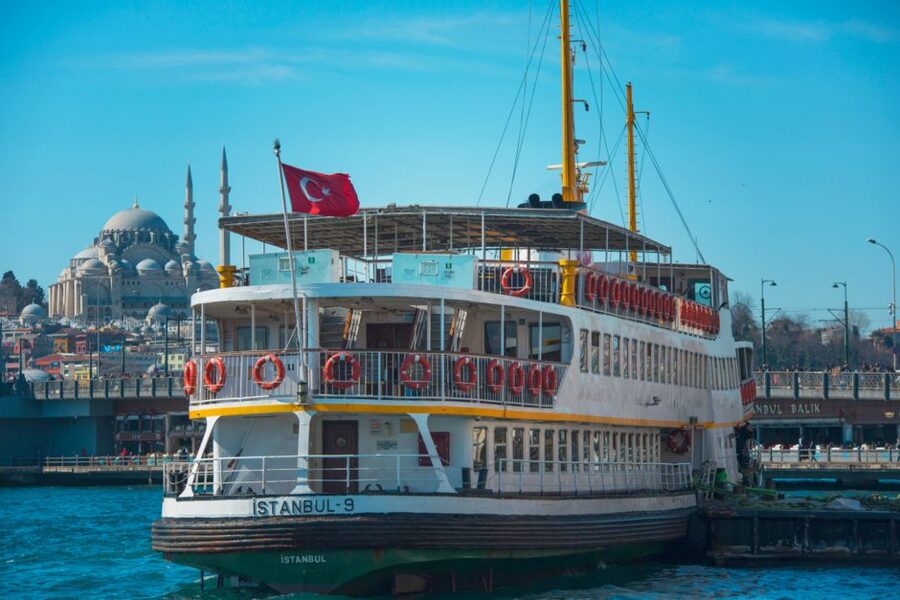
The best time to visit Istanbul is mid-April to early June, or mid-September to late October. Days run in the 60s and 70s°F, rain is light, and the city’s sights and ferries are pleasant to use from morning to night. July and August are the hottest months (average highs of 85°F), and January and February are the cheapest but the wettest and grayest.
The catch: the shoulder seasons aren’t quiet. The provincial tourism directorate counted 1.86 million foreign arrivals in October 2025, almost as many as in July (1.88 million), so autumn brings summer-sized lines at Hagia Sophia and Topkapı Palace. The real lull runs from November to March.

In 2027, also plan around the religious calendar. According to Türkiye’s Directorate of Religious Affairs, Ramadan runs from February 8 to March 8. Ramazan Bayramı (Eid al-Fitr) falls on March 9 to 11, and Kurban Bayramı (Eid al-Adha) on May 16 to 19. Neither spoils a trip, but both change how the city runs for a few days.
On this page
Istanbul weather by month
The figures below are the official long-term averages from the Turkish State Meteorological Service (MGM). They combine its Kadıköy, Florya and Sarıyer stations over 1950 to 2025; sea temperature is its 1970 to 2025 average for the Sea of Marmara. Daylight is approximate sunrise and sunset on the 15th.
| Month | Average high / low | Rain | Rainy days | Sea (Marmara) | Daylight on the 15th |
|---|---|---|---|---|---|
| January | 49 / 40°F (9.6 / 4.2°C) | 3.5 in (89 mm) | 16 | 49°F (9.3°C) | 8:27am to 5:59pm |
| February | 50 / 40°F (10.2 / 4.2°C) | 2.8 in (71 mm) | 14 | 47°F (8.2°C) | 8:00am to 6:37pm |
| March | 54 / 42°F (12.4 / 5.5°C) | 2.5 in (62 mm) | 13 | 48°F (8.7°C) | 7:18am to 7:10pm |
| April | 63 / 49°F (17.4 / 9.2°C) | 1.9 in (48 mm) | 10 | 52°F (11.3°C) | 6:26am to 7:42pm |
| May | 72 / 56°F (22.3 / 13.6°C) | 1.3 in (33 mm) | 8 | 60°F (15.4°C) | 5:47am to 8:13pm |
| June | 81 / 64°F (27.1 / 18.0°C) | 1.1 in (28 mm) | 5 | 68°F (20.2°C) | 5:31am to 8:37pm |
| July | 85 / 69°F (29.7 / 20.5°C) | 0.9 in (22 mm) | 3 | 74°F (23.4°C) | 5:44am to 8:36pm |
| August | 85 / 69°F (29.7 / 20.8°C) | 0.9 in (24 mm) | 4 | 76°F (24.2°C) | 6:13am to 8:05pm |
| September | 79 / 64°F (25.9 / 17.6°C) | 1.6 in (40 mm) | 6 | 72°F (22.3°C) | 6:43am to 7:16pm |
| October | 69 / 57°F (20.6 / 13.7°C) | 2.6 in (66 mm) | 9 | 66°F (18.8°C) | 7:14am to 6:25pm |
| November | 61 / 50°F (16.1 / 9.9°C) | 3.1 in (78 mm) | 11 | 59°F (15.2°C) | 7:51am to 5:47pm |
| December | 53 / 44°F (11.8 / 6.5°C) | 3.9 in (99 mm) | 16 | 54°F (12.0°C) | 8:22am to 5:37pm |
July and August tie as the warmest months, with an 85°F average high, and humidity off the water makes them feel hotter. The MGM’s records show heat waves past 104°F in both months.
Winter is mild on paper and damp in practice. Rain falls on about half of all days from December to February, and a cold northeasterly off the Black Sea makes 45°F feel like freezing.
Note the late winter sunrises. Türkiye stays on UTC+3 all year (it stopped changing clocks in 2016), so in December the sun doesn’t rise until about 8:25am.
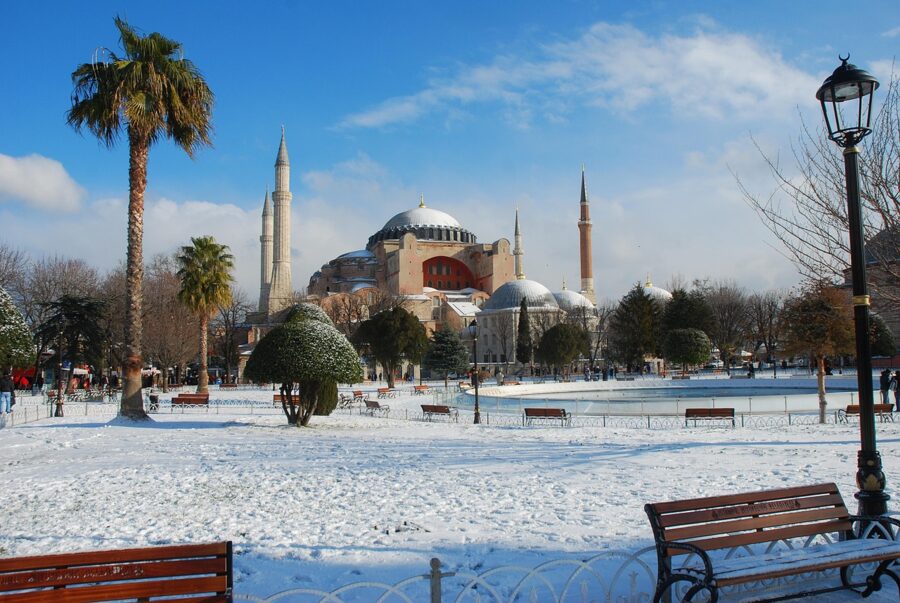
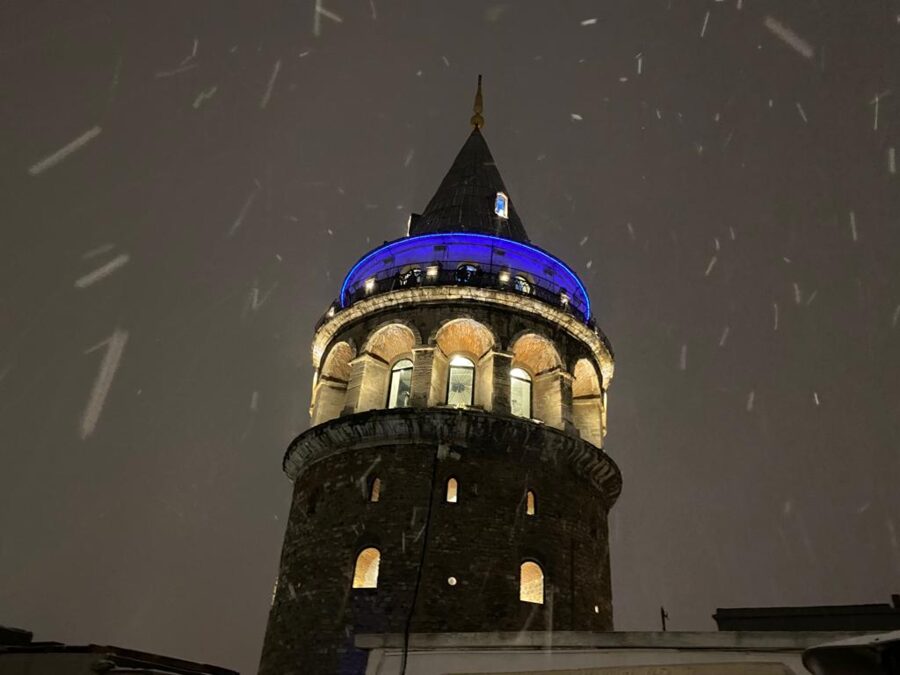
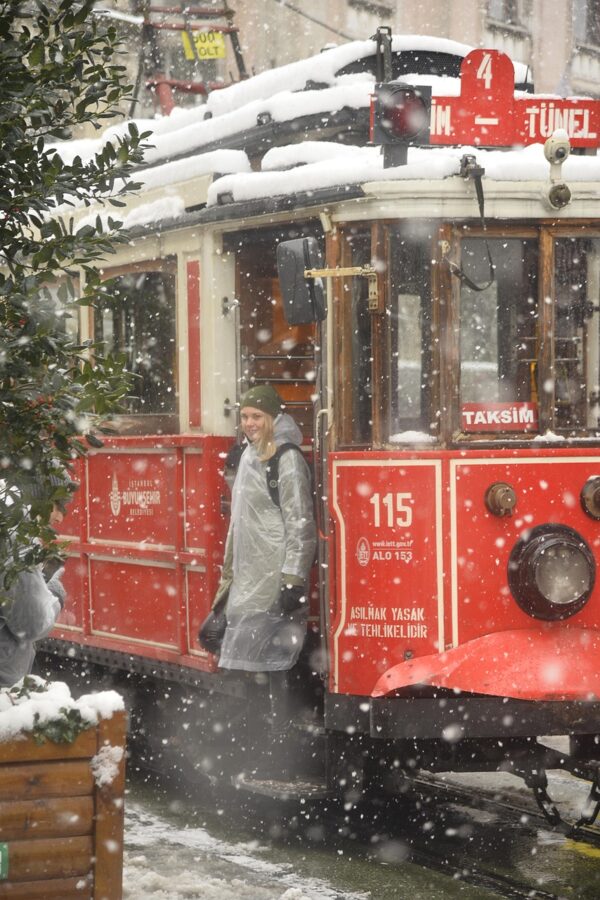
And yes, it snows, usually a few times between January and early March. The MGM’s deepest recorded snow cover was 41 cm (16 inches) on March 9, 1987. A heavy snow day can stop buses and cancel ferries, so leave a spare day before a winter flight home.

When the crowds come: the arrival numbers
The Istanbul Provincial Directorate of Culture and Tourism publishes monthly foreign arrivals through the city’s airports and seaports. The 2025 figures show a flatter year than most people expect.
| Month (2025) | Foreign arrivals | Of which by sea at Karaköy (cruise port) |
|---|---|---|
| January | 1,268,660 | 9,743 |
| February | 1,255,459 | 8,087 |
| March | 1,228,785 | 8,628 |
| April | 1,583,204 | 19,875 |
| May | 1,668,304 | 52,158 |
| June | 1,631,177 | 68,332 |
| July | 1,879,266 | 63,304 |
| August | 1,852,996 | 81,907 |
| September | 1,790,651 | 66,195 |
| October | 1,857,314 | 68,635 |
| November | 1,462,607 | 16,567 |
| December | 1,494,276 | 12,223 |
July is the busiest month, but only by a hair over October and August, and even the quietest month, March, drew about two-thirds of July’s number. Istanbul never gets truly empty.
The cruise column matters more than its size suggests. From May to October, 50,000 to 80,000 passengers a month land at the Galataport terminal in Karaköy, and they reach Hagia Sophia, the Blue Mosque and the Grand Bazaar in the same morning hours. In winter, those numbers drop by about 85 percent.
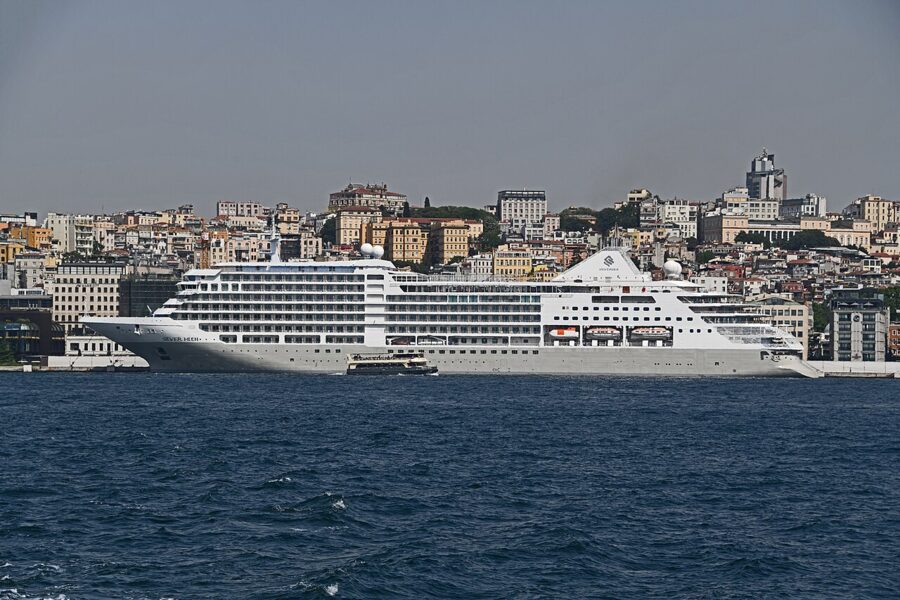

March 2025, almost all of it in Ramadan, was the quietest month. In 2027 Ramadan covers most of February and early March, a good window for cheap rooms and short lines if you don’t mind cool, wet weather.
Istanbul month by month
January
The coldest, darkest stretch of the year: a 49°F average high, rain on about 16 days, and sunrise near 8:30am. After New Year’s, hotel rates drop and Topkapı Palace has no real queue. Plan indoor days around the museums and the Basilica Cistern, and save the Bosphorus cruise for a clear afternoon.
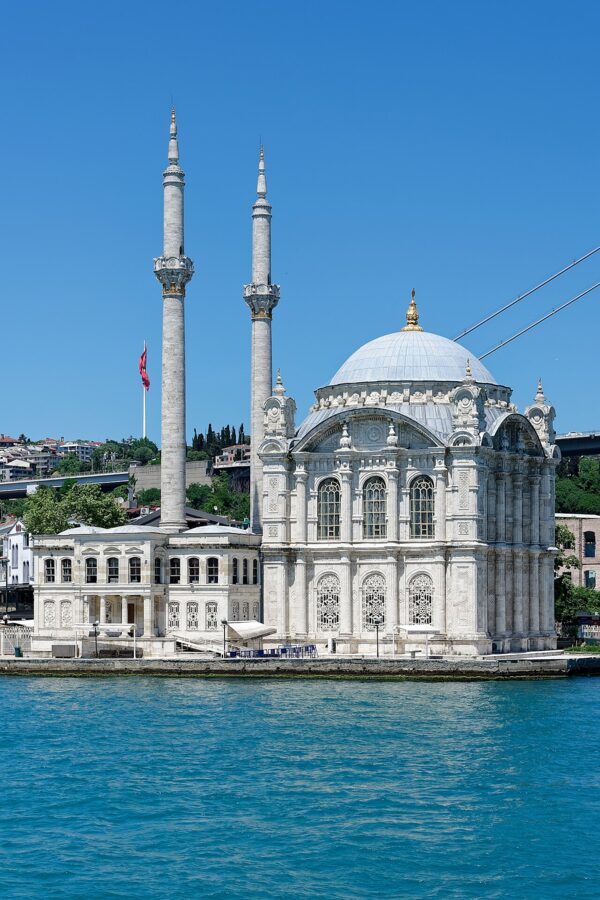
January 1 is a public holiday, and New Year’s Eve crowds fill Taksim, Ortaköy and the Bosphorus shore. After the first week, you’ll have the city mostly to yourself.

February
Much like January, with slightly fewer rainy days (about 14). In 2027, Ramadan starts on February 8, so most of the month runs on fasting hours. For a visitor that changes little, and the evenings get livelier.
March
Spring arrives slowly: a 54°F average high and 13 rainy days. In 2027, Ramadan ends with Ramazan Bayramı on March 9 to 11, after a half-day holiday on March 8. Expect busy roads out of the city beforehand, some closed shops on the first day, and crowded parks once families come out to visit.
Mid-March, after the holiday, is a fair compromise between low prices and better weather. Bring a waterproof jacket.
April
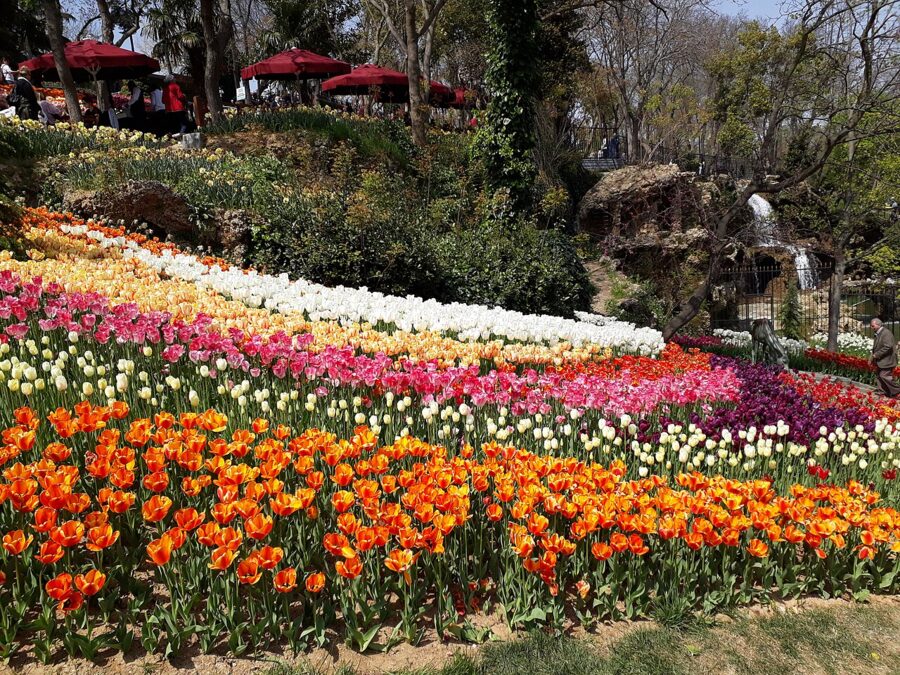
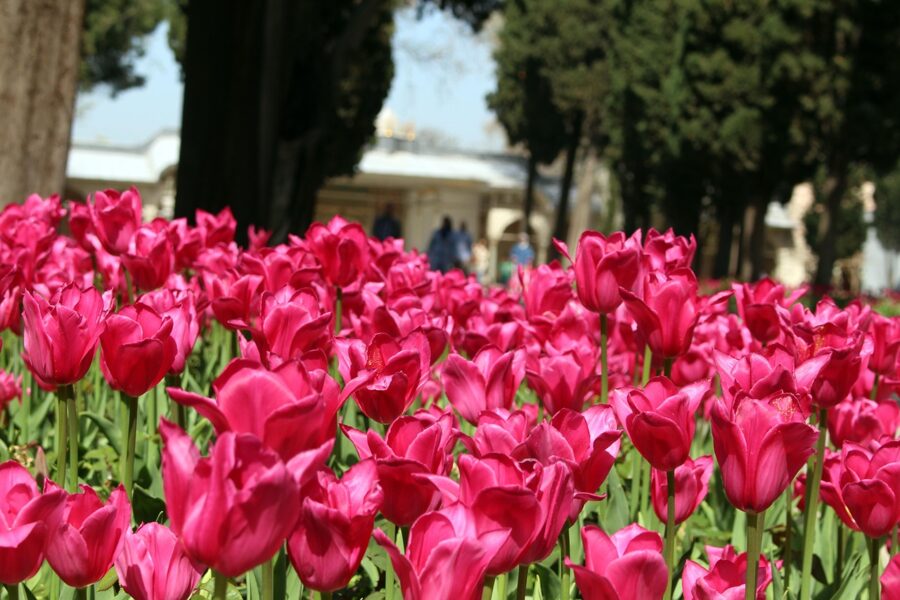
April is when Istanbul turns green. The average high climbs to 63°F, rain falls on about 10 days, and the city’s tulip festival fills the parks. In 2026 it ran through all of April, with peak bloom at Emirgan Park expected around April 10 to 20.
The Istanbul Foundation for Culture and Arts (İKSV) has set its 46th Istanbul Film Festival for April 8 to 18, 2027. April 23, National Sovereignty and Children’s Day, is a public holiday on a Friday in 2027. Arrivals jump about 30 percent from March to April, so book hotels a few months ahead.
May
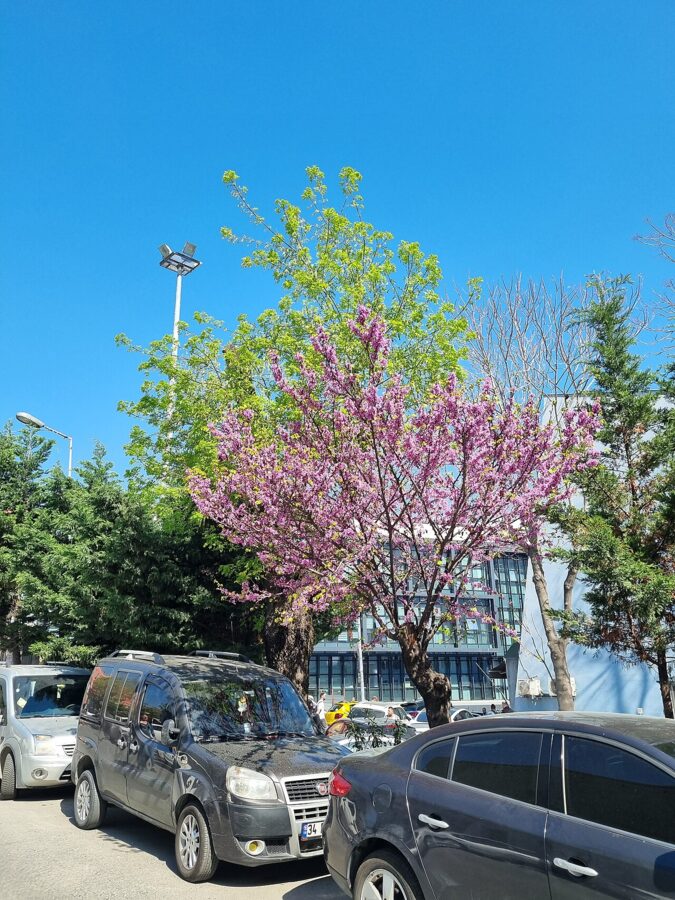
If you can only pick one month, pick May. Highs average 72°F, rain is down to about 8 days, the evenings are long (sunset after 8pm), and the summer humidity hasn’t set in yet. The Judas trees (erguvan) that line the Bosphorus hills flower from April into May, turning whole slopes pink.
Two May dates need care in 2027. On May 1, Labor Day, police usually seal off Taksim Square. Kurban Bayramı falls on May 16 to 19, merging with the May 19 national holiday, so book flights and hotels early if your trip overlaps it.

June
Summer starts properly: an 81°F average high, just 5 rainy days, and sunset around 8:37pm. Early June is still comfortable for full sightseeing days; by the end of the month, midday in the old city is hot work.
The public beaches open in mid-June: the Istanbul Metropolitan Municipality (İBB) opened its 14 beaches on June 15 in 2026. İKSV’s Istanbul Music Festival fills concert halls for two weeks (June 11 to 25 in 2026; 2027 dates not yet announced as of November 2026).
July
July is the busiest month and ties with August as the hottest: an 85°F average high, sticky nights around 69°F, and about 3 rainy days. İKSV’s Istanbul Jazz Festival usually runs through the month, and July 15 is a public holiday.
The heat is manageable if you change your schedule: sights at opening time, a long break indoors or on a ferry deck from 1pm to 4pm, and dinner late, as locals do.
August
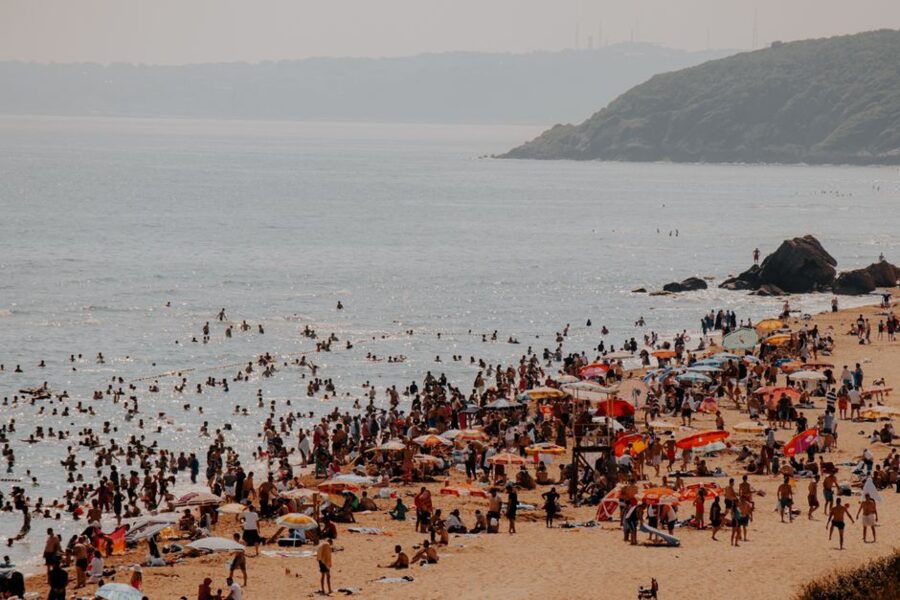
Late August is a good time to visit if heat doesn’t bother you. The sea is at its warmest (76°F in the Marmara), and many residents leave for the coast, which thins out local traffic. Foreign visitors don’t: August 2025 saw 1.85 million arrivals and the year’s biggest cruise month.
The Bosphorus Cross-Continental Swim, from the Asian shore to the European one, has moved to late August in recent years (August 23 in 2026) and closes part of the shoreline that morning. August 30, Victory Day, is a public holiday.
September
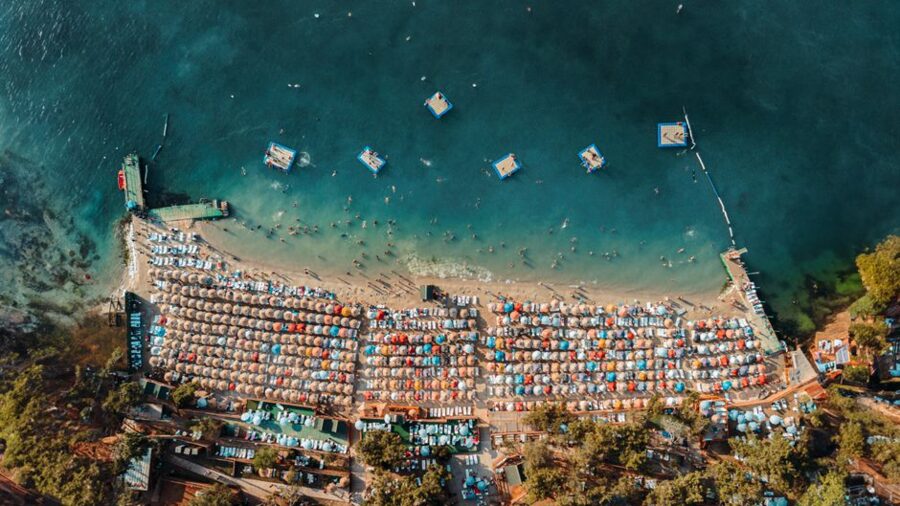
September is the runner-up to May. Highs drop back to 79°F, rain is rare (about 6 days), and the sea stays warm at 72°F, warmer than in June. The fishing season opens on September 1, ending the summer ban.
Crowds don’t ease in September, but comfort improves: you can walk from Sultanahmet to Galata without hunting for shade. Late September is also when soaring birds funnel south over the Bosphorus. The 2023 autumn count at Karlıtepe in Sarıyer logged more than 47,000 lesser spotted eagles, 13,224 of them on September 29 alone.

October
October is a gamble on rain that pays off most years. The average high is 69°F, rain falls on about 9 days, and autumn storms can be heavy (the city’s daily record, 5.4 inches, fell on September 10, 1981).
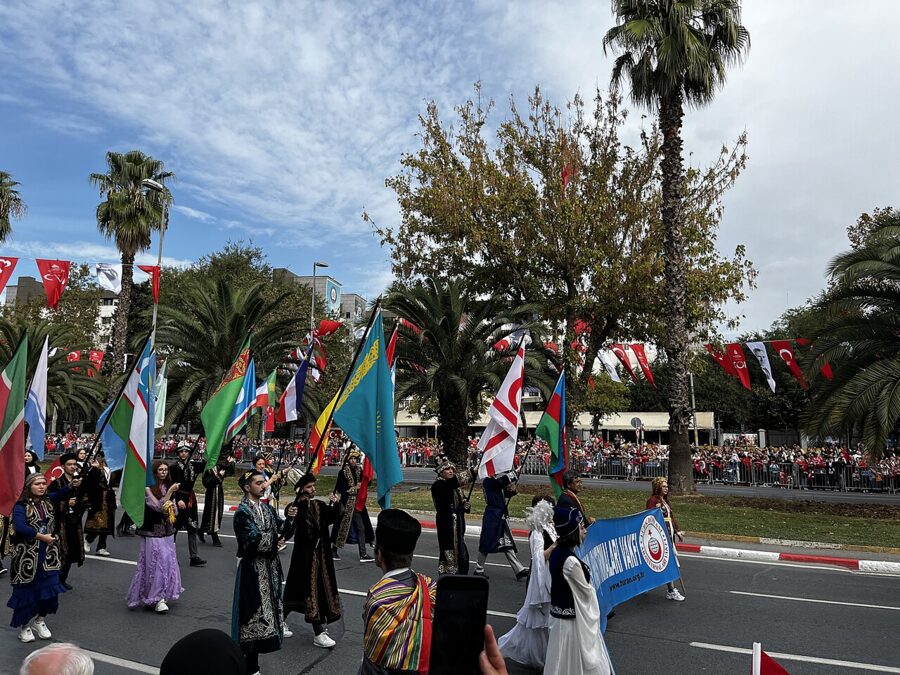
October 29 is Republic Day, the biggest national holiday, with flags on every building and fireworks over the Bosphorus. In 2027 it falls on a Friday, after a half day on the 28th. Arrivals in October 2025 almost matched July, so book like it’s peak season.

November
November is the most underrated month. Early on, highs are still around 60°F, arrivals fall by more than 20 percent from October, and cruise traffic drops by three-quarters. The tradeoff is rain on about 11 days and darkness before 6pm.
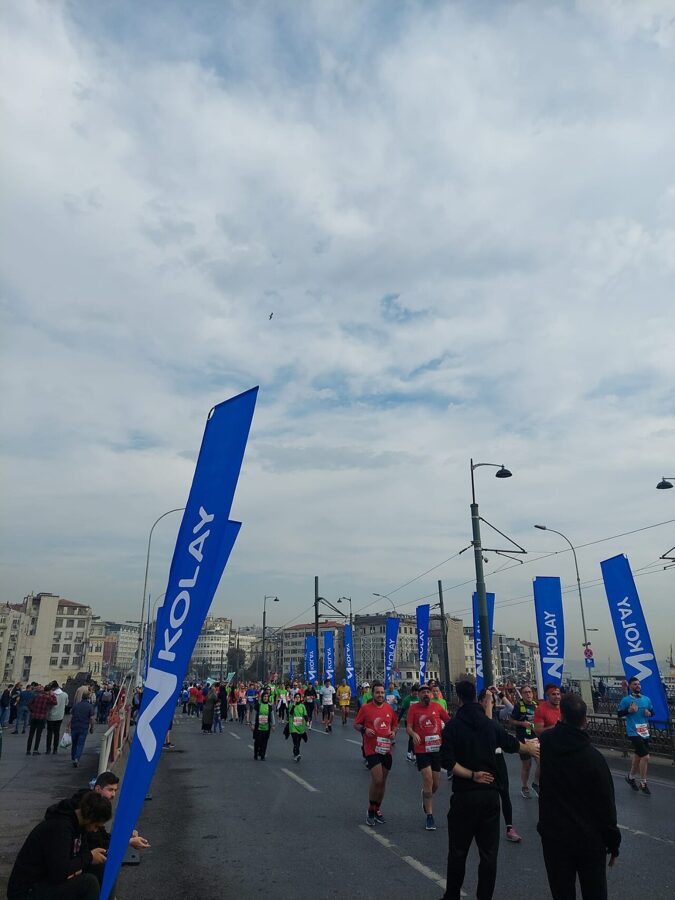
The Istanbul Marathon, which starts on the Asian side and crosses the Bosphorus into Europe, runs on a Sunday in early November (November 1 in 2026). On race day, the 15 July Martyrs Bridge, the Galata Bridge and the Eurasia Tunnel close to traffic until mid-afternoon. On November 10, the anniversary of Atatürk’s death, sirens sound at 9:05am and the city stops for a minute of silence.

December
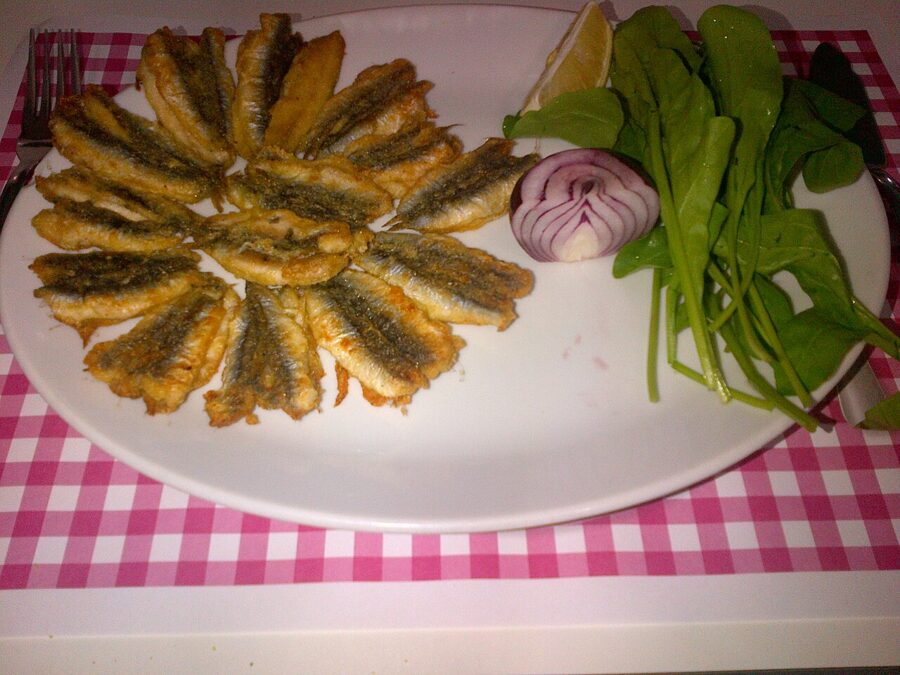
December is the wettest month (3.9 inches over about 16 days) and has the shortest days, but the first three weeks are quiet and cheap. Hamsi, the small Black Sea anchovy that Istanbul eats fried or baked with rice, is at its best in the cold months.
Christmas isn’t a holiday in Türkiye, but New Year’s Eve is a big night out, and hotel rates jump for the last days of the month.

The best time for what you want to do
Sightseeing
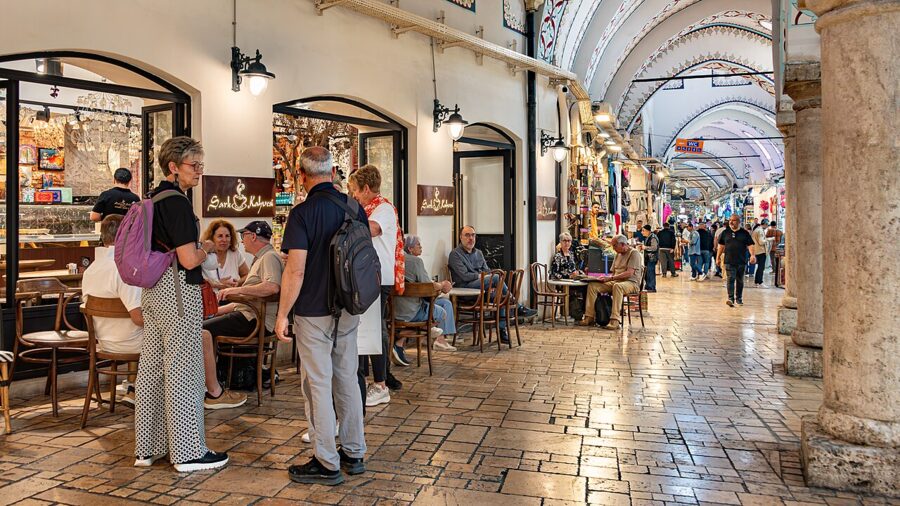
For the big monuments, the time of day matters more than the month. Arrive at opening time to beat the cruise and tour groups. Topkapı is closed on Tuesdays. As of November 2026, the palace opens from 9am to 5:30pm (the ticket office closes at 5pm), and the combined ticket for the palace, the Harem and Hagia Irene costs 2,750 TL (about $54).
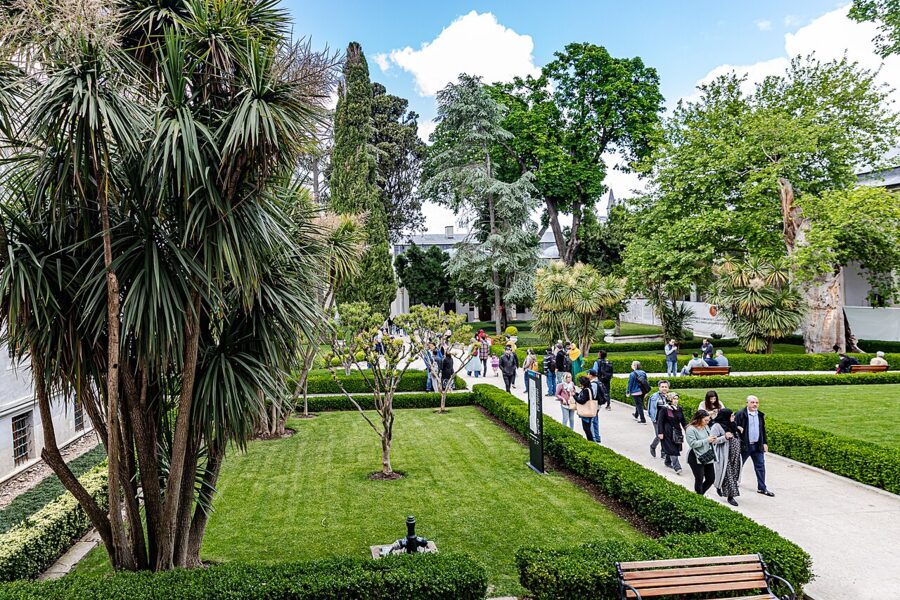

Hagia Sophia and the Blue Mosque are working mosques. Visitors are kept out of the prayer areas during the daily prayers, longest at Friday midday prayer, so check prayer times before you go. In summer 2026, Topkapı also opened on Saturday nights from mid-June to mid-September, worth checking for 2027.

Beaches and swimming
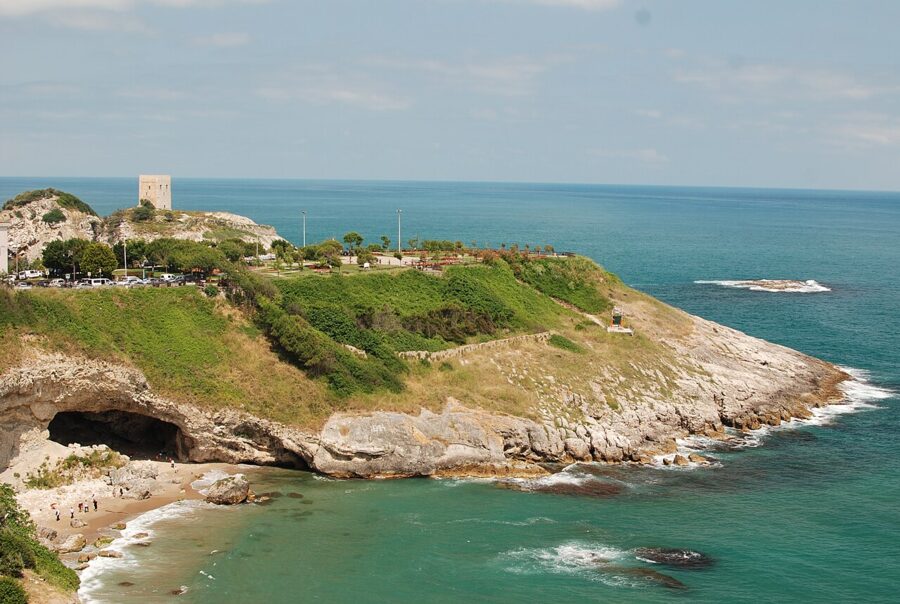
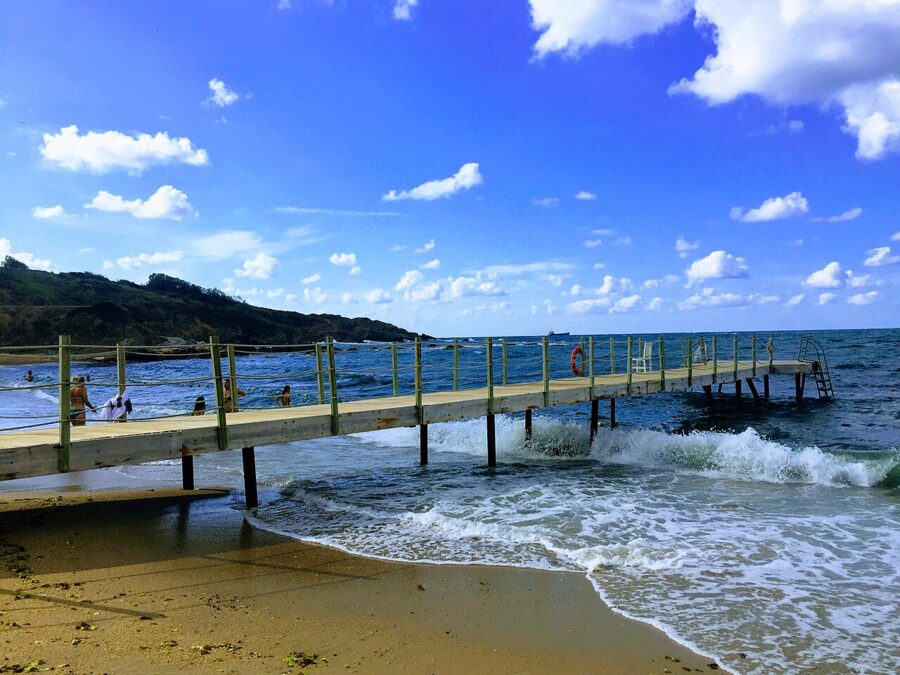
Swimming season runs from mid-June to late September. İBB opened its beaches on June 15, 2026, and its lifeguard program says the season ends on September 28. The water is warmest in August and September; before mid-June it’s refreshing at best.
There are two quite different kinds of beach. The Black Sea coast at Kilyos and Şile, an hour or more north of the center, has long sandy beaches, cleaner water and surf. It also has strong waves and rip currents, which claim lives most summers, so swim only on lifeguarded beaches and stay out when the red flag is up. The Marmara beaches, such as Florya, Caddebostan and the Princes’ Islands, are calmer and closer.

Walking and hiking
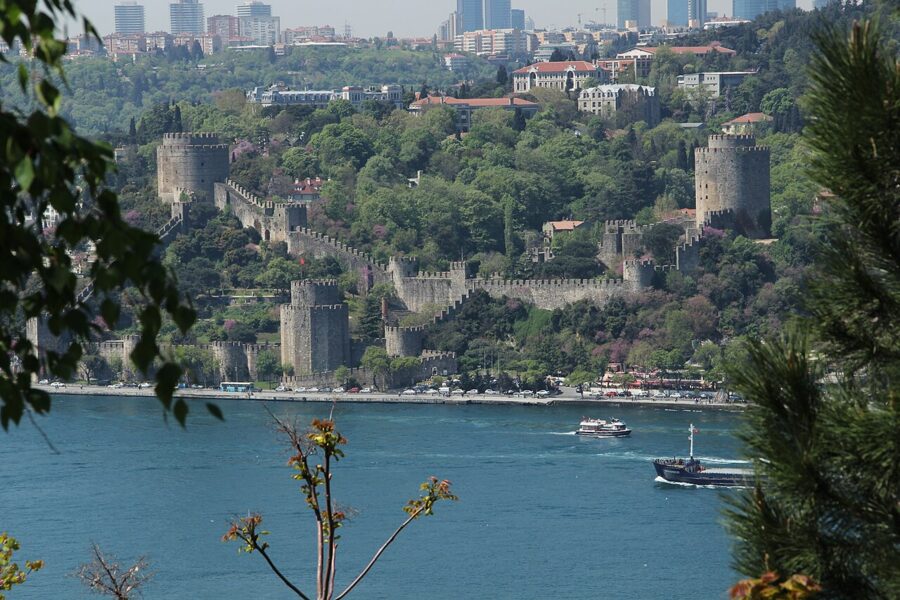
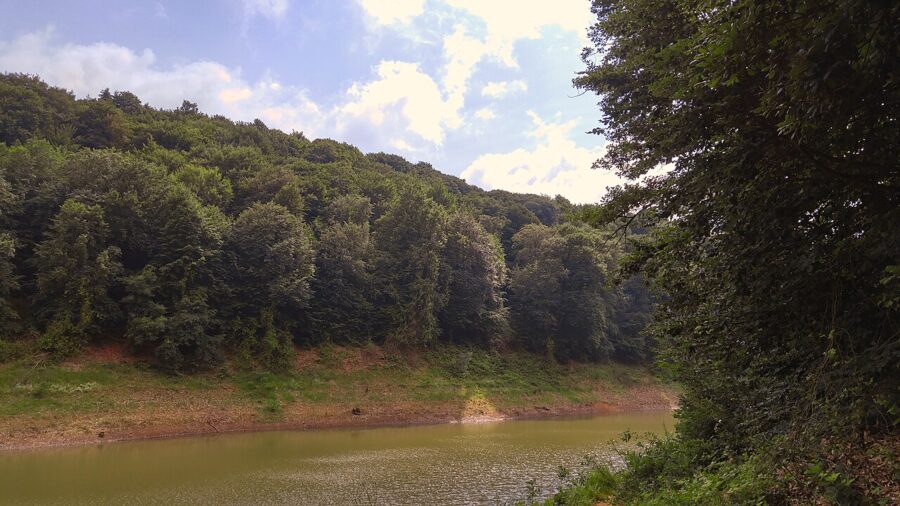
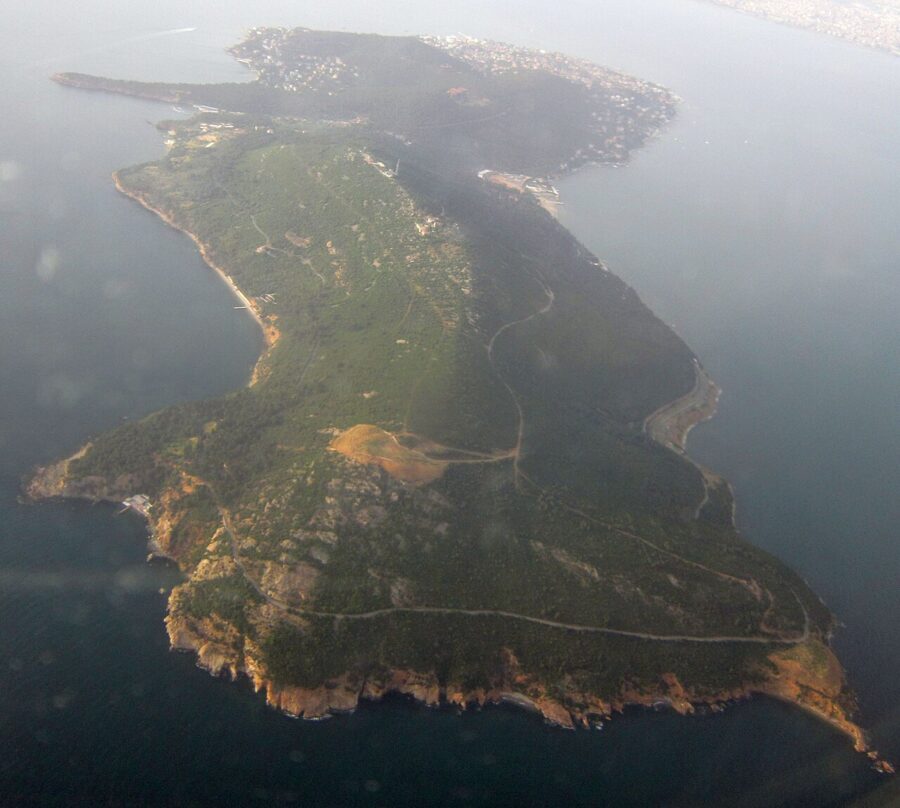
Spring and autumn are the seasons to walk Istanbul. Belgrad Forest, on the city’s northern edge, has shady trails and old Ottoman reservoirs for a hot June weekend. In April and May, walk the Bosphorus shore from Bebek to Rumeli Hisarı, or climb through the pine woods of Büyükada, the largest of the Princes’ Islands.

Wildlife
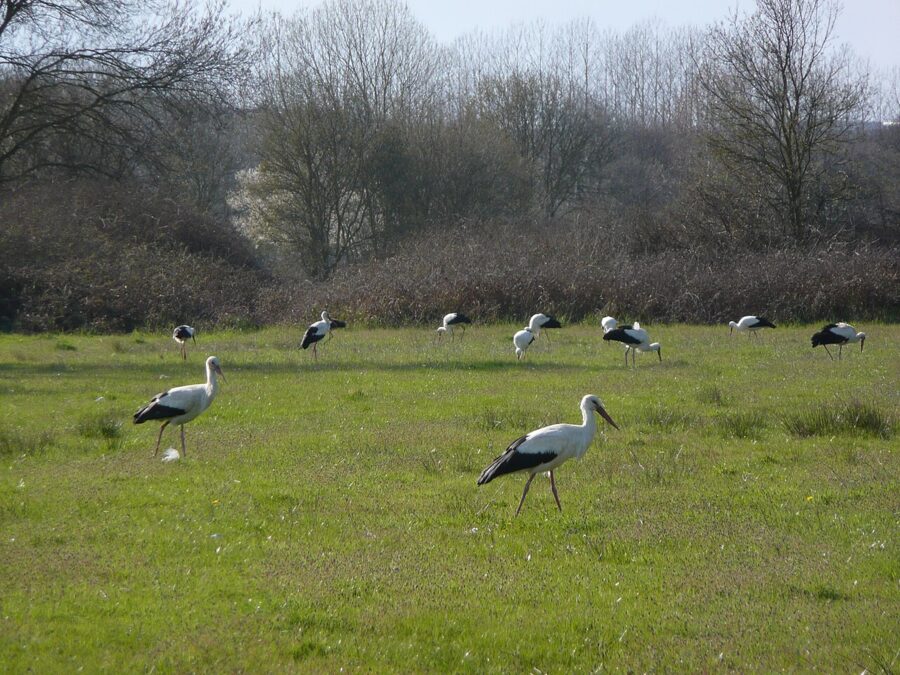
Storks, eagles and buzzards avoid crossing open sea, so tens of thousands of them pass over the narrow Bosphorus twice a year. Autumn is the bigger show, peaking from late August to early October over the hills of Sarıyer and Çamlıca. In spring the flow runs north from March to May.

Food seasons
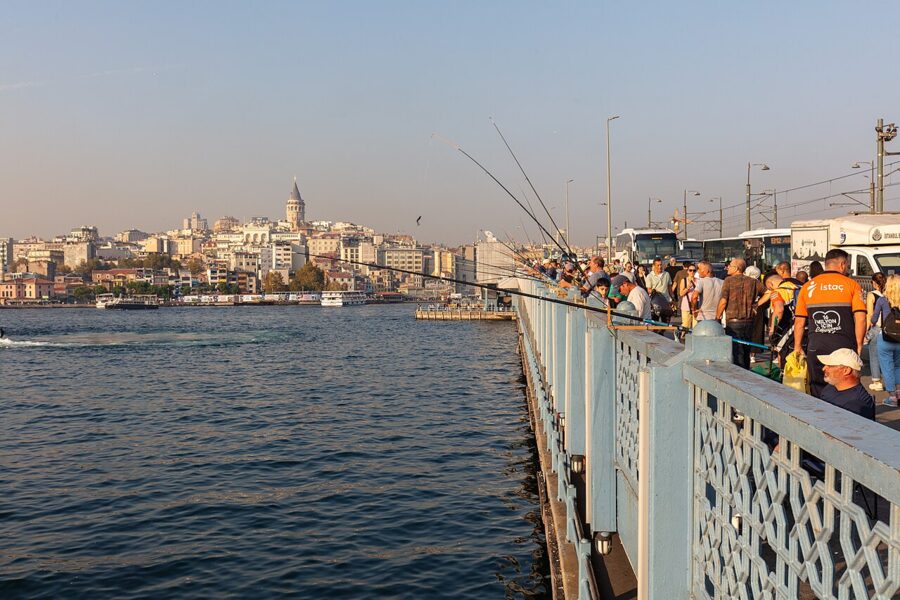
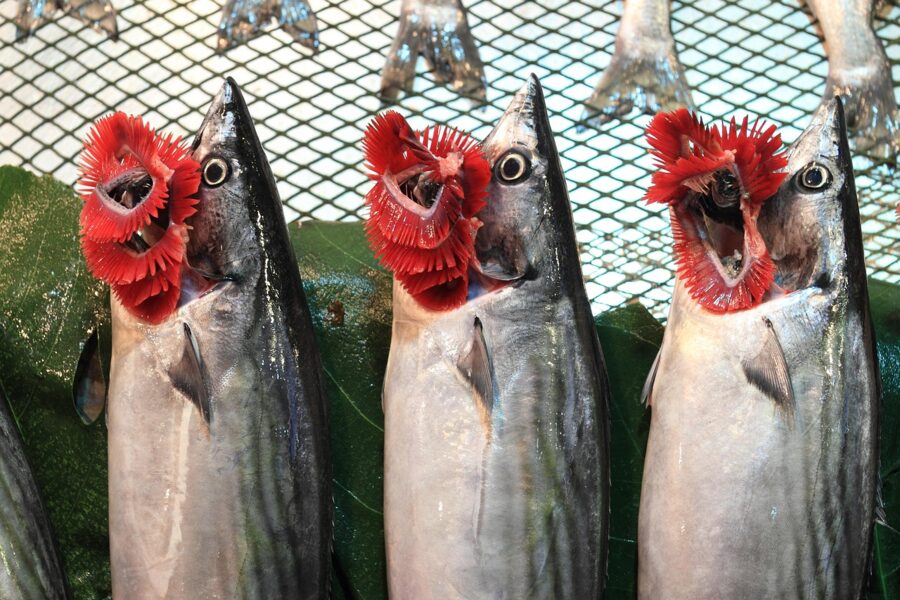
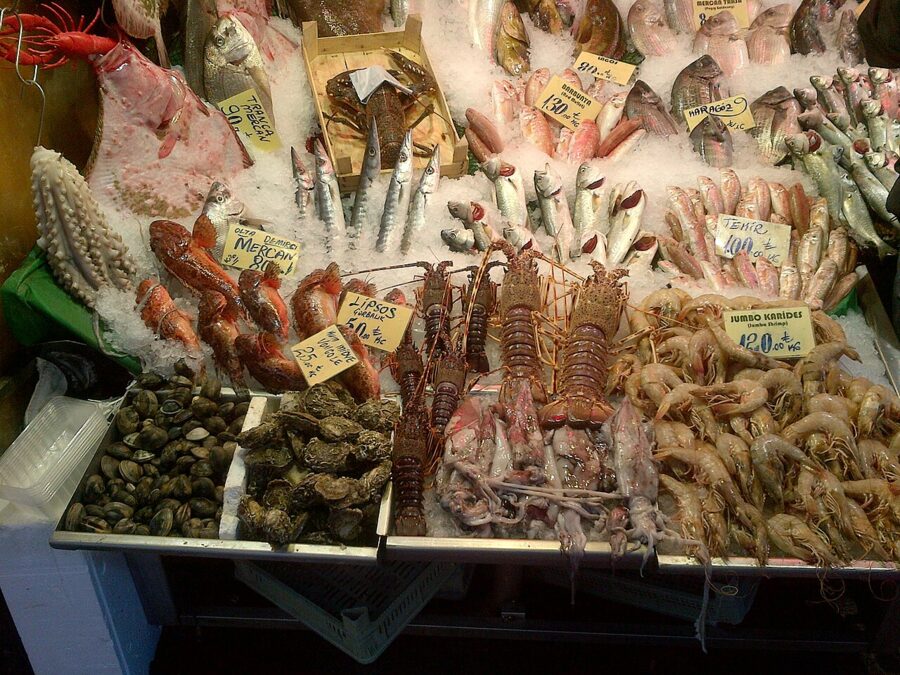
Türkiye’s commercial fishing season runs from September 1 to April 15. Autumn brings palamut (Atlantic bonito) and winter brings hamsi, while summer menus lean on farmed sea bass and bream. Spring markets have artichokes and green almonds; summer brings cherries and figs.

Prices and crowds
Hotel prices follow the arrival curve: lowest from mid-January to March (outside the holidays) and in late November and early December, high from May to October. The big spikes are New Year’s and the bayram holidays.
European side, Asian side, the Black Sea and the islands
The season feels different from one part of the city to another. The historic peninsula (Sultanahmet, Eminönü, the bazaars) is the hottest and most crowded part in summer, with little breeze away from the water. Beyoğlu and Karaköy, across the Golden Horn, have rooftop bars at their best from May to October.
The Asian side, around Kadıköy and Moda, feels more local and is noticeably calmer in high season. It’s a good base in July and August, since the ferry to Eminönü takes about 20 minutes.

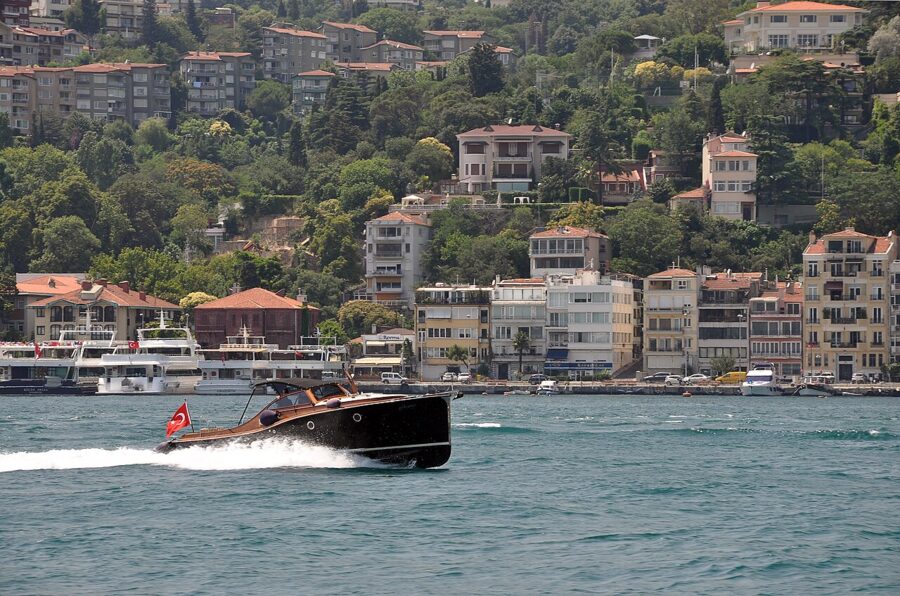
The Bosphorus villages to the north (Arnavutköy, Bebek, Emirgan, Sarıyer) catch more breeze, and they’re where the tulips and Judas trees put on their spring show.

The Black Sea coast is cooler and windier than the city in summer and largely shut outside it. The Princes’ Islands are at their best in May, June and September, and many island restaurants and hotels close in winter.
Holidays and festivals in 2027
Official public holidays close government offices and banks, and some museums change their hours for them. Most shops and restaurants stay open, except on the first morning of each religious holiday. The religious dates below come from the Directorate of Religious Affairs. Festival dates come from the organizers, and those marked as not announced follow their usual pattern.
| Date (2027) | Holiday or event | What it means for a visit |
|---|---|---|
| January 1 (Friday) | New Year’s Day | Public holiday. Hotels are full for New Year’s Eve. |
| February 8 to March 8 | Ramadan | Sights and restaurants open. Iftar crowds around sunset. |
| March 8 (half day), March 9 to 11 | Ramazan Bayramı (Eid al-Fitr) | Public holiday. Heavy traffic out of the city beforehand. Some shops closed on the first day. |
| April (all month in 2026) | Istanbul Tulip Festival | Parks planted with tulips, with Emirgan at its best in mid-April. |
| April 8 to 18 | 46th Istanbul Film Festival (İKSV) | Screenings at cinemas in Beyoğlu and elsewhere. |
| April 23 (Friday) | National Sovereignty and Children’s Day | Public holiday. Long weekend. |
| May 1 (Saturday) | Labor Day | Public holiday. Taksim usually sealed off. |
| May 15 (half day), May 16 to 19 | Kurban Bayramı (Eid al-Adha) | Public holiday, merging with May 19. Long national break. |
| May 19 (Wednesday) | Commemoration of Atatürk, Youth and Sports Day | Public holiday. |
| June (dates not announced) | Istanbul Music Festival (İKSV) | Classical concerts. Ran June 11 to 25 in 2026. |
| July (dates not announced) | Istanbul Jazz Festival (İKSV) | Concerts across the city, some outdoors. |
| July 15 (Thursday) | Democracy and National Unity Day | Public holiday. |
| Late August (date not announced) | Bosphorus Cross-Continental Swim | Shoreline closures on race morning. August 23 in 2026. |
| August 30 (Monday) | Victory Day | Public holiday. Long weekend. |
| 2027 (dates not announced) | 19th Istanbul Biennial (İKSV) | Contemporary art at venues around Beyoğlu. |
| October 28 (half day), October 29 (Friday) | Republic Day | Flags, parades and Bosphorus fireworks. Long weekend. |
| Early November (date not announced) | Istanbul Marathon | Bridges and the historic waterfront closed to traffic. November 1 in 2026. |
Ramadan in Istanbul
Ramadan changes the rhythm of the city, not access to it. Museums, shops and most restaurants keep normal hours, and nobody expects a visitor to fast. Eating and drinking on the street is fine, though it’s polite to be discreet near mosques during the day.
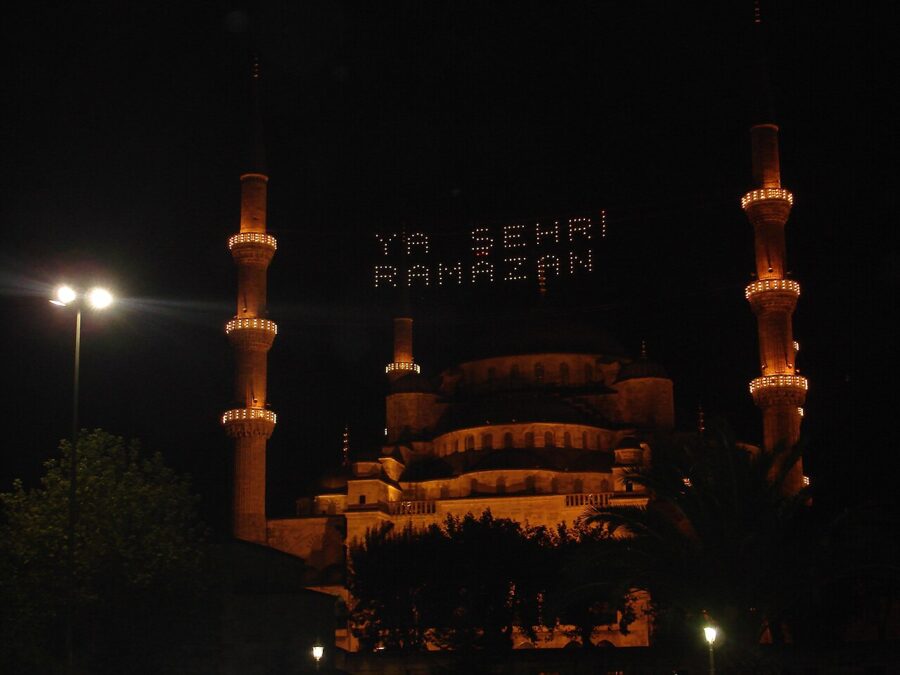
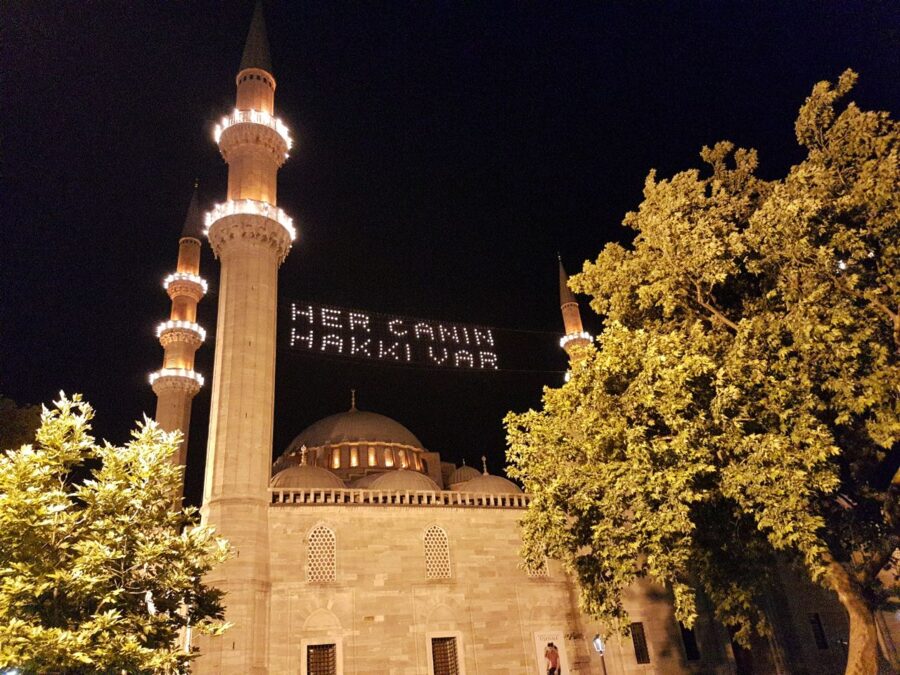
The change comes at sunset. Traffic jams up in the hour before iftar (the meal that breaks the fast), and restaurants with set iftar menus fill up. Then families fill the lawns of Sultanahmet, and lit messages called mahya hang between the minarets of the imperial mosques, a custom that began in Ottoman Istanbul. Mosques are at their busiest for evening prayers, and drummers walk some neighborhoods before dawn to wake people for sahur, the pre-dawn meal.

The bayram holidays
The two bayrams matter more for planning than Ramadan itself. Many residents leave to visit family, so roads, intercity buses and domestic flights are jammed the day before. In the city itself, traffic gets lighter, and on the first day of each holiday many small shops and some restaurants close. The Grand Bazaar usually shuts for at least that first day.
Big museums generally open, though some close on the first morning or cut their hours. For Kurban Bayramı 2026, Topkapı opened from 10:30am on the first day. Public transport was free during that holiday under a presidential decree. Whether this happens again is announced only a few days before each holiday, so don’t count on it.

The tulip festival
Tulips came to western Europe from the Ottoman gardens, and Istanbul now plants millions of bulbs each spring for a festival that runs through April. Emirgan Park, on the Bosphorus north of Bebek, is the centerpiece, with carpets of tulips laid out on its slopes. Gülhane Park, beside Topkapı, is the easiest place to see the flowers if you’re staying in the old city.
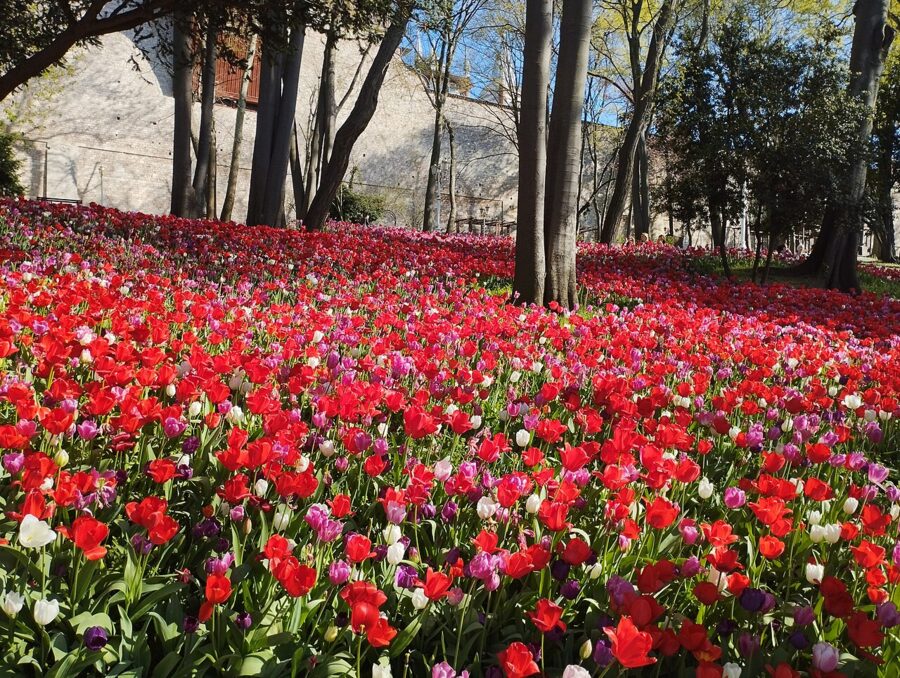

Bloom depends on the spring weather. A warm March pulls the peak earlier, while a cold one pushes it later, so the middle two weeks of April are the safest bet. Go on a weekday morning. On a sunny weekend afternoon, Emirgan is packed.
Summer crowds
The summer crush in the old city is real, but it has a pattern you can use. Cruise passengers and tour groups arrive from about 9:30am and leave by mid-afternoon. Evenings belong to locals, the light is soft, and the heat breaks on the water. So do your sightseeing at opening time and after 4pm, and save the middle of the day for a museum, a hammam or a ferry ride.

Which month for which trip
- First visit, sightseeing first: May, or mid-September to mid-October. Warm, mostly dry and long days, with crowds you can work around if you start early.
- Tulips and spring flowers: the middle two weeks of April, then the Judas trees into early May.
- Swimming and beaches: late June to mid-September. August has the warmest sea, and early September has it nearly as warm with fewer local crowds.
- Lowest prices and shortest lines: mid-January to early March, avoiding the end of Ramadan and the bayram. Pack for rain.
- Ramadan nights and mahya lights: February 8 to March 8, 2027.
- Food: October and November for palamut, December to February for hamsi.
- Birdwatching: the last week of September, from the hills of Sarıyer on a clear morning with a northerly breeze.
- Avoid if you can: the bayram travel days, New Year’s week (unless that’s the point), and midday in Sultanahmet in late July.
Once your dates are set, check them against the bayram calendar, then plan to be at Topkapı’s gate when it opens at 9am. That one habit does more for a summer trip than any change of month.