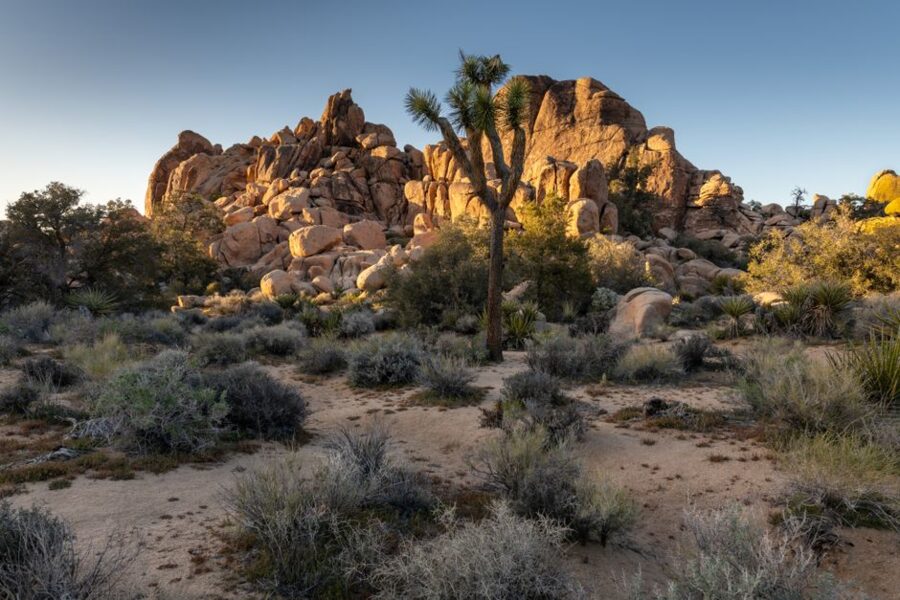
The best time to visit Joshua Tree National Park is mid-October through November or late February through April, when average highs at Twentynine Palms, near the North Entrance, run from the low 70s to the low 80s. Avoid June through September: July averages 104°F there, flash floods peak with the summer storms, and the Park Service tells summer hikers to skip every trail longer than two miles.
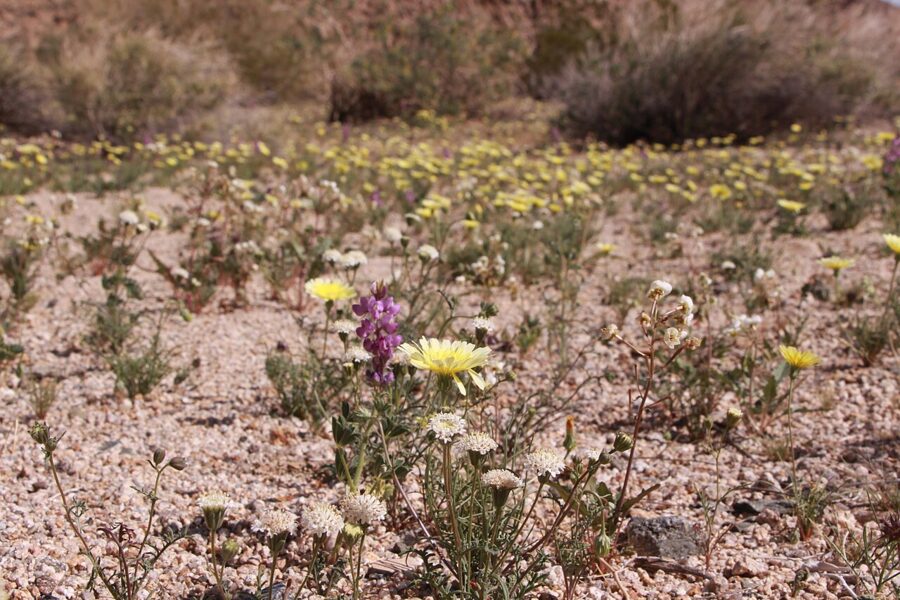
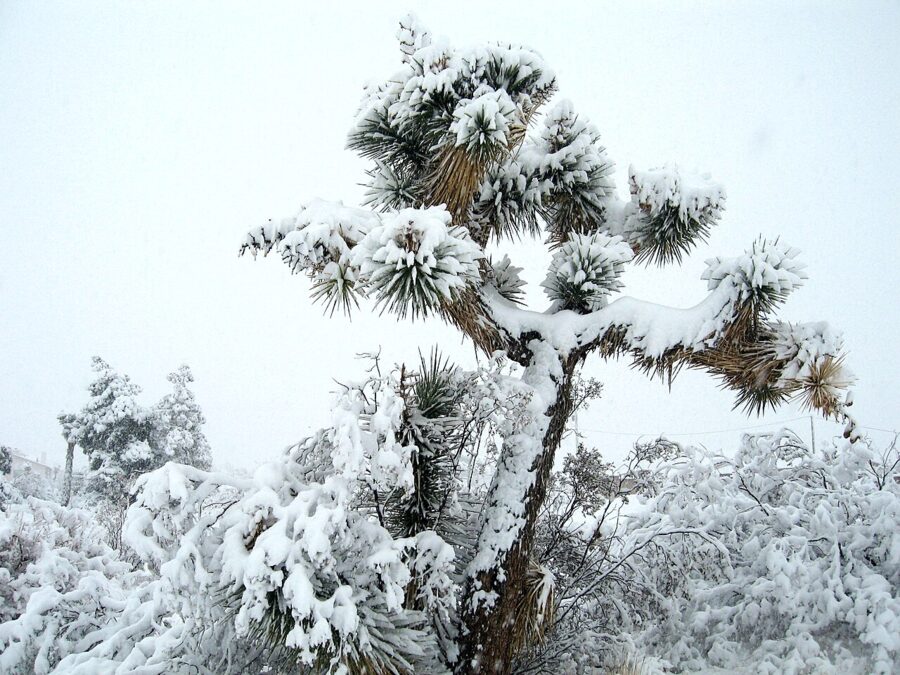
Spring brings the wildflowers and the Joshua tree bloom, and also the biggest crowds: March is the park’s busiest month by its own visitor counts. Fall has the same mild weather with far fewer people. Winter is quiet and bright, with freezing nights and the odd dusting of snow on the high ground around Keys View and Eureka Peak.
On this page
- The short answer by season
- Joshua Tree weather by month
- Joshua Tree month by month
- North or south: the park's two deserts
- Wildflowers and the Joshua tree bloom
- Summer heat: the rules that keep people alive
- Crowds and the busy spring weekends
- Camping: when to book
- The right season for what you want to do
- Festivals, holidays and fee-free days in 2027
- Which month for which trip
The short answer by season
- Best overall: mid-October to mid-November. Highs in the 70s and low 80s, campfires allowed again from October 1, and fewer people than spring.
- Wildflowers and the Joshua tree bloom: late February to April, moving uphill as the weeks pass. Expect full campgrounds and parking lots on weekends.
- Quiet: January and early February, outside the holiday weekends. Cold nights and short days.
- The Milky Way: moonless nights from late spring to early fall, sleeping through the heat of the day.
- Avoid: June through September for hiking, and spring break and the Christmas to New Year week if crowds bother you.
Joshua Tree weather by month
The park climbs from 536 feet in its southeast corner to 5,814 feet on Quail Mountain, so it has no single temperature. The table uses NOAA’s 1991 to 2020 climate normals for two official stations that bracket the places most people go: Twentynine Palms (about 1,975 feet) and Yucca Valley (about 3,250 feet), near the Black Rock area. Daylight is sunrise to sunset on the 15th of each month in 2027, from the US Naval Observatory.
| Month | Twentynine Palms high / low | Yucca Valley high / low | Rain, Twentynine Palms | Daylight |
|---|---|---|---|---|
| January | 63°F / 42°F | 58°F / 38°F | 0.50 in | 10 h 9 m |
| February | 67°F / 44°F | 61°F / 39°F | 0.56 in | 11 h 0 m |
| March | 74°F / 49°F | 67°F / 40°F | 0.35 in | 11 h 57 m |
| April | 81°F / 55°F | 73°F / 47°F | 0.12 in | 13 h 2 m |
| May | 90°F / 63°F | 82°F / 52°F | 0.05 in | 13 h 56 m |
| June | 99°F / 71°F | 91°F / 59°F | 0.00 in | 14 h 25 m |
| July | 104°F / 77°F | 96°F / 66°F | 0.40 in | 14 h 12 m |
| August | 103°F / 76°F | 96°F / 68°F | 0.65 in | 13 h 26 m |
| September | 97°F / 69°F | 89°F / 60°F | 0.34 in | 12 h 23 m |
| October | 85°F / 58°F | 80°F / 50°F | 0.15 in | 11 h 21 m |
| November | 72°F / 47°F | 66°F / 41°F | 0.19 in | 10 h 24 m |
| December | 62°F / 40°F | 58°F / 34°F | 0.56 in | 9 h 54 m |
Two things surprise first-time visitors. August, not winter, is the wettest month at Twentynine Palms, because the monsoon arrives as short, violent thunderstorms. And the nights get cold: Yucca Valley averages 34°F in December, and the Jumbo Rocks (4,400 feet) and Hidden Valley (4,200 feet) campgrounds sit higher still.
The higher station runs about 4 to 5°F cooler than Twentynine Palms in winter and 7 to 8°F cooler in midsummer, and the Park Boulevard trailheads are cooler again. Twentynine Palms gets only 3.87 inches of rain a year, and the Park Service describes typical days as clear with humidity under 25%.
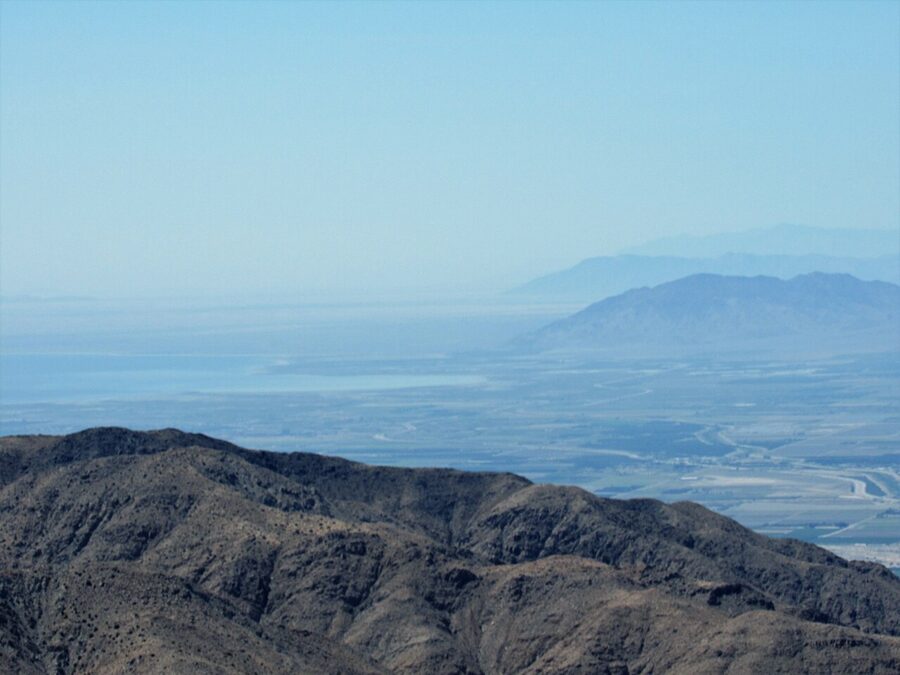

Joshua Tree month by month
The visit counts below are the Park Service’s recreation visits for 2024, a typical recent year, and the clearest guide to how busy each month gets.
January
January is cold, clear and quiet after New Year: 251,664 visits in 2024. Highs reach the low 60s at Twentynine Palms, but frost is normal on high-ground mornings, and days are barely 10 hours long, so hike at midday and use the long evenings for the stars. The Martin Luther King Jr. Day weekend (January 16 to 18, 2027) brings a holiday crowd.
February
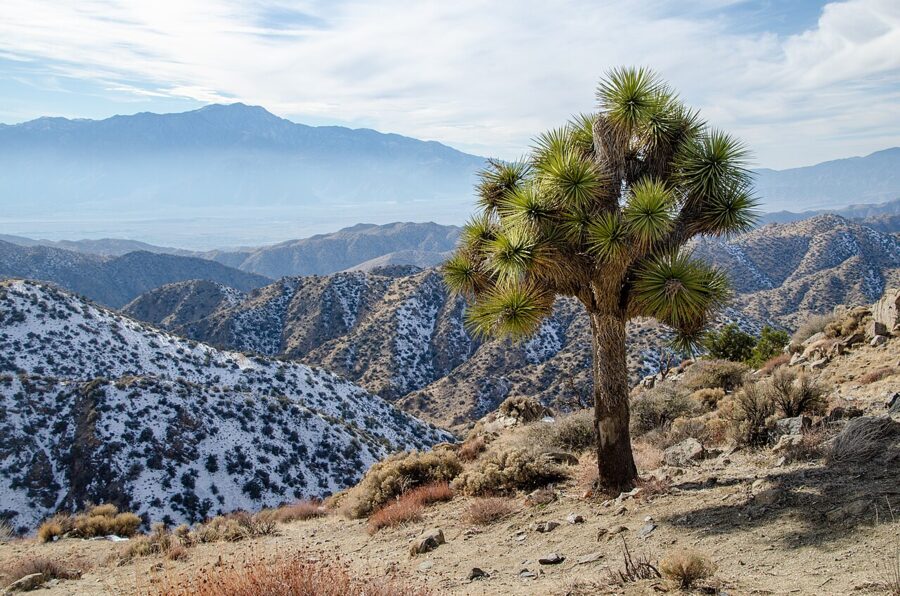
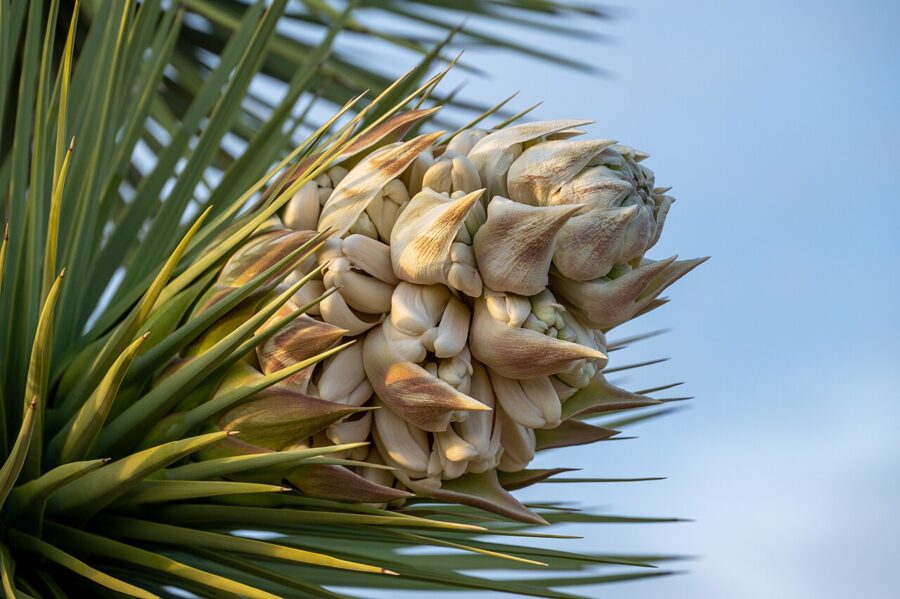
February is when the season turns. Highs average 67°F at Twentynine Palms, the first wildflowers usually open in the low Pinto Basin and around the South Entrance, and the Joshua trees can start blooming from mid-month. The Presidents Day weekend (February 13 to 15, 2027) is one of the busiest of the winter, and Palm Springs’ Modernism Week (February 11 to 21, 2027) fills rooms on the far side of the mountains.
March
March is the peak: 401,378 visits in 2024 and 411,993 in 2025. Highs in the mid-70s, flowers climbing into the 3,000 to 5,000 foot zone and spring break all land at once, and Easter falls on March 28 in 2027.
The park’s crowd advice matters most now. Arrive before 8am, see Barker Dam, Hidden Valley and Lost Horse Mine before 9am, and use the North Entrance in Twentynine Palms or the South Entrance off Interstate 10 rather than the West Entrance, which the Park Service names as the busiest.
April
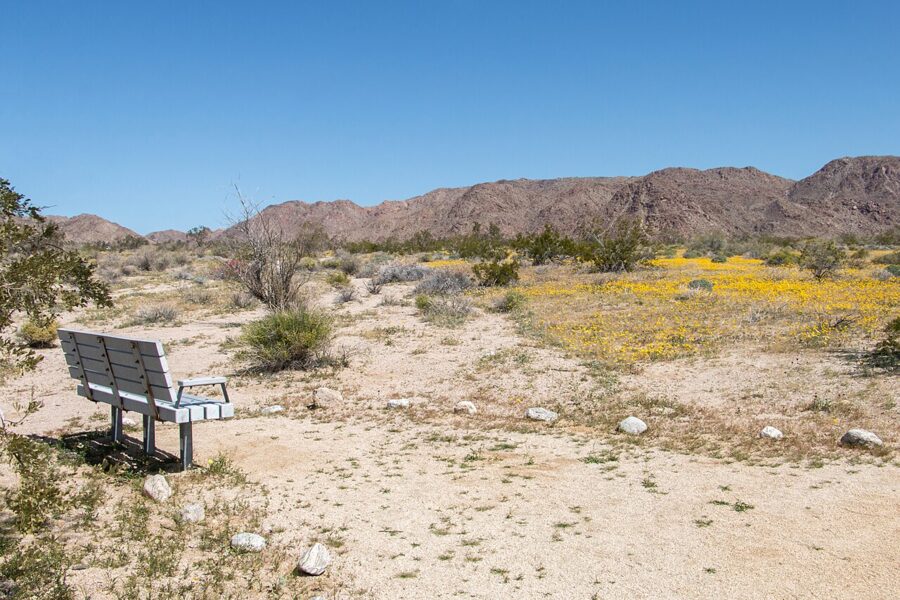
April is still prime: 81°F average highs at Twentynine Palms, almost no rain, and 343,806 visits in 2024. Two festivals in Indio affect where you sleep rather than the park itself: Coachella (April 9 to 11 and 16 to 18, 2027) and Stagecoach (April 23 to 25, 2027) push up demand across the Palm Springs area, so book early or stay along the Twentynine Palms Highway. Rattlesnakes become more active on warm afternoons; stay on trails.

May
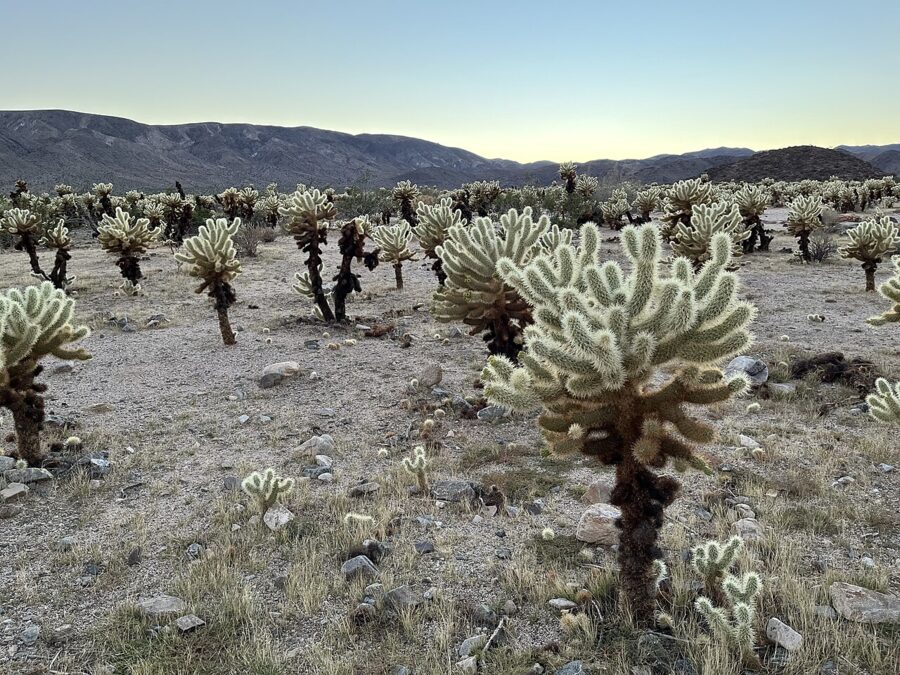
May starts well, especially above 5,000 feet at Black Rock Canyon, Juniper Flats and Covington Flat, where flowers keep going. By the end of the month Twentynine Palms averages 90°F and visits drop (259,803 in 2024). The spring Joshua Tree Music Festival (May 13 to 16, 2027) adds to lodging demand in the town of Joshua Tree, and Memorial Day weekend (May 29 to 31) is the last big crowd before summer.
June
June is hot and bone dry: 99°F average highs at Twentynine Palms and no measurable rain in the normals. The annual campfire ban starts on June 15, and visits fall to 171,606. Treat it as a sunrise, sunset and night trip, and follow the heat rules further down.
July and August
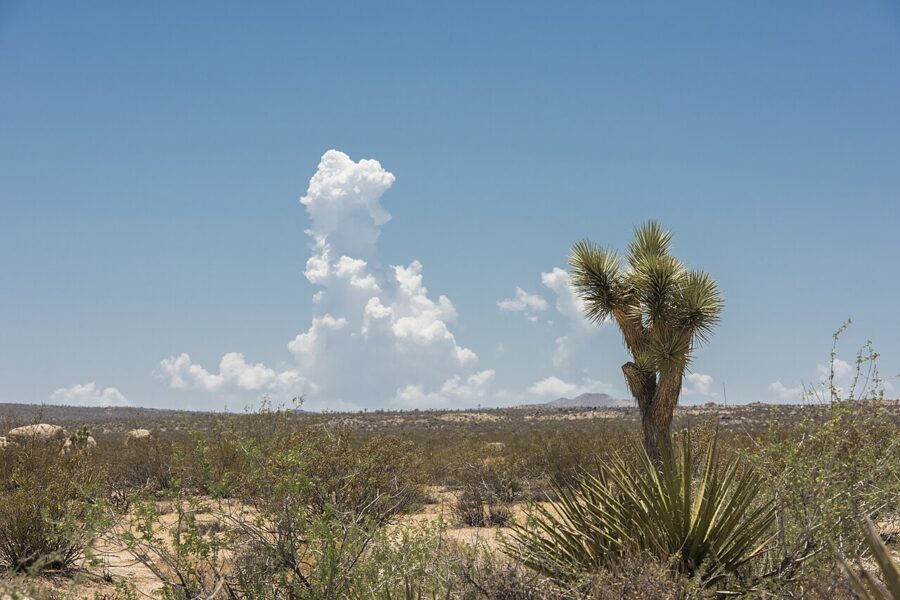
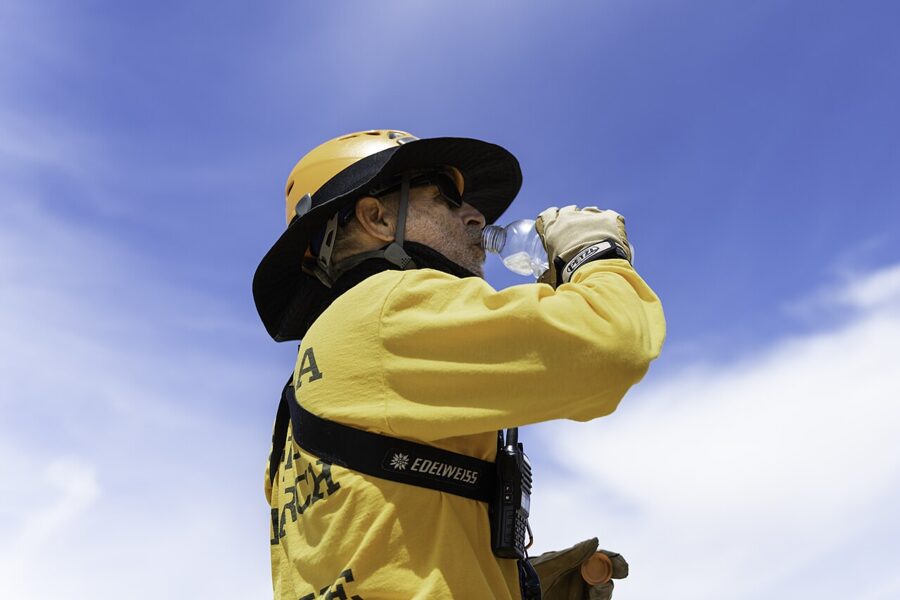
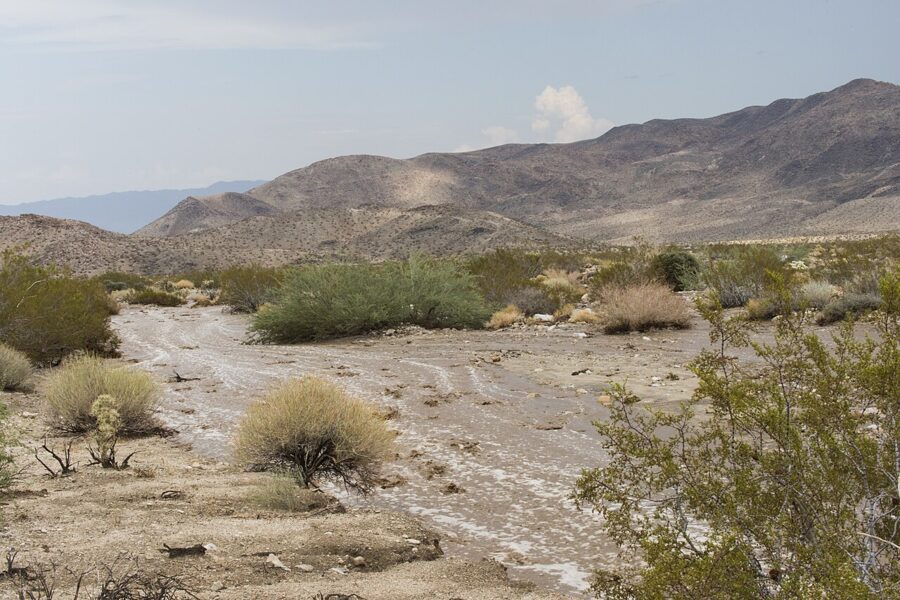
These are the hottest months, at 104°F and 103°F average highs, with nights in the mid-70s at Twentynine Palms. July is the quietest month of the year (123,786 visits in 2024). The monsoon runs from about mid-July to early September, bringing lightning, wind and flash floods.
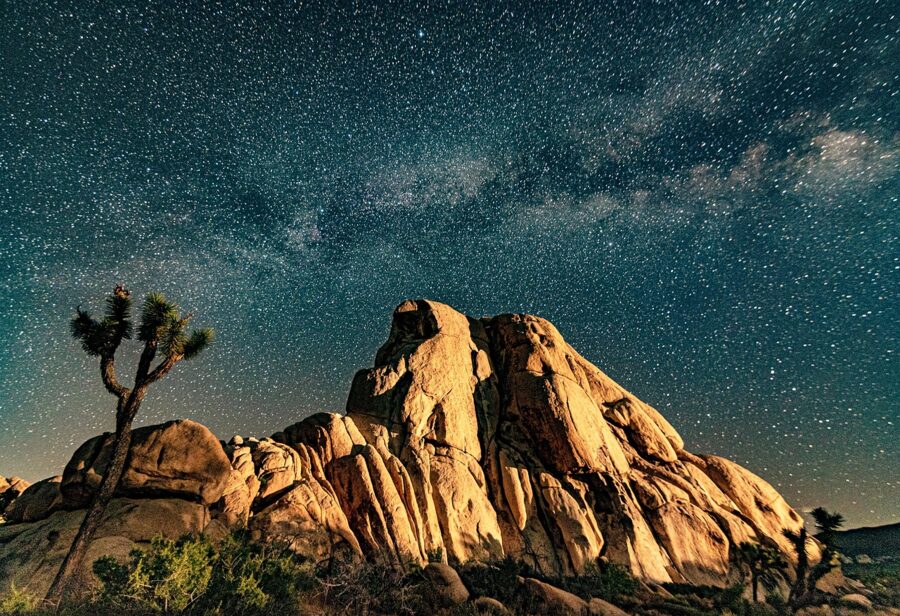
The upside is the sky. The core of the Milky Way rides high on summer nights, and the Perseid meteor shower peaks in mid-August. Stargaze from a designated parking lot or a campsite and save the hiking for another season.
September
September still averages 97°F at Twentynine Palms and sits in the monsoon window early on, so it behaves like summer. Visits stay low (157,399), but the park says its campgrounds are usually full on weekends from September through May, and Labor Day weekend (September 4 to 6, 2027) is busy. If this is your only month, go late, camp high at Black Rock or Jumbo Rocks, and plan around sunrise.
October
October starts the good season. Highs fall to 85°F at Twentynine Palms, the campfire ban lifts on October 1, and visits were 212,097 in 2024, about half of March’s total. Ranger-led tours of Keys Ranch usually run from October to April; tickets cost $10 to $20, are sold only on recreation.gov up to 60 days ahead, and often sell out.
The Night Sky Festival, held by the Sky’s the Limit Observatory and Nature Center in Twentynine Palms and listed by the park as its annual festival, took place on October 9 and 10 in 2026; the 2027 dates had not been announced as of November 2026. The Joshua Tree Music Festival also holds a fall edition each October.
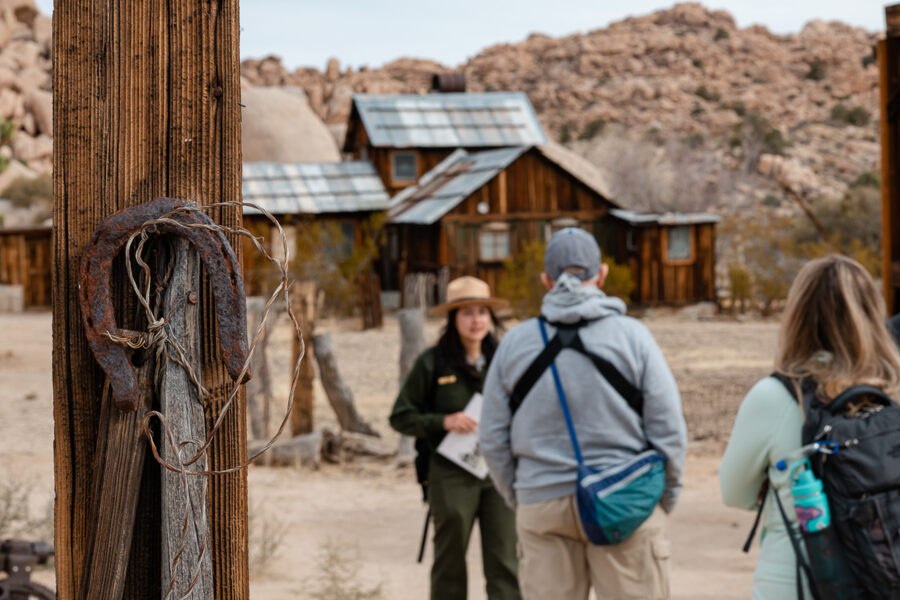
November
November may be the best month of all: highs of 72°F, nights in the 40s and low, golden light on the granite. Visits climb back up (301,653 in 2024), and Thanksgiving (November 25, 2027) brings a holiday crowd. Daylight is down to about 10 and a half hours, so start early.

December
December has the shortest days (sunset as early as 4:30pm, says the park) and the coldest nights: 40°F at Twentynine Palms and 34°F at Yucca Valley. The park lists holidays among its busiest times, and December drew 342,051 visits in 2024, more than November. Pack for freezing nights if you camp.
North or south: the park’s two deserts
Joshua Tree joins two deserts, and the half you visit changes the answer. The higher west and north, around Park Boulevard, Hidden Valley, Keys View and Black Rock, is Mojave Desert, mostly above 3,000 feet. That is where the Joshua trees grow (between 2,800 and 5,800 feet, by the park’s count), where it snows, and where spring arrives late.
The lower south and east, down Pinto Basin Road past the Cholla Cactus Garden to Cottonwood, is Colorado Desert, the western edge of the Sonoran Desert, with few Joshua trees. NOAA’s Eagle Mountain station, just outside the park’s southeast edge at about 970 feet, shows the gap: January nights average 46°F there against 38°F at Yucca Valley. That makes the south the better winter choice for a warm day hike and the part to avoid from May on.
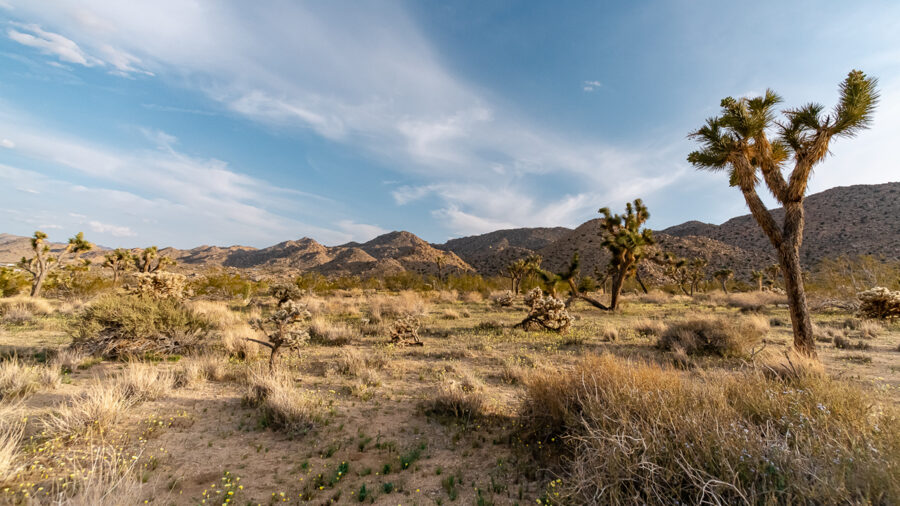
Yes, you can simply drive through, but you still need an entrance pass. The park’s estimates are about 45 minutes from the West Entrance to the North Entrance, an hour from the North to the South Entrance, and an hour and a half from West to South.
Wildflowers and the Joshua tree bloom
Some flowers bloom every spring, but a carpet bloom needs a wet fall and winter, and the park’s botanists put those at about one year in 5 to 10. Seeds need a half inch or more of rain in a single storm to sprout, and dry spring windstorms can end a promising season. In 2019, the big bloom year the park uses as its example, the Lost Horse Valley gauge recorded 8.25 inches between October and March, 229% of its 3.61 inch average.
The bloom climbs the park in three stages, according to the Park Service:
- January to mid-April: the low south around the South Entrance, Cottonwood and the Pinto Basin. Arizona lupine, desert gold, Canterbury bells and poppies.
- Early March to early May: 3,000 to 5,000 feet around Hidden Valley, Indian Cove, Jumbo Rocks and Twin Tanks. Desert dandelion, globemallow, brittlebush and paintbrush.
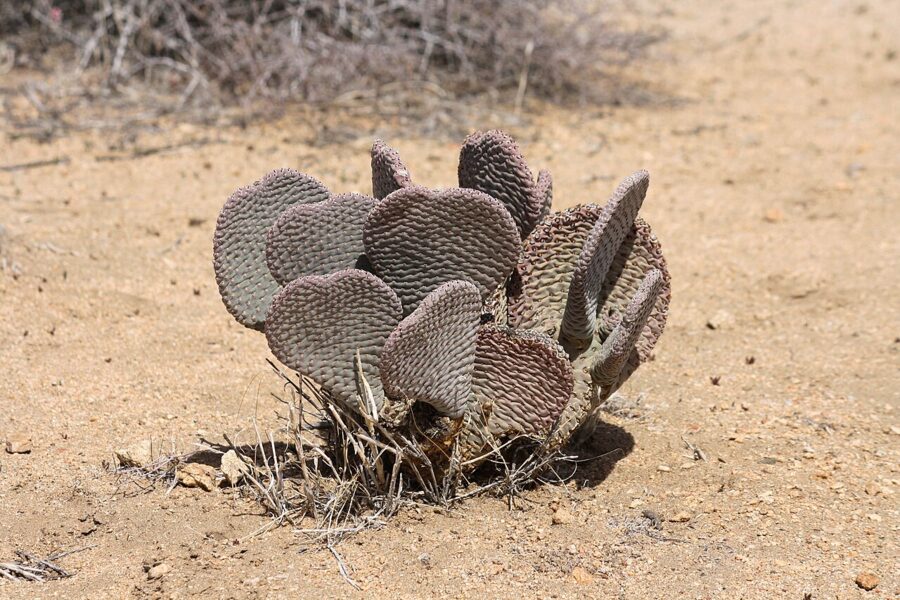
- April through June: above 5,000 feet at Juniper Flats, Black Rock Canyon and Covington Flat. Mariposa lily, blackbush, beavertail cactus and fiddleneck.
After a good monsoon, a small fall bloom of chinchweed and fringed amaranth can follow. For a current read, the park points to its Wildflower Watch project on iNaturalist, where people log what is blooming and where. Picking flowers is prohibited.

Summer heat: the rules that keep people alive
Every year the park rescues hikers in the heat, and some die. Its own hiking page tells of an experienced, well-prepared hiker who set out for the 3-mile round trip to Fortynine Palms Oasis in July 2018 and never came back.
- Time it: hike before 9am and after 5pm.
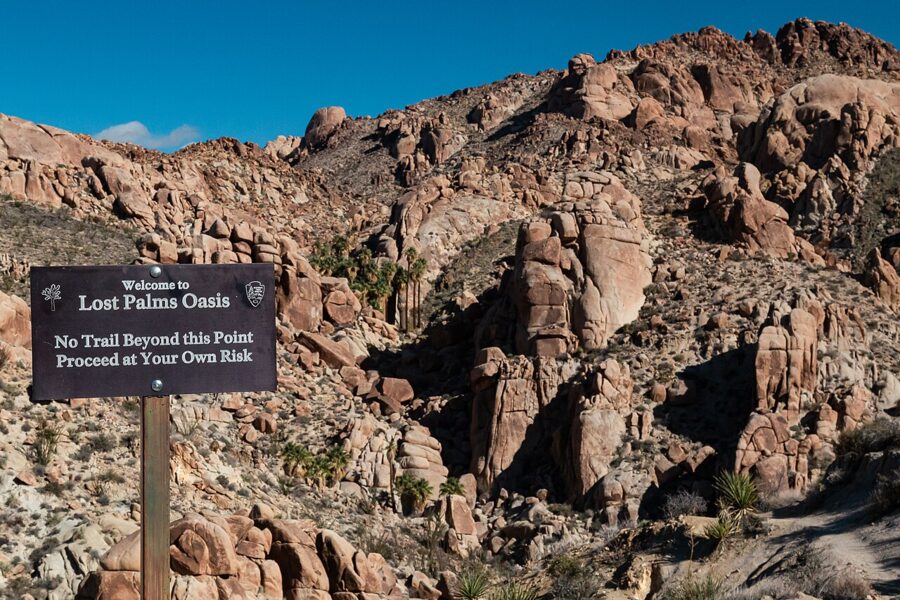
- Keep it short: skip anything over two miles, including Boy Scout, Fortynine Palms, Lost Palms Oasis, Ryan Mountain, Panorama Loop and Warren Peak.
- Carry water: four liters per person for the day, plus some for cooling off. The center of the park has none; fill up at the West Entrance Station, the Black Rock Nature Center or the visitor center in Twentynine Palms.
- Know the signs: nausea, headache, cramps and confusion point to heat illness. Stop, cool down and get help.
- Stay on pavement: save unknown dirt roads for winter.
- Check the air: limit activity when the air quality index tops 100.
Cell coverage is very limited, so tell someone your plan; emergency phones are at the Cottonwood Visitor Center, the Indian Cove Ranger Station and Intersection Rock. Bees gather at any moisture in summer, including sweat, and the park flags Jumbo Rocks, Keys View and the Cholla Cactus Garden.
Crowds and the busy spring weekends
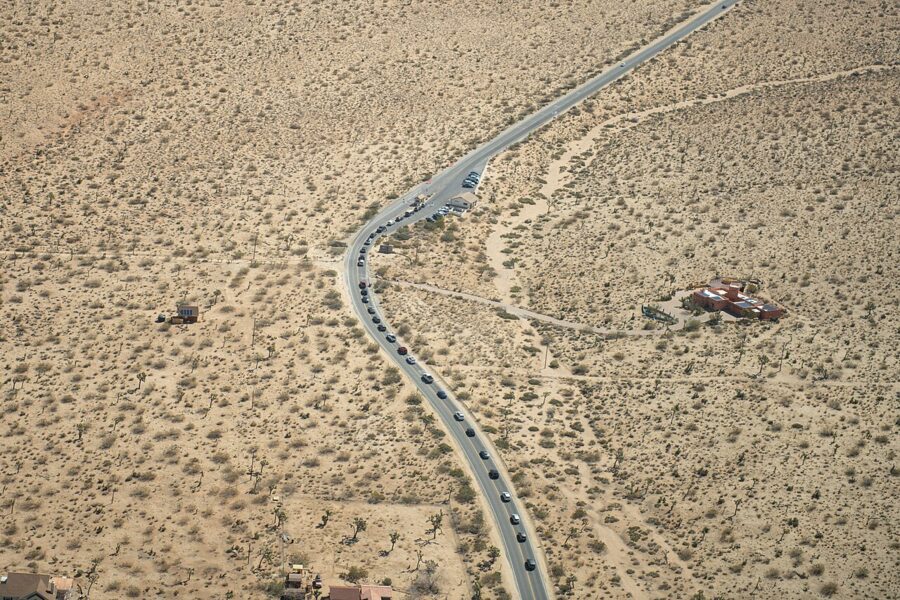
Joshua Tree recorded about 2.93 million recreation visits in 2025, most of them between October and May. The busiest times are weekends, holidays and spring break (March to mid-April), when entrance lines grow and the Hidden Valley, Barker Dam, Keys View, Split Rock and Lost Horse Mine lots close temporarily once full.
| Month (2024) | Recreation visits |
|---|---|
| March | 401,378 |
| April | 343,806 |
| December | 342,051 |
| November | 301,653 |
| February | 283,582 |
| May | 259,803 |
| January | 251,664 |
| October | 212,097 |
| June to September | 123,786 to 171,606 a month |
There is no reservation system to enter, and the park is open 24 hours a day, all year. Buy a digital pass on recreation.gov and save it to your phone; when staff allow, pass holders get bypass lanes. Weekdays are calmer, and the park suggests not leaving right after sunset, when everyone else does.
There is no food, gasoline or water for sale inside, so stock up in Joshua Tree, Twentynine Palms or Yucca Valley. Park only in marked spots or on graded shoulders: driving off the road brings a citation of up to $180.
Camping: when to book
Most of the park’s roughly 500 campsites are reservation-only on recreation.gov, bookable up to six months ahead. The park strongly recommends reserving for holidays, weekends and any day in its busy season, which it defines as October to May. A March weekend means booking in September.
| Campground | Sites | Elevation | Per night | Notes |
|---|---|---|---|---|
| Black Rock | 99 | 4,000 ft | $35 | Reserve; water |
| Cottonwood | 62 | 3,000 ft | $35 | Reserve; water |
| Indian Cove | 101 | 3,200 ft | $35 | Reserve; no water |
| Jumbo Rocks | 124 | 4,400 ft | $30 | Reserve; no water |
| Ryan | 31 | 4,000 ft | $30 | Reserve; closes in summer |
| Hidden Valley | 44 | 4,200 ft | $25 | First-come; open all year |
| White Tank | 15 | 3,800 ft | $25 | First-come; closes in summer |
| Belle | 18 | 3,800 ft | $25 | First-come; closes in summer |
Prices are the park’s as of November 2026, after new fees took effect on January 1. The first-come sites are full nearly every weekend from September to May and most weeknights from mid-February to mid-May, usually by Friday afternoon; claim an empty site, then pay by card at an entrance station within an hour. Sleeping in a car outside a campsite is illegal, and no park campground has showers.
The right season for what you want to do
Hiking
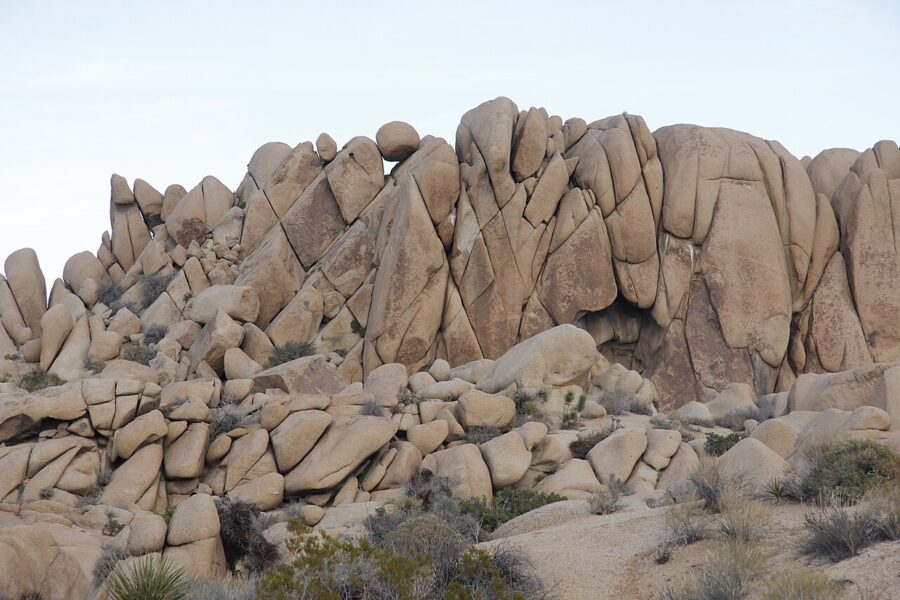
Plan long hikes for October through April: Ryan Mountain, Boy Scout and Lost Palms Oasis are all on the park’s do-not-attempt-in-the-heat list. The short loops at Hidden Valley, Barker Dam and Arch Rock and the Discovery Trail, each around a mile, work year-round if you go early in summer.

Climbing and bouldering
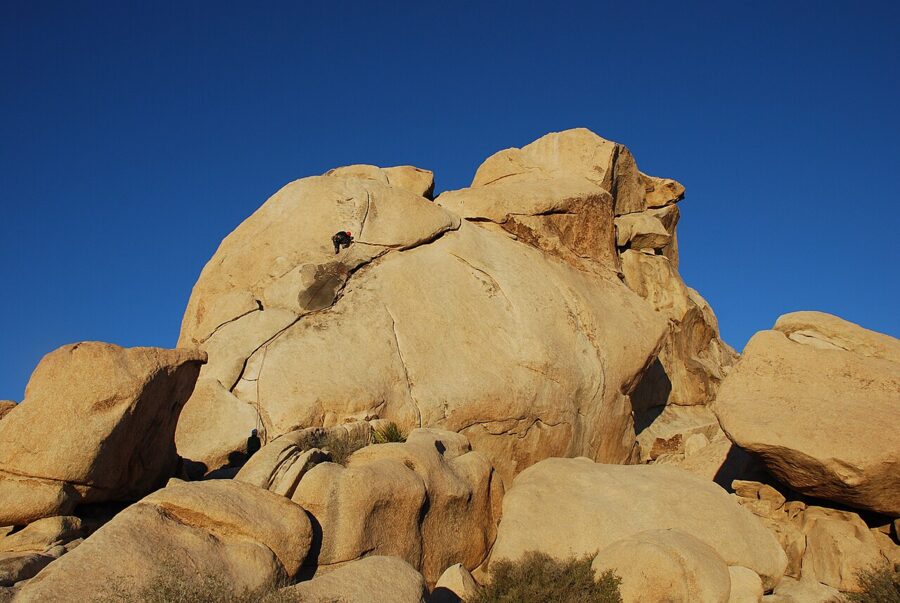
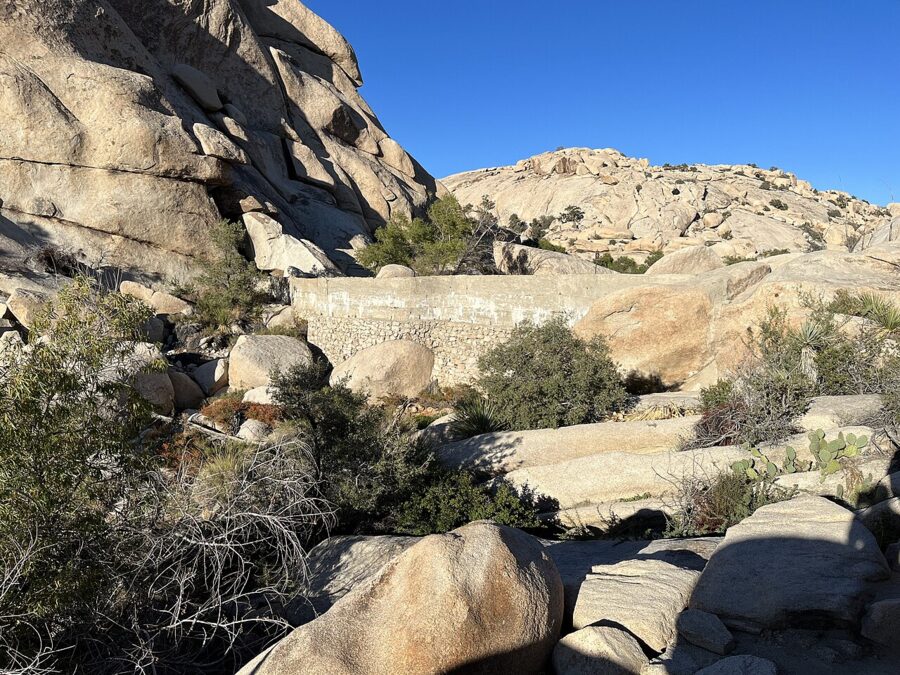
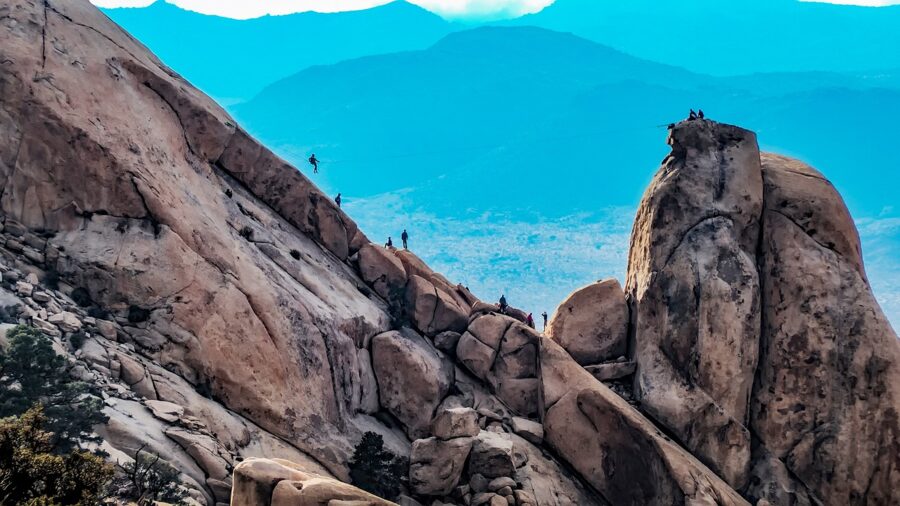
The park counts more than 8,000 climbing routes and 2,000 boulder problems on its monzogranite. The cool months are the season, when midday highs in the 60s and 70s keep the rock comfortable; in summer, climbing comes down to the first and last hours of light.
Stargazing
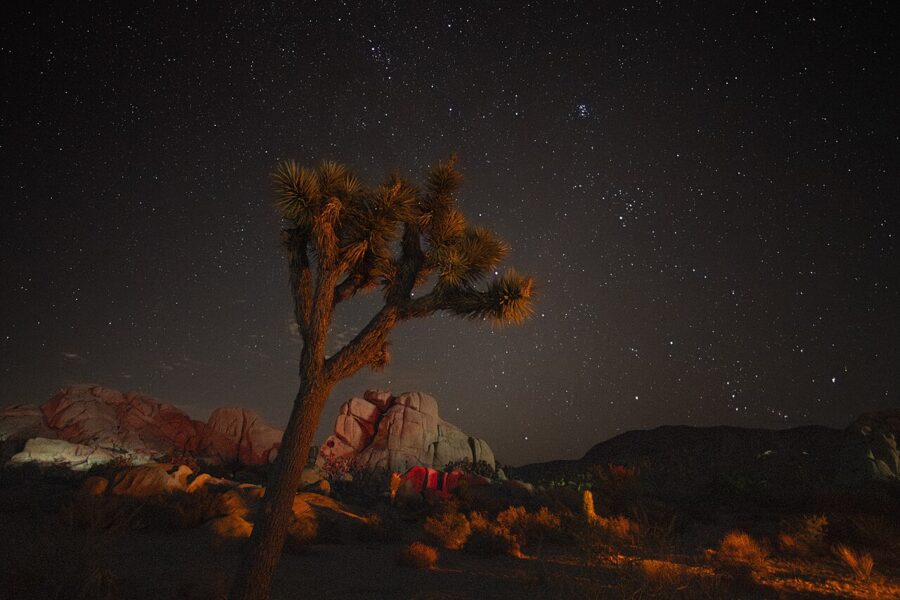
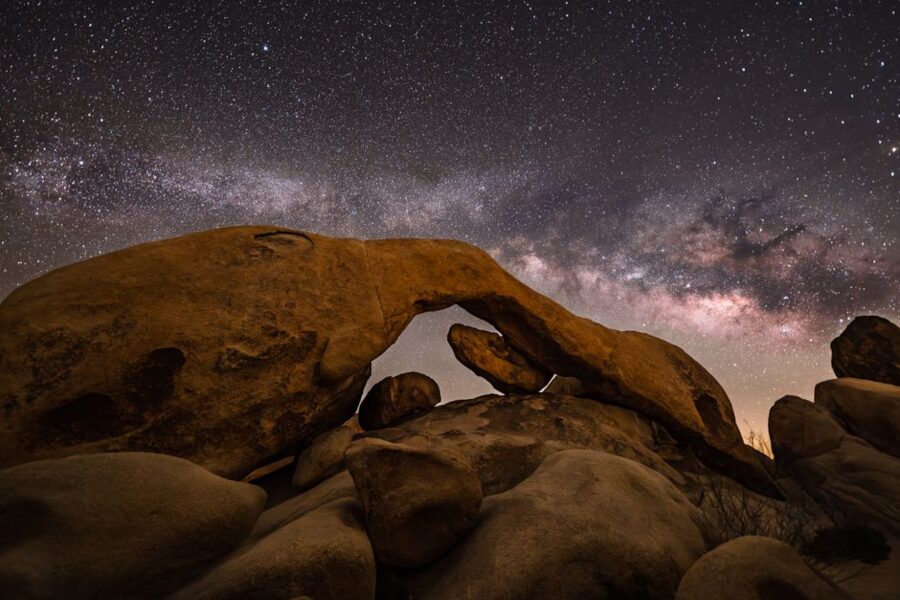
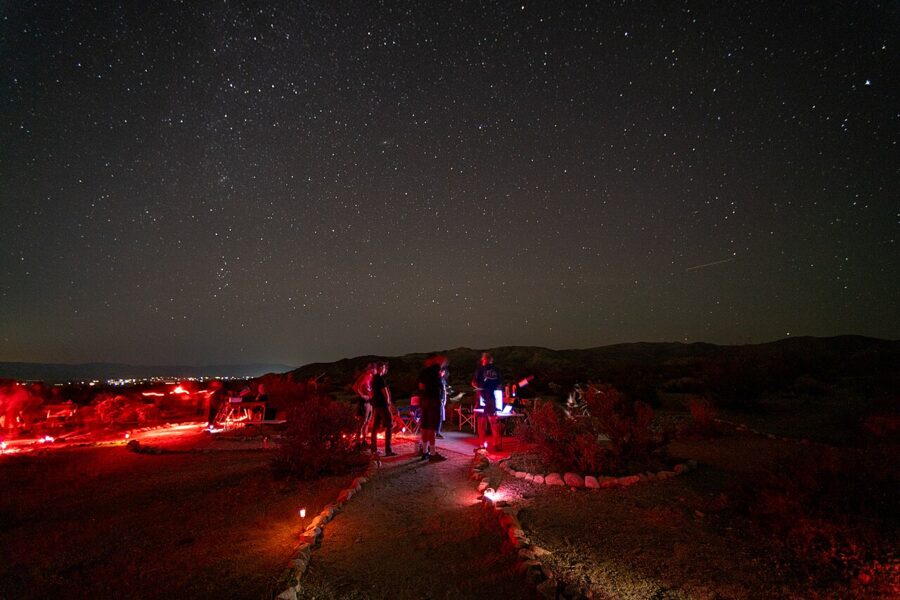
Joshua Tree is an International Dark Sky Park. The darkest skies are along Pinto Basin Road between the Cholla Cactus Garden and Cottonwood, and Cottonwood Campground is the darkest place to camp. The designated stargazing areas are the Quail Springs, Hidden Valley, Cap Rock and Ryan Mountain parking lots; stay awake and within 20 feet of your car.
Summer gives the Milky Way’s bright core and warm nights; winter gives long nights that start before 5pm, with Orion in the southern sky. The moon matters more than the month: plan around a new moon, use red light only, and bring layers.
Wildlife and birds
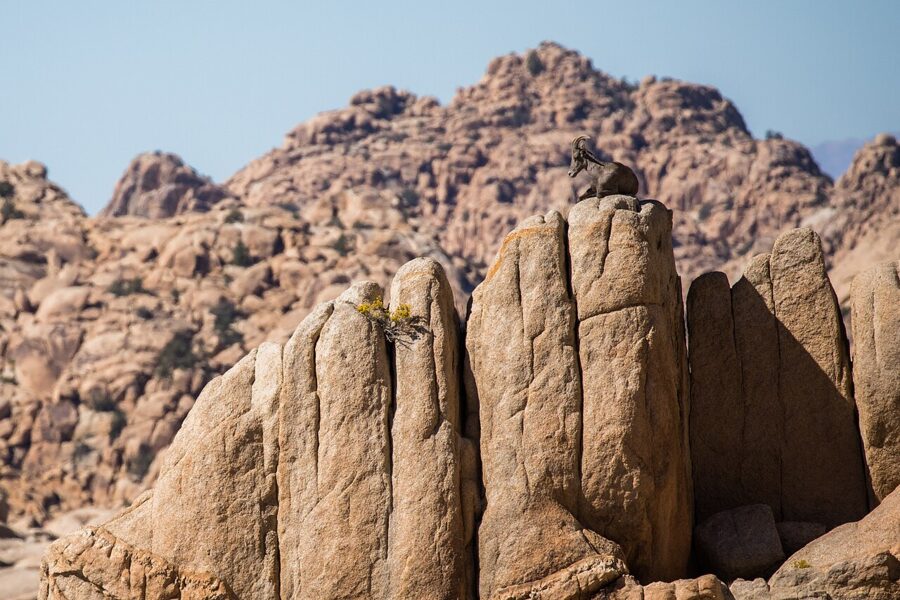
The park lists 57 mammal species, 46 reptile species and more than 250 kinds of birds. Desert tortoises are most often seen in spring, and bighorn sheep move about early and late in the day in rocky country, sometimes near Barker Dam. Reptiles hide when it is cold and mammals when it is hot, so spring and fall mornings suit both.
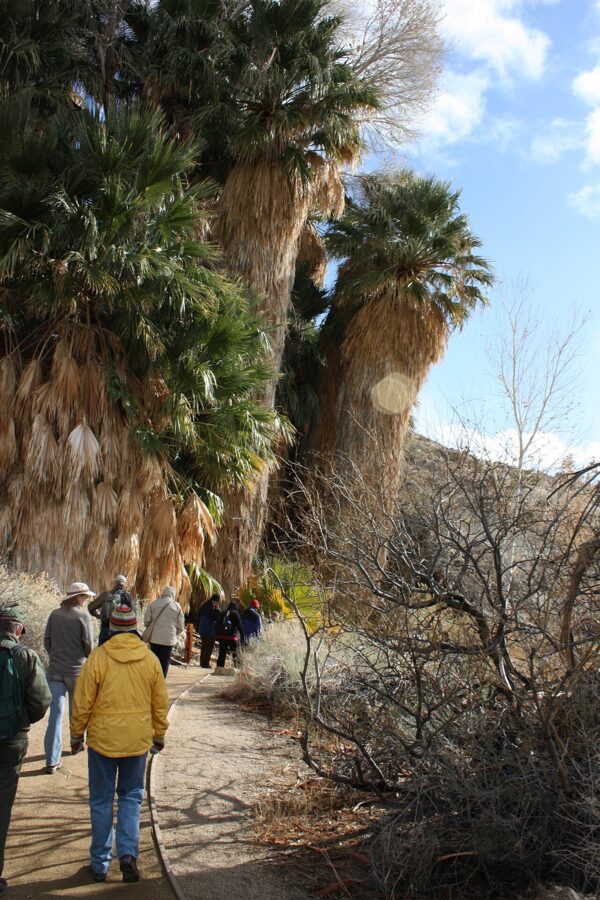
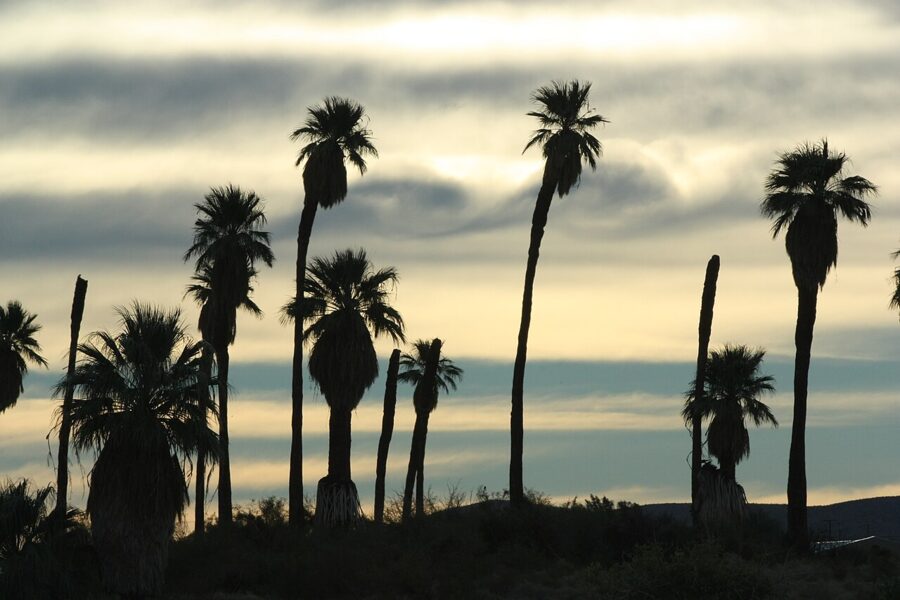
Winter birds such as white-crowned sparrows and dark-eyed juncos stay into March, then spring migration brings warblers and tanagers through. The Oasis of Mara in Twentynine Palms and Cottonwood Spring are the places to look.
Festivals, holidays and fee-free days in 2027
The park never closes for holidays. What changes is how full the campgrounds and nearby towns get.
| Dates (2027) | Event | Effect |
|---|---|---|
| January 16 to 18 | Martin Luther King Jr. Day weekend | Holiday crowds |
| February 11 to 21 | Modernism Week, Palm Springs | Busier Palm Springs hotels |
| February 13 to 15 | Presidents Day weekend | Busy winter weekend |
| March to mid-April | Spring break; Easter on March 28 | Peak crowds |
| April 9 to 11 and 16 to 18 | Coachella, Indio | Coachella Valley lodging fills |
| April 23 to 25 | Stagecoach, Indio | Same again |
| May 13 to 16 | Joshua Tree Music Festival | Busier town of Joshua Tree |
| May 29 to 31 | Memorial Day weekend | Last big crowd before summer |
| September 4 to 6 | Labor Day weekend | Busy despite the heat |
| October, dates to come | Night Sky Festival; fall music festival | Night programs |
| November 25 to 28 | Thanksgiving weekend | Holiday crowds |
| December 24 to January 1 | Christmas and New Year | One of the busiest stretches |
As of November 2026, entrance costs $30 per private vehicle for seven days, $25 per motorcycle or $15 per person on foot or bike, and a Joshua Tree annual pass is $55. The America the Beautiful pass is $80 for US residents and $250 for nonresidents, and Joshua Tree is not one of the 11 parks that charged nonresidents an extra $100 in 2026.
The 2026 fee-free days were for US citizens and residents only: Presidents Day, Memorial Day, June 14, the Independence Day weekend, August 25, September 17, October 27 and Veterans Day. The 2027 list had not been published as of November 2026, so check the park’s fees page before planning around one.
Which month for which trip
- A first visit: late October or the first half of November.
- Wildflowers: February for the low south, March and April for the Joshua tree country, May for the high western edge. Wait for a wet winter if a big bloom is the point.
- Camping in comfort: October, November or April, booked six months ahead for weekends.
- Climbing: November through March.
- Solitude: weekdays in January or early February.
- The Milky Way: a new-moon week between May and September, at night only.
- A winter sun break: December or January in the warmer south, around Cottonwood.
- Young children: spring weekdays or fall, when the heat and the distances between water sources are easier on them.
Palm Springs International is the closest airport. The park is about 140 miles from Los Angeles, 175 from San Diego and 215 from Las Vegas, home to Harry Reid International, so a long weekend works from any of them.
Whatever month you pick, download the NPS app’s offline map and your digital pass before you leave town, because the park warns that cell service inside is very limited and should never be relied on.