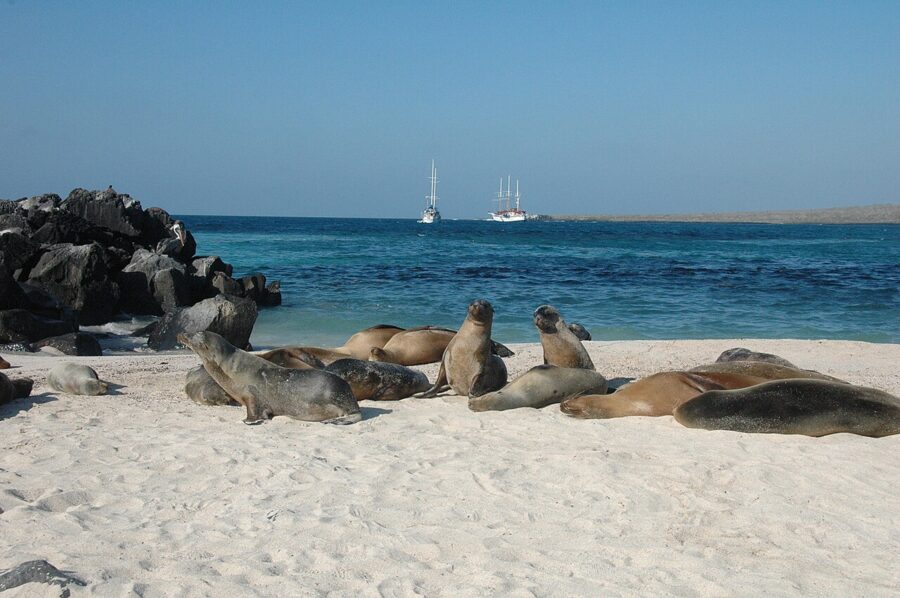
For most people the best time to visit the Galápagos is late April to early June. The rains have eased, the sea at Puerto Ayora is still about 76°F, the waved albatrosses are back on Española and blue-footed boobies are courting on North Seymour. Go between July and November for the richest sea life and the big seabird colonies, at the cost of cooler water and rougher crossings; go in February to April if warm, calm water for snorkeling matters most.
No month is closed and every month has animals worth the trip, because something is breeding somewhere in the islands in every month. The months to think twice about are August and September if you get seasick, since the seas run roughest between June and September and the water is at its coldest. For crowds and cabin prices, the hard weeks are Christmas and New Year, Holy Week (March 21 to 28, 2027) and July and August.
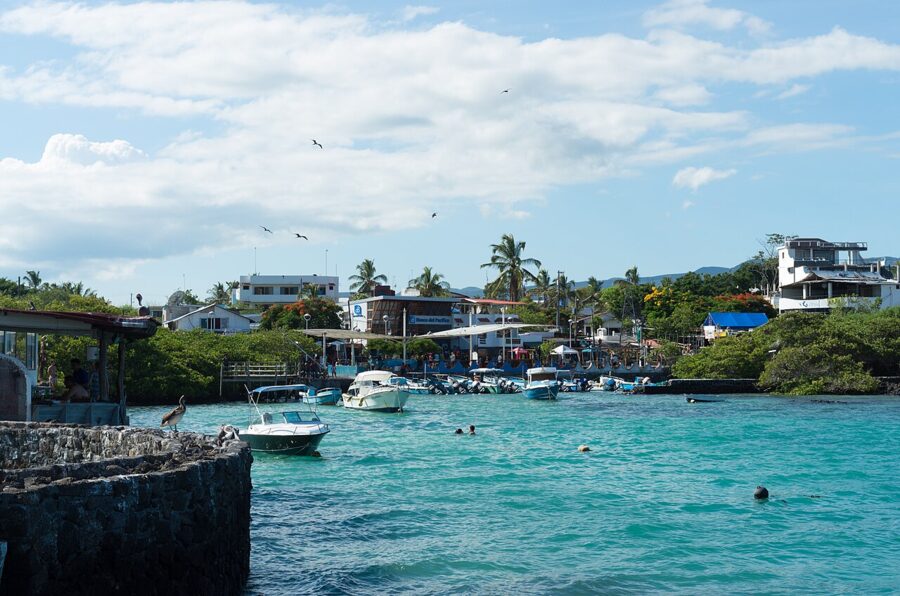

One caution applies to anyone traveling before mid-2027. As of November 2026 a strong El Niño is under way, and the season ahead will be warmer, wetter and leaner for some wildlife than the averages below suggest. The section on El Niño explains what that means for a trip this winter and spring.
On this page
- Galápagos weather by month
- Two seasons, and what "wet" and "dry" really mean
- The 2026-27 El Niño: read this if you're going before mid-2027
- The Galápagos month by month
- Where in the islands you go changes the answer
- Sea conditions, snorkeling and diving
- Crowds, prices and holidays in 2027
- Before you book
- Which month for which trip
Galápagos weather by month
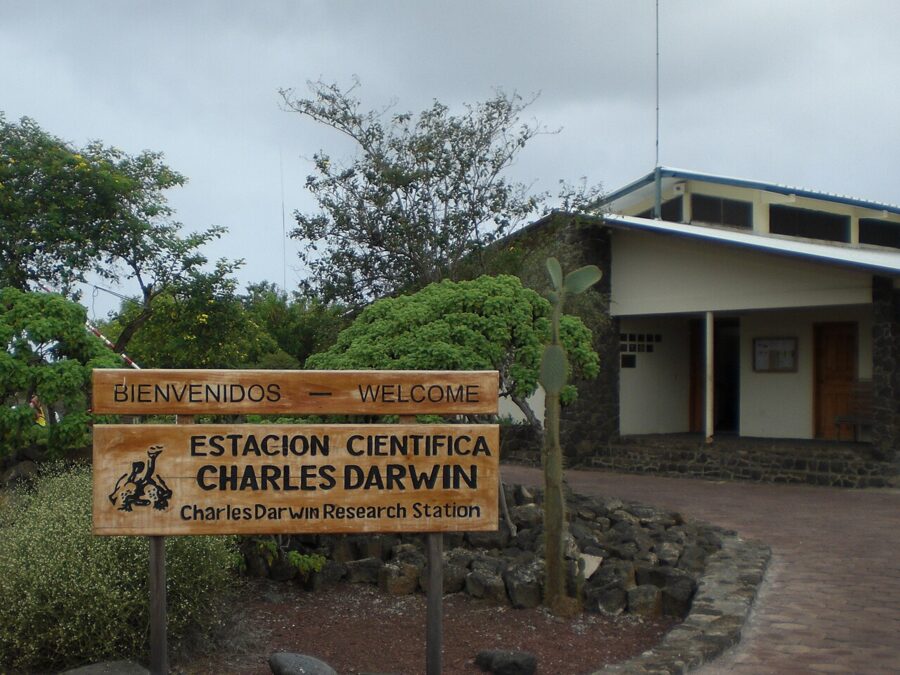
The longest weather record in the Galápagos comes from the station Ecuador’s national weather service (INAMHI) set up at Puerto Ayora in 1965, the only one of its first island stations still working, kept by the Charles Darwin Research Station and published by the Charles Darwin Foundation. The table below gives the 1991-2020 averages from its daily records, plus the number of rainy days at the Foundation’s highland station at Bellavista, 223 meters up on Santa Cruz. Rain is shown as the typical (median) month, because a handful of El Niño years swamp the plain average.

| Month | High / low (°F) | Sea at Puerto Ayora (°F) | Typical rain on the coast (in) | Sunshine (hours a day) | Rainy days in the highlands |
|---|---|---|---|---|---|
| January | 83 / 73 | 76 | 0.9 | 5.3 | 10 |
| February | 87 / 73 | 78 | 1.9 | 6.6 | 10 |
| March | 88 / 73 | 78 | 1.6 | 7.9 | 7 |
| April | 86 / 73 | 78 | 0.3 | 7.1 | 6 |
| May | 83 / 73 | 76 | 0.2 | 5.3 | 6 |
| June | 80 / 71 | 74 | 0.4 | 3.0 | 9 |
| July | 78 / 69 | 72 | 0.5 | 2.1 | 15 |
| August | 76 / 67 | 71 | 0.5 | 2.2 | 18 |
| September | 76 / 67 | 71 | 0.4 | 2.2 | 16 |
| October | 77 / 67 | 71 | 0.3 | 3.2 | 14 |
| November | 78 / 69 | 72 | 0.4 | 3.2 | 13 |
| December | 80 / 71 | 74 | 0.5 | 3.5 | 14 |
Three things in those numbers surprise people. The “wet” season is the sunny one: March averages almost eight hours of sunshine a day on the coast, against about two in August. The “dry” season is the drizzly one up high, with rain falling on more than half the days at Bellavista in August and September. And the coast is dry in almost every month, with a typical year at Puerto Ayora bringing only about 10.7 inches of rain.
Daylight barely changes. The islands sit on the equator, so the sun rises around 6am and sets around 6pm all year. The islands run one hour behind mainland Ecuador (UTC-6).
Two seasons, and what “wet” and “dry” really mean
The warm season, December to May
From about December the cold Humboldt water weakens and warmer water flows in from the north. The air turns hot and humid, the sea warms to 76-78°F, and rain arrives as short, heavy afternoon showers rather than gray days. The lowland scrub, bare and silver for half the year, turns green fast.
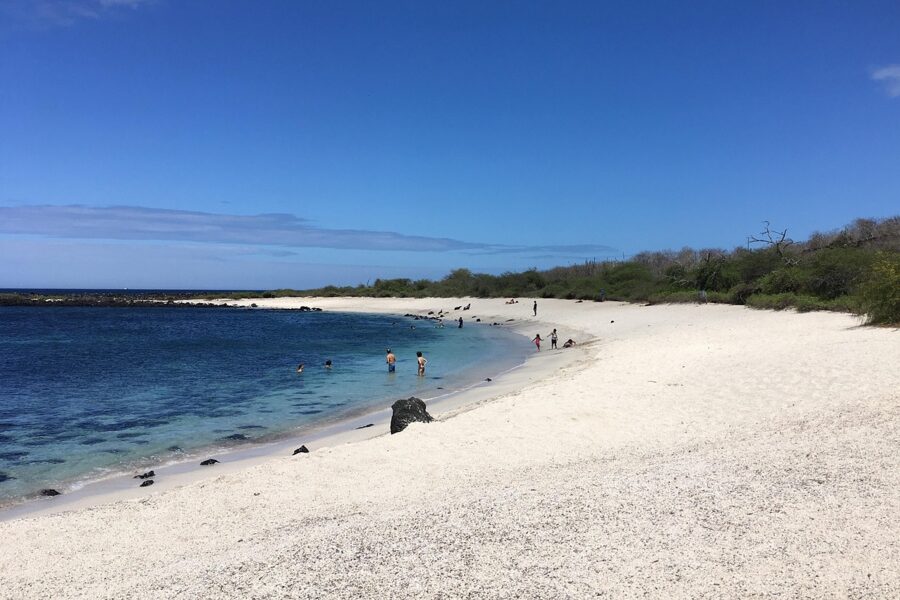
This is the easier season on the water. Winds drop, the swell is smaller and visibility for snorkeling tends to be better, so it suits families, nervous swimmers and anyone who dreads seasickness. Many land birds and reptiles nest now: green turtles haul out on the beaches, land iguanas mate, and flamingos and frigatebirds start their displays.
The cool garúa season, June to November
From June the southeast trade winds strengthen and the cold Humboldt Current pushes back in. Low gray cloud settles over the islands, and the fine mist the islanders call garúa keeps the highlands green and damp while the coast stays almost rainless. The sea drops to about 71°F at Puerto Ayora, and colder still in the far west of the archipelago.

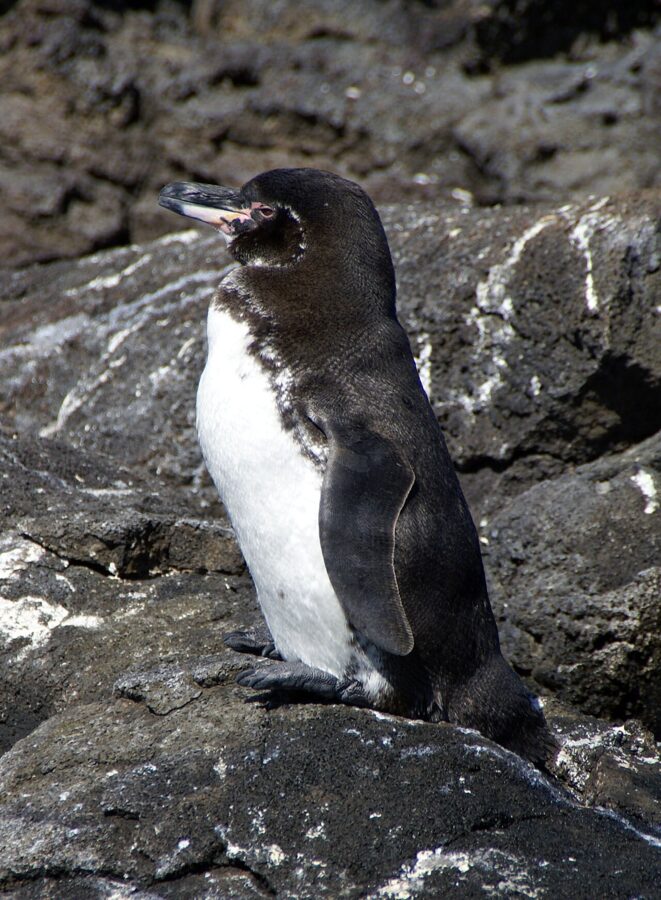
Cold water means food, and food means activity. The upwelling feeds plankton, fish and the birds and mammals that eat them, so the cool season is the time for seabird colonies, penguins, sea lion pups and, for divers, whale sharks. It is also when the seas run roughest, with June to September the choppiest stretch.
The 2026-27 El Niño: read this if you’re going before mid-2027
The averages above describe a normal year, and the coming months will not be one. On November 12, 2026, NOAA’s Climate Prediction Center kept its El Niño Advisory in place and put the chance of a strong-to-very strong event lasting through January to March 2027 at more than 79 percent. The sea surface in the Niño 1+2 region off Ecuador was running 4.4°C (about 8°F) above normal, and the outlook expects the event to begin weakening only in early 2027.

The Puerto Ayora records show what a big El Niño does on land. In 1983 the station measured about 109 inches of rain, roughly ten times a typical year, and in 1998 it measured about 69 inches. In March and April 1998 the sea in Academy Bay averaged about 83°F, some 5°F above normal.
In the water, the Charles Darwin Foundation warned in September 2026 that warm water cuts off the upwelling that feeds the whole food web. Penguins, flightless cormorants and sea lions may skip breeding or lose their young; marine iguanas lose weight as the algae they graze die back. The Foundation’s figure for the 1982-83 event is stark: around 97 percent of the islands’ reef corals died.
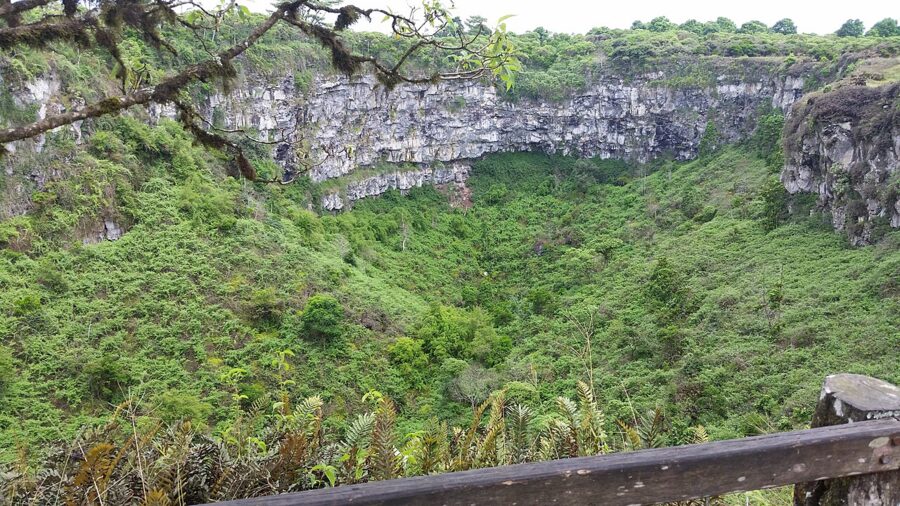
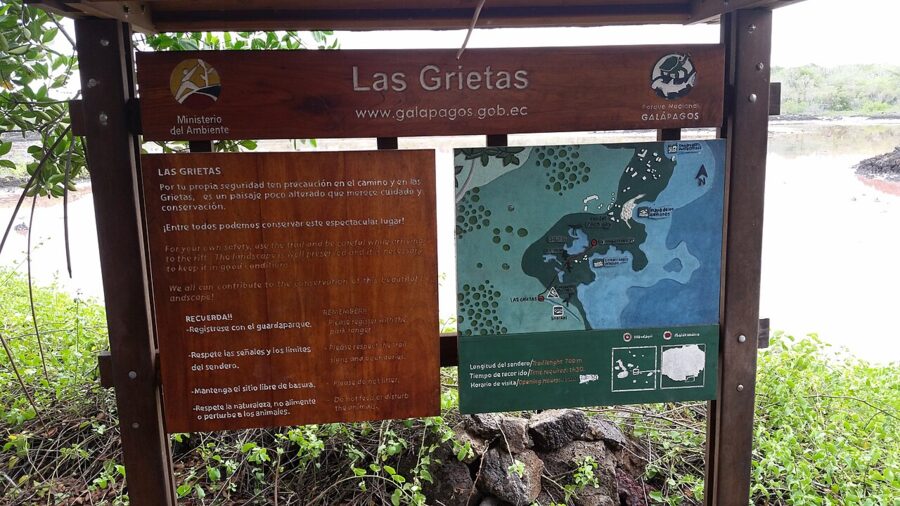
The weather has already arrived. Heavy rain on October 30 and 31, 2026 flooded parts of Puerto Ayora and the Santa Cruz highlands, Baltra airport suspended flights for most of October 31, and the national park temporarily closed six visitor sites: El Garrapatero, Las Grietas, Puntudo and El Chato on Santa Cruz, and the Puerto Chino and Baquerizo beaches on San Cristóbal. More flooding on November 14 led the authorities to ask residents of the La Cascada area of Puerto Ayora to evacuate.

For a trip between now and about May 2027, plan for this. Expect warm water (good for snorkeling), heavy downpours, muddy highland roads and possible site closures at short notice, and expect fewer active seabird nests and penguins than a normal year. Book a flexible fare, arrive a day before any cruise, buy travel insurance that covers weather disruption, and check the Galápagos National Park’s notices in the week before you fly.
The Galápagos month by month
The wildlife notes below follow the calendar kept by the Galapagos Conservation Trust and the Galápagos Conservancy, checked against the national park’s visitor figures for crowds. Animals do not read calendars, and in an El Niño year the marine species especially can run late or skip a season.
January
The warm season settles in, with highs around 83°F and the sea near 76°F. Green turtles come ashore to nest, at Gardner Bay on Española among other beaches, and marine iguanas on Española start mating while land iguanas begin on Isabela. Nazca and red-footed boobies and flightless cormorants start nesting too.
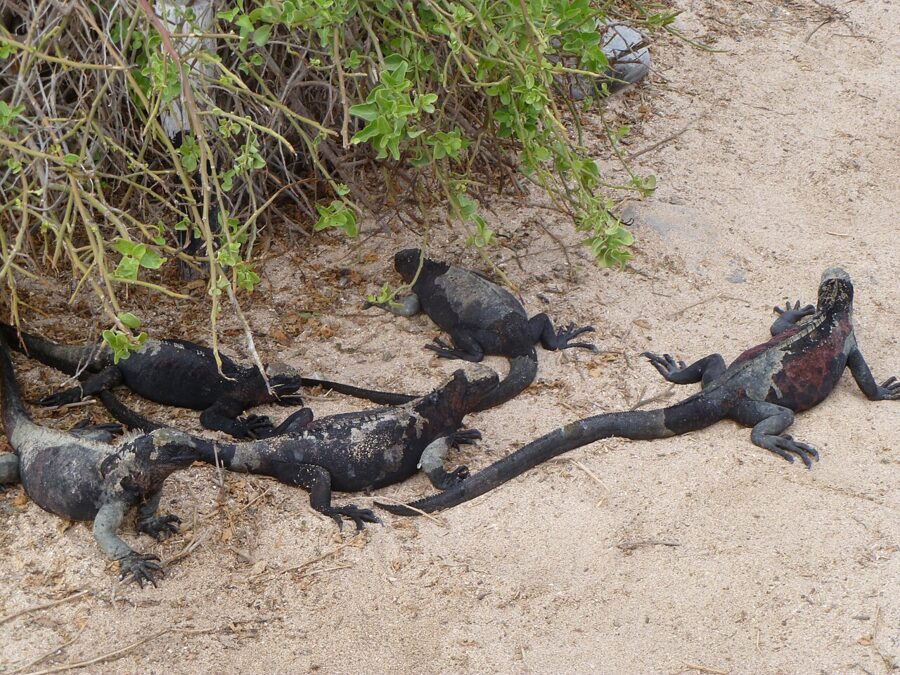

The first week is still holiday season, with New Year cruises and hotels full and priced to match. Once those departures are over, demand usually eases until Carnival.
February
February brings the warmest, calmest snorkeling of the year for many people, with the sea near 78°F and highs in the upper 80s. Flamingos nest at the lagoons on Floreana, and magnificent frigatebirds start courting on North Seymour, the males inflating their red throat pouches. It is also the month with the most typical rain on the coast, though even that is under two inches.
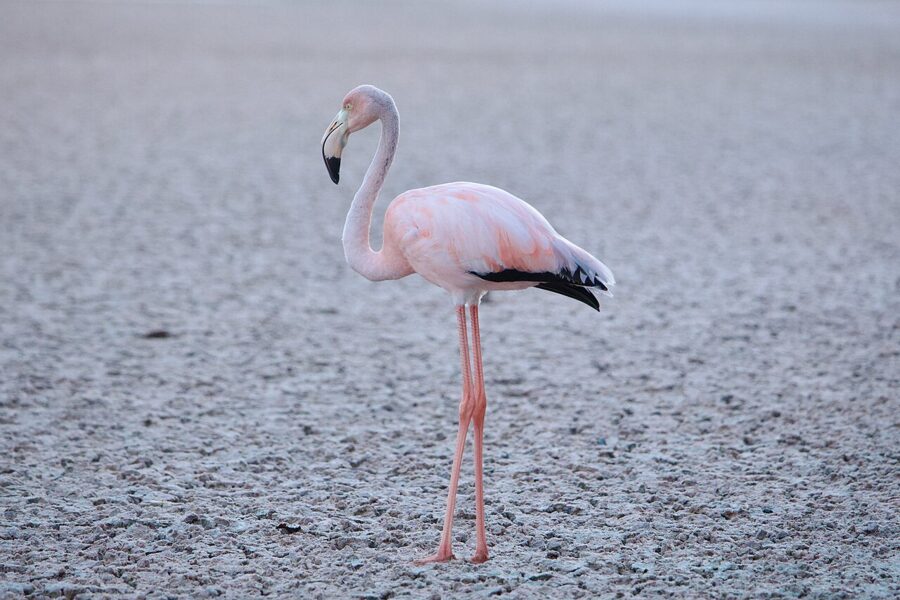
Carnival falls on Monday February 8 and Tuesday February 9, 2027, a long weekend from February 6 that fills island hotels with travelers from the mainland. The islands also usually take February 18 as a local rest day, for the founding of Galápagos province and of the San Cristóbal and Santa Cruz cantons.
March
The hottest and sunniest month, with highs near 88°F and almost eight hours of sun a day, and the tail end of the heaviest rain in the highlands. Marine iguanas nest on Fernandina, giant tortoises breed, and the first waved albatrosses return to Española after their months at sea. The water stays near 78°F.
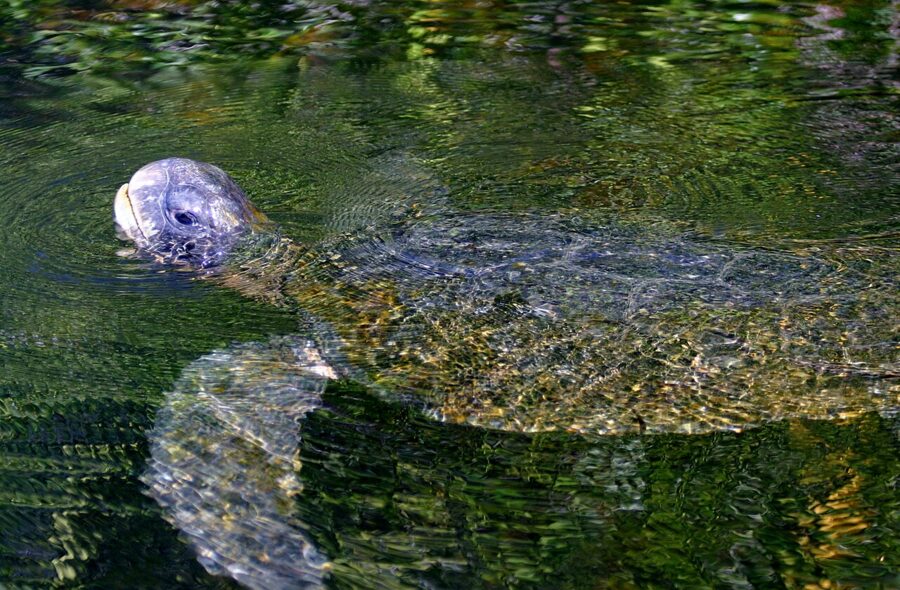

The national park’s 2025 visitor report shows March and April as the peak for foreign visitors. Holy Week runs March 21 to 28, 2027, with Good Friday (March 26) a national holiday, so book these weeks early.
April
The rains usually end during April and the islands stay green for weeks. Green turtle and land iguana eggs hatch, and the albatrosses gather on Española for their courtship, the bill-clacking dance that draws most visitors to Punta Suárez. The sea is still about 78°F and typical rainfall on the coast drops to a third of an inch.
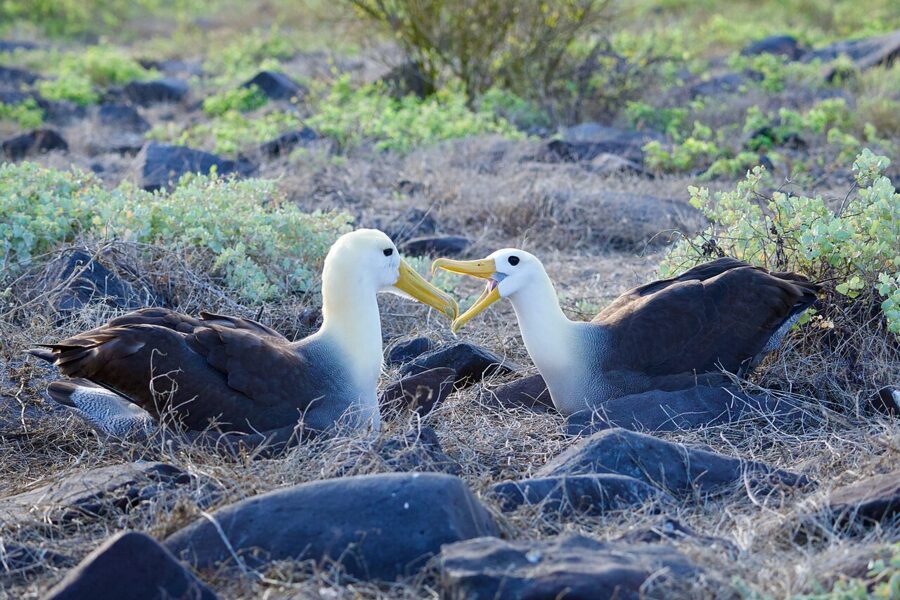
Once Easter is over, late April combines warm water, green islands and the albatrosses’ return. It is still one of the busiest months for foreign arrivals, so book ahead.
May
May is the transition month and, for a first trip, the strongest all-round choice. The air is still warm (about 83°F), the sea about 76°F, rain has all but stopped, and the sun still shines more than five hours a day. Blue-footed boobies are displaying on North Seymour, albatrosses lay their eggs on Española, and penguins are active at Bartolomé.
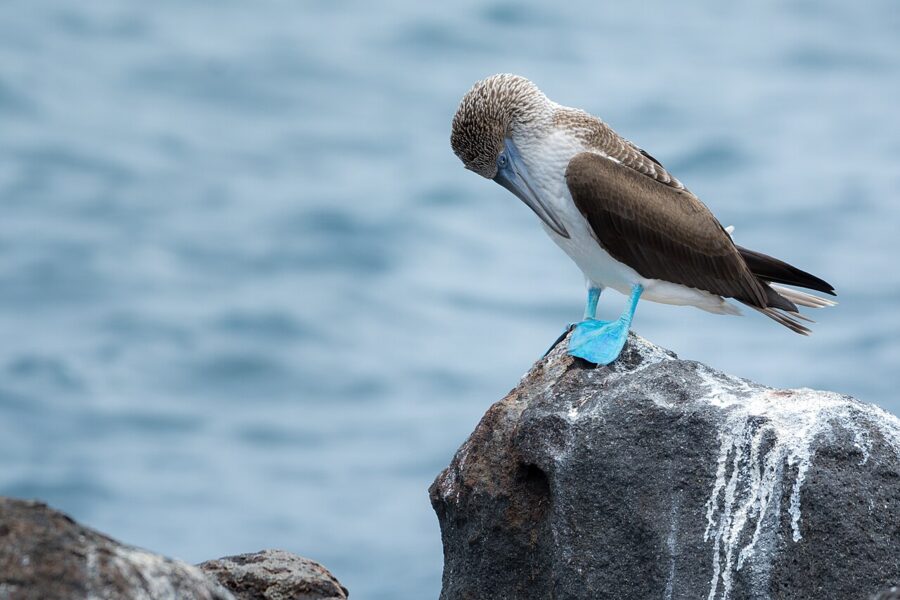

The one national holiday is May 24, a Monday in 2027, which brings a long weekend of mainland visitors.
June
The cool season arrives during June: the first garúa days, the sea dropping toward 74°F and the swell building. Humpback whales are sometimes seen offshore, and great frigatebirds court on Genovesa. On Santa Cruz the tortoises shift: the big males head up toward the green highlands as the lowlands dry out, while nesting females make for lower ground.
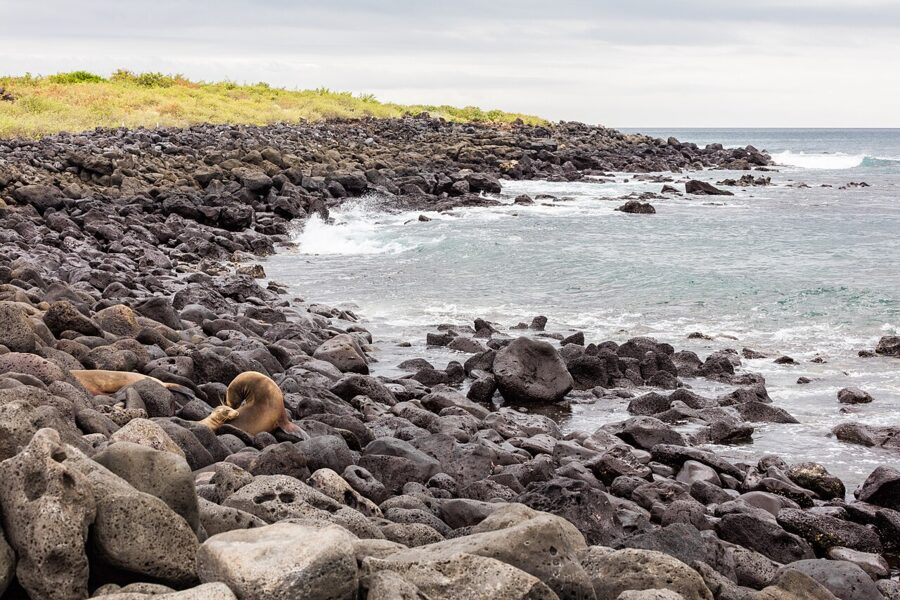

Late June is a sensible window for families on a North American school calendar, before the full July crush. Bring a 3-5 mm wetsuit or confirm your boat has one in your size.
July
The Humboldt Current is in full force. Snorkeling gets colder (about 72°F) but much fishier, and seabirds are at their busiest. Flightless cormorants court on Fernandina, lava lizards mate and American oystercatchers nest on Santiago.
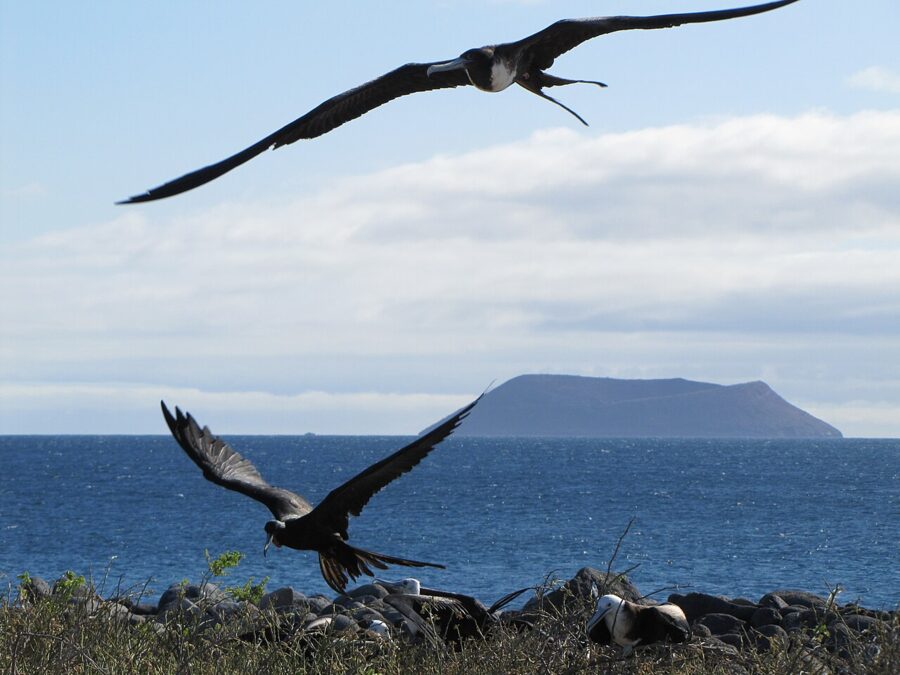

July and August are the second peak of the year, driven mainly by Ecuadorian families, according to the national park’s 2025 report, and by North American summer travel. Book land hotels and the smaller cruise boats well ahead.
August
August is the coolest month: highs around 76°F, the sea near 71°F at Puerto Ayora, and barely two hours of sunshine a day. Sea lions give birth on many beaches, Nazca boobies and swallow-tailed gulls nest on Genovesa, and Galápagos hawks start courting on Española and Santiago.
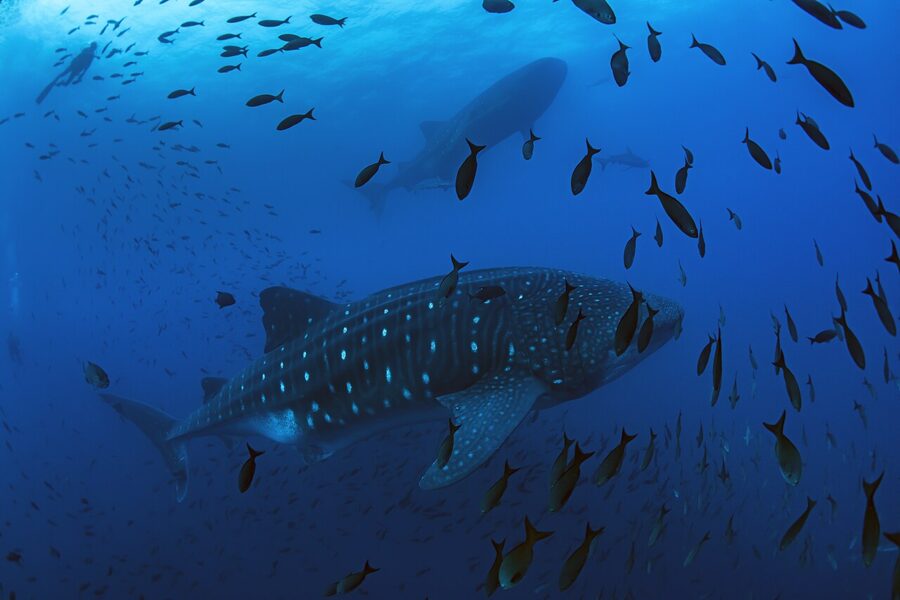

For divers this is prime time at the two northern islands. A 2014 study of the whale sharks at Darwin Island logged 207 of its 211 sightings in the July to December cool season. Ecuador’s Independence holiday falls on Monday August 9, 2027.
September
September is the quietest month of the year for arrivals, according to the national park’s 2025 report, and that is its main appeal. The weather matches August, with cool water, gray mornings and seas that can be rough. Penguins at Bartolomé are in courtship, male sea lions guard beaches as females come into season, and whales are seen most often.
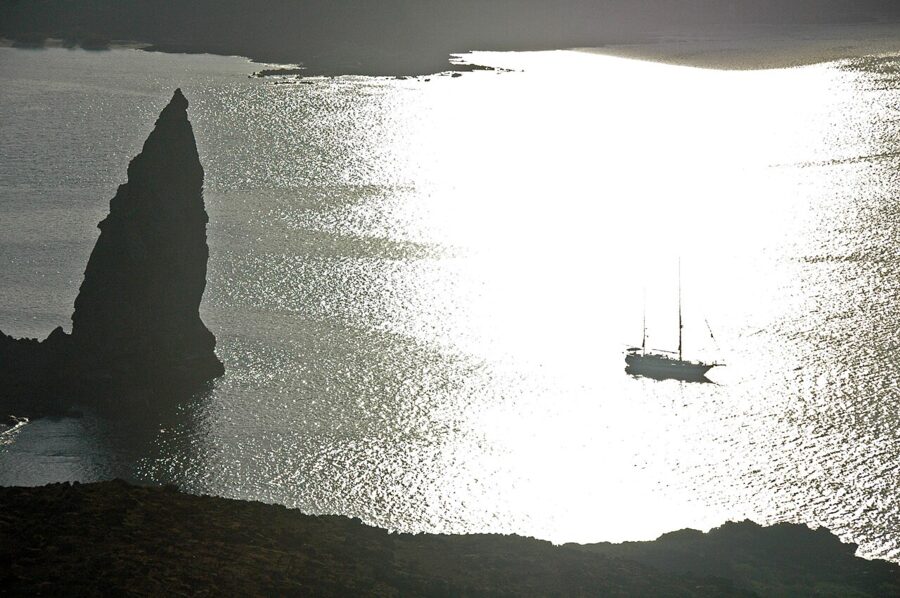

Shoulder-season deals are easiest to find now. If you are prone to seasickness, choose a land-based trip with short boat days, or a larger, more stable ship.
October
The cool season continues, with the sea near 71°F and strong currents that bring plenty of fish to the snorkeling sites. Sea lion pups are old enough to join snorkelers in the shallows, blue-footed boobies are raising chicks on Española and Isabela, and Galápagos fur seals begin their mating season.
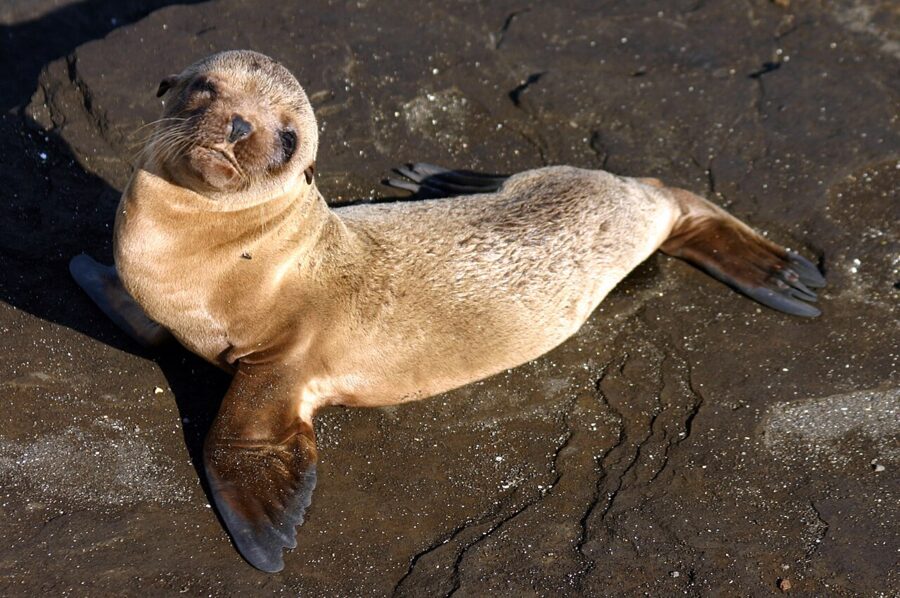

Guayaquil’s independence day gives Ecuador a long weekend in 2027, with the holiday taken on Friday October 8.
November
The last cool month, with the sea edging up to 72°F. Brown noddies begin breeding, band-rumped storm petrels start a second nesting period, sea lions are still pupping and green turtles begin mating again.
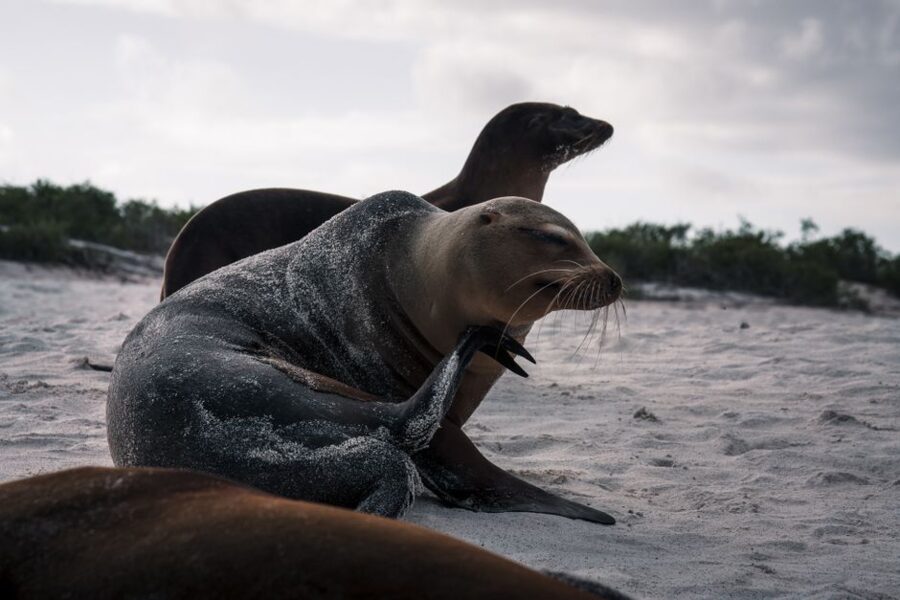
The Day of the Dead and Cuenca’s independence make Monday November 1 and Tuesday November 2, 2027 a four-day weekend, the busiest of the season with mainland visitors. Outside those days, November is one of the calmer months to book.
December
The warm season begins again. Giant tortoise eggs hatch, marine iguanas start their mating rituals, green turtles court in the shallows and the first young waved albatrosses fledge on Española. The sea climbs back to about 74°F and the first showers return.
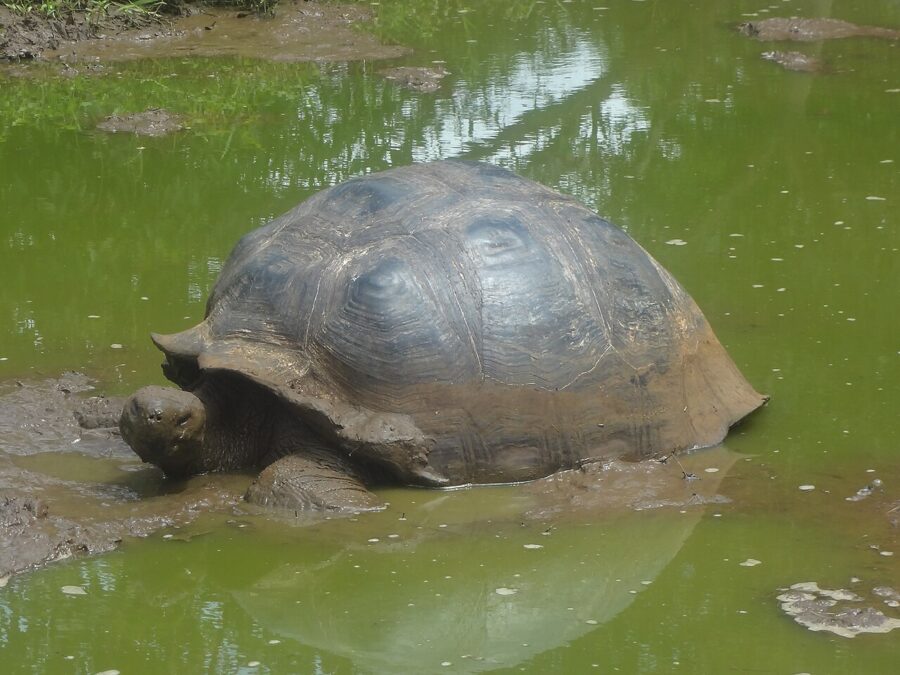
pic._e.JPG)
The two weeks around Christmas and New Year are the most expensive of the year, and the national Christmas holiday stays on Saturday December 25 in 2027. The first half of December, before the holiday rush, is usually much cheaper than the holiday weeks.
Where in the islands you go changes the answer
The weather table describes the southern coast of Santa Cruz. Go up into the highlands, out west or to the remote islands and the picture changes.
The highlands of Santa Cruz, San Cristóbal and Isabela
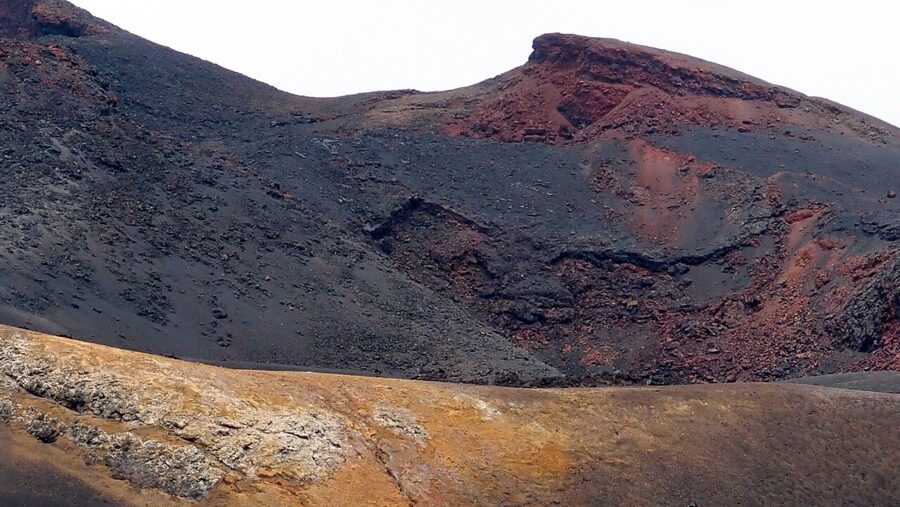
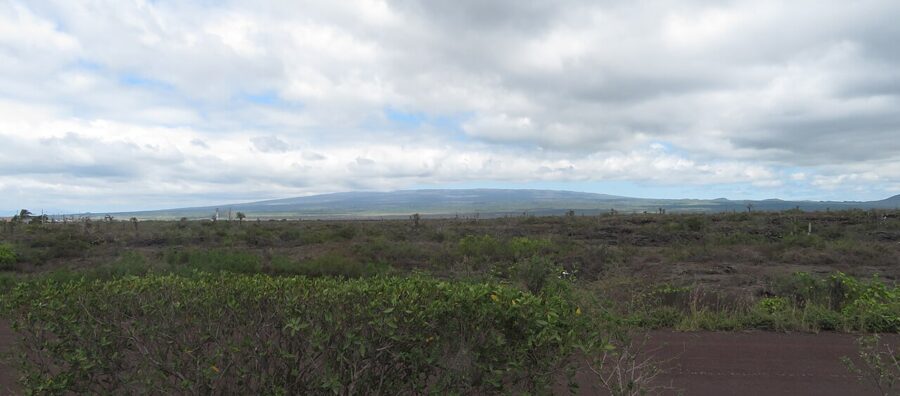
The highlands follow the opposite pattern to the coast. Bellavista gets rain on about 18 days in August, against 4 at Puerto Ayora, and less than one hour of sunshine a day in August and September. If you want clear views from a crater rim, such as the long hike to the caldera of Sierra Negra on Isabela, the warm season gives you a far better chance, with five to six hours of sun a day at Bellavista in February and March.


The west: Isabela and Fernandina
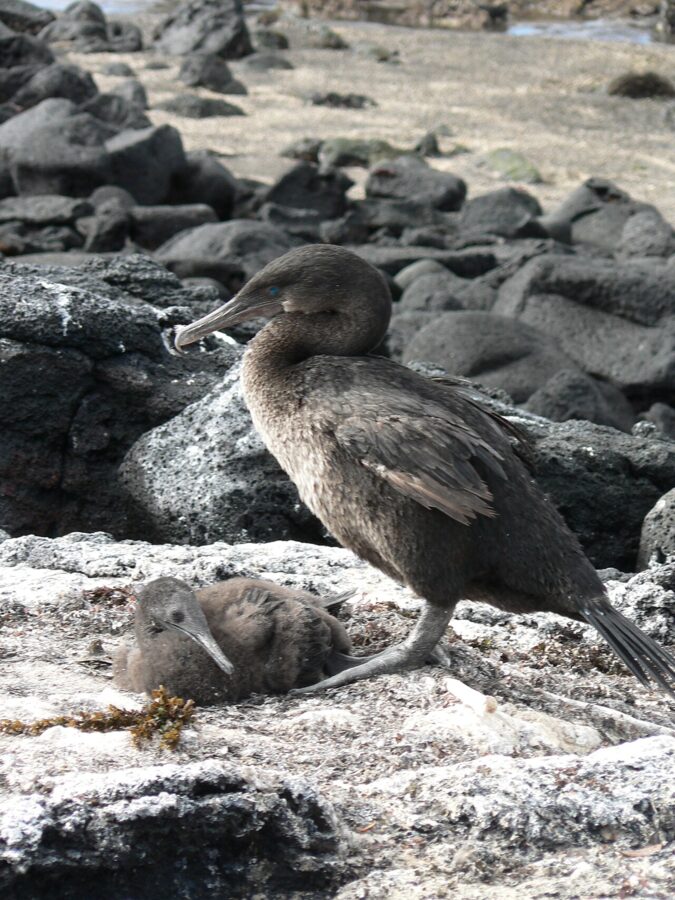
The western islands sit in the path of the coldest upwelling water in the archipelago, which is why the penguins and flightless cormorants live there. Expect colder snorkeling than the table suggests in any month, and the richest sea life in return. Only cruises on western itineraries reach Fernandina and the west coast of Isabela.

The south and the far north
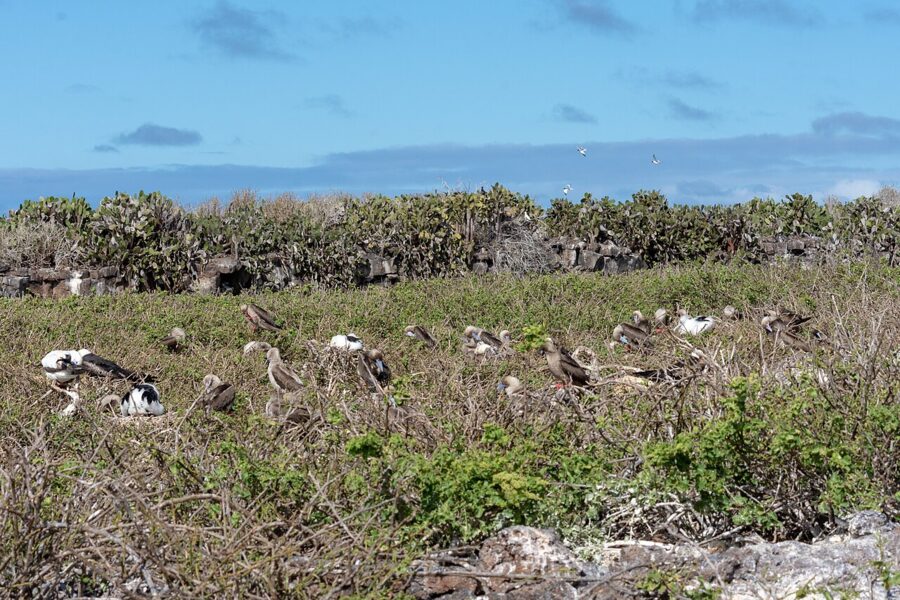
Española, in the south, is the albatross island, worth timing a trip around if you want to see them (roughly April to December). Genovesa, in the north, is the great seabird island, with red-footed and Nazca boobies, frigatebirds and storm petrels, and is reached only by cruise. Darwin and Wolf, the far northern islands, are dive-only and at their best between July and December.

Sea conditions, snorkeling and diving
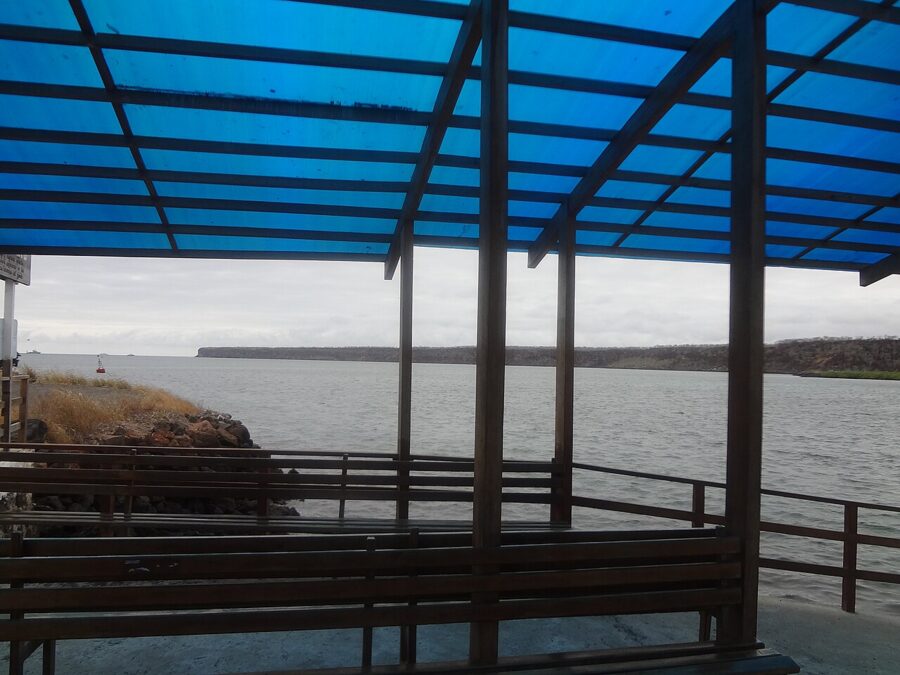
Do you need a wetsuit to snorkel in the Galápagos? Between June and November, yes, for anything more than a quick swim: 71°F water feels cold after half an hour, and western sites are colder. In January to April most people snorkel comfortably without one at 76-78°F, though a thin shorty helps on long snorkels. In the coming El Niño months the water is likely to be warmer than normal.
Sea state matters because so much of a Galápagos trip happens on boats. The public speedboats between Santa Cruz, San Cristóbal and Isabela, and the small yachts on overnight crossings, are where seasick travelers suffer most from June to September. In those months, take medication before you board rather than after, and choose a central cabin on a cruise.

For divers, the warm season brings calmer seas and better visibility, while the cool season brings the whale sharks at Darwin and Wolf and the strongest currents. Darwin and Wolf are advanced dives, and the liveaboards that go there book up early for August to October.
Crowds, prices and holidays in 2027
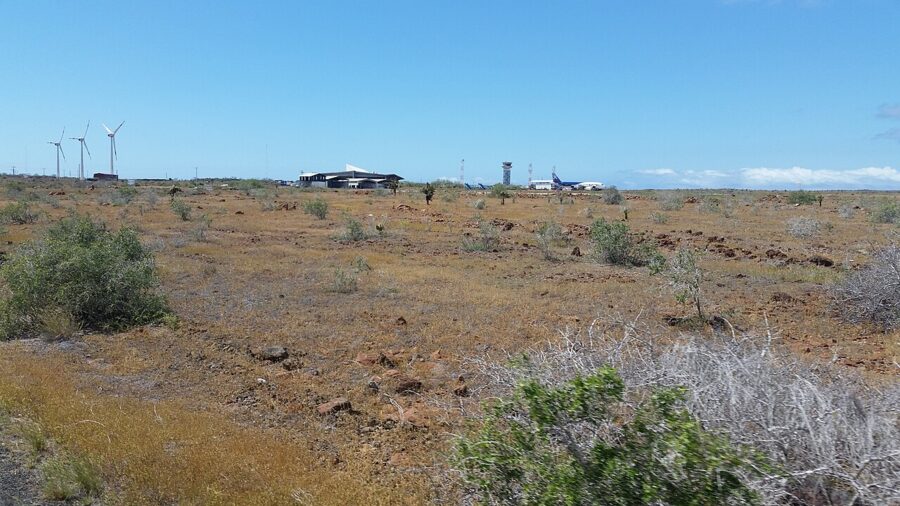
The national park’s annual visitor report counted 290,404 arrivals in 2025, 62 percent of them foreign and 29 percent from the United States, the largest group after Ecuadorians. About 79 percent of visitors stay in hotels on the islands and 21 percent on boats, and seven in ten arrive through Baltra. The report identifies two peaks, March to April for foreign visitors and July to August for Ecuadorians, and a low point in September.

Cruise and hotel prices generally follow the same calendar: highest at Christmas, Easter and in July and August, lower in September and the first half of December. Some costs don’t change with the season. As of November 2026, foreign adults pay a $200 Galápagos National Park entry fee ($100 for children under 12), and every visitor needs a $20 Transit Control Card, which can be bought online before you fly from the mainland.
Ecuador’s 2027 national holidays, as published in November 2026, are the dates when island hotels fill with mainland visitors:
| Holiday | Day off in 2027 |
|---|---|
| New Year’s Day | Friday, January 1 |
| Carnival | Monday and Tuesday, February 8 and 9 |
| Good Friday | Friday, March 26 |
| Labor Day (moved from May 1) | Friday, April 30 |
| Battle of Pichincha | Monday, May 24 |
| Independence Day (moved from August 10) | Monday, August 9 |
| Independence of Guayaquil | Friday, October 8 |
| Day of the Dead and Independence of Cuenca | Monday and Tuesday, November 1 and 2 |
| Christmas | Saturday, December 25 |
On top of these, the islands usually take a local holiday on February 18, and Isabela marks its own cantonal day in March; the provincial government confirms each year’s dates by decree.
Before you book
Is seven days enough? For a first trip, yes. A seven-night cruise covers one loop of the islands (the east or the west, for example), and seven nights on land lets you base yourself on Santa Cruz with two or three nights on Isabela or San Cristóbal. Four or five days works only if you accept seeing Santa Cruz and a couple of day-trip islands.

On health, the CDC’s Ecuador page (reviewed November 10, 2026) says the yellow fever vaccine is not recommended for the Galápagos, and there is no malaria on the islands; it does recommend hepatitis A for unvaccinated travelers to Ecuador. The State Department rates Ecuador as a whole at Level 2, “Exercise Increased Caution”, in its advisory of August 18, 2026, with stricter warnings for parts of Guayaquil, where many island flights connect.
Many trips pair the islands with the Andes. If you’re adding Machu Picchu, the dry months in Peru line up with the Galápagos cool season.
Which month for which trip
- A first trip, all-round: late April to early June. Warm water, little rain, albatrosses on Española and blue-footed boobies displaying.
- Warmest, calmest snorkeling: February to April, ideally after Easter.
- Seabirds, penguins and sea lion pups: July to November, with a wetsuit.
- Diving Darwin and Wolf: August to October for whale sharks.
- Waved albatrosses: April to December; courtship peaks in April and May, and chicks fill the colony in the second half of the year.
- Highland hikes with views: February to April, when the craters are clear.
- Quiet and cheaper: September (if you handle rough seas) or the first half of December.
- Families on a school calendar: late June, booked six months or more ahead.

Whichever month you choose, land on the islands at least a day before a cruise departs. The October 2026 storm closed Baltra for most of a day, and in an El Niño season a spare day is the cheapest insurance you can buy.