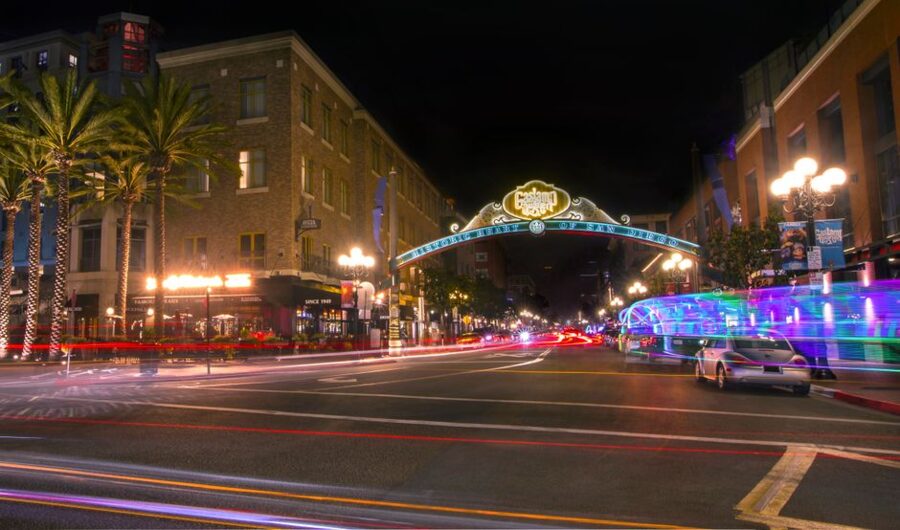
Yes. San Diego is one of the safer big cities in the United States, and the official numbers back that up: its police recorded 27 murders in 2025 in a city of about 1.4 million people, the lowest count since the late 1960s. The risks a visitor is most likely to meet are a smashed car window at a beach lot, a phone lifted from a towel, and a rip current.
That doesn’t mean nothing happens. Theft from cars is common, downtown has visible homelessness, and parts of the coast are genuinely dangerous in big surf. Most of the trouble is predictable, though, and most of it can be avoided with habits you probably already have.

On this page
- What the official travel advice says (November 2026)
- The crime numbers, read properly
- Neighborhoods: where visitors stay and where to take care
- The ocean is the bigger risk
- Fire, earthquakes and other hazards
- Getting around safely
- Practical precautions, all in one place
- Is San Diego safe? The short answer
What the official travel advice says (November 2026)
The US State Department doesn’t rate its own country, so there is no State Department “level” for San Diego. Where it matters is south of the border, which comes up below. For visitors flying in from abroad, the two advisories most often read are Canada’s and the UK’s.
Canada puts the whole United States at its lowest risk level, “Take normal security precautions,” in advice last updated on November 18, 2026. It flags pickpocketing and purse snatching in cities and tourist areas, tells travelers not to leave bags in parked cars, especially rentals, and notes that criminal incidents linked to drug trafficking are more frequent along the Mexican border in California, Arizona, New Mexico and Texas.
The UK’s Foreign, Commonwealth and Development Office (FCDO) has no warnings against travel anywhere in the mainland US; its page was last updated on November 20, 2026. Its crime section is short and specific: don’t leave passports in rental cars, try not to walk through quieter areas alone at night, and keep in mind that violent crime and gun crime “rarely affect tourists.” It also reminds non-US visitors to carry a passport showing their permission to be in the country.
Both also mention protests and terrorism in the same terms they use for every large American city. Neither singles out San Diego.
If you’re planning a day in Tijuana
This is where the official advice changes sharply. The State Department reissued its Mexico advisory on May 28, 2026 at Level 2, “Exercise increased caution,” for terrorism, crime and kidnapping, and says some areas carry higher risk. Its rules for its own staff, which it strongly advises US citizens to follow, include no travel between cities after dark and taxis only from regulated stands or ride apps, never hailed on the street.
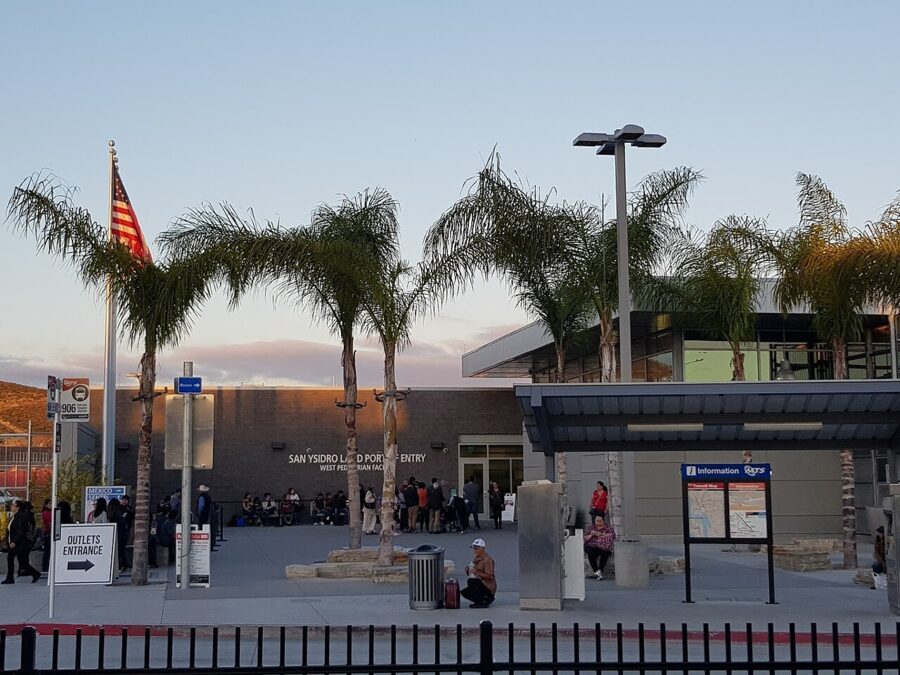

The UK goes further. As of its October 20, 2026 update, the FCDO advises against all but essential travel to the city of Tijuana, apart from airside transit at Tijuana airport, the Cross Border Xpress bridge that links that airport to a terminal on the US side, and the toll road 1D and Via Rápida through the city to the border. It describes Tijuana as an extremely violent city and lists Rosarito and Ensenada as places to take care.
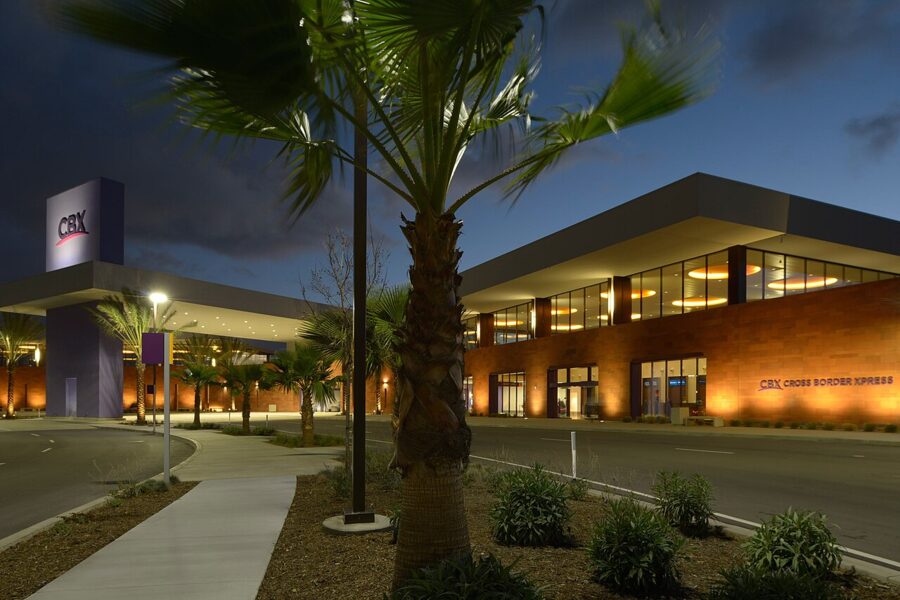

If you’re British, that advice can affect your travel insurance, so read it before you cross. Whatever your passport, carry the document you need to get back into the US, and don’t take cannabis across the border in either direction: it’s legal for adults in California but illegal under federal law, and border officers enforce federal law.
The crime numbers, read properly
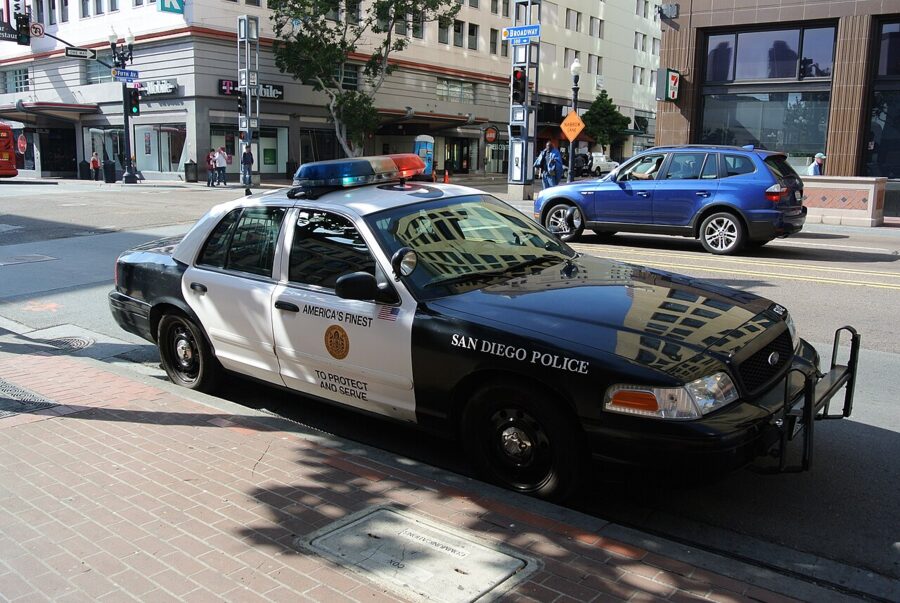
The San Diego Police Department reports crime under the FBI’s National Incident-Based Reporting System. Its 2025 annual report, released in March 2026, shows overall crime down 6.3% on 2024, the fourth straight year of decline. The department puts its violent crime rate at 4.1 per 1,000 residents, which it says is comparable to the 1970s and one of the lowest of any major US city.
| Offense (City of San Diego) | 2024 | 2025 | Change |
|---|---|---|---|
| Murder | 36 | 27 | -25% |
| Robbery | 1,080 | 962 | -11% |
| Aggravated assault | 4,528 | 4,351 | -4% |
| Sexual assault | 793 | 738 | -7% |
| Theft from a motor vehicle | 4,960 | 3,735 | -25% |
| Motor vehicle theft | 5,447 | 4,261 | -22% |
| Larceny (other theft) | 12,122 | 12,102 | flat |
A few details in the report matter to a visitor. Of the 27 murders, five were gang-related and seven involved family or domestic violence, and detectives had a suspect for 26 of them. Robberies were at their lowest annual count since 1970, and car thefts at their lowest since 1972. Non-fatal shootings fell to 96, from a peak of 256 in 2021.
The one category that didn’t fall much is the one tourists feed: ordinary theft. Larceny, which covers pickpocketing, shoplifting, bags taken from beaches and bikes taken from racks, was flat at about 12,100 reports. And the clearance rate for theft from a vehicle was 2.2%. In plain terms, if something is stolen from your car, you will almost certainly not see it again.
What actually happens to visitors
Car break-ins top the list. The SDPD’s 2025 neighborhood tables put the most thefts from vehicles in Pacific Beach (147), Mission Valley East (142), North Park (119), University City (117) and La Jolla (115). Three of those five are places tourists park to go to the beach, the shops or the cove.
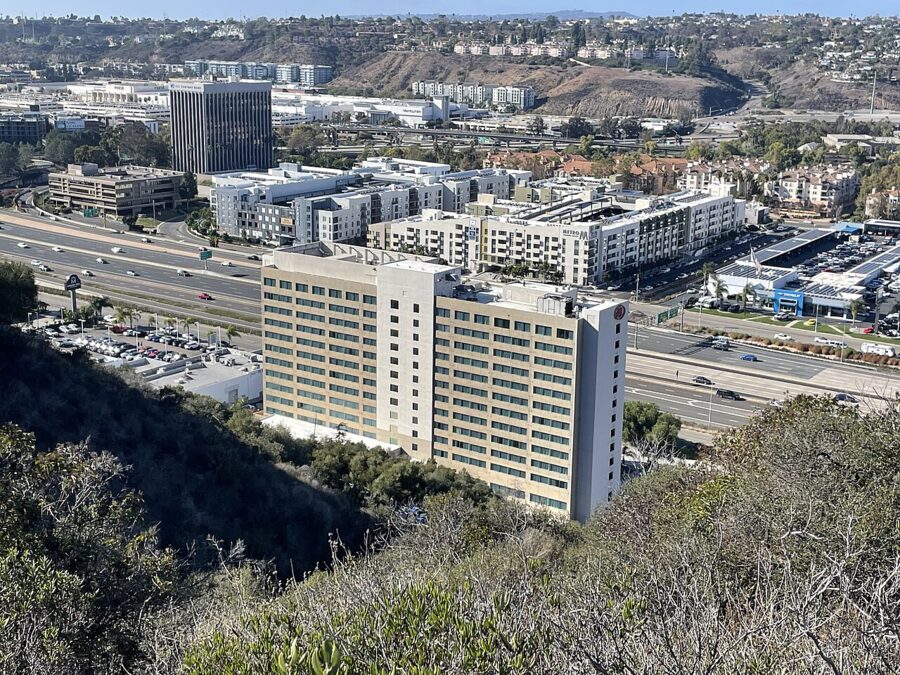
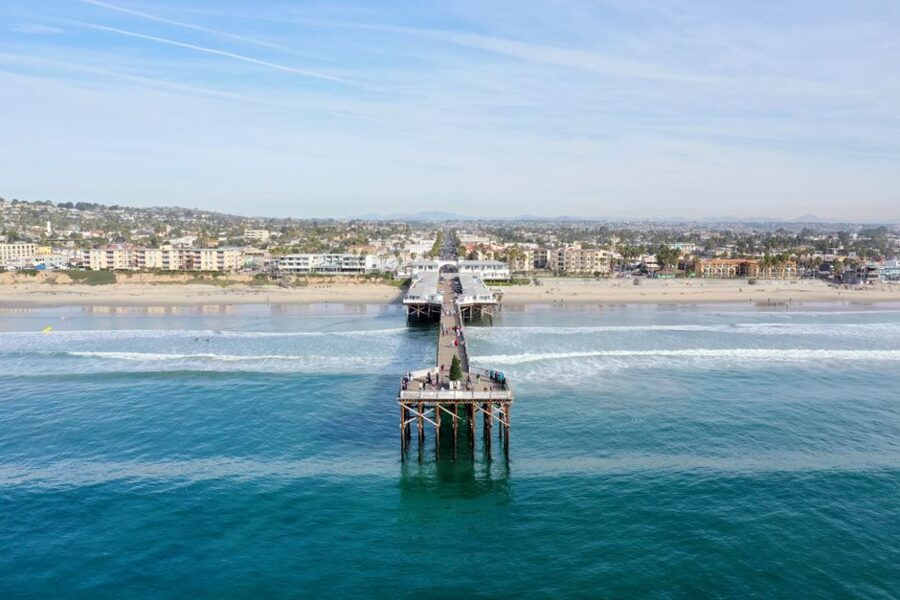
The second is unattended stuff on the sand: phones, wallets and keys left on a towel while everyone goes in the water. The third is late-night trouble around bars: in the Gaslamp Quarter, 251 of the 390 crimes against persons recorded in 2025 were simple assaults. Violent crime against tourists who aren’t involved in any of that is rare, which is what both foreign governments also say.
Scams are mostly the national ones rather than anything local. Text messages claiming you owe an unpaid toll are a widespread phishing scheme across the US; San Diego has toll and express lanes, which makes the message sound plausible. Pay tolls only through the operator’s own site, never through a link in a text.
Is San Diego one of the safest big cities?
By the city’s own reporting, yes, for violent crime. Its murder count of 27 in 2025 is low for any city of 1.4 million, and its robbery and car-theft figures are back at 1970s levels. Property crime is the weak spot, as it is in most of California, and it is concentrated where people and parked cars are.
Hate crimes are worth a line too, since some travelers ask. The SDPD confirmed 41 in 2025, down from 60 in 2024. Religion accounted for about half and sexual orientation for about a third.
Does downtown have a homelessness problem?
It’s visible, and it’s the thing first-time visitors mention most. The January 2026 count by the Regional Task Force on Homelessness found 3,132 people living unsheltered in the City of San Diego, down 6.6% on 2025, with another 2,826 in shelters. County-wide, the total was 9,803.
Downtown, you’ll see tents and people sleeping in doorways, most of all in East Village. The practical advice is the same as in any American city: don’t engage with someone who is clearly in crisis, give space on the sidewalk, and report anything threatening to 911.
Neighborhoods: where visitors stay and where to take care
The SDPD publishes 2025 counts for every neighborhood in the city. They are raw counts, not rates, so busy districts with lots of visitors and nightlife score high simply because so many people pass through. Read them as “where things happen,” not “where people live dangerously.”
| Neighborhood | Crimes against persons, 2025 | Property crimes, 2025 |
|---|---|---|
| East Village | 781 | 1,003 |
| Pacific Beach | 455 | 1,245 |
| Gaslamp | 390 | 297 |
| Hillcrest | 382 | 714 |
| Ocean Beach | 287 | 399 |
| La Jolla | 175 | 1,101 |
| Mission Beach | 129 | 288 |
| Lincoln Park | 127 | 223 |
| Balboa Park | 114 | 113 |
| Old Town | 84 | 160 |
| Little Italy | 71 | 210 |
“Crimes against persons” in this table includes simple assault and intimidation as well as the serious offenses, so most of it is low-level. The figures cover January to December 2025 and come from the SDPD’s neighborhood tables.
Gaslamp Quarter and East Village
The Gaslamp is where most of the convention hotels and nightlife are, and it’s crowded and well lit until the bars close. Most of its incidents are simple assaults, the kind of thing that happens outside a club at 1:45am. If you’re not in that crowd at that hour, the district is fine.


East Village had the most crimes against persons of any neighborhood in 2025 and the most robberies (53). The blocks right around Petco Park and the convention center are busy and fine. The quieter streets further east are where to take a car rather than walk at night.
Little Italy and Hillcrest
Little Italy, just north of downtown, had one of the lowest counts of crimes against persons on the list, and it’s an easy place to base yourself if you want restaurants and a walk to the waterfront. Its Saturday farmers market draws big crowds, so keep a hand on your bag there.
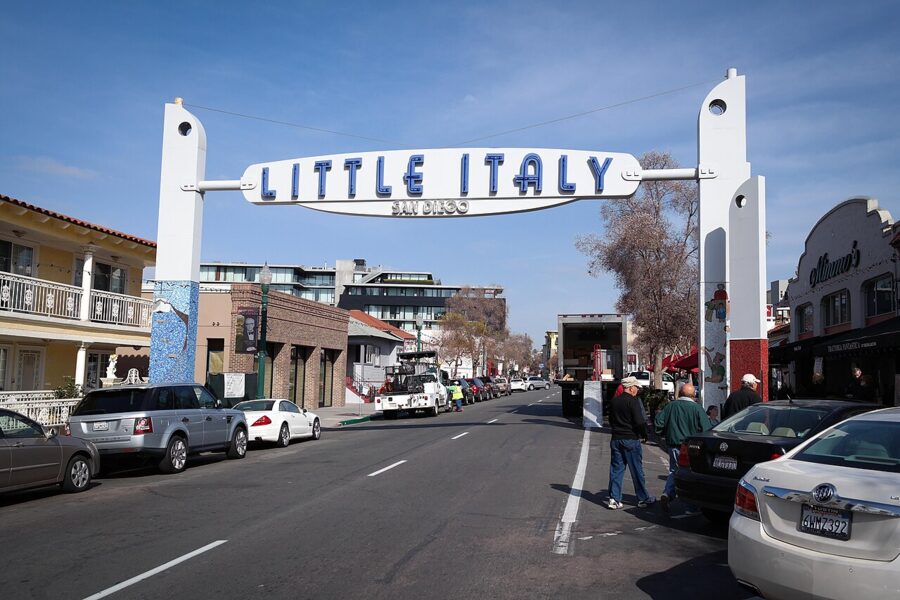

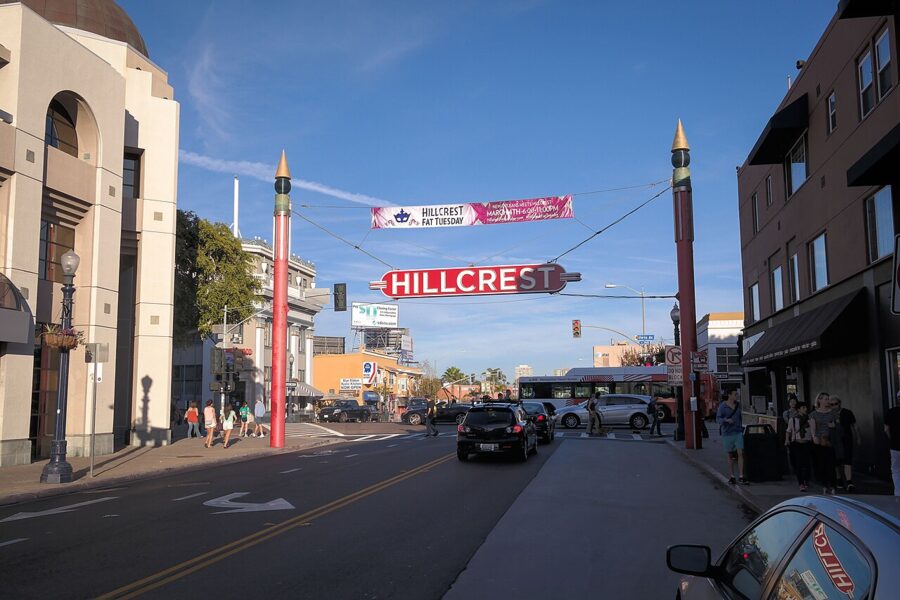
Hillcrest, the city’s best-known LGBTQ neighborhood, is a lively bar and restaurant district with numbers to match. It’s a normal city neighborhood: busy on weekend nights, with car break-ins on the side streets.

The beach towns: Pacific Beach, Mission Beach, Ocean Beach
Pacific Beach is the party beach, with the most property crime of any neighborhood the city counts and a lot of late-night noise. It’s a fine place to visit and a loud place to sleep. Mission Beach, immediately south, is calmer, with roughly a quarter of Pacific Beach’s property crime.
Ocean Beach is older, scruffier and more local, with a visible homeless population near the beach and Newport Avenue. It had three homicides in 2025, more than any other neighborhood in the table, which sounds alarming next to the Gaslamp’s zero but is three cases in a year. Use the usual care at night and you’re unlikely to notice anything.

La Jolla, Coronado, Old Town and Balboa Park
La Jolla’s numbers are almost all property crime: 624 larcenies and 115 thefts from vehicles in 2025, next to 175 crimes against persons. Violent crime there is low. The same is true of Old Town, where most visitors spend an afternoon among the restaurants and the state historic park.
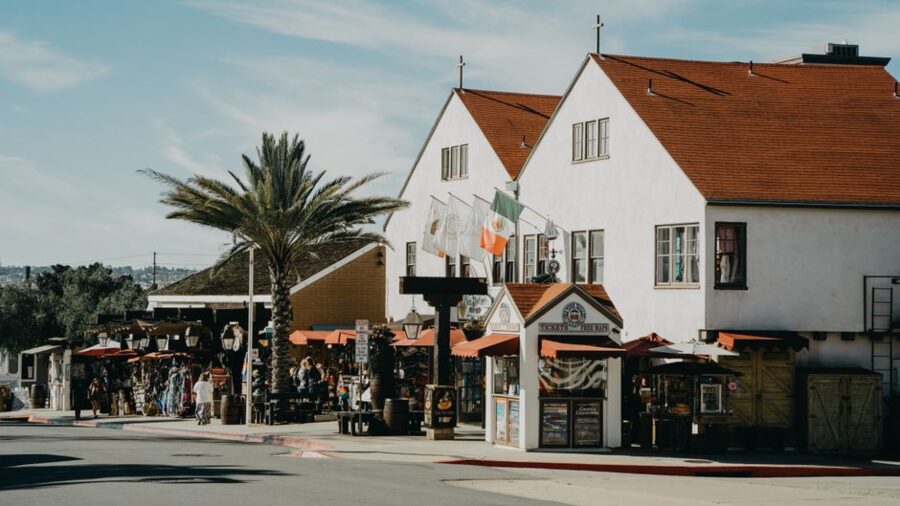
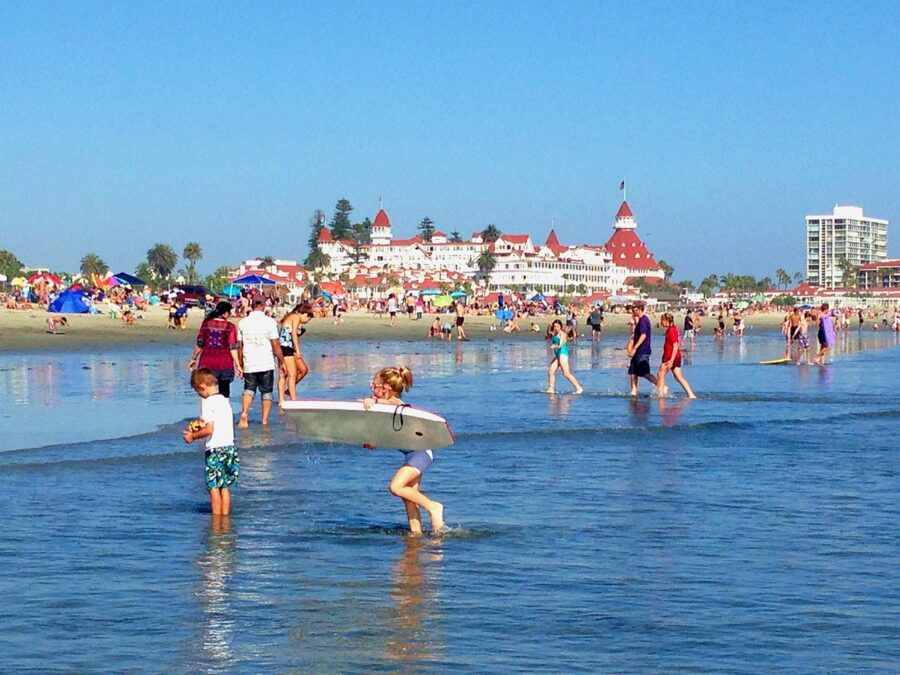
Coronado is a separate city with its own police department, and it’s quiet. Its biggest safety issue in 2026 has been water quality, not crime (see below).
Balboa Park is busy and safe by day. At night the museums close and the park empties, so walking across it after dark, especially through its quieter canyons, isn’t a good idea. Drive or take a rideshare instead.

The “Four Corners of Death”
This nickname belongs to the intersection of Euclid Avenue and Imperial Avenue in Lincoln Park, in southeast San Diego, where gang territories meet and where shootings were frequent years ago. Since 2020, residents working to revive the area have been calling it “The Four Corners of Life.” In 2025 the SDPD recorded one homicide and 127 crimes against persons in the whole of Lincoln Park, fewer than in Ocean Beach.
It’s a residential neighborhood that visitors rarely have a reason to go to. If you pass through on the Orange Line trolley, the Euclid Avenue station is the stop, and ordinary city care applies.
Where not to stay
No neighborhood visitors are likely to book is off-limits. The better rule is about specific situations: a cheap rental on a dark block in the eastern part of East Village, a room above a Pacific Beach bar if you want to sleep, or a place you can only reach on foot through an empty park at night. Check the street, not just the neighborhood name.
The ocean is the bigger risk
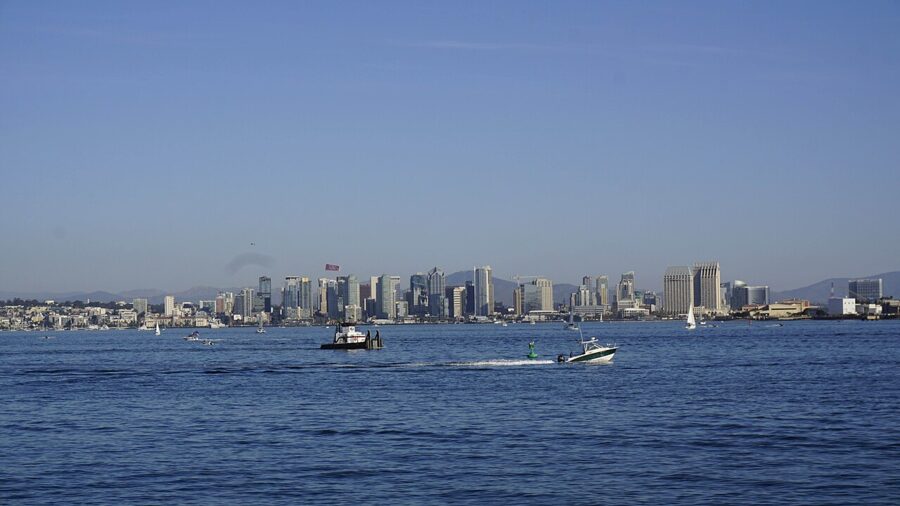
For most visitors, the Pacific is more dangerous than any street. The city’s lifeguard service covers about 24 miles of coastline from Point Loma to Torrey Pines, with nine permanent oceanfront stations and close to 300 lifeguards. The city says rip currents are the most threatening hazard on its coast, and cites the US Lifesaving Association finding that more than 80% of rescues by ocean lifeguards involve them.
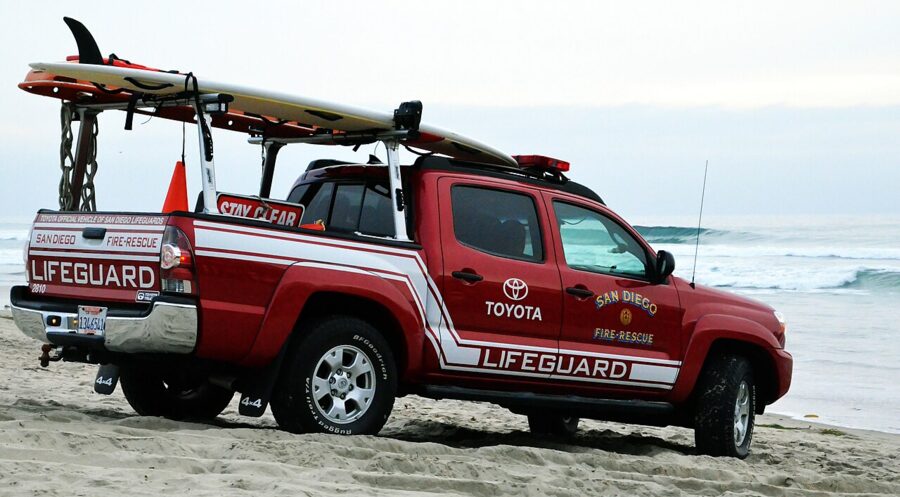

Busy summer weekends show the scale. Over one hot weekend in late July 2026, San Diego lifeguards made 464 water rescues as large surf and strong rip currents hit crowded beaches, nearly double the 336 of the week before.
The lifeguards’ rules are simple. Swim near a staffed tower, ask a lifeguard where it’s safe, and stay where you can touch bottom. If a current pulls you out, swim sideways, parallel to the shore, until you’re free of it, then swim in. Don’t dive head first into unfamiliar water; go in feet first the first time.
Cliffs and bluffs
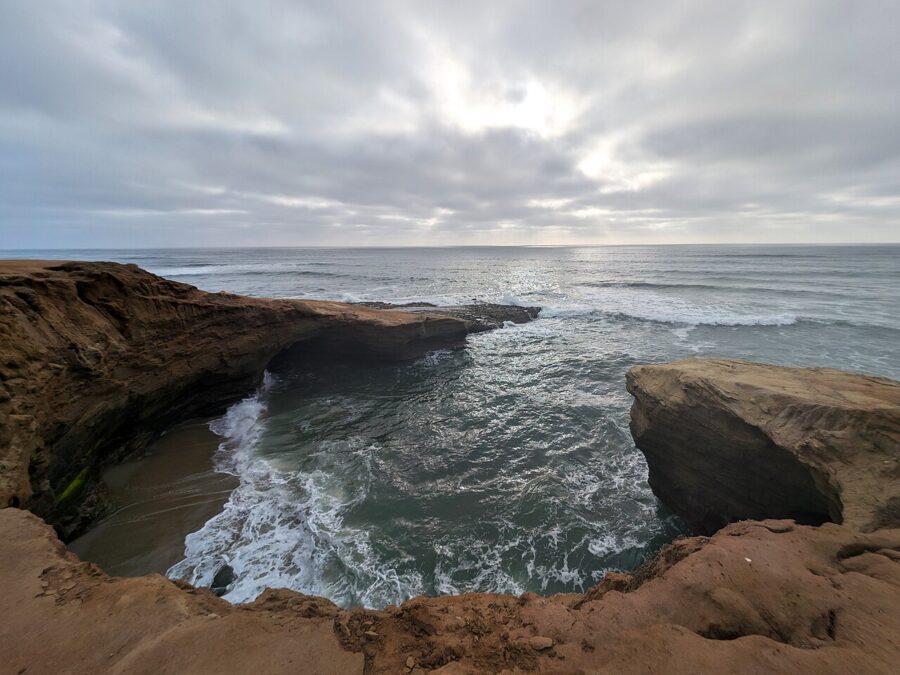
San Diego’s sandstone cliffs collapse without warning, and the city tells people to stay well back from the edges and never turn their backs on the ocean on rocks or tide pools, where a set of bigger waves can arrive with no warning. Sunset Cliffs is where that advice is easiest to forget. During that same late-July weekend, a 17-year-old was seriously injured jumping from the cliffs there.

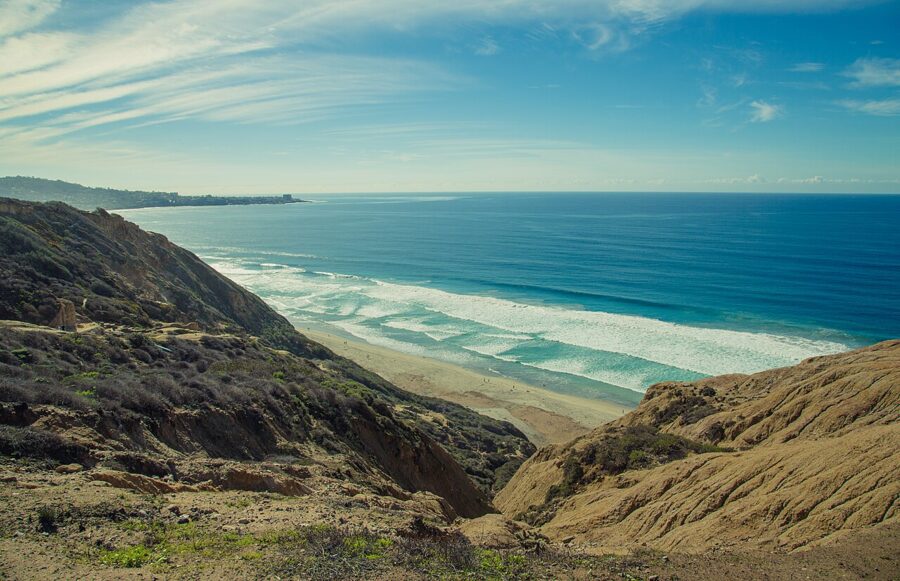
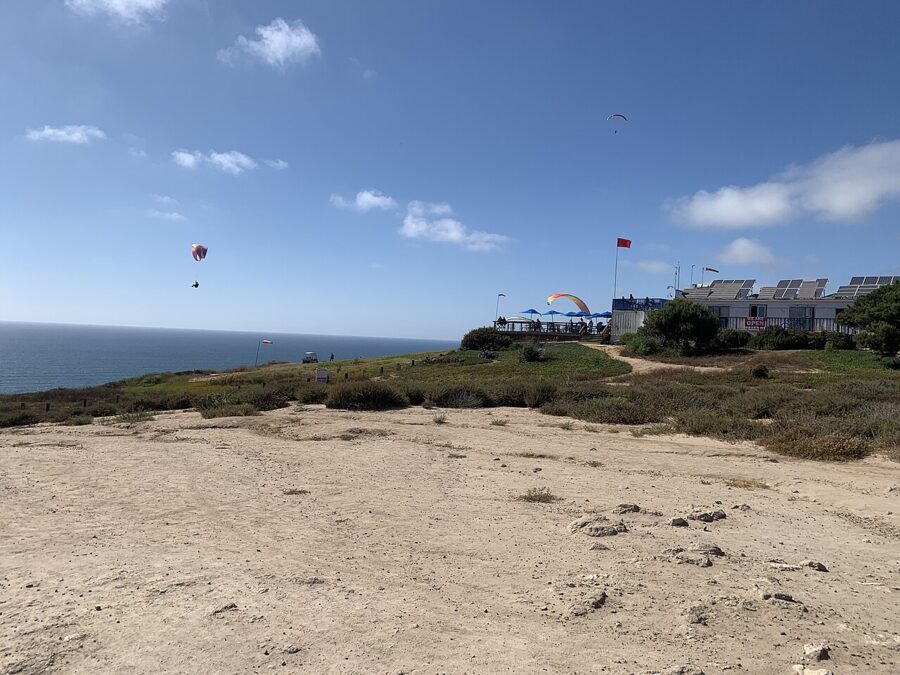
Black’s Beach, below the Torrey Pines Gliderport, is the other one. The city calls access very difficult, warns that the trails down are unimproved and unmaintained and that slides can happen without warning, and says the safest way in is along the sand from neighboring beaches. High tide or big surf can cut that route off, so check the tide before you walk.


Seals and sea lions
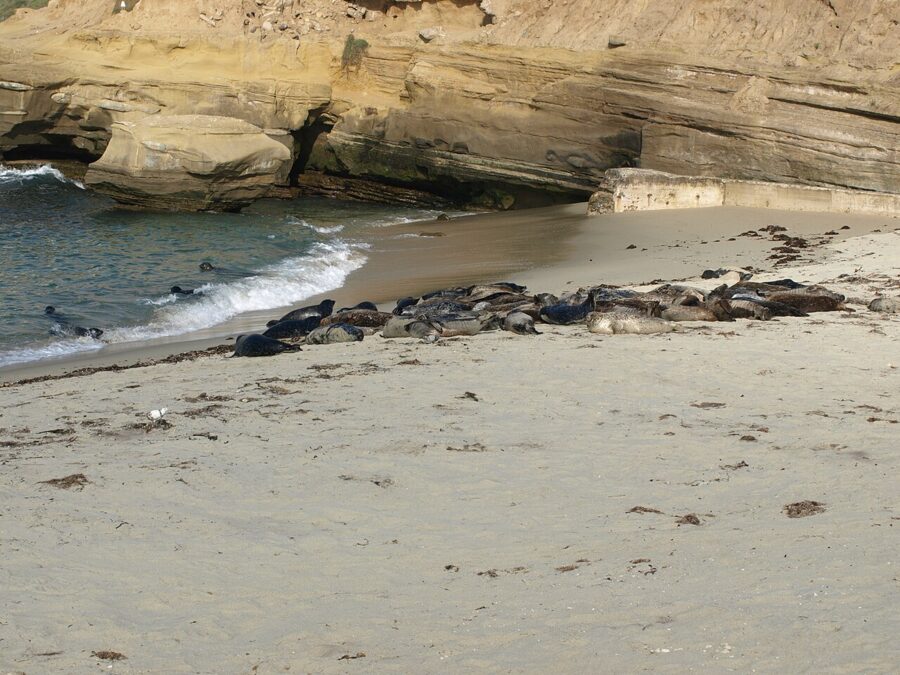
La Jolla’s sea lions are a top sight and a real hazard for people who get close. The city has fenced off parts of Point La Jolla as a closure area, and its signs warn that seals and sea lions can bite, that agitated animals may attack, and that harassing them is against the law. Pupping season runs from about early May to October, when mothers are most defensive.


A short walk south, Children’s Pool Beach is closed to the public every year from December 15 to May 15 for harbor seal pupping. Outside those dates you can go down to the sand, but the reef just offshore creates strong currents in big surf.
Sewage and water quality
The southernmost beaches have a problem no lifeguard can fix: sewage from the Tijuana River. County health officials have closed the shoreline at Imperial Beach, the Silver Strand and parts of Coronado repeatedly in 2026, including closures in September. On some days the water there isn’t safe to touch.
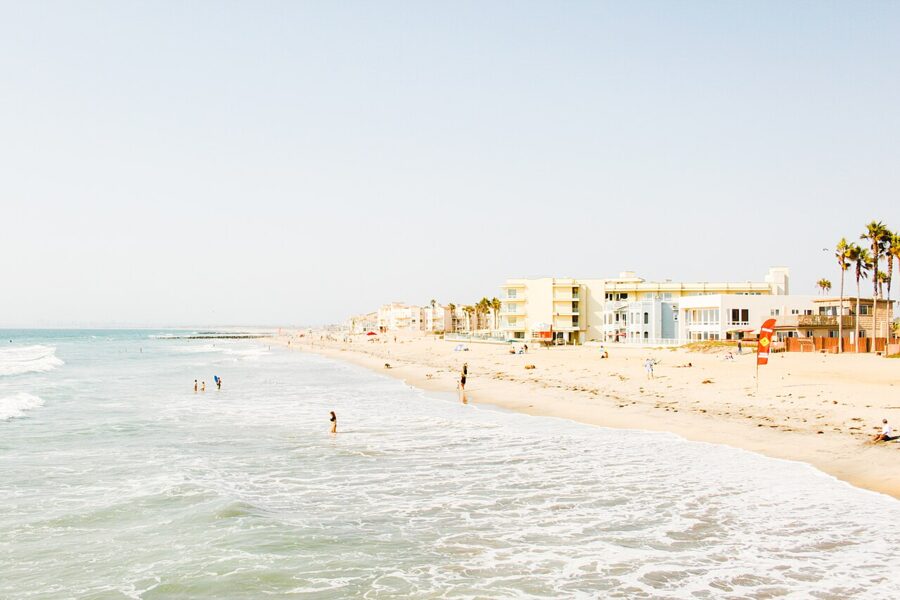
After rain, the county advises staying out of the ocean everywhere in the region for 72 hours, because storm drains carry runoff straight to the beaches.
Fire, earthquakes and other hazards
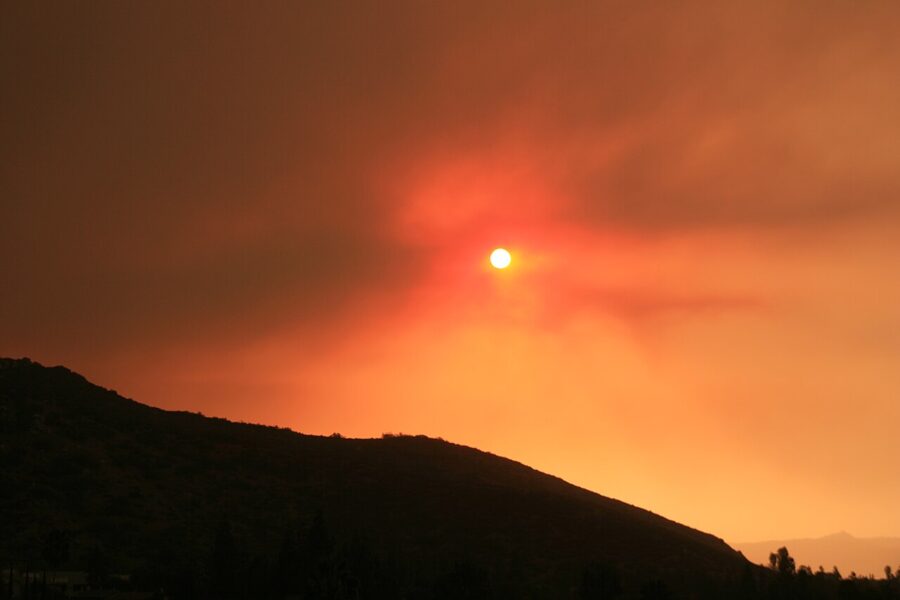
Wildfire is San Diego’s big natural risk. The worst fires have come with Santa Ana winds, the hot, dry gusts from the desert that tend to blow in fall and winter. The National Weather Service office in San Diego issues Red Flag Warnings when conditions turn dangerous, and that’s the signal to keep an eye on local news, especially if you’re staying inland or in the hills.

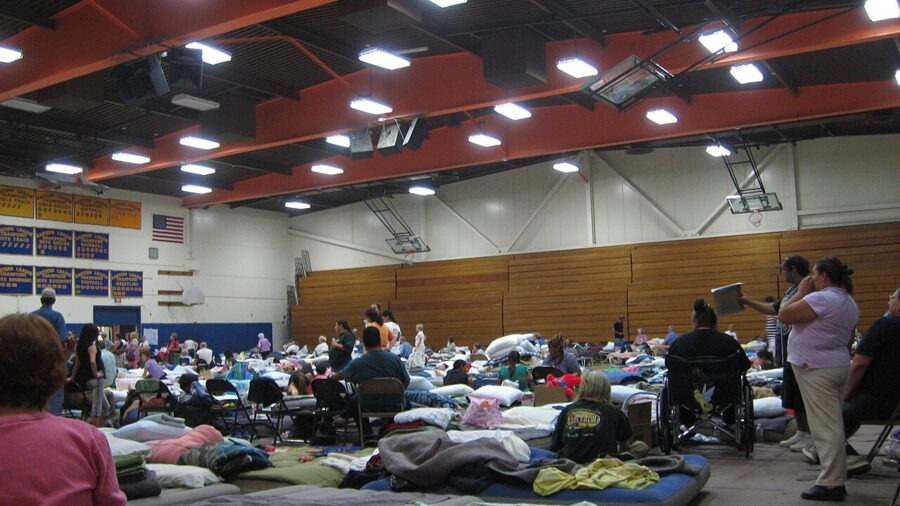
The county’s emergency system is AlertSanDiego. You can register a mobile phone or email address for alerts tied to a location, such as your hotel, and the county’s companion app adds evacuation information, shelter locations and early earthquake warnings.

Earthquakes are possible anywhere in California, and the Rose Canyon Fault runs through the city itself, under parts of downtown and La Jolla. There’s nothing to do in advance beyond knowing the drill: drop, cover and hold on, then move away from glass and the coast if the shaking is long and strong.
Water, food and health
Tap water is treated, tested and safe to drink; the city publishes an annual drinking water quality report comparing it with state standards. Restaurants are inspected by the county, and the grade card should be posted near the entrance.
The sun is the most common health complaint. Even on a cool, gray “June gloom” morning the UV is strong, so use sunscreen. Medical care is excellent and expensive. The FCDO notes there are no special arrangements for foreign visitors and that some hospitals ask for a deposit, so buy travel insurance before you come.
Cannabis is legal for adults 21 and over in California, but you can’t use it in public, and it stays illegal under federal law, including at the airport and the border. The drinking age is 21, and bars check ID. Foreign visitors should bring their passport out at night rather than a photocopy.
Getting around safely
The San Diego Trolley is the easiest way to move between downtown, Old Town, Mission Valley and the border. As of November 2026, a one-way adult fare is $3, and if you pay with a PRONTO card, the PRONTO app or a contactless bank card, fares stop at $7 for the day. The trains are generally safe; late at night, sit in a busy car, keep your phone out of reach of the doors, and stay alert at the downtown stations.


After midnight, take a rideshare. Check the plate and driver name before you get in, and wait inside rather than on the curb.
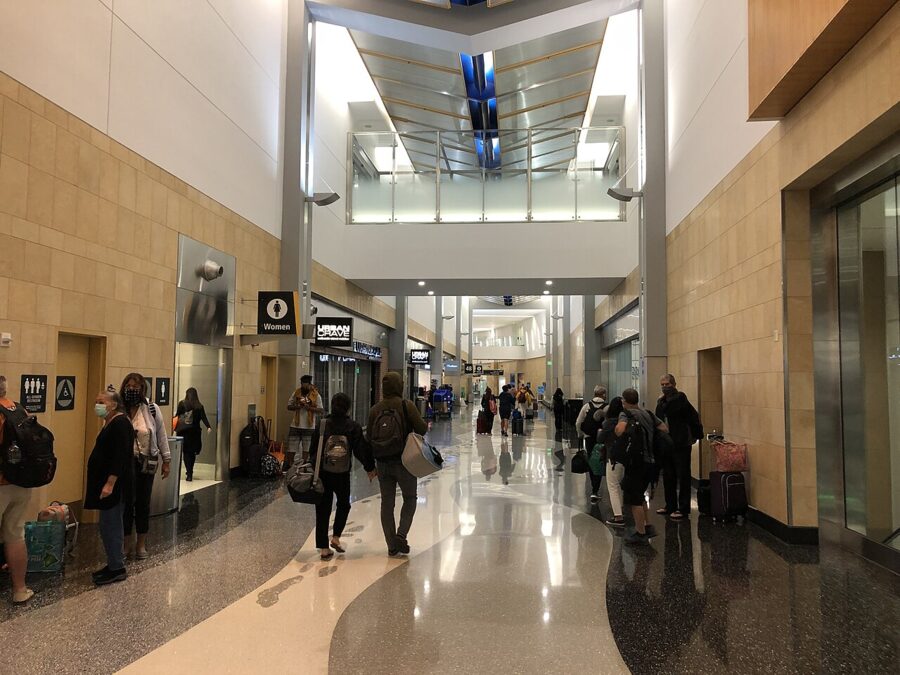

If you rent a car, treat it as a target. Leave nothing visible, not even a charging cable or an empty bag, and don’t leave a passport in the trunk, which is the FCDO’s specific warning. Canada also warns of a highway ploy aimed at drivers leaving airports: someone signals that your car has a problem, waits for you to stop, then grabs what’s inside. If it happens, keep going, put on your hazard lights and pull into a gas station or another busy place.
Practical precautions, all in one place
- Emergencies: dial 911 for police, fire, ambulance and lifeguards. For non-urgent police matters, the SDPD lists its non-emergency line on its website.
- Beach days: bring only what you need, keep your phone in a zip pocket or with someone on shore, and never leave a bag in the car at the beach lot.
- Swimming: pick a beach with a staffed tower, check the county’s sdbeachinfo.com map south of Point Loma, and stay out of the water for 72 hours after rain.
- Nights out: the Gaslamp and Pacific Beach are fine until closing time; leave a few minutes before 2am or after the crowd clears, and take a rideshare home.
- Money: cards and phone payments work almost everywhere. Use ATMs inside banks or stores, and cover the keypad.
- Documents: foreign visitors should carry their passport. Anyone going to Mexico needs the right document to come back.
- Alerts: register your hotel’s location with AlertSanDiego if you’re staying a while, especially in fire season.
Is San Diego safe? The short answer
- Official advice (November 2026): Canada rates the US “Take normal security precautions”; the UK has no warnings for the US; the State Department doesn’t rate its own country.
- Violent crime: low. 27 murders in 2025, the fewest since the late 1960s, and a violent crime rate of 4.1 per 1,000 residents.
- Most likely problem: theft from cars and unattended bags, especially in Pacific Beach, Mission Valley and La Jolla.
- Biggest physical risk: the ocean. Swim near lifeguards, and stay back from cliff edges and sea lions.
- Areas to take care at night: the eastern blocks of East Village, empty parks, and the bar strips at closing time.
- Tijuana: check both the State Department and the FCDO before crossing; the UK advises against all but essential travel to the city.
One habit prevents the most common problem visitors have here: before you leave the car at any beach, look through the windows from the outside. If you can see anything worth stealing, so can everyone else.