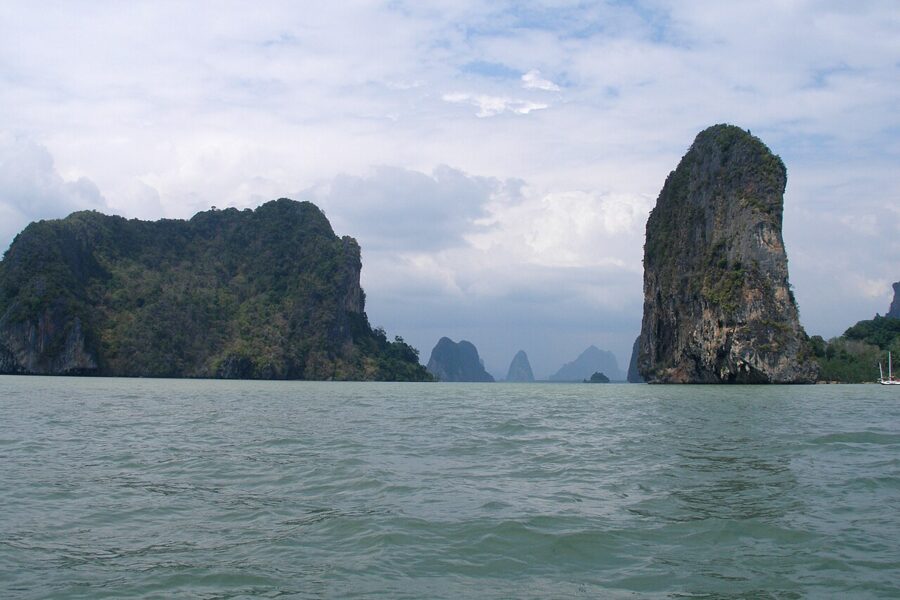
The best time to visit Thailand is November to February, the cool, dry season, when Bangkok and Chiang Mai are at their most comfortable and the Andaman coast around Phuket, Krabi and the Similan Islands has its calmest seas. If you can only pick one month, make it January: little rain almost everywhere except the Gulf islands, mornings cool enough for temples and markets, and the Christmas rush already over.
The months to avoid depend on where you are going. September and October are the wettest on the Andaman coast and in Bangkok; October to December are the wet months on Ko Samui, Ko Pha Ngan and Ko Tao, which flips the usual advice for those islands. March and early April bring smoke to the north, and April is the hottest month nearly everywhere. The rainy season is green and cheap, and mostly brings afternoon storms rather than wet weeks.


The climate figures below are the Thai Meteorological Department’s 30-year averages for 1991 to 2020 (1998 to 2020 for Ko Samui). Festival and holiday dates are for 2027 where they have been announced, and entry rules and advisories are as of November 2026.
On this page
- The short answer
- Thailand's three seasons
- Thailand weather by month
- Thailand month by month
- Andaman coast or Gulf coast?
- Northern Thailand and the burning season
- When to go for what you want to do
- Festivals and public holidays in 2027
- Before you book: entry rules and advice for 2026 to 2027
- Which month for which trip
The short answer
- Best overall: November to February. Dry and comparatively cool in Bangkok, the north and the Andaman coast.
- Best single month: January, unless your trip is mainly Ko Samui, Ko Pha Ngan or Ko Tao.
- Best for the Gulf islands: February to August, with March and April the driest.
- Best value: May, June and early July, before the heaviest rain and after the high-season prices drop.
- Hardest months: April for heat, March for smoke in the north, September and October for rain on the Andaman side and in Bangkok, November for rain on Ko Samui.
- Book furthest ahead: Christmas to mid-January, Chinese New Year, Songkran in mid-April and the Loy Krathong full moon in November.
Thailand’s three seasons
Thai government sources divide the year into three seasons: a cool season from mid-October to mid-February, a hot season from mid-February to mid-May, and a rainy season from mid-May to mid-October. The dates move by a week or two each year, and the Thai Meteorological Department announces each start. In 2026 the cool season arrived late: the department declared winter on November 9, after rain lingered well into October.
That calendar fits Bangkok, the north and the northeast. The south is different, because its two coasts face two different monsoons.
Cool season (mid-October to mid-February)
The northeast monsoon brings drier air from the Asian mainland. Bangkok’s average lows fall to about 74°F in December and January, and Chiang Mai’s to about 60°F, with clear days in the mid-80s. In the mountains it can be properly cold: frost forms on Doi Inthanon on some winter mornings.
For 2026 to 2027 the department expects a milder winter than usual, with El Niño building late in the year. Its October forecast put the coldest spell between late December and early February, Bangkok’s lowest temperatures at 66 to 70°F, and the upper north and northeast at about 50 to 54°F, with frost possible on the peaks.


Hot season (mid-February to mid-May)
The heat builds until the first storms arrive, peaking in April. Beaches are still good on both coasts in March, and the Gulf islands are at their driest. This is also when smoke from crop and forest fires fills the north.
Rainy season (mid-May to mid-October)
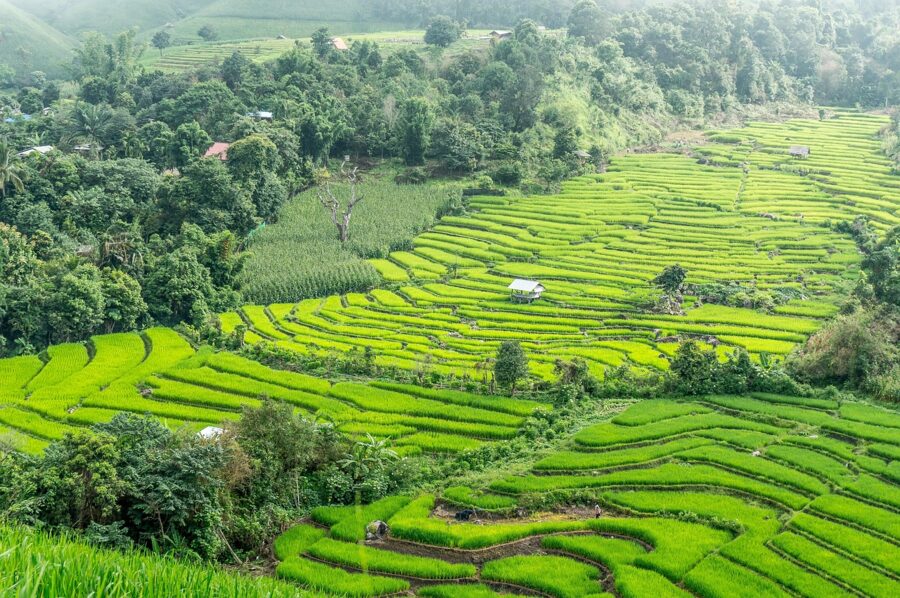
The southwest monsoon brings most of the year’s rain. Bangkok gets about 85% of its annual rainfall in these months, and September is its wettest month, at about 13 inches over 21 rainy days. In most places the pattern is a heavy storm in the afternoon or evening with dry hours either side, not days of drizzle. Rice fields turn green, and some island parks close.
Thailand weather by month
Average daily highs and lows and monthly rainfall at four stations that cover most trips: Bangkok, Chiang Mai, Phuket for the Andaman coast and Ko Samui for the Gulf islands. Source: the Thai Meteorological Department’s 1991 to 2020 climate normals.
| Month | Bangkok high/low | Bangkok rain | Chiang Mai high/low | Chiang Mai rain | Phuket rain | Ko Samui rain |
|---|---|---|---|---|---|---|
| January | 91/74°F | 0.9 in | 86/60°F | 0.4 in | 2.0 in | 5.0 in |
| February | 93/77°F | 0.8 in | 91/62°F | 0.4 in | 0.9 in | 2.5 in |
| March | 94/80°F | 2.0 in | 96/68°F | 0.8 in | 3.2 in | 4.6 in |
| April | 96/81°F | 3.7 in | 98/74°F | 2.1 in | 5.3 in | 3.3 in |
| May | 95/80°F | 8.5 in | 94/76°F | 6.6 in | 9.3 in | 5.2 in |
| June | 93/80°F | 7.8 in | 92/76°F | 4.7 in | 9.8 in | 5.3 in |
| July | 92/79°F | 7.5 in | 90/76°F | 5.9 in | 9.5 in | 4.6 in |
| August | 92/79°F | 8.9 in | 89/75°F | 8.8 in | 12.2 in | 4.0 in |
| September | 92/78°F | 13.2 in | 90/75°F | 8.2 in | 13.8 in | 4.6 in |
| October | 91/77°F | 11.4 in | 89/73°F | 4.9 in | 13.2 in | 11.6 in |
| November | 92/76°F | 1.8 in | 87/68°F | 1.6 in | 7.0 in | 17.5 in |
| December | 90/74°F | 0.5 in | 85/62°F | 0.6 in | 3.2 in | 10.4 in |
Two things the averages hide. First, temperature barely moves on the coasts: Phuket’s average high stays between 89 and 94°F all year, so for a beach trip only the rain and the sea matter. Second, daylight changes little this close to the equator, from about 11 hours in December to about 13 in June in Chiang Mai, a little less of a swing in Bangkok. Sunshine changes far more: Chiang Mai logs about 258 hours of it in January and about 111 in August.
Thailand is humid all year: Bangkok’s average relative humidity sits between 66% and 79%, and Ko Samui’s is 78% or higher in every month. The driest air is in Chiang Mai in February and March, at about 54% to 58%.

Thailand month by month
January
The best all-round month. Bangkok averages under an inch of rain, Chiang Mai under half an inch, and Phuket about 2 inches over five or six days. Northern mornings are cool, around 60°F in Chiang Mai.
The exception is the Gulf islands, where the northeast monsoon is fading but not gone: Ko Samui still averages 5 inches of rain over about 11 days. The first week of January is still part of the holiday peak.

February
The driest month on the Andaman coast (under an inch in Phuket) and the point where the Gulf islands turn good, with rain on Ko Samui down to about 2.5 inches. In the north, haze starts to appear by late February in a dry year.
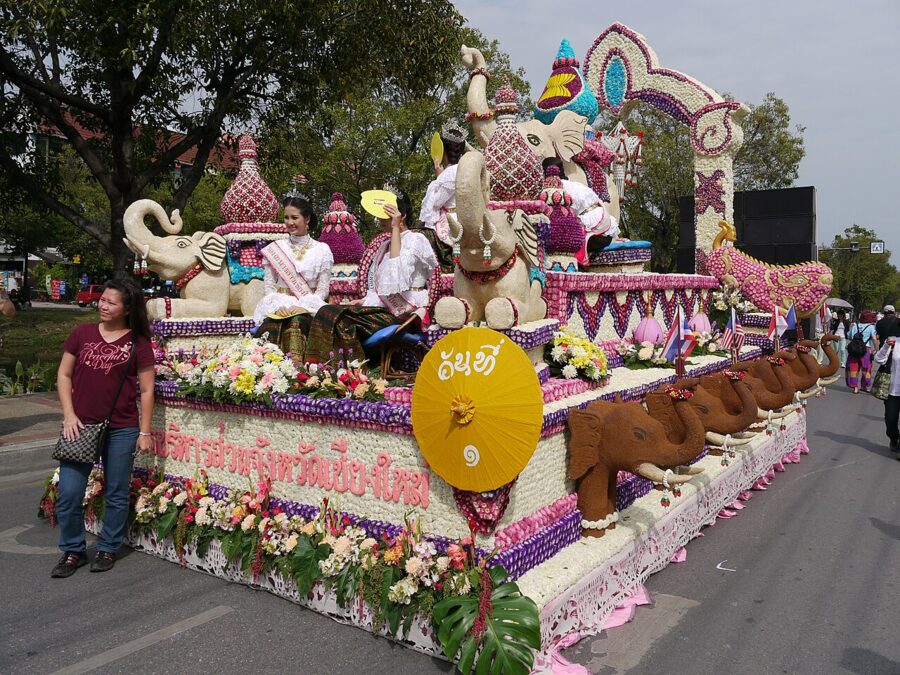
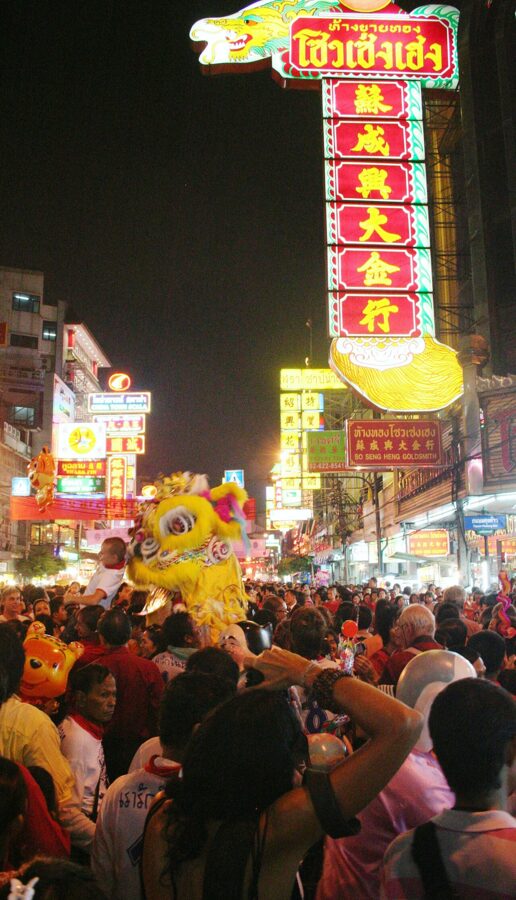
Chinese New Year falls on February 6 in 2027, which fills Bangkok’s Chinatown and Phuket Town and brings a wave of visitors from across Asia that week. Chiang Mai’s Flower Festival is usually held on the first weekend of the month, with a parade of flower-covered floats. Makha Bucha, a Buddhist holy day, falls on February 21, 2027.

March
Beach weather is still excellent on both coasts. Phuket averages about 3 inches of rain and Ko Samui about 4.6 inches over only six rainy days, and the seas are calm. Bangkok’s highs reach the mid-90s.
March is the worst month for smoke in the north. Chiang Mai’s weather station records haze on about 27 days of an average March, and in 2026 the city again ranked among the most polluted in the world on several days. If the north is the point of your trip, move it to November to January.

April
The hottest month, with average highs around 96°F in Bangkok and 98°F in Chiang Mai. Sightsee early, rest at midday and go out again after dark. The Gulf islands are a good escape: Ko Samui’s highs stay near 89°F and April is one of its driest months.
Songkran, the Thai New Year, runs April 13 to 15 in 2027. It is the busiest domestic travel week of the year, and buses and trains out of Bangkok sell out.


May
The rains begin, usually in the second half of the month, as short, heavy afternoon storms that break the heat. Phuket’s rainfall jumps to more than 9 inches, and the Andaman swell starts: Similan and Surin island national parks closed for the season on May 16 in 2026. The Gulf islands stay relatively dry at about 5 inches.
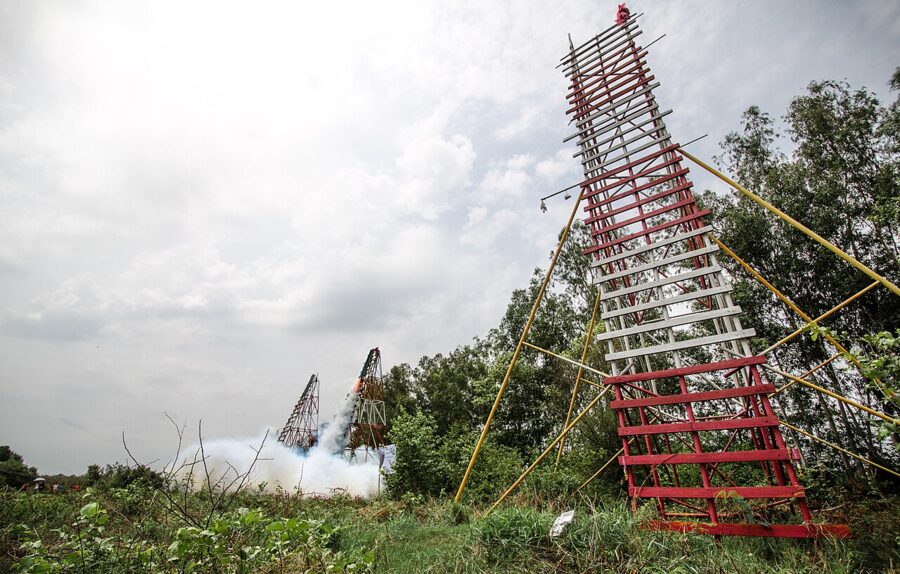
May is one of the best-value months, as high-season prices end and the summer holidays have not begun. In the northeast, rocket festivals (Bun Bang Fai) call for rain; the best known, in Yasothon, is usually held over a weekend in mid-May. Visakha Bucha, the holiest day of the Buddhist year, falls on May 20, 2027.

June
A good month for a first trip on a budget. Storms are frequent but short, and June is drier than May in Chiang Mai. The Andaman coast is wet and rough, with red flags on west-facing beaches, while the Gulf islands remain the better beach choice.

July
School holidays in Europe and North America bring a second, smaller peak, mostly to the Gulf islands, where July is one of the drier months (about 4.6 inches on Ko Samui). Bangkok gets about 7.5 inches of rain over 17 days, enough to plan around but rarely to cancel a day.
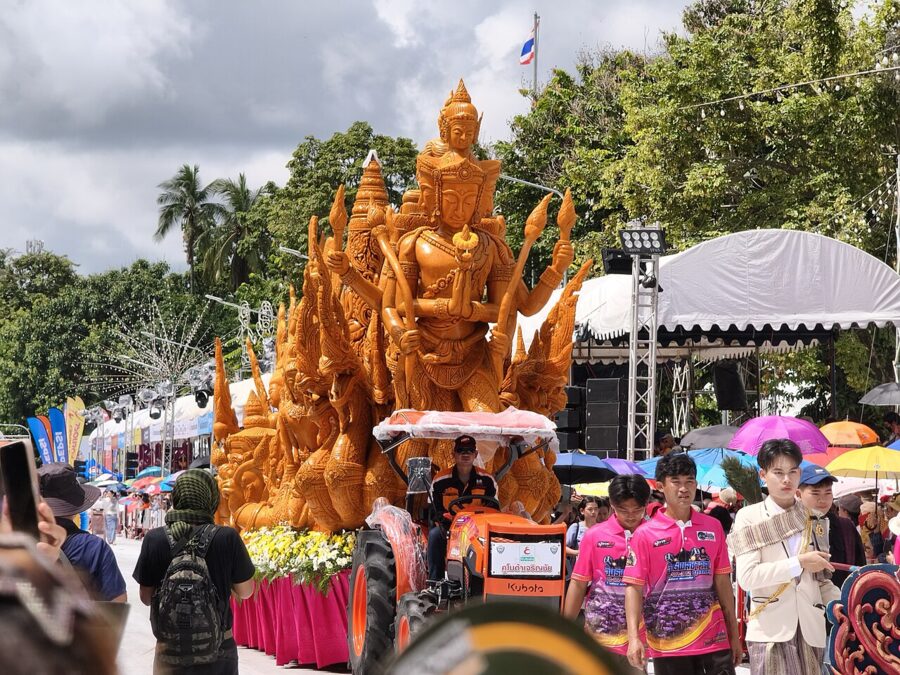
Asanha Bucha falls on July 18, 2027, and the start of Buddhist Lent on the following day; alcohol sales are normally restricted on both. In Ubon Ratchathani the start of Lent is marked by the Candle Festival, a parade of huge carved wax floats.
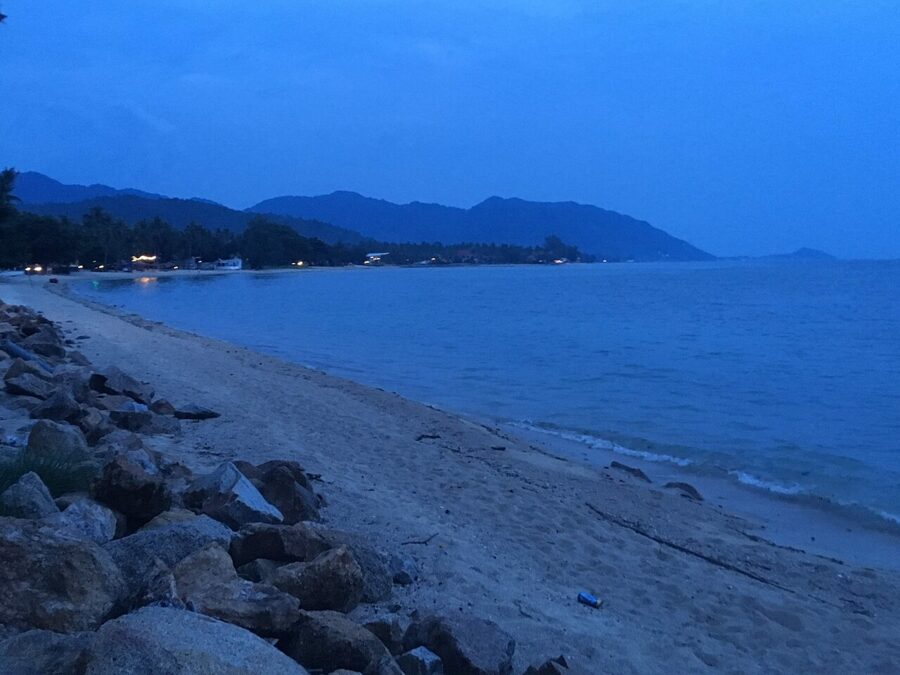

August
Rain peaks in the north: Chiang Mai averages 8.8 inches over 21 rainy days, and trekking trails get muddy and leech-prone. Phuket gets more than 12 inches. Ko Samui, at 4 inches, is drier in August than in any month from October to January.
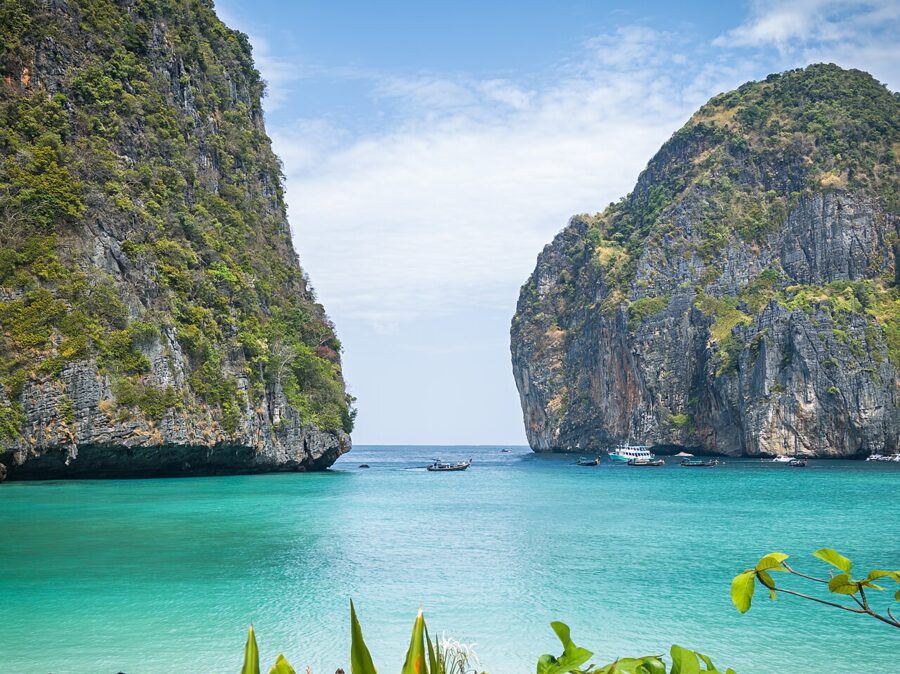
Maya Bay on Ko Phi Phi Le closes to visitors in the monsoon for its annual rest; it reopened on October 1 in 2026.
September
The wettest month in Bangkok (about 13.2 inches over 21 days) and on the Andaman coast (about 13.8 inches in Phuket). It is the cheapest month to travel, and cities and temples are still fine with an umbrella. Low-lying parts of Bangkok can flood after heavy storms.
Stay out of floodwater: the CDC warns that leptospirosis risk rises after floods and heavy rain. Ko Samui, at about 4.6 inches, is the drier beach option.
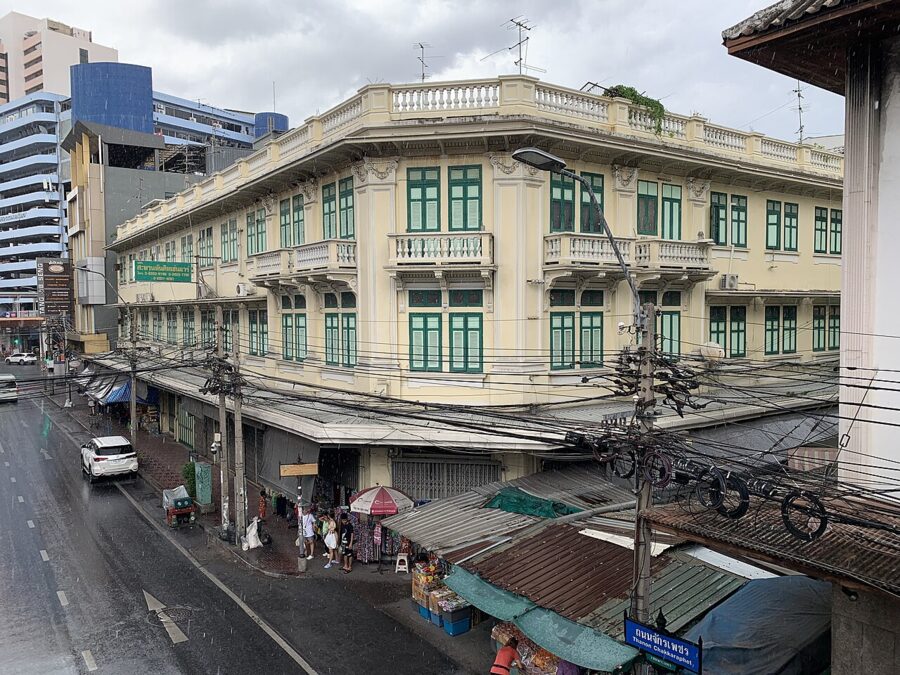

October
The rain eases in the north and center, and Chiang Mai is often clear and green by the end of the month. On the Andaman coast the seas begin to settle; Similan and Surin parks reopen on October 15 most years, as they did in 2026. The Gulf turns wet, with Ko Samui’s rainfall more than doubling to about 11.6 inches.
The Phuket Vegetarian Festival is held in the ninth lunar month, which in 2026 meant October 10 to 18; dates for 2027 have not been announced.

November
High season starts. Bangkok and Chiang Mai turn dry (under 2 inches each) and the north is clear, cool and green after the rains. The Andaman coast improves through the month, though Phuket still averages about 7 inches of rain, so the second half is safer. November is the wettest month of the year on Ko Samui, at about 17.5 inches over 19 days.
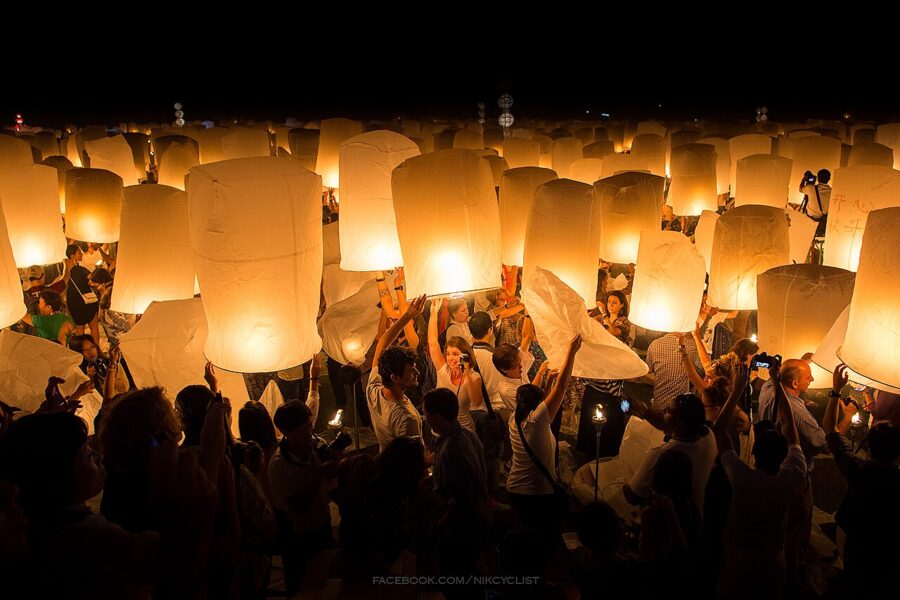
Loy Krathong, when people float small candle-lit baskets on rivers and ponds, falls on the full moon of the twelfth Thai lunar month. In 2026 that is November 24; in 2027 it is expected on November 14. Chiang Mai marks the same nights with Yi Peng, the release of paper sky lanterns, and Sukhothai holds the country’s best-known Loy Krathong festival in its historical park.


December
Peak season, with Bangkok at its driest (about half an inch of rain) and the Andaman coast settled for diving, island-hopping and the Similan Islands. The north is at its coolest, with lows around 62°F in Chiang Mai and colder in the mountains. Ko Samui is still wet, at about 10 inches, but drying toward January.
The week from Christmas to New Year is the most expensive of the year in Phuket, Krabi and Ko Phi Phi, and the best rooms go months ahead.

Andaman coast or Gulf coast?
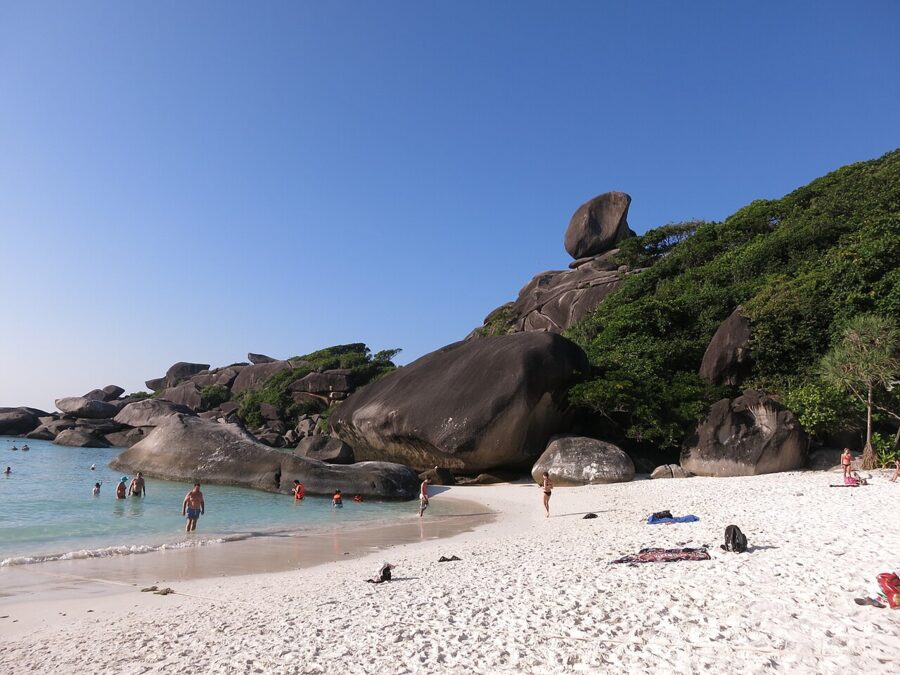
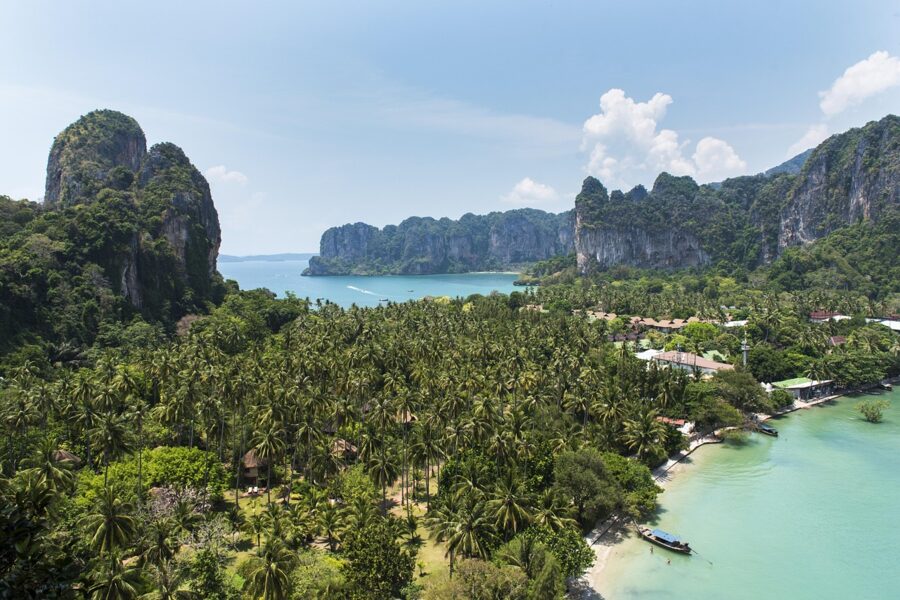
The two coasts have opposite wet seasons. The Andaman coast (Phuket, Krabi, Ko Phi Phi, Ko Lanta, Ko Lipe and the Similan Islands) faces the southwest monsoon and is wet from May to October. The Gulf coast (Ko Samui, Ko Pha Ngan, Ko Tao, plus Hua Hin and Pattaya on the mainland) is sheltered from it, and gets its heaviest rain from the northeast monsoon from October to December.
| Andaman coast (Phuket) | Gulf islands (Ko Samui) | |
|---|---|---|
| Driest months | January to March | February to April |
| Wettest months | September and October (about 13 to 14 in each) | November (about 17.5 in), then October and December |
| Rainy days a year | About 175 | About 154 |
| Good in July and August? | Wet, rough seas on west-facing beaches | Yes, about 4 to 5 in a month |
| Good at Christmas? | Yes, but book early | Wet; drier from February |
| Marine park closures | Similan and Surin, May 16 to October 15; Maya Bay in the monsoon | Some dive and snorkel trips stop on rough days |
Hua Hin and Pattaya sit high in the Gulf and follow the Bangkok pattern more than the islands do: Pattaya’s wettest months are September and October, and its driest are December to February. That makes them easy cool-season add-ons to a Bangkok trip.

Northern Thailand and the burning season
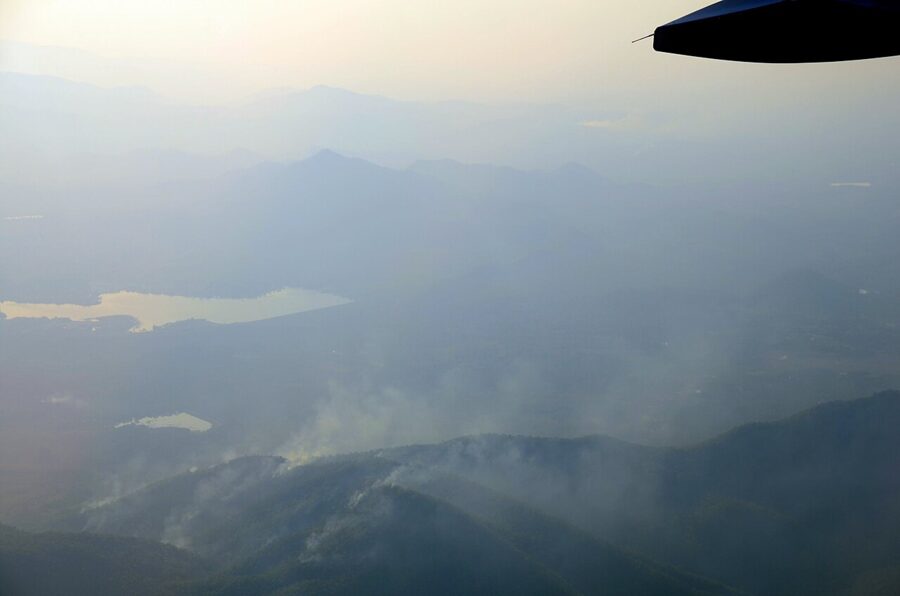
Timing matters most in the north. Chiang Mai, Chiang Rai, Pai and Mae Hong Son have dry, sunny days and cool nights between November and January. Between February and April, smoke from crop burning and forest fires, some across the borders, covers the region.
The Thai Meteorological Department’s own records show how regular this is. Chiang Mai’s station logs haze on about 19 days in January, 22 in February, 27 in March and 17 in April, then almost none from May to September. Chiang Rai follows the same curve, peaking at about 25 haze days in March.
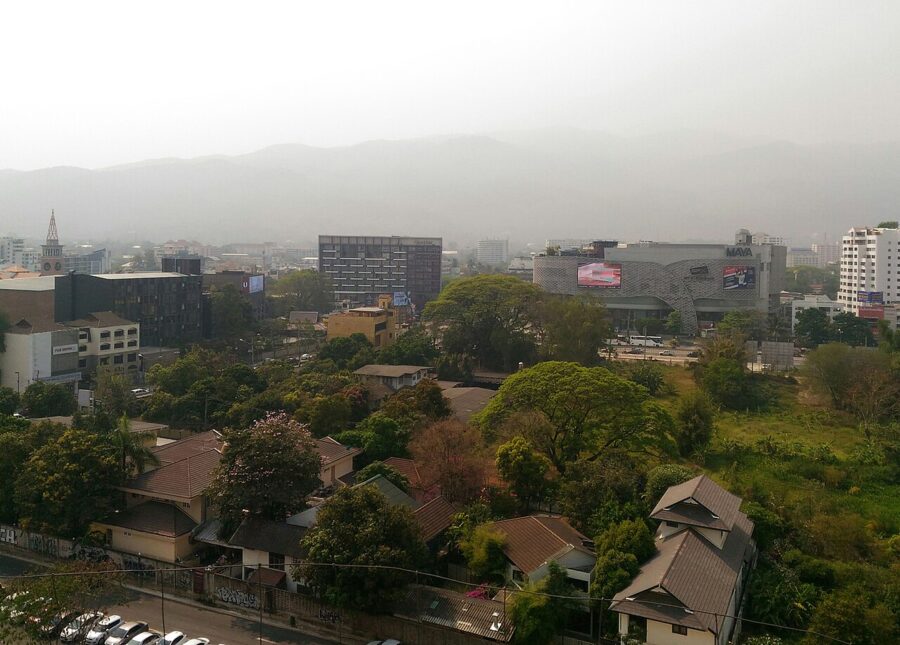

Chiang Mai province banned open burning for the 2026 season (local reports give the start as January 1 or February 1, running to May 31), and in April 2026 the national Pollution Control Department ordered a ban on all burning across 17 northern provinces. Smoke was still heavy in March. Bans for 2027 had not been announced as of November 2026.
If you have asthma, a heart condition or small children, avoid the north from late February to mid-April. If you go anyway, carry N95 masks, plan indoor days, and keep the coast or the Gulf islands as a fallback; the first good storms of April or May usually clear the air.

When to go for what you want to do
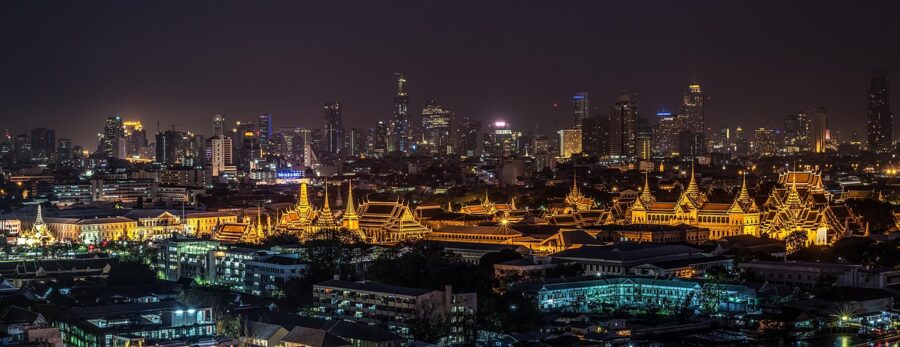
Temples and cities. November to February for Bangkok, Ayutthaya, Sukhothai and Chiang Mai. The rainy season works too if you start early. April is hard going on foot.
Beaches. December to March on the Andaman coast; February to August on the Gulf islands. For a beach in October or November, Hua Hin and Pattaya are more reliable than Ko Samui.
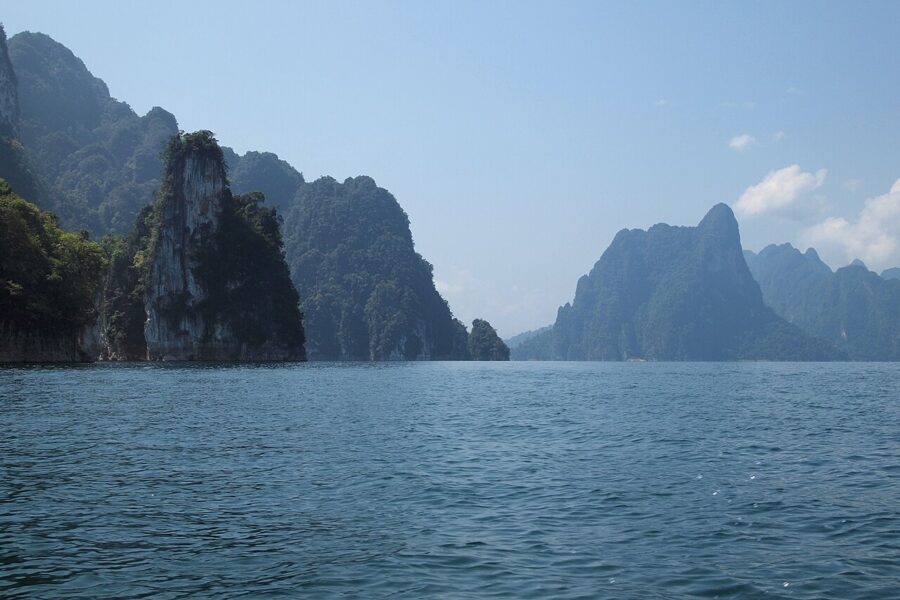
Diving and snorkeling. The Similan and Surin islands are open mid-October to mid-May. Ko Tao, a popular place to learn to dive, is best from about March to September.
Hiking and trekking. November to January in the north, when trails are dry and the air is clear. Wet-season treks are muddy.
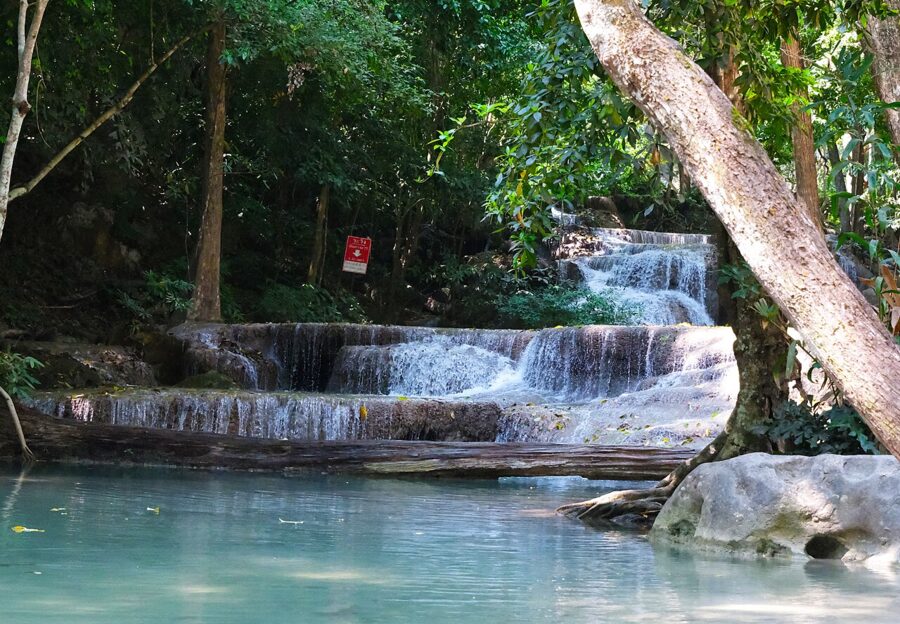
Wildlife and national parks. The cool months suit long walks in parks such as Khao Yai and bring migrant birds to the north. Waterfalls are fullest from August to October.
Festivals. April for Songkran, November for Loy Krathong and Yi Peng. The smaller regional festivals of the rainy season (rockets in May, Phi Ta Khon in June or July, candles in July) are less crowded and more local.
Prices and crowds. Island rates peak from mid-December to mid-January and bottom out on the Andaman coast in the rains. Thai long weekends, such as Makha Bucha (February 20 to 22, 2027) and Asanha Bucha (July 17 to 19, 2027), fill Hua Hin, Khao Yai and Kanchanaburi.
Festivals and public holidays in 2027
The Bank of Thailand’s holiday notice for 2027, published in the Royal Gazette in August 2026, fixes the public holidays below. Other festivals are given as expected or usual dates; confirm them with the organizers or the Tourism Authority of Thailand.
| Date (2027) | Event | Where | What it means for you |
|---|---|---|---|
| January 1 | New Year’s Day | Nationwide | Public holiday at the end of the peak season |
| Usually first weekend of February | Flower Festival | Chiang Mai | Parade of flower floats; busy weekend in the city |
| February 6 | Chinese New Year | Bangkok’s Chinatown, Phuket Town, nationwide | Busy week; book Bangkok and Phuket early |
| February 21 (observed February 22) | Makha Bucha | Temples nationwide | Candlelit processions; alcohol sales usually restricted |
| April 6 | Chakri Memorial Day | Nationwide | Public holiday |
| April 13 to 15 | Songkran | Nationwide; biggest in Bangkok and Chiang Mai | Water fights; transport and hotels book out |
| Usually mid-May | Rocket Festival (Bun Bang Fai) | Yasothon and the northeast | Parade, then rocket launches |
| May 20 | Visakha Bucha | Temples nationwide | Alcohol sales usually restricted |
| June or July (set each year) | Phi Ta Khon | Dan Sai, Loei | Masked parade; dates set locally |
| July 18 (observed July 19) | Asanha Bucha, then start of Buddhist Lent | Nationwide; Candle Festival in Ubon Ratchathani | Alcohol sales usually restricted on both days |
| July 28 | King’s Birthday | Nationwide | Public holiday |
| August 12 | Queen Mother’s Birthday and Mother’s Day | Nationwide | Public holiday |
| Ninth lunar month (2026: October 10 to 18) | Vegetarian Festival | Phuket, Bangkok’s Chinatown, Trang and others | Processions; Phuket Town busy |
| October 13 and 23 | King Bhumibol Memorial Day; Chulalongkorn Day | Nationwide | Public holidays |
| Expected November 14 | Loy Krathong and Yi Peng | Sukhothai, Chiang Mai, Bangkok, nationwide | Book Chiang Mai and Sukhothai months ahead |
| December 5 (observed December 6), December 10, December 31 | Father’s Day, Constitution Day, New Year’s Eve | Nationwide | Peak beach season; highest prices |
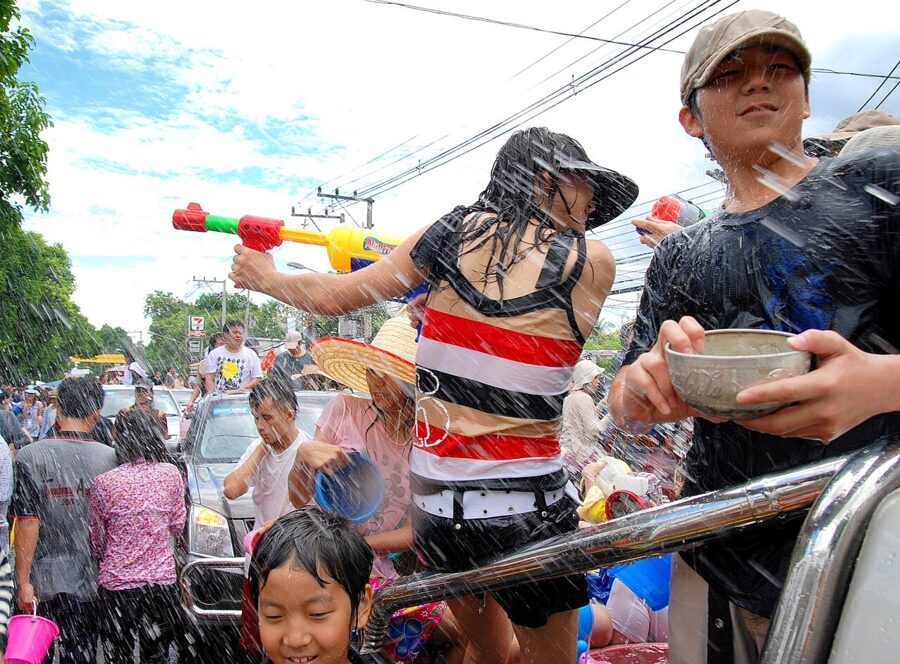
Songkran
Songkran began as a time to visit family and pour water over Buddha images and the hands of elders, and those rituals still fill temples in the mornings. In Bangkok the street water fights center on Si Lom and Khao San roads; in Chiang Mai, on the roads around the old city moat.

Loy Krathong and Yi Peng
For 2026 the Tourism Authority of Thailand lists Bangkok’s riverside events from November 17 to 29 and a ticketed sky-lantern festival at the CAD Cultural Center Lanna in Mae On district, outside Chiang Mai, on November 24 and 25. Chiang Mai limits sky lanterns because of flights into its airport, and the big releases happen at organized events, so check the year’s rules before you launch one yourself.

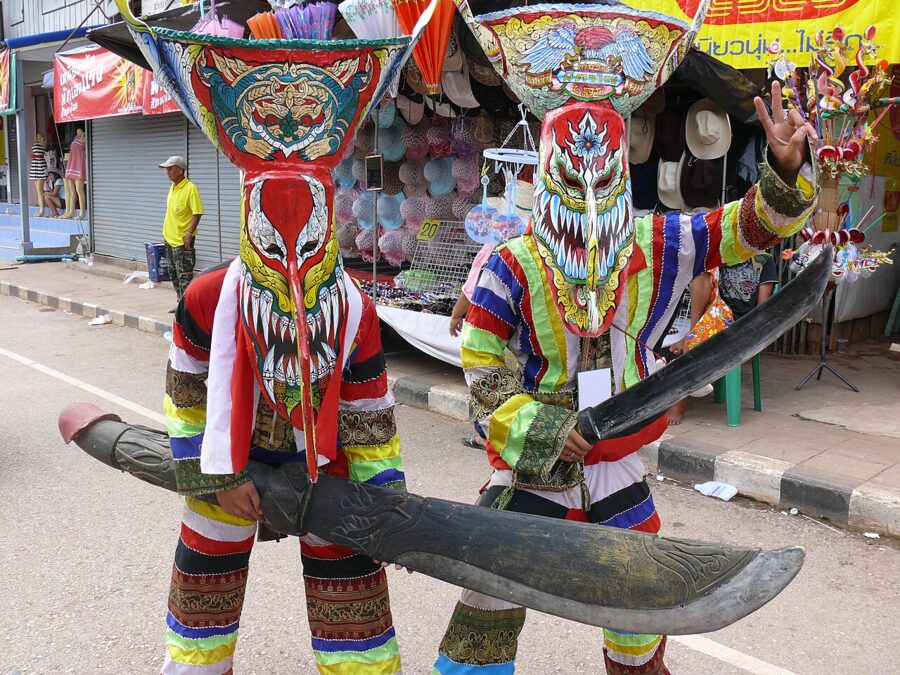
Phi Ta Khon
Dan Sai in Loei Province holds the Phi Ta Khon ghost festival over three days, usually in June or July, with dates set locally each year. Townspeople in painted masks and patchwork costumes dance through the streets. Rooms in Dan Sai are limited.
Before you book: entry rules and advice for 2026 to 2027
Visa-free stays are shorter now. From September 15, 2026, US citizens and visitors from 59 other countries and territories can enter Thailand visa-free for up to 30 days for tourism, down from 60. At land borders, the 30-day exemption can generally be used no more than twice a calendar year.
Fill in the arrival card online. Every foreign visitor must submit the Thailand Digital Arrival Card within the three days before arrival, on the immigration bureau’s own site, tdac.immigration.go.th. Third-party sites charge for the same free form. This three-day window is the “3 day rule” travelers ask about.
The safety advice. The US State Department rates Thailand at Level 1, “Exercise Normal Precautions,” its lowest level, in an advisory reissued in July 2026, and asks travelers to take more care near the border with Cambodia because of the risk of armed conflict. For crime, scams and getting around the capital, see whether Bangkok is safe. Check the advisory page again before you fly, since border conditions change.
Health by season. The CDC recommends hepatitis A and typhoid vaccines for most travelers, plus routine shots. Dengue, which has no vaccine or medicine for travelers, is a year-round risk that rises with the rains, so pack repellent.
Which month for which trip
- First trip, Bangkok plus Chiang Mai plus a beach: mid-January to mid-February, with Phuket, Krabi or Ko Lanta for the beach.
- Christmas and New Year: the Andaman coast, booked by the summer before. Skip Ko Samui and its neighbors until mid-January.
- Northern Thailand for trekking and temples: November to January. Avoid late February to mid-April for the smoke.
- Beach in July or August: Ko Samui, Ko Pha Ngan or Ko Tao, plus a few days in Bangkok.
- Songkran: Bangkok or Chiang Mai, April 13 to 15, 2027, with trains and hotels booked well ahead.
- Loy Krathong and Yi Peng: Sukhothai or Chiang Mai around November 14, 2027, with lantern-event tickets bought early.
- Lowest prices: May, June or September, sticking to cities, the north and the Gulf islands, with the Andaman coast last on the list.
- Diving: the Similan Islands between December and April; Ko Tao from March to September.
If your dates are fixed and land in the wrong season for your first-choice coast, switch coasts rather than canceling the beach: outside October, the Gulf islands and the Andaman coast rarely have their worst weather at the same time.