The best things to do in Harrogate are the ones its spa history left behind: a sulphur well you can still smell in the Royal Pump Room, a working Victorian Turkish bath, 200 acres of common called the Stray, and Bettys, the tea room that opened here in 1919. Two days covers the town on foot; a third and fourth add Knaresborough, Fountains Abbey, Brimham Rocks and the edge of the Yorkshire Dales, all within about 40 minutes’ drive.
Harrogate is a town in North Yorkshire, England, 16 miles north of Leeds, built in pale stone around mineral springs that made it one of Britain’s leading spas in the 19th century. Hours and prices below are as of November 2026.

On this page
- Harrogate in brief: where it is and how to get there
- The spa town: Harrogate's main sights
- Parks and gardens
- Smaller things worth an hour
- Day trips from Harrogate
- Festivals and events by month
- Where to eat and drink
- When to go and how many days to spend
- Getting around and practical notes
- Harrogate questions
Harrogate in brief: where it is and how to get there
Harrogate sits on high ground between the Wharfe and Nidd valleys. Leeds is 16 miles south, York about 22 miles east, and the Yorkshire Dales National Park starts roughly 15 miles to the west. North Yorkshire Council has run its museums, parks and car parks since 2023.

Getting there from the United States
- By air: Leeds Bradford Airport is the closest, about 11 miles southwest, and Transdev’s Flyer bus links it with Harrogate daily from about 6am to 10pm. Its routes are mainly within Europe, so most Americans land at Manchester (about 70 miles, an hour and a half to two hours by road) or London and finish by train.
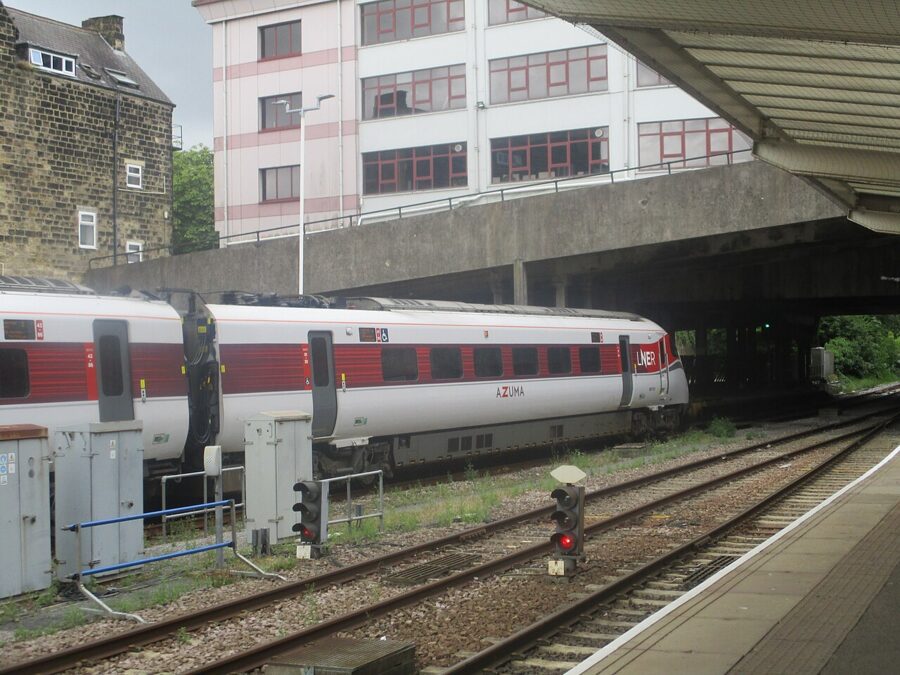
- By train from London: LNER runs several direct trains a day between King’s Cross and Harrogate, taking just under three hours. Other London trains need a change at Leeds or York.
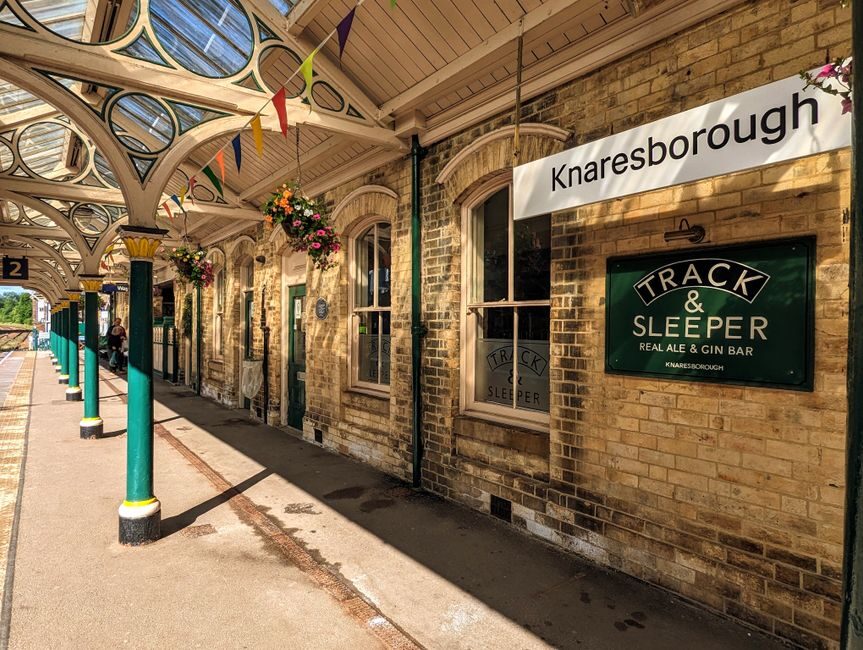
- By train within Yorkshire: Northern trains run from Leeds in about 35 minutes and from York, via Knaresborough, in a little over half an hour.
- By car: the A61 comes up from Leeds and the A59 crosses the town east to west between York and Skipton. Driving is on the left.
American citizens need an Electronic Travel Authorisation before flying to the UK. As of November 2026 the UK government charges £20 (about $26) for it, applied for online in advance. The State Department’s advisory for the United Kingdom was Level 2, “exercise increased caution,” as of its September 9, 2026 update, with terrorism as the reason given.
The spa town: Harrogate’s main sights
Harrogate’s first spring was found in 1571, and by the Victorian era 88 mineral wells had been recorded in and around the town. Visitors drank the sulphur and iron water, bathed in it and walked it off on the Stray. The buildings put up to serve them are now the main sights, all within a few hundred yards of each other.
Royal Pump Room Museum
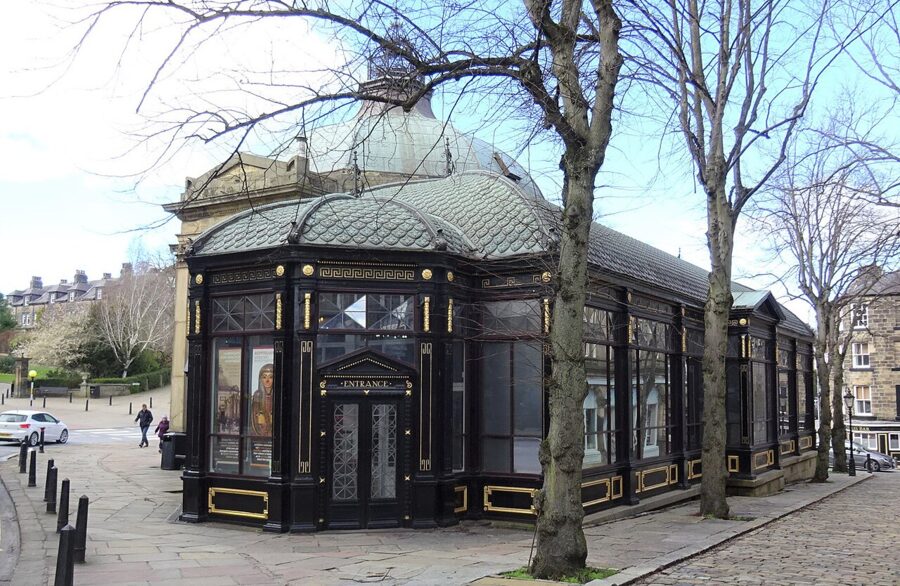

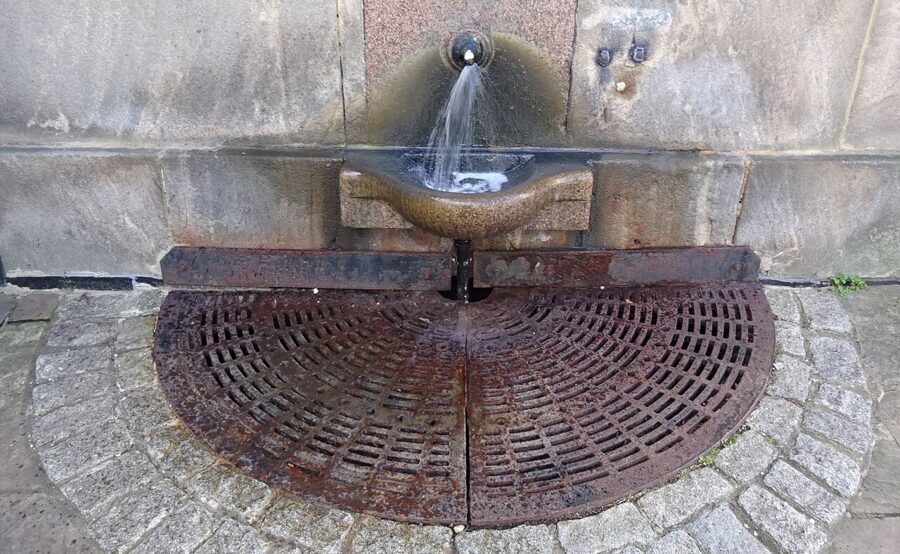
Start here, because it explains the rest of the town. The octagonal stone Pump Room was built in 1842 over what the council still bills as the strongest sulphur well in Europe, and the well is still there to see, and smell. The museum covers a Victorian spa visitor’s daily routine, costume and jewelry, and a reconstructed Victorian street.
The museum is open Tuesday to Sunday, 9:30am to 4:30pm, and closed on Mondays (including bank holiday Mondays), December 25 to 28 and January 1. As of November 2026, entry is £4.40 (about $6) for adults, £2.50 (about $3) for children up to 16, £3.40 for concessions and £13 (about $17) for a family of up to five. Allow an hour. There is no visitor parking, but three-hour disc parking is available on Swan Road.

Turkish Baths Harrogate
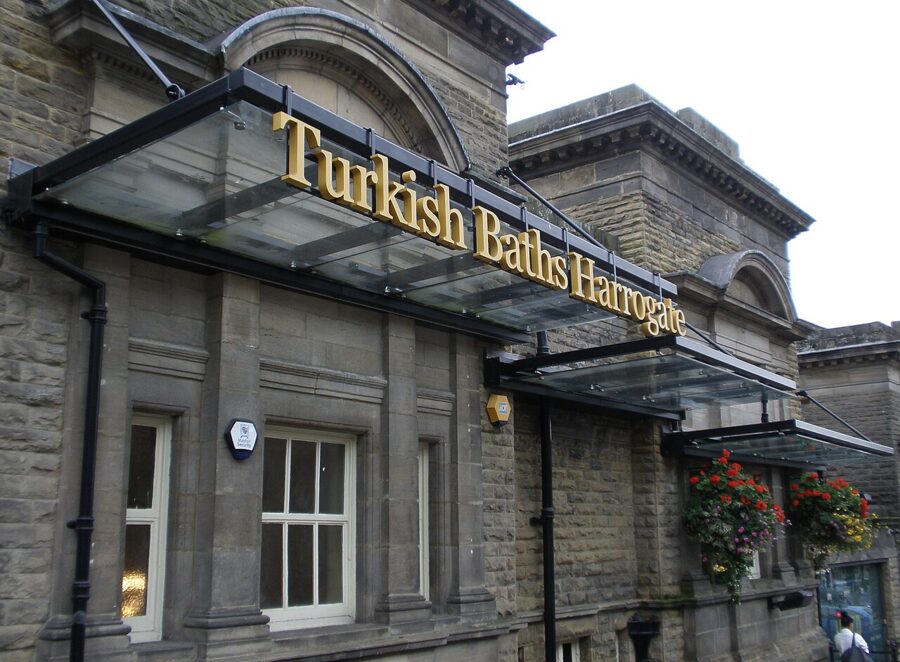
The Turkish Baths are the one historic spa building in town where you can still bathe. They sit in the Royal Baths, the stone building on Parliament Street that opened in 1897, and the bathing rooms keep their Moorish arches, glazed brick, painted ceilings and terrazzo floors. A session means working through three heated rooms of rising temperature, a steam room and a cold plunge pool, then resting.
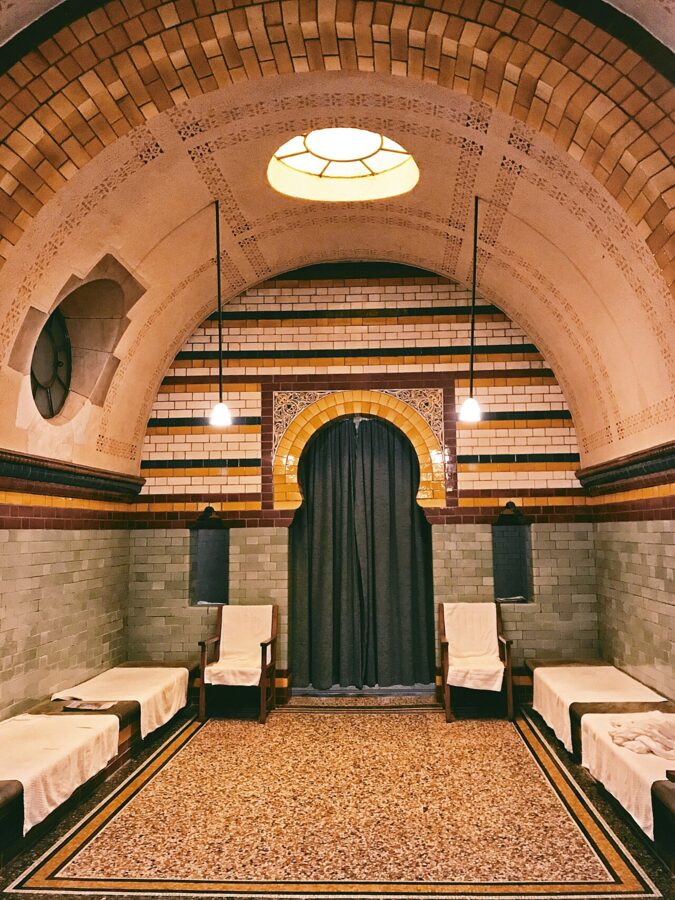

Sessions last about 90 minutes to two hours, with limited places released every half hour, so book ahead online. Entry is only for those 16 and over, and photo ID can be asked for. As of November 2026 the timetable and prices are:
| Session | Days and times | Price |
|---|---|---|
| Mixed, weekdays | Monday 9:30am to 4:30pm; Tuesday and Wednesday 9:30am to 3:30pm; Thursday 9:30am to 6:30pm | £29 (about $38) |
| Mixed, Friday to Sunday | Friday 9:30am to 6:30pm; Saturday and Sunday 9am to 6:30pm | £39 (about $51) |
| Ladies only | Tuesday 6pm to 8:30pm | £29 |
| Gentlemen only | Wednesday 6pm to 8:30pm | £29 |
| Guided history tour (45 minutes) | Wednesday 8:30am, booked by phone | £4 (about $5) |
The times shown are session windows; the baths stay open later, to 8:30pm Thursday to Sunday. From December 22 to 30 every session is mixed, and the baths close on Christmas Day, Boxing Day and New Year’s Day.

Bettys Cafe Tea Rooms
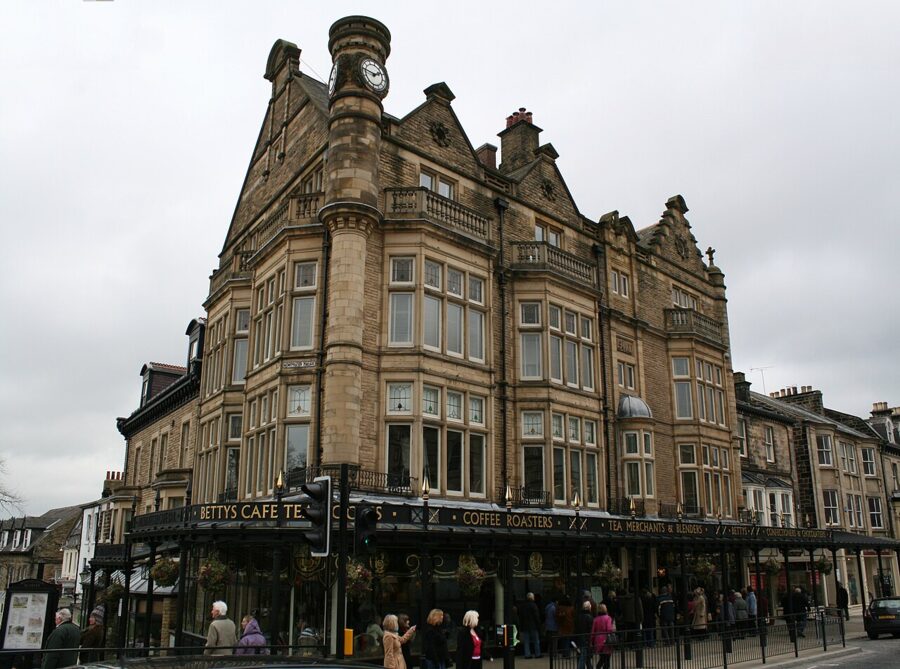
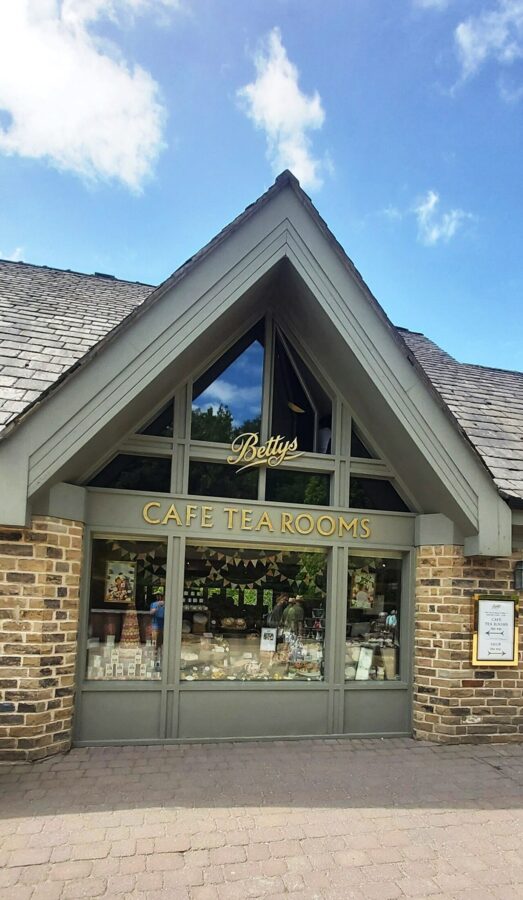
Bettys was opened in Harrogate in July 1919 by Frederick Belmont, a Swiss confectioner, and it has never opened a branch outside Yorkshire. The Harrogate shop at 1 Parliament Street is the one to visit: a ground-floor tea room on the corner above Montpellier Hill, a shop and patisserie counter, and the Imperial Room upstairs for afternoon tea.
The tea room downstairs does not take bookings, so expect to wait in line on weekends and in summer; a weekday morning is usually quieter. Afternoon tea in the Imperial Room is booked in advance and was £49.95 (about $65) a head for autumn 2026 bookings. If the line is long, try the Bettys branch at RHS Harlow Carr.
Mercer Art Gallery
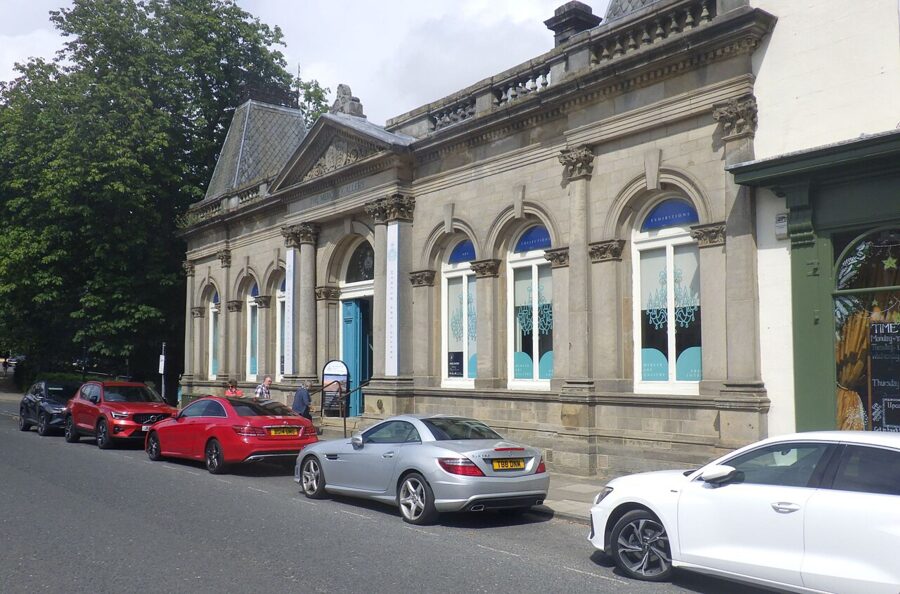

The Mercer holds the district’s art collection, mostly 19th- and 20th-century work, plus changing exhibitions. It is open Tuesday to Sunday, 9:30am to 4:30pm, with the same closures as the Pump Room. Entry is free with a suggested £5 donation. It is two minutes from the Pump Room on Swan Road; allow 45 minutes.
The Royal Hall and Harrogate Theatre
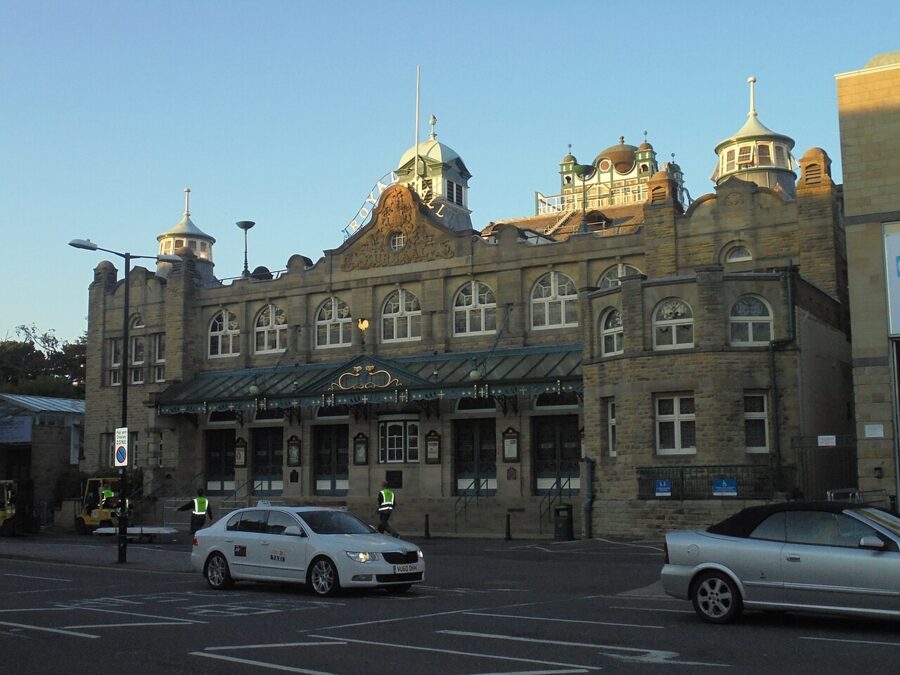
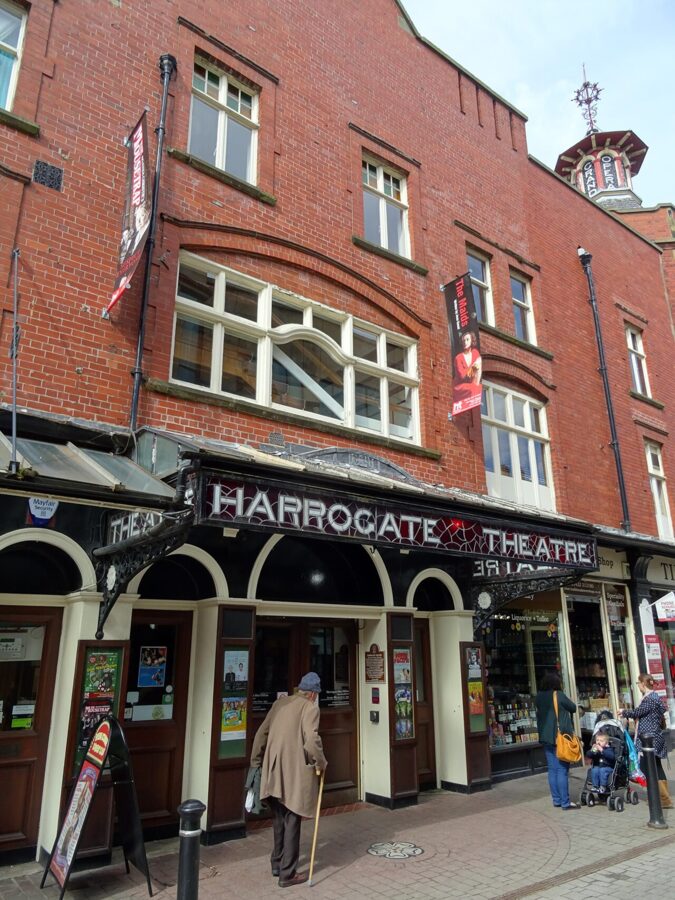
The Royal Hall on Ripon Road opened in 1903 as the Kursaal, a concert hall for spa visitors designed by Frank Matcham. Harrogate Theatre on Oxford Street opened on January 13, 1900 as the Grand Opera House and now runs drama, comedy and an annual Christmas pantomime.


Parks and gardens
The Stray, Valley Gardens and the Pinewoods link up, so you can walk the two miles from the station to RHS Harlow Carr almost entirely through green space.
The Stray
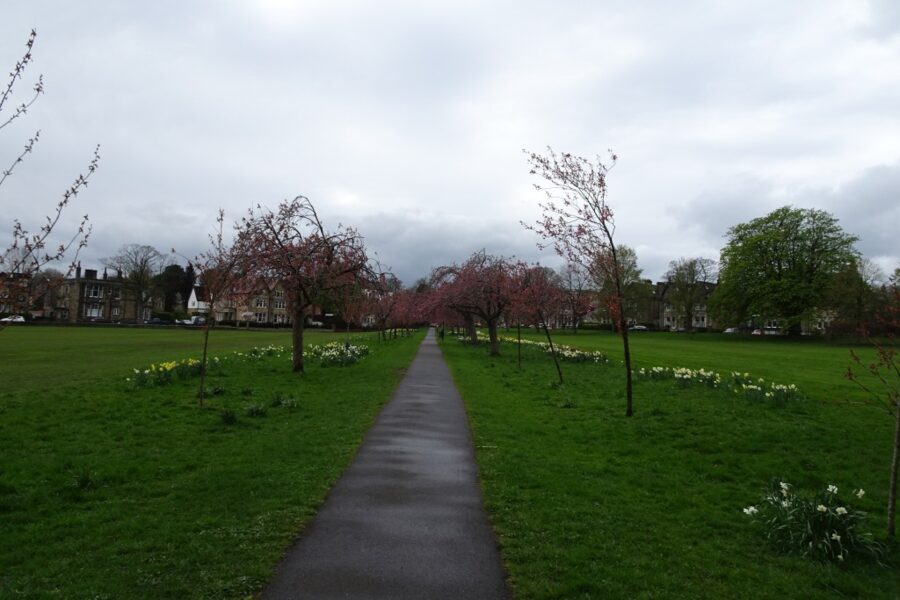
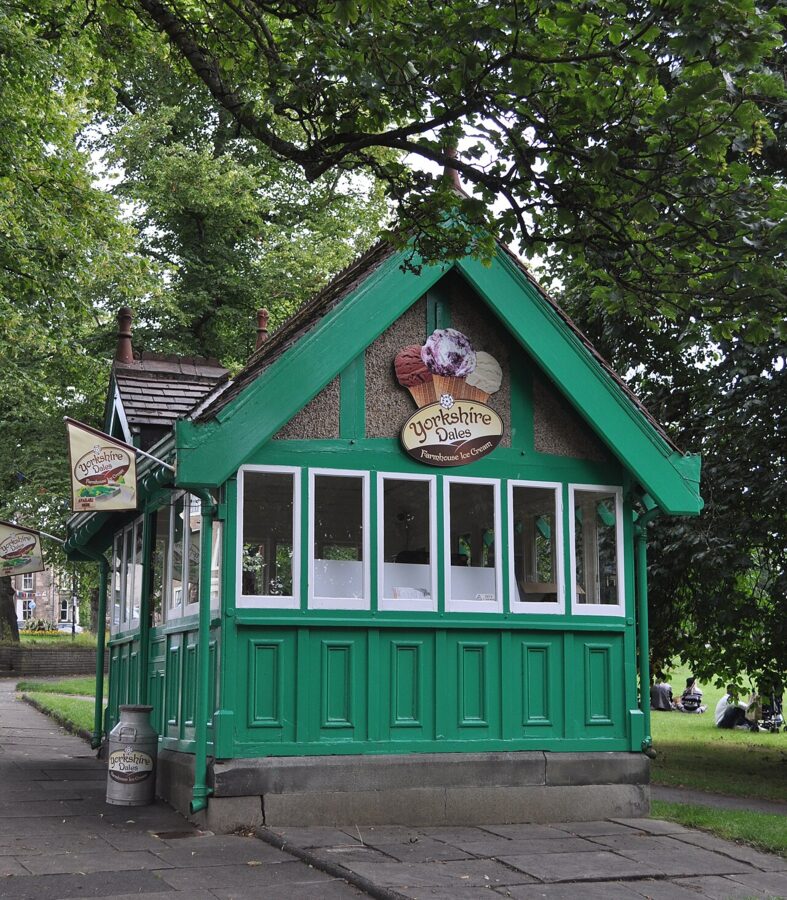
The Stray is the town’s front lawn: about 200 acres of open grass set aside by an award of August 19, 1778, so that the public could reach the wells across what had been the Forest of Knaresborough. Today it is protected by the Harrogate Stray Act 1985, which limits what can happen on it. It is free and always open.
Valley Gardens and the Pinewoods
Valley Gardens is a 17-acre Grade II listed park in Low Harrogate, laid out in 1887 on Bogs Field, the boggy ground where 36 of the town’s 88 wells rise. The main entrance is opposite the Pump Room, at the junction of Cornwall Road, Valley Drive and Royal Parade. It is open all year and free.
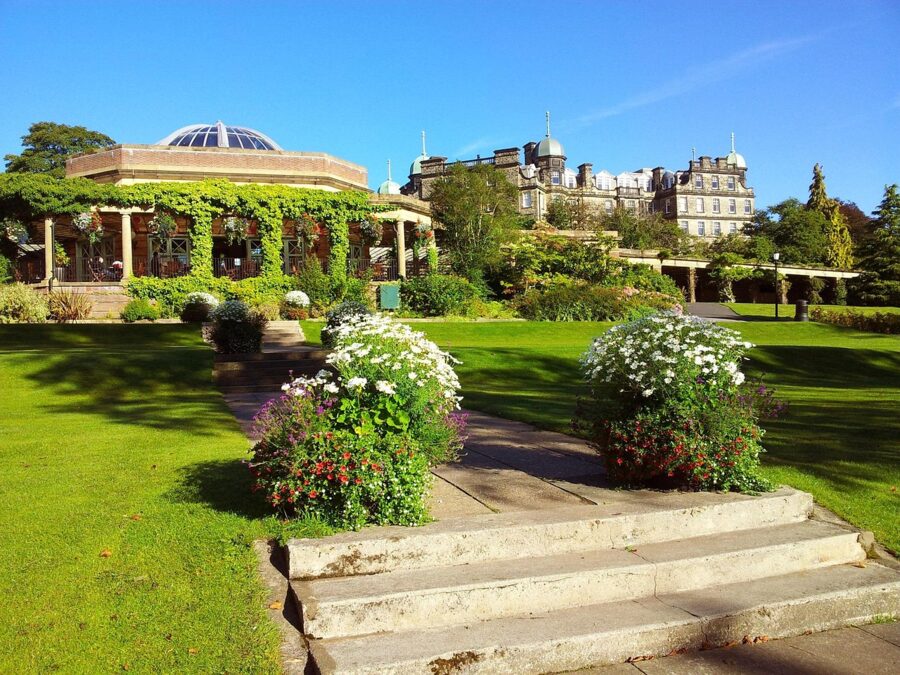
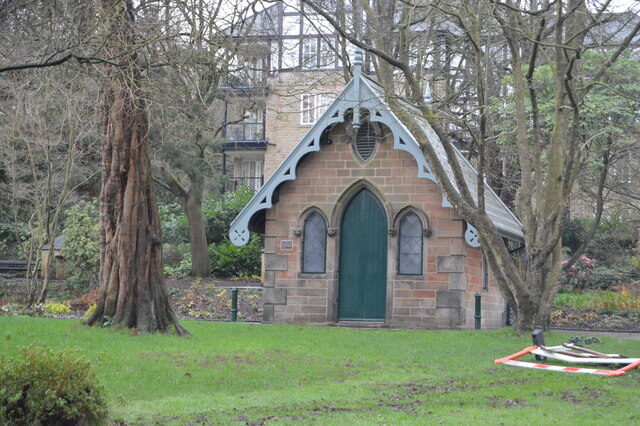
Inside you will find flowerbeds, a bandstand, the Sun Pavilion and its colonnade, a skatepark, tennis courts, mini golf and a play area with a paddling pool that is free in summer. Small grates and well heads mark the springs under the grass. Public toilets by the Cornwall Road entrance open 8am to 6pm in winter and to 8pm from April to October.

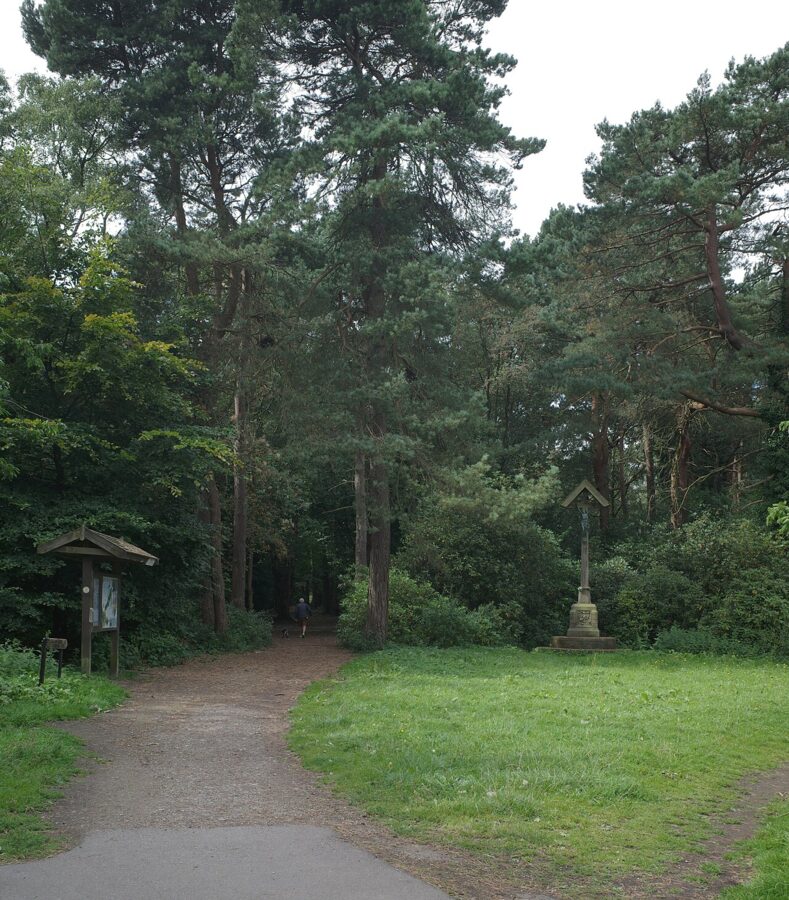
At the top of the gardens, the Pinewoods are about 96 acres of woodland with Scots pines first planted in 1796. Paths run through them to the gate of RHS Harlow Carr, which makes a good walk there and a bus or taxi back.

RHS Garden Harlow Carr
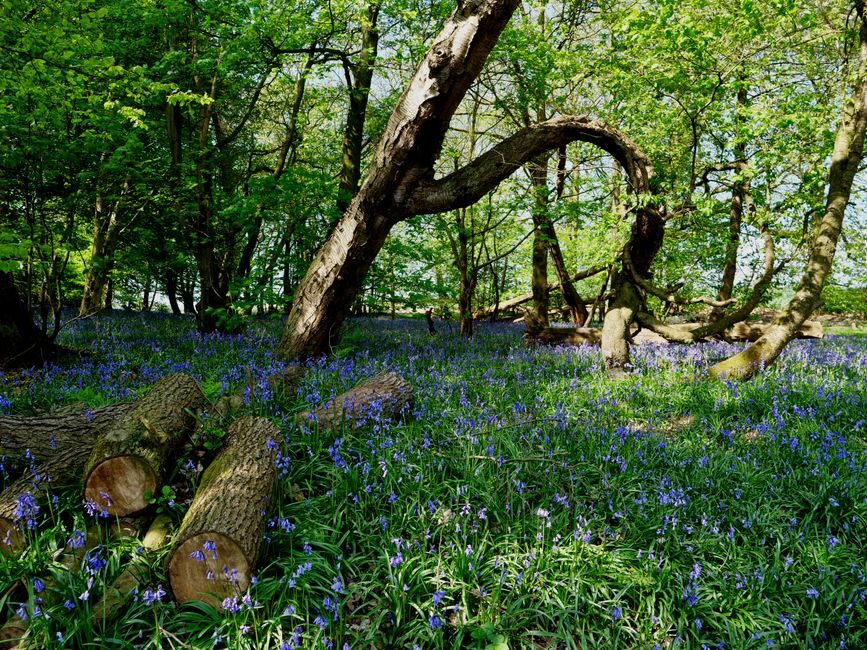
Harlow Carr is the Royal Horticultural Society’s garden in the North, on Crag Lane about a mile and a half west of the town center. It opened in 1950 and joined the RHS in 2001, and it is planted for Yorkshire weather: streamside and woodland planting, a lake, an alpine house and the long Main Borders, at their best from June to September.
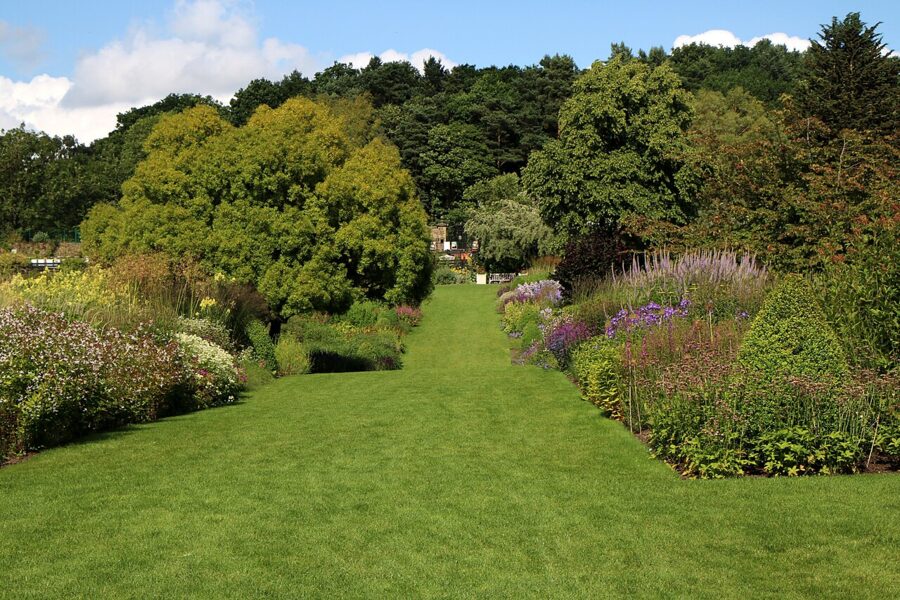

As of November 2026 the garden opens daily except Christmas Day, 9:30am to 4pm with last entry at 3pm; summer hours run later, so check the RHS site for your dates. Ticket prices depend on the date:
| Ticket | When it applies | Price |
|---|---|---|
| Saver | Weekdays October to March (except October 26 to 30) | £13.60 (about $18) |
| Off-peak | Weekends October to March; weekdays April to September outside school holidays | £15.70 (about $21) |
| Standard | Weekends April to September; weekdays May 25 to 29 and July 20 to September 4 | £17.20 (about $23) |
| On the day | Any day, bought at the gate | £18.40 (about $24) |
| Child 5 to 16 | All year | £6 (about $8) |
Booking online beats the gate price. Allow two to three hours. From November 2026 into January 2027 the garden also runs RHS Glow, an evening light trail with separate tickets.

Smaller things worth an hour
The Montpellier Quarter
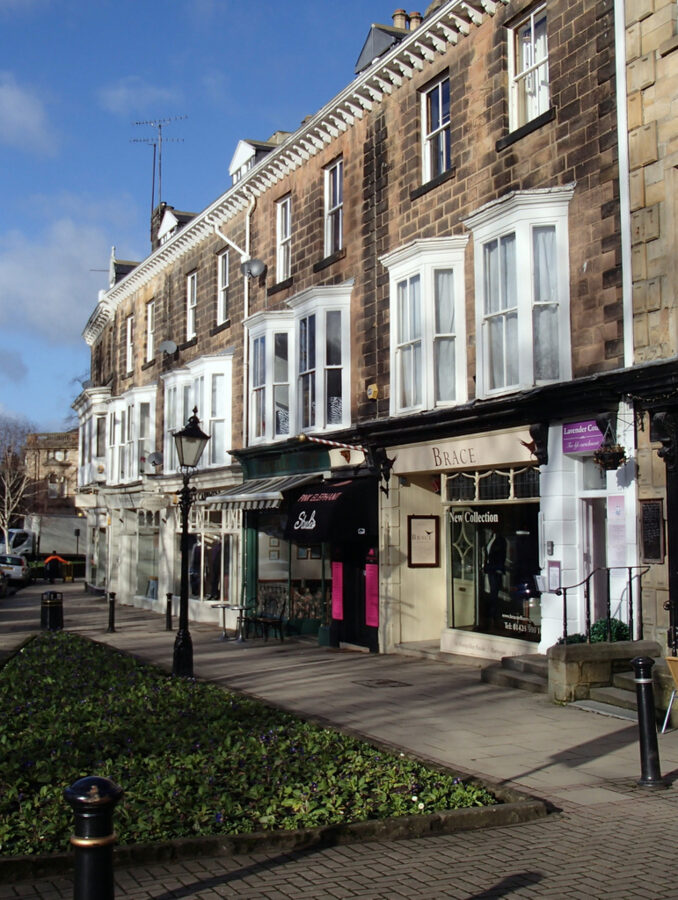
The streets between Parliament Street, Crescent Road and Montpellier Hill are the prettiest part of the town center: Montpellier Parade, Montpellier Street and Montpellier Mews, with independent shops, antiques dealers, cafes and pubs in Victorian terraces. Some shops close on Sundays, so browse on a weekday or Saturday.

The Old Swan Hotel and the Agatha Christie story
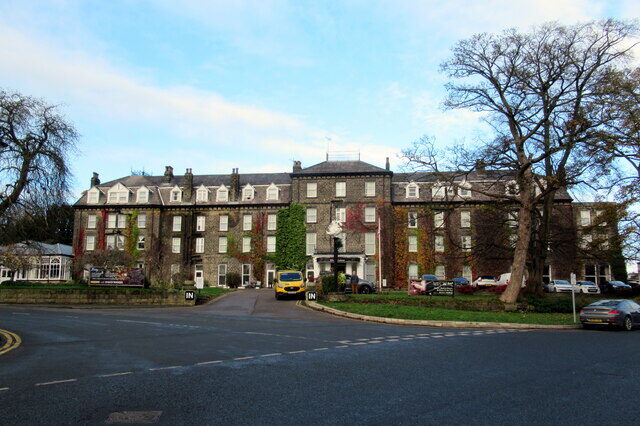
In December 1926 Agatha Christie disappeared from her home in Surrey, set off a national search, and was found 11 days later staying under another name at the Swan Hydropathic Hotel in Harrogate. That hotel is now the Old Swan on Swan Road, home of the Theakston Old Peculier Crime Writing Festival each July.

St Wilfrid’s Church and the Odeon
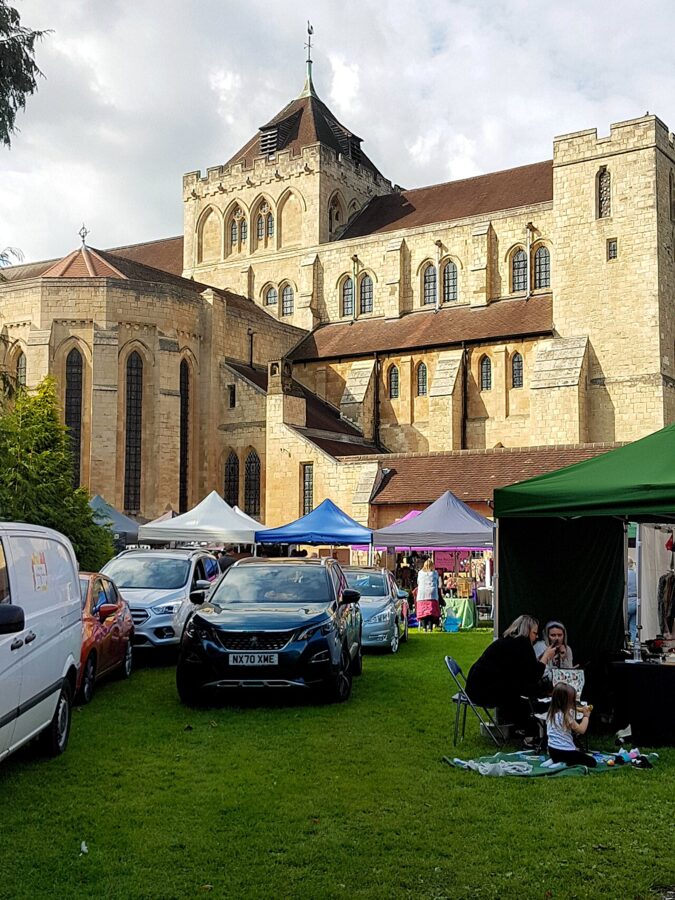
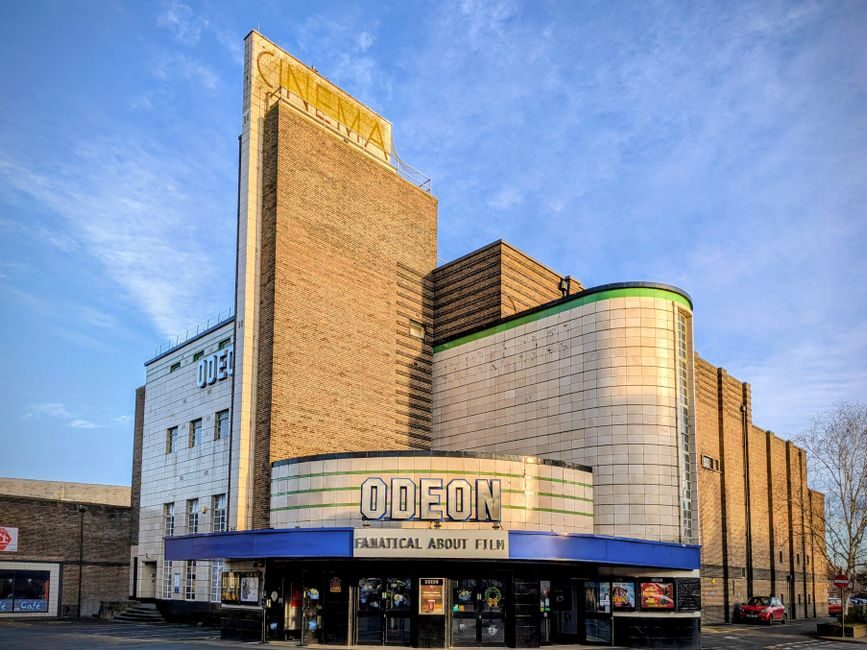
St Wilfrid’s on Duchy Road is the only Grade I listed building in town, a 20th-century church in a medieval style designed by Temple Moore and completed in 1914. It is a working parish church, so visit outside service times. For something younger, the Odeon on East Parade is a 1930s art deco cinema building.

Walks, markets and the Ringway
- Harrogate Farmers’ Market: second Thursday of every month on Cambridge Street, with Yorkshire meat, cheese, bread and vegetables.
- Harrogate Makers Market: third Sunday of the month, 10am to 4pm, also on Cambridge Street, for crafts and food.
- Ripley’s market day: the last Sunday of each month in the castle village three miles north (see Ripley below).
- The Harrogate Ringway: a 20-mile footpath circling the town through farmland, woods and the Nidd Gorge. Most people walk a section, such as the stretch through the Nidd Gorge near Knaresborough.
Day trips from Harrogate
Knaresborough, Ripley and Pateley Bridge are easy by train or bus. Fountains Abbey, Brimham Rocks and Harewood House are each under half an hour by car and much harder without one.
Knaresborough
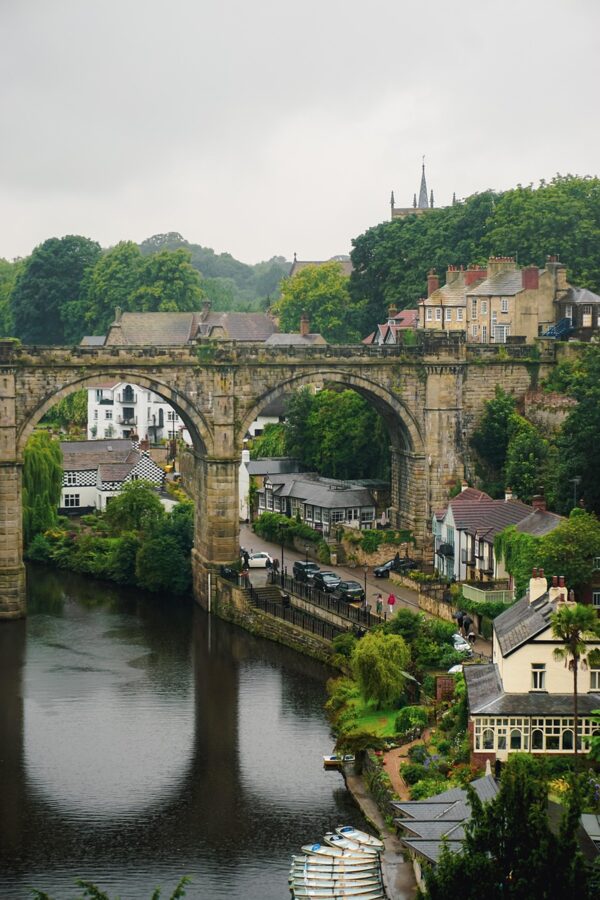
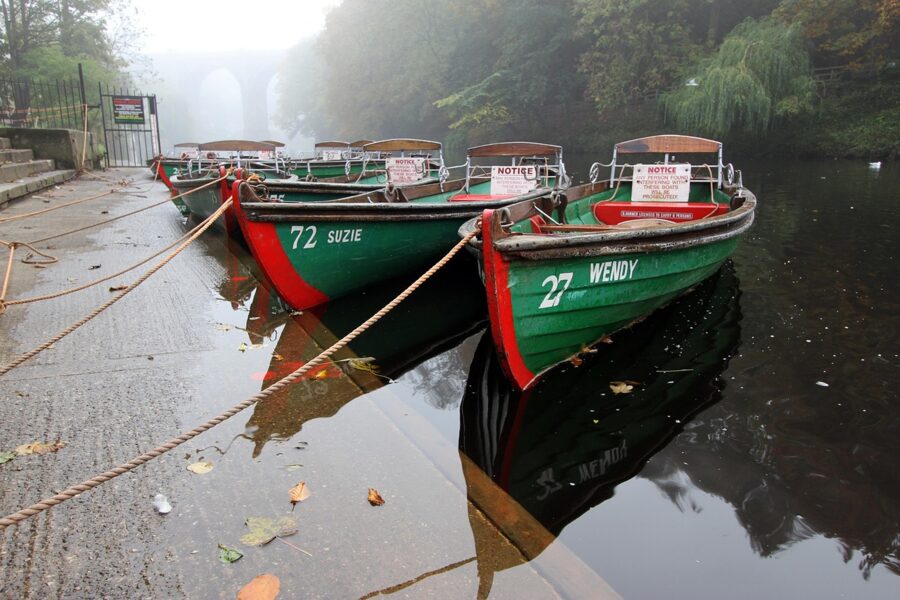
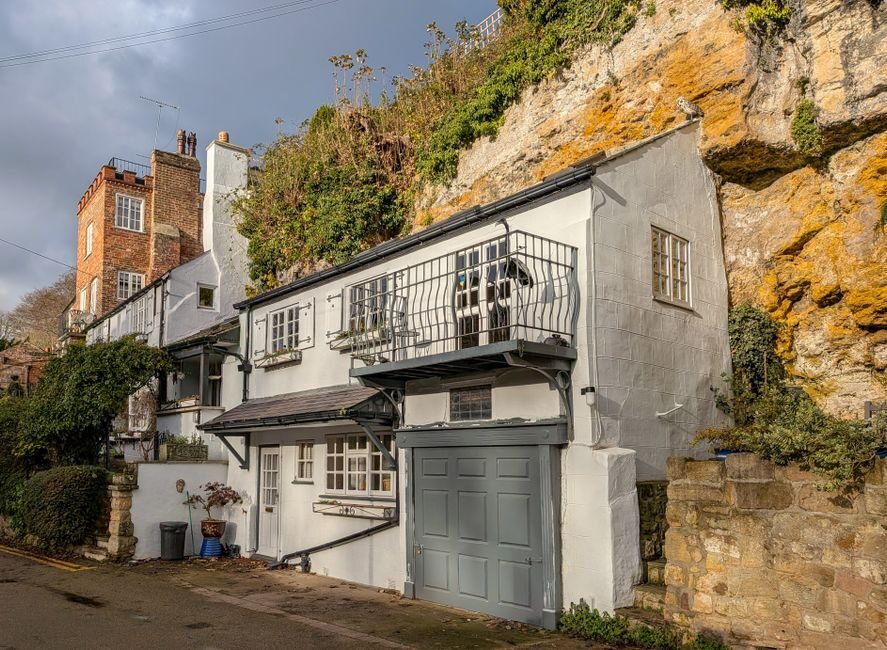
Knaresborough is Harrogate’s older neighbor, about four miles east, a market town on a sandstone gorge above the River Nidd. Take the train (about ten minutes) or the number 1 bus, and give it half a day. The free view of the viaduct from the castle grounds is the town’s postcard shot.
Knaresborough Castle’s ruins stand on the cliff above the river, with a Tudor courtroom museum in the grounds. From April to October it is open Tuesday to Sunday, 9:30am to 4:30pm; in winter (November to March), Wednesday to Saturday, 10am to 3:30pm, and it closes from December 25 to January 1. Entry costs the same as the Royal Pump Room (£4.40 for adults, as of November 2026), the grounds are open all year for free, and tours of the sally port, a secret tunnel, cost extra.
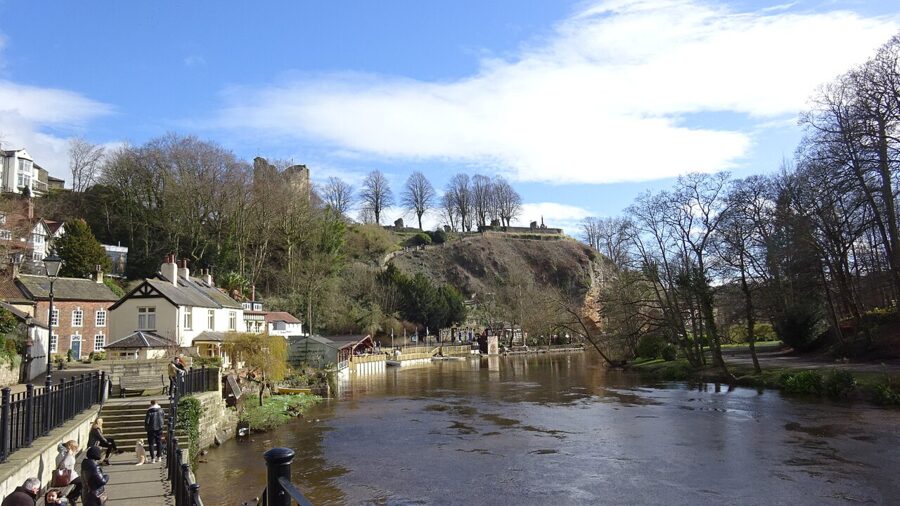

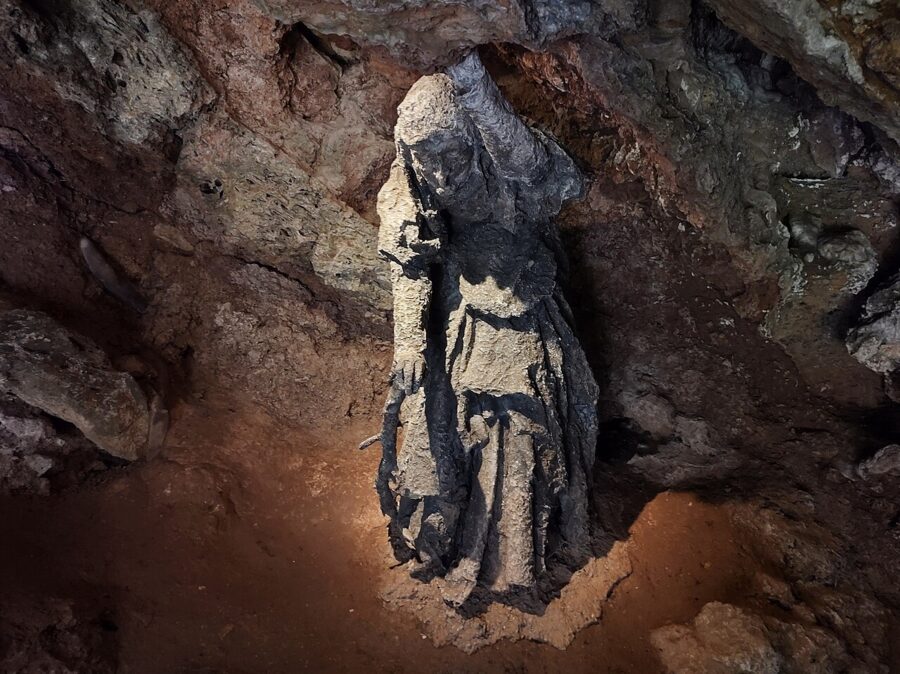
Across the Nidd, Mother Shipton’s Cave is a riverside estate with a petrifying well, where mineral water slowly coats hung-up objects in stone. As of November 2026 the cave site is closed for setup before Christmas events running November 28 to December 24, then opens December 26 to January 3 and weekends after that. Its 2026 prices are per car: £35 (about $46) for up to five people off-peak and £42 (about $55) at peak times, or £12 and £16 per walk-in visitor.

Ripley Castle
Ripley is a stone estate village three miles north of Harrogate off the A61, on the 36 bus route, with a castle that has been the Ingilby family’s home for centuries. The gardens and grounds open 10am to 4pm daily and you enter through the coffee shop in the castle walls. Guided tours of the castle run Tuesday to Saturday as of 2026 and cost £19.50 (about $26) for adults, £16 for over-60s and £5 for children 6 to 18.
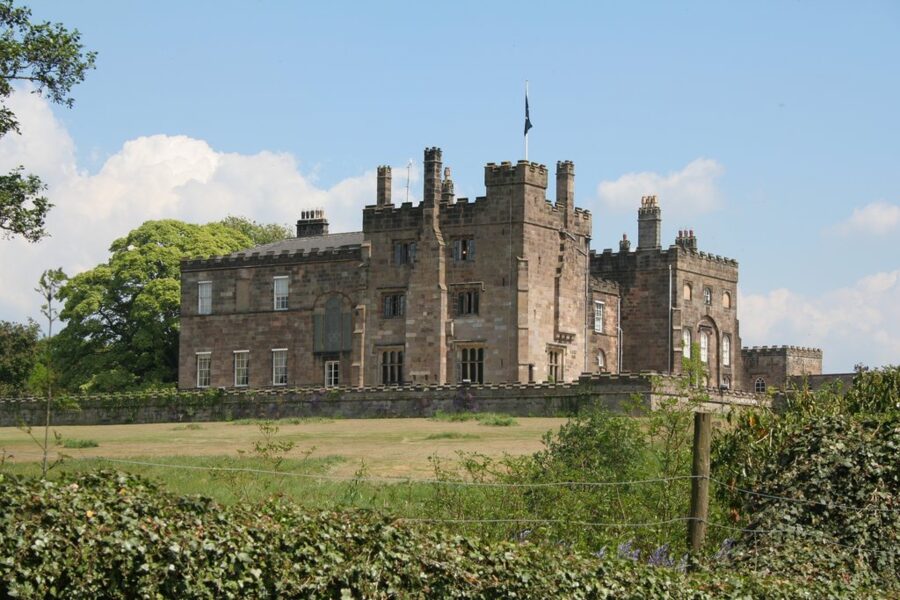

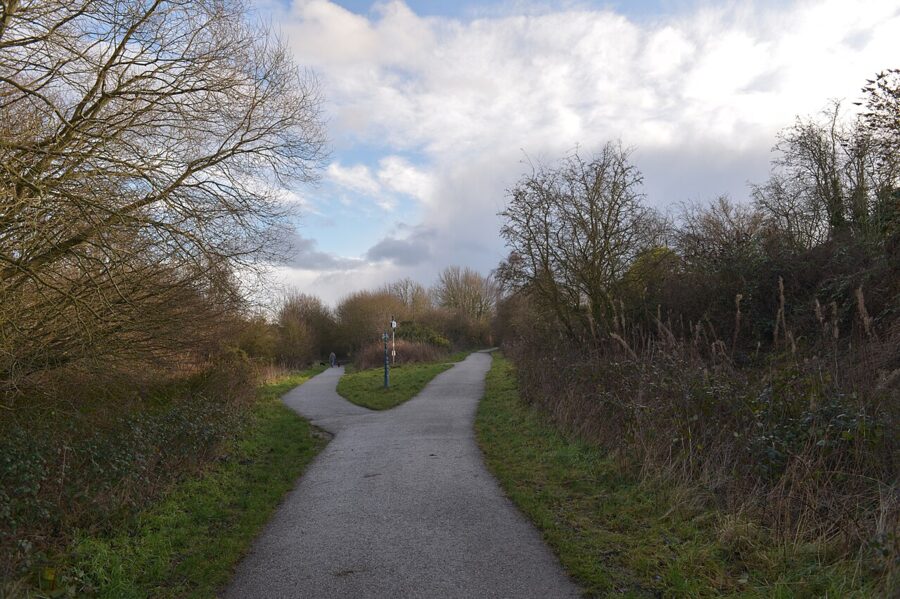
The Nidderdale Greenway, a walking and cycling path on an old railway line, links Ripley with Harrogate’s northern edge if you want to arrive on foot or by bike. Allow two hours, or half a day with a castle tour.

Brimham Rocks
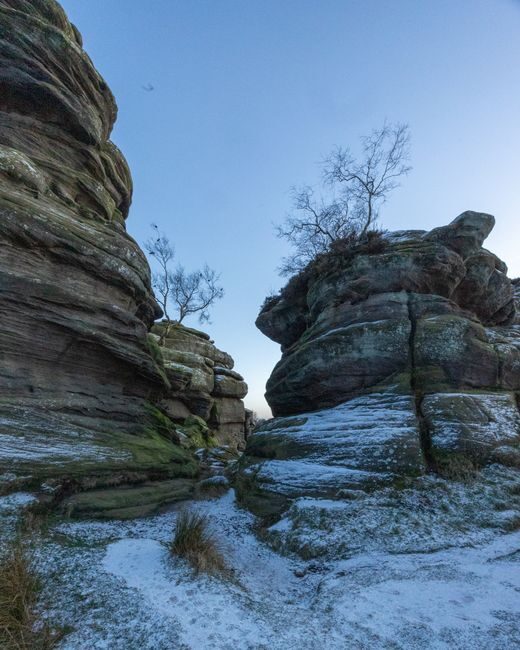
Brimham Rocks is a moor about 11 miles northwest of Harrogate, off the B6165, scattered with gritstone outcrops weathered into balancing stacks and towers. The National Trust runs it, entry is free and the site is open from 9am to dusk. Non-members pay to park: as of November 2026, £7 (about $9) for four hours or £10 (about $13) for the day, by card, coin or the JustPark app.
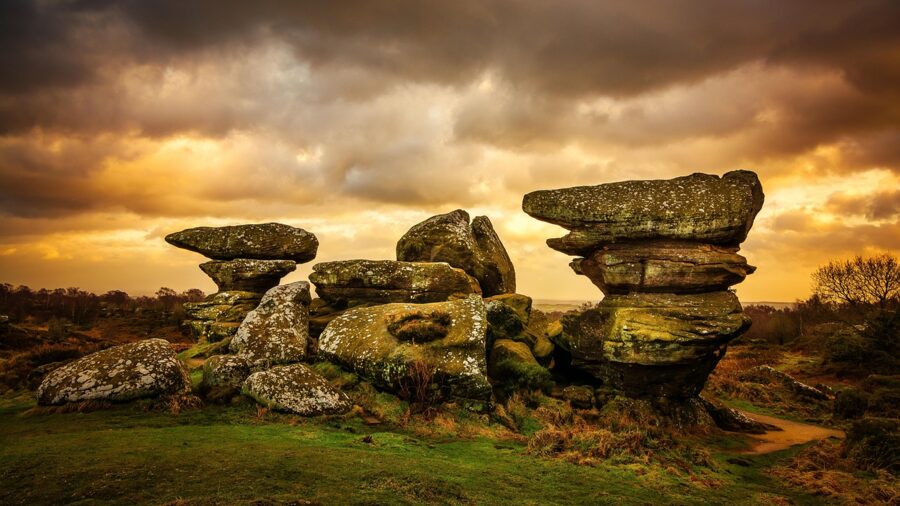
A kiosk sells drinks and snacks, and there is a visitor center with a secondhand bookshop. Dogs must stay on a short lead across the site and moor. Allow two hours; there is no regular bus, so this one needs a car.
Fountains Abbey and Studley Royal
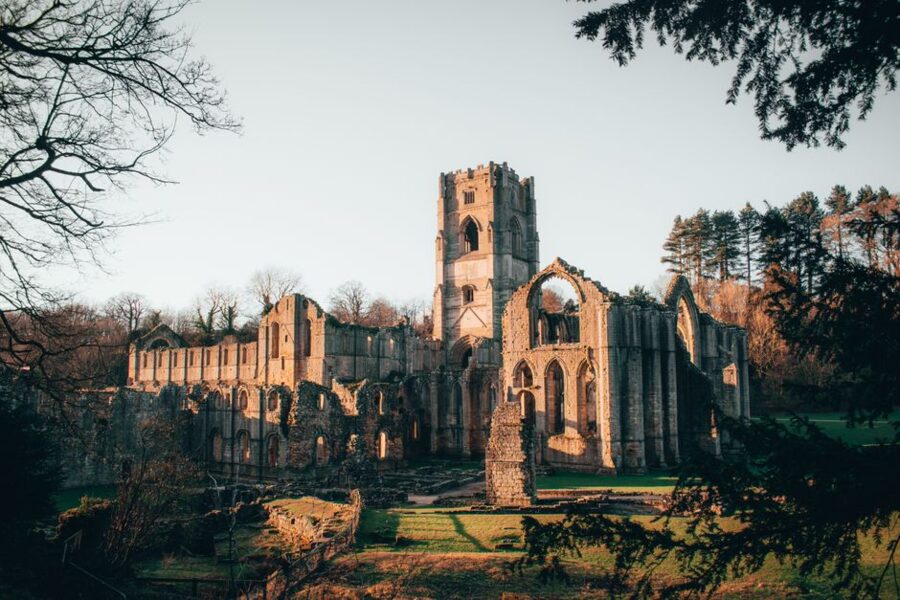
Fountains Abbey is the best day trip from Harrogate and the one to choose if you only have time for one. It is 12 miles north, near Ripon, and it combines the largest monastic ruins in England with Studley Royal, an 18th-century water garden of canals, ponds and temples, plus a deer park with more than 300 red, fallow and sika deer. It became Yorkshire’s first UNESCO World Heritage Site in 1986.
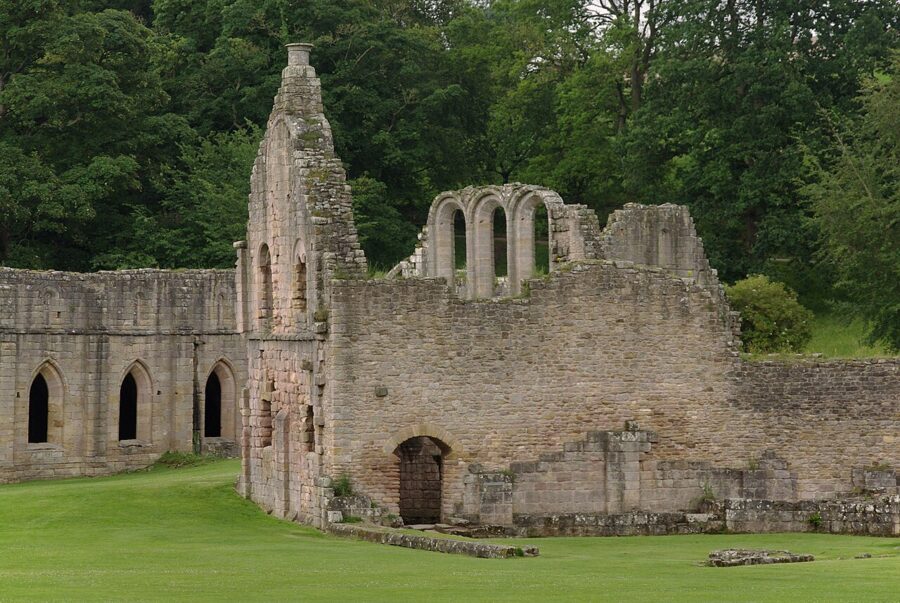

As of November 2026, winter hours are 9:30am to 3:30pm, and the site is closed on Fridays until February. Adult tickets are £21 (about $28), or £23.10 with Gift Aid; children 5 to 17 are £10.50, and a family ticket is £52.50 (about $69). National Trust and English Heritage members enter free. Parking at the visitor center and West Gate is free; allow at least three hours.
Harewood House
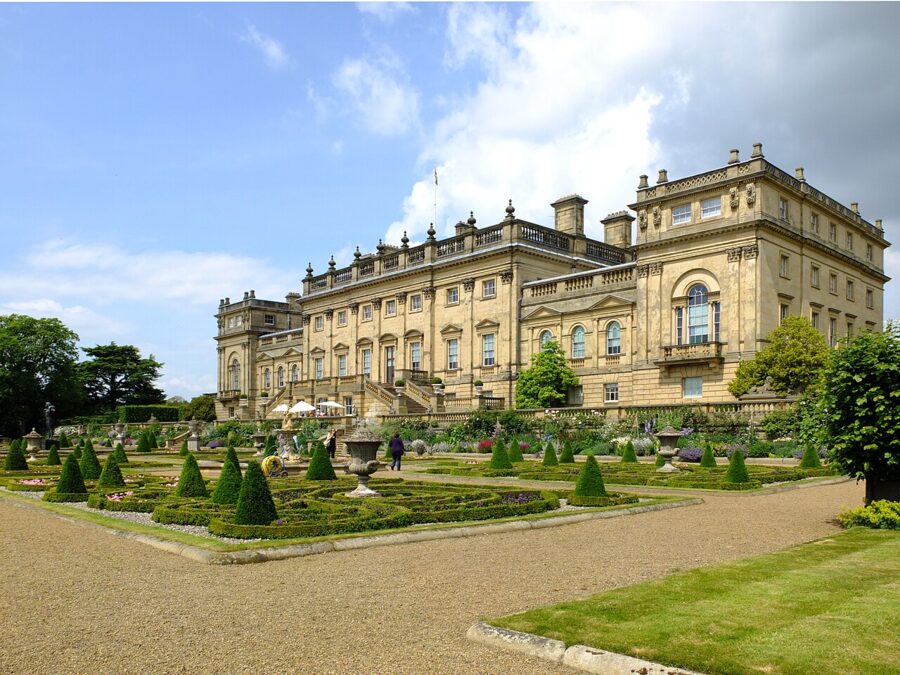
Harewood House is an 18th-century country house halfway between Harrogate and Leeds on the A61, with Chippendale furniture, Capability Brown grounds and a bird garden. Its main 2027 season begins on March 19; until January 3, 2027, it is open only for its Christmas event, Magic at the Mansion. Allow half a day; the 36 bus stops in Harewood village.

The Yorkshire Dales: Bolton Abbey and Nidderdale
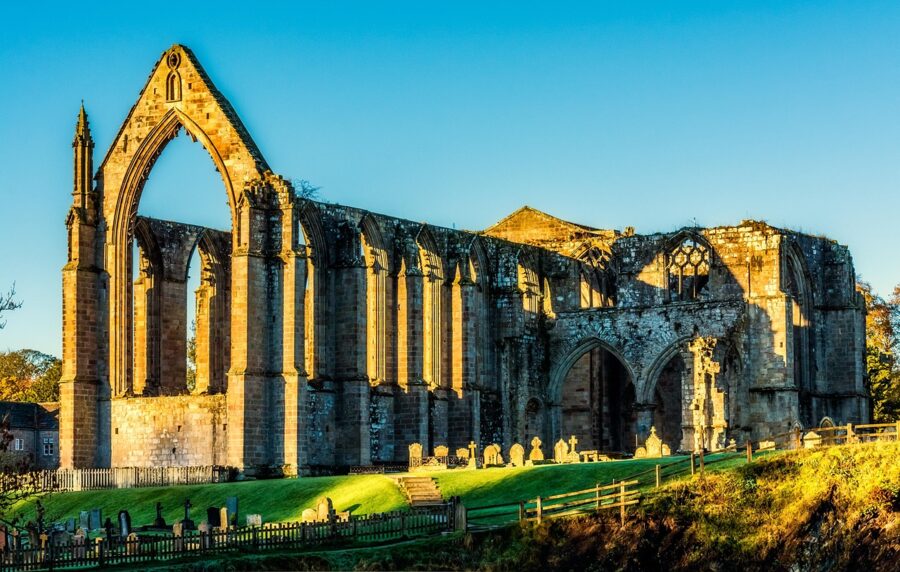
The closest part of the Yorkshire Dales National Park is Wharfedale. Bolton Abbey, about 40 minutes west along the A59, is an estate with the ruined Bolton Priory beside the River Wharfe and the Strid, a narrow channel where the river forces through rock; its water is deep and deadly, so stay on the bank. The estate charges per car for parking; check its site for the current rate.
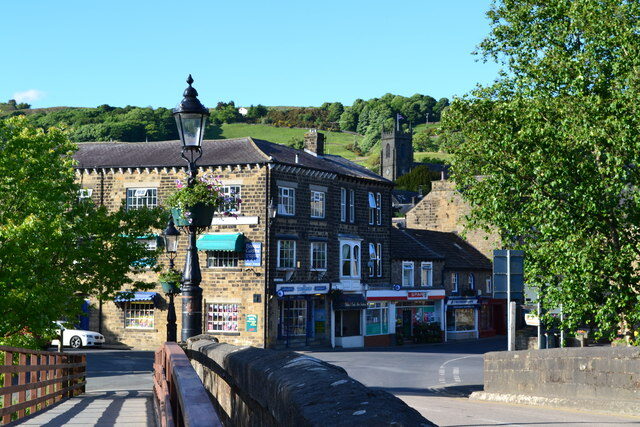
Nidderdale, northwest of Harrogate, lies outside the national park but is just as good for walking. The 24 bus runs from Harrogate to Pateley Bridge, the dale’s small market town about 14 miles away, every day of the year. From there, walk up the valley toward Gouthwaite Reservoir.

Festivals and events by month
The big events fill hotels, so plan around them either way:
| When | Event | Notes |
|---|---|---|
| Second Thursday, monthly | Harrogate Farmers’ Market | Cambridge Street |
| Late March to April | Crocuses and daffodils on the Stray | Free, weather dependent |
| Late April | Harrogate Spring Flower Show | Great Yorkshire Showground; listed for April 22 to 25, 2027 |
| Mid July | Great Yorkshire Show | July 13 to 16, 2027; advance tickets only, on sale from November 2026 |
| Late July | Theakston Old Peculier Crime Writing Festival | Old Swan Hotel, July 22 to 25, 2027 |
| Autumn | Harrogate Autumn Flower Show | Great Yorkshire Showground |
| November to January | RHS Glow at Harlow Carr; pantomime at Harrogate Theatre | Separate tickets for both |
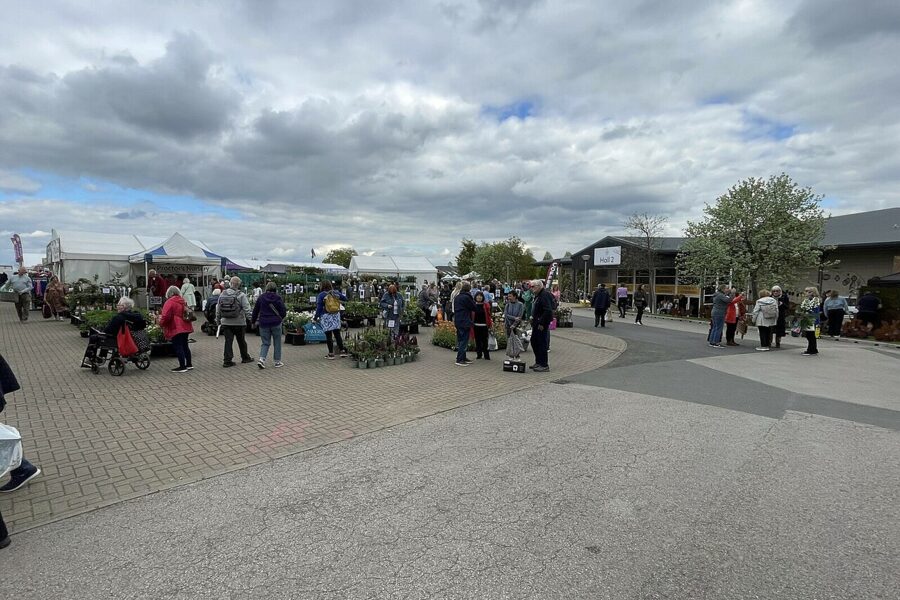

The Great Yorkshire Show is England’s largest agricultural show, and it has sold out in advance every year since tickets went advance-only in 2021, so buy early. The town’s December Christmas fayre has changed its dates, size and venue several times in recent years; check the council and local news before planning a trip around it.
Where to eat and drink
Every place below was trading in autumn 2026; book for Friday or Saturday dinner.
- Breakfast and tea: Bettys Cafe Tea Rooms, 1 Parliament Street, for breakfast, lunch or afternoon tea (see above). The Bettys at RHS Harlow Carr is the calmer alternative.
- Pub with history: Hales Bar, 1 to 3 Crescent Road, billed as the town’s oldest pub, with gas lighting still in use over the bar. It lists noon to 1am Thursday to Saturday and noon to 11pm on Sunday; times can vary on quiet nights.
- Station pint: the Harrogate Tap, in the station building on Station Parade, with a long list of cask and craft beer. It opens 11am to 11pm, and to midnight on Friday and Saturday.
- Local brewery: Cold Bath Brewing’s taproom at 44 to 46 King’s Road, open noon to 11pm Monday to Saturday and noon to 10pm on Sunday, with Asian street food in its clubhouse bar (closed Monday and Tuesday).
- Cheap and grand: the Winter Gardens, the Wetherspoon pub inside the Royal Baths, opens at 8am daily and is listed in CAMRA’s Good Beer Guide 2026. The food is chain food; the room, a Victorian hall built for bathers to stroll in, is the attraction.
- Pan-Asian dinner: the Orchid, in the Studley Hotel on Swan Road, open since 2001, serves lunch and dinner daily.
- A special occasion: Fifty Two at Rudding Park, on the southeast edge of town, won its first Michelin star in February 2026 for tasting menus built around the hotel’s kitchen garden. Shaun Rankin at Grantley Hall, near Ripon, also holds a Michelin star.
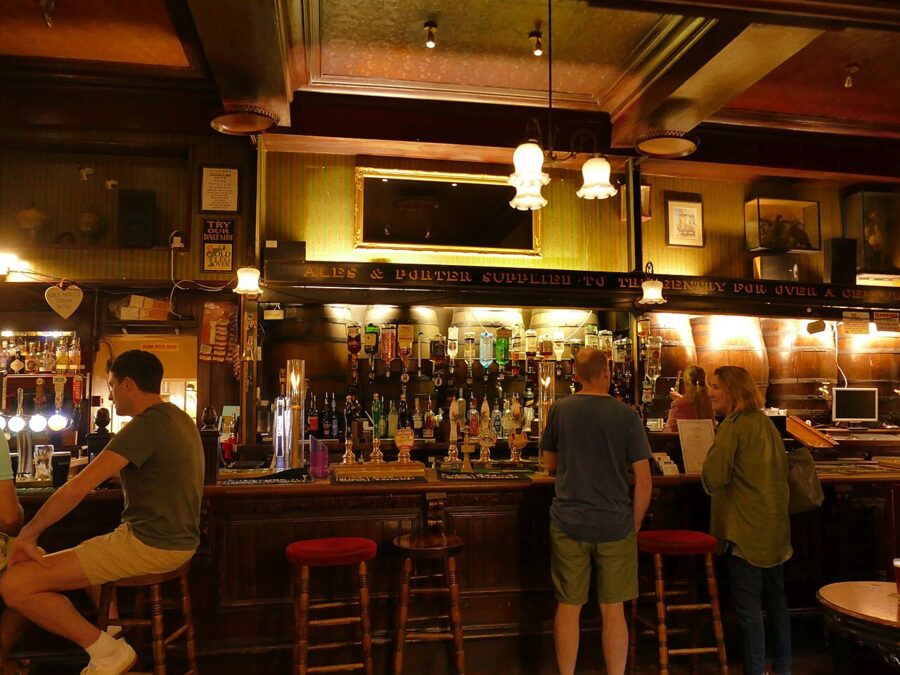

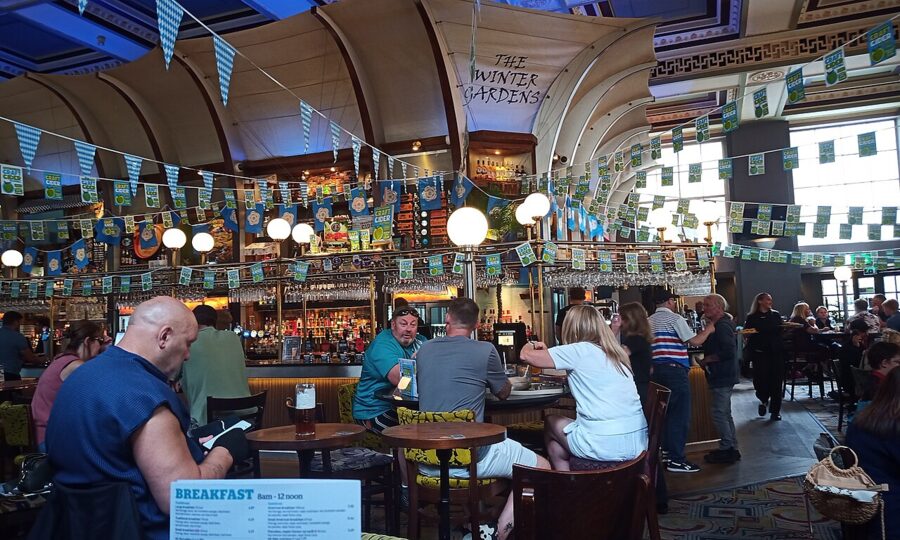

Evenings are quieter than in Leeds or York: pubs, wine bars and the theater rather than clubs, mostly around the Montpellier Quarter, Parliament Street and King’s Road.
When to go and how many days to spend
Harrogate is good all year, but May, June and September are the best months: the gardens are at their peak, the days are long, and you miss school holidays. Met Office averages for the nearest lowland weather station put July highs around 21°C (70°F) and January highs around 7°C (45°F), with rain on roughly one day in three spread through the year. Harrogate sits higher than that station and runs a little cooler, so pack a layer even in summer.
July and August are warmest and busiest, with school holidays from late July, and show weeks and big conferences push hotel prices up. Winter is quieter and cheaper; the Turkish Baths and Bettys are at their best on a cold day, though the gardens close early.
Two days covers Harrogate itself; three or four adds Knaresborough, Fountains Abbey and a day in the Dales. The museums close on Mondays, so do not save them for a Monday.
A one- or two-day plan
- Day 1 morning: walk from the station across the Stray to Bettys for breakfast, then down Montpellier Hill to the Royal Pump Room Museum and the Mercer Art Gallery.
- Day 1 afternoon: Valley Gardens and its Magnesia Well, then through the Pinewoods to RHS Harlow Carr. Take a taxi or bus back.
- Day 1 evening: a drink at Hales Bar and dinner in the Montpellier Quarter.
- Day 2 morning: a session at the Turkish Baths (book ahead), followed by lunch and the Montpellier shops.
- Day 2 afternoon: the train to Knaresborough for the castle, the viaduct view and a row on the Nidd in summer; back to Harrogate for dinner or a show.
With a third day and a car, do Fountains Abbey in the morning and Brimham Rocks before sunset.
Getting around and practical notes
- Buses: the Harrogate Bus Company runs the 36 (Leeds, Harrogate, Ripley, Ripon), the 1 (Knaresborough) and the 24 (Pateley Bridge). Pay the driver by contactless card.
- Parking: North Yorkshire Council runs the town’s car parks, including the Jubilee and Victoria multistories; tariffs were revised in April 2026, and you can pay by app with a 30p convenience fee. Many streets near the center are disc zones with time limits, such as the three-hour bays on Swan Road, where you must display a parking disc.
- Money: the UK uses pounds sterling; as of November 2026, £1 was worth about $1.31. Contactless cards work almost everywhere, including buses; carry a little cash for markets.
Harrogate questions
Is there a market day in Harrogate?
Harrogate’s own markets are monthly. The farmers’ market runs on the second Thursday of each month on Cambridge Street, and the makers market on the third Sunday, 10am to 4pm, in the same place. Knaresborough’s market is on Wednesdays, and Ripley holds one on the last Sunday of the month.
What is Harrogate famous for?
Its sulphur wells, which made it one of Britain’s leading spas in the 19th century; today, also Bettys, the Stray and its flower shows.
What is the nicest part of Harrogate?
For visitors, the Montpellier Quarter and Low Harrogate around Valley Gardens, where the spa buildings, shops and parks sit together. The Duchy area beyond, with large Victorian villas around St Wilfrid’s Church, is the smartest residential district.
Which is nicer, Harrogate or York?
York has the bigger sights, from the Minster to the city walls, and the bigger crowds. Harrogate is smaller, calmer and greener. They are a half-hour train ride apart, so stay in one and visit the other.
If you only book one thing before you arrive, make it a Turkish Baths slot: places are limited to each half-hour start, and an hour in the hot rooms after a day on the Stray is how Harrogate was meant to be visited.