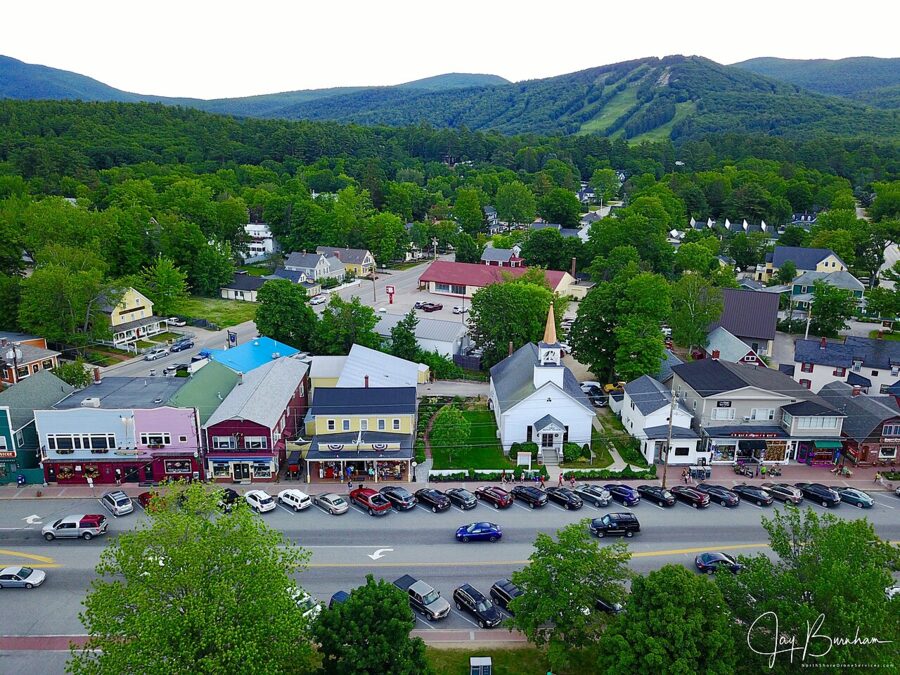
The best things to do in North Conway are a ride on the Conway Scenic Railroad from the 1874 station in the middle of the village, a day on the Kancamagus Highway, the trip to the top of Mount Washington by the Auto Road or the Cog Railway, the view from Cathedral Ledge, a cold swim at Diana’s Baths or Echo Lake, and tax-free shopping on Route 16. In winter, Cranmore’s lifts start a few minutes from Main Street. Two full days covers the village and one big outing; three lets you do both the Kanc and Mount Washington without rushing.
North Conway is a mountain village, not a city. It sits on a broad, flat stretch of the Saco River valley with the White Mountain National Forest on three sides. Expect a walkable old center with a green, a station and a row of shops, then a long strip of outlets and motels running south. The best of the rest is a short drive out of town and up.


On this page
- North Conway in brief
- The Conway Scenic Railroad
- Mount Washington, by road or by rail
- Drive the Kancamagus Highway
- Cathedral Ledge and Echo Lake
- Diana's Baths
- Shopping without sales tax
- Ski season
- Smaller things worth an hour
- Events through the year
- Where to eat and drink
- When to go and how long to stay
- A two-day plan
- Getting around and practical notes
North Conway in brief
North Conway is a village inside the town of Conway, in Carroll County on New Hampshire’s eastern edge, a few miles from the Maine line. That answers the question people ask most often about the area: Conway is the town, and North Conway is one of several villages within it, alongside Conway Village to the south (where the Kancamagus Highway begins), Center Conway, Kearsarge, Intervale, Redstone and East Conway.
And yes, it has a real downtown. The village center runs along Main Street (Route 16 and US 302 share the road here) from the railroad station and Schouler Park north past the old storefronts, churches and inns. South of the village, the same road becomes a few miles of outlets, chain restaurants and motels.
Getting there
Almost everyone arrives by car. The nearest commercial airport is Portland International Jetport in Maine, roughly an hour and a half away. Manchester-Boston Regional Airport is about two hours south, and Boston Logan is two and a half to three hours, longer on a foliage-season Friday. From Boston, NH 16 (the Spaulding Turnpike) runs all the way north to the village.
Without a car it’s harder. As of November 2026, Concord Coach Lines’ Northern New Hampshire route stops in North Conway on Fridays and Sundays only, with southbound buses leaving at 8:30am and 2:30pm and reaching Boston South Station and Logan about four hours later.
The Conway Scenic Railroad
The yellow Victorian station on the east side of Schouler Park was finished in 1874, when the railroad brought the first real crowds of summer visitors. Today it is the base of the Conway Scenic Railroad, which runs heritage trains on two lines: south along the old Boston & Maine Conway Branch, and west through Crawford Notch on the line built to cross the mountains.
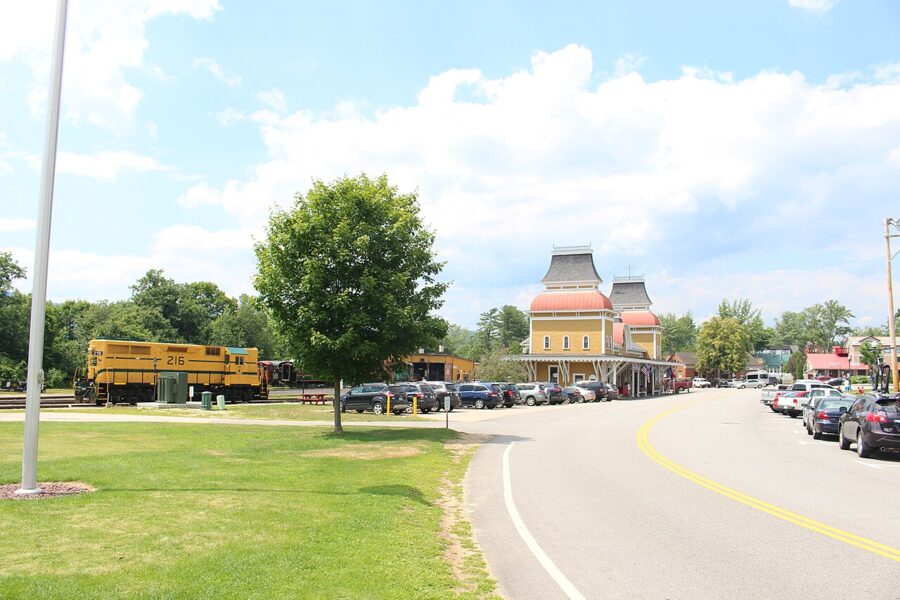

The Valley Train is the short ride: 11 miles round trip down to Conway and back in about an hour, good for small children. The Mountaineer is the one people travel for. It runs 50 to 60 miles round trip in four to four and a half hours, climbing into Crawford Notch and crossing the Frankenstein Trestle and the Willey Brook Bridge high above the valley floor. In July through October it leaves North Conway at 9am and 1:30pm; in spring and late fall it runs on select days at 10:30am.
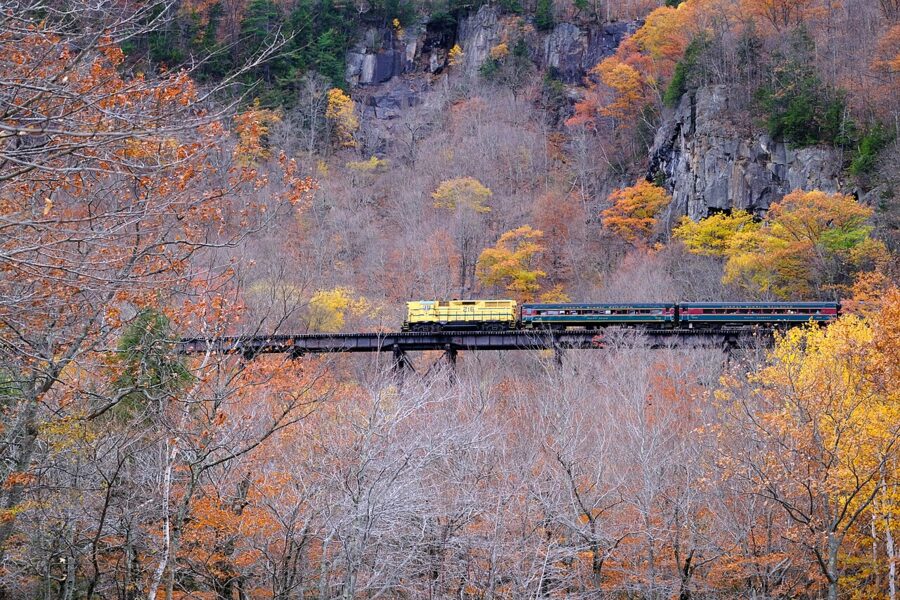

Published fares as of November 2026 (the railroad notes they vary through the year):
| Train | Length | Coach, adult (13+) | Coach, child (4-12) | Other classes |
|---|---|---|---|---|
| Valley Train | About 1 hour | $24 | $18 | Comfort $31, Observation Dome $40 (adult) |
| Mountaineer | 4 to 4.5 hours | $75 regular, $83 high season | $52 regular, $63 high season | Comfort $105-$130, Observation Dome $185-$198 (adult) |
| Winter Mountaineer | About 4 hours | From $83 | Select dates, November 28, 2026 to March 2027, 10:30am | |
| Snow Train | About 1 hour | From $27 | Winter, down and back on the Conway Branch | |
Toddlers ride free in Coach on the Valley Train but still need a ticket. On the Mountaineer you can’t bring outside food or drink: order a boxed lunch at least 48 hours ahead, or use the snack car. Dogs aren’t allowed.
Is the railroad open in winter? Yes: the Snow Train and the Winter Mountaineer run through the cold months, the Santa’s Holiday Special runs on holiday-season weekends from $27, and there’s an adults-only New Year’s Eve Late Special on December 31, 2026, boarding at 8pm.
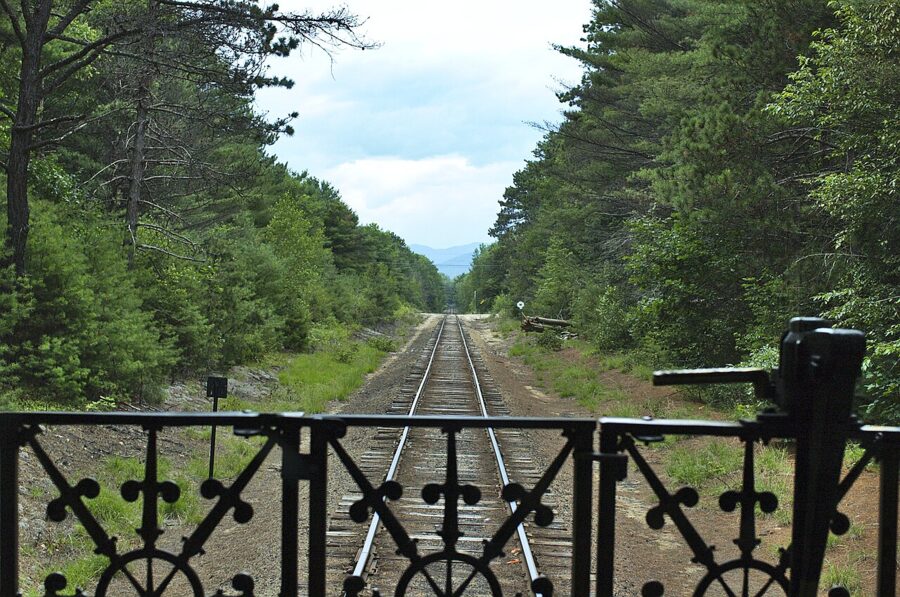

With one clear day, the Mountaineer in Coach is a better use of money than the Valley Train in a dome. Book foliage-season Mountaineer seats early; the October departures sell out.
Mount Washington, by road or by rail
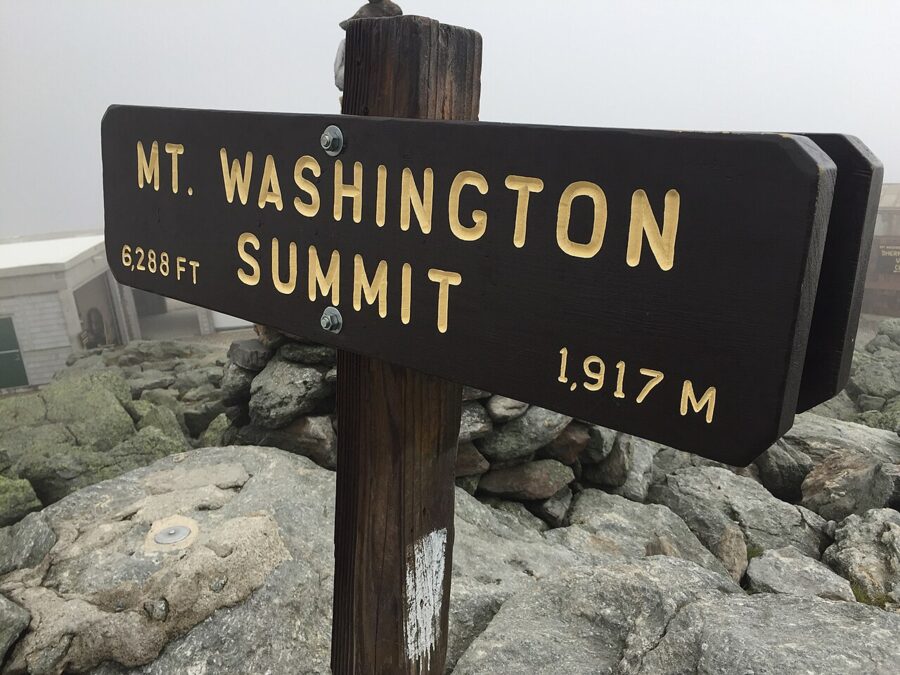
At 6,288 feet, Mount Washington is the highest peak in the Northeast, with famously bad summit weather: fog, hard wind and cold even in July. Two privately run routes reach the top without a hike, one from each side. Both close for the season in fall, leaving only the winter versions below.
The Mount Washington Auto Road
The Auto Road starts on Route 16 in Pinkham Notch, about 40 minutes north of North Conway, and climbs 7.6 miles to the summit. Allow about 30 minutes each way, plus at least an hour on top.
The posted tolls are $36 per adult (13 and up), $15 per child aged 4 to 12, and free under 4, and the toll includes entry to the Mount Washington Observatory’s summit museum. The “This Car Climbed Mt. Washington” bumper sticker is still part of the ritual.
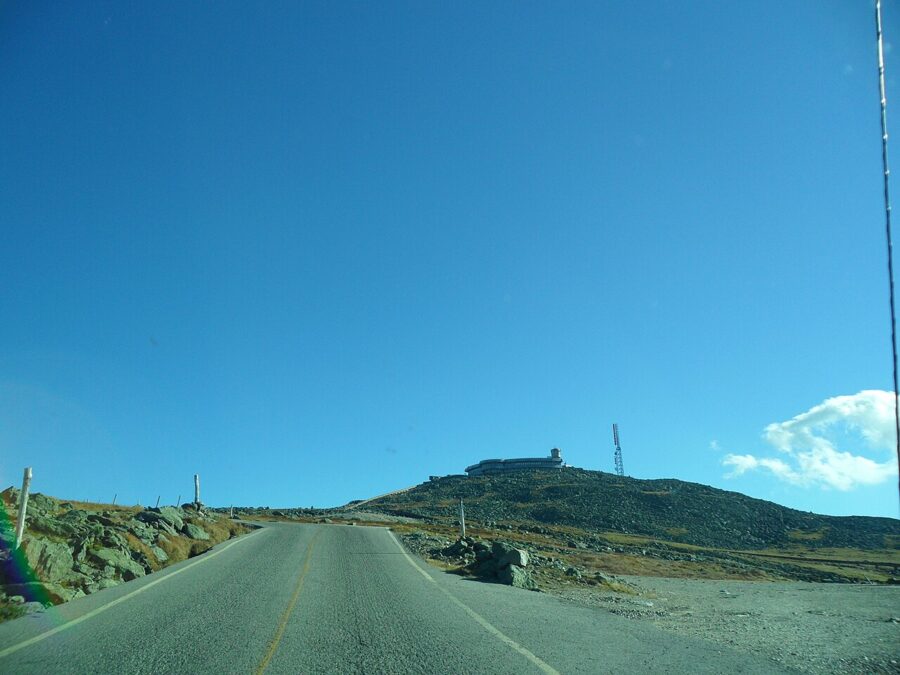

In 2026 the road opened for self-drive on weekends from April 25 and daily from May 23, closing on November 1. The last car up leaves the base at 6pm in high summer, stepping back to 4pm by late October, and all vehicles must be off the summit within 45 minutes of closing. Race days open late.
Some vehicles, including large RVs and trailers, aren’t allowed, so check the road’s vehicle restrictions first. If you’d rather not drive, guided two-hour van tours start from $59.
In winter the only way up is the Auto Road’s own SnowCoach, a tracked van running 1.5-hour trips into the alpine zone from $79.
The Mount Washington Cog Railway
The Cog climbs the west side of the mountain from the Marshfield Base Station off US 302 near Bretton Woods, about an hour’s drive from North Conway through Crawford Notch. It has run since July 3, 1869, making it one of the oldest mountain-climbing railways anywhere. The summit trip takes about three hours, including an hour at the top. The 2027 summit season is listed from April 30 to late October, and in winter the trains run one-hour round trips to Waumbek Station at 4,000 feet, from November 2, 2026 to April 29, 2027.
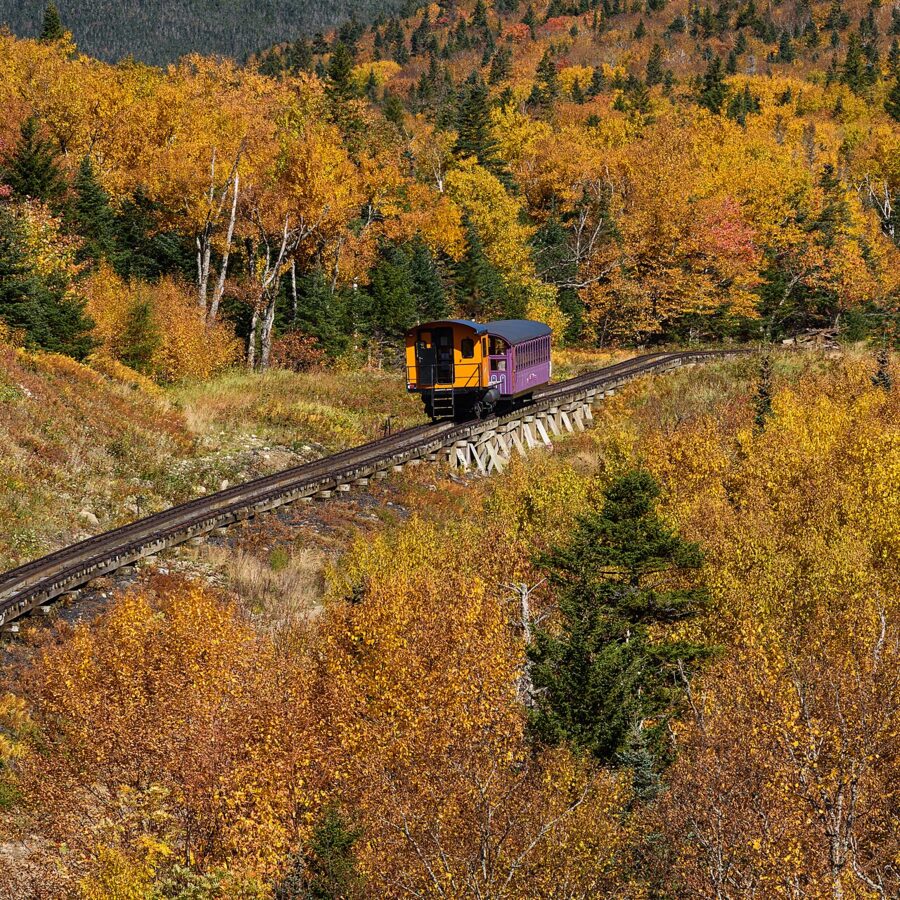

Cog tickets are priced dynamically, so the fare depends on the date and how full the train is. On a busy October 2026 weekend, adult summit tickets topped out at $119, according to The Boston Globe; quieter days cost less. Children under 4 ride free on an adult’s lap. Arrive at least 45 minutes before departure, and know that missing your train costs a fee of $20 to $30 per ticket.
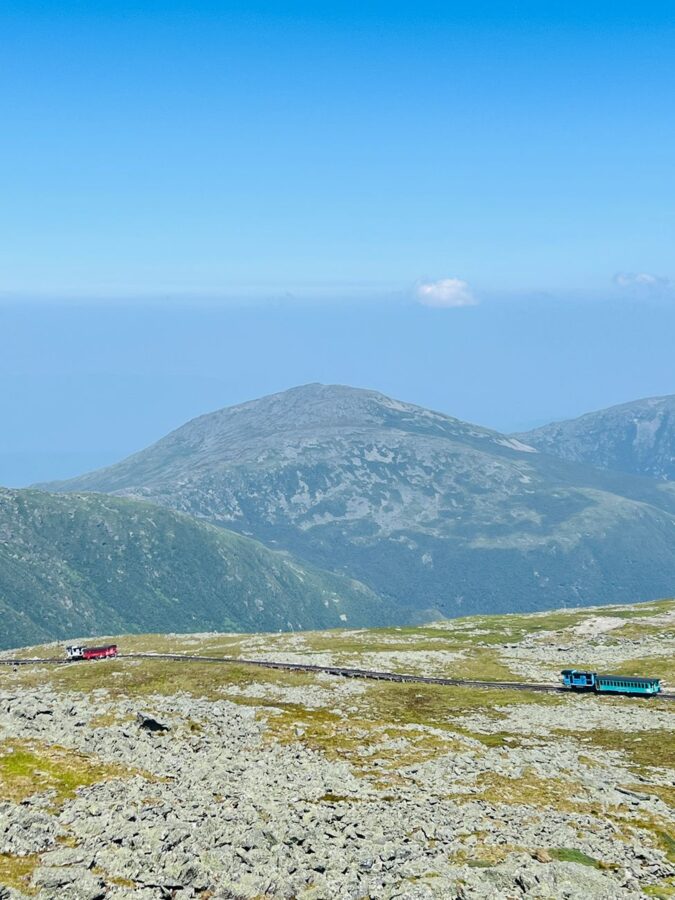
Road or rail?
Drive the Auto Road if you have a reliable car and a confident driver. Take the Cog if you’d rather sit back or want the train itself as the experience. Either way, read the Mount Washington Observatory’s Higher Summits Forecast the night before: a cloudy summit means paying full price to stand in fog.
At the summit
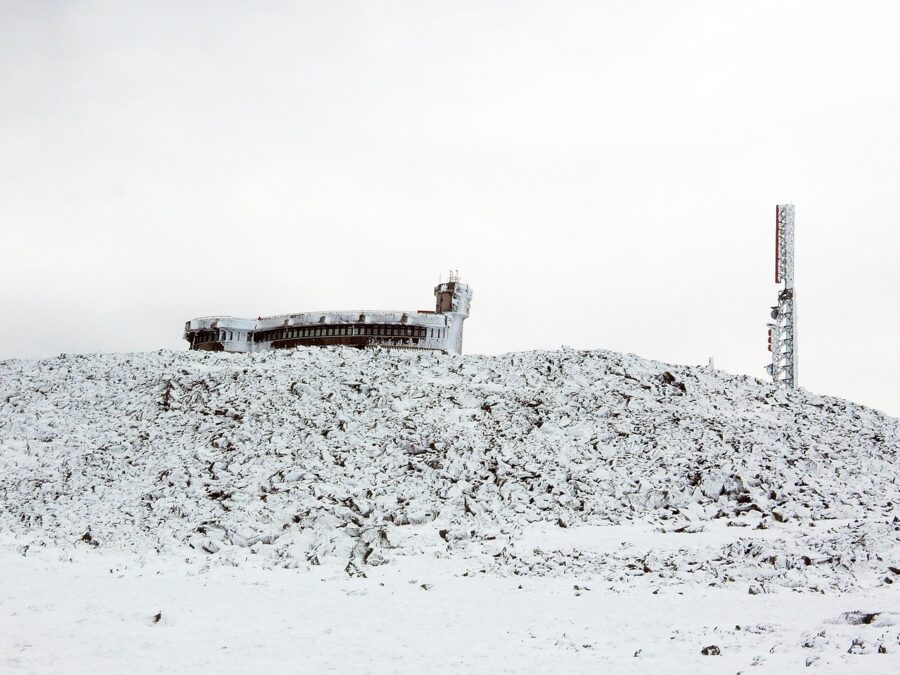
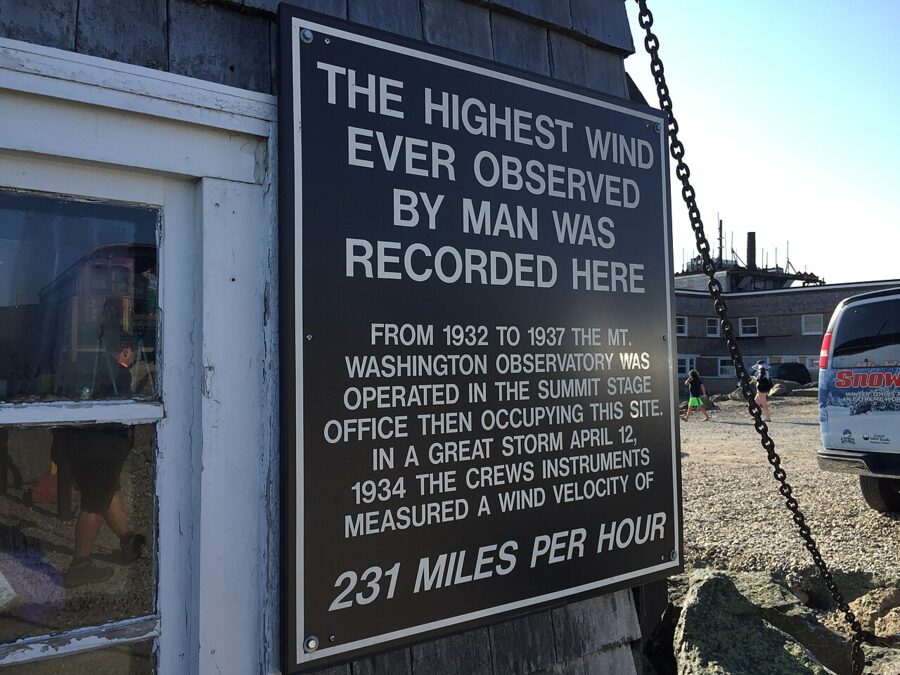
The summit belongs to Mount Washington State Park. Its Sherman Adams Visitor Center, with food, restrooms and the Observatory’s Extreme Mount Washington museum, is open from about mid-May to mid-October. Next to it stand the stone Tip-Top House, a summit hotel from 1853, and the old Observatory office.


Drive the Kancamagus Highway
The Kancamagus Highway is NH Route 112 between Conway and Lincoln: 34.5 miles of two-lane road through the White Mountain National Forest, climbing to almost 2,900 feet at Kancamagus Pass. There’s no gas, no food and patchy cell service the whole way, so fill up in Conway. Without stops it takes about an hour each way. With the stops below, give it half a day.

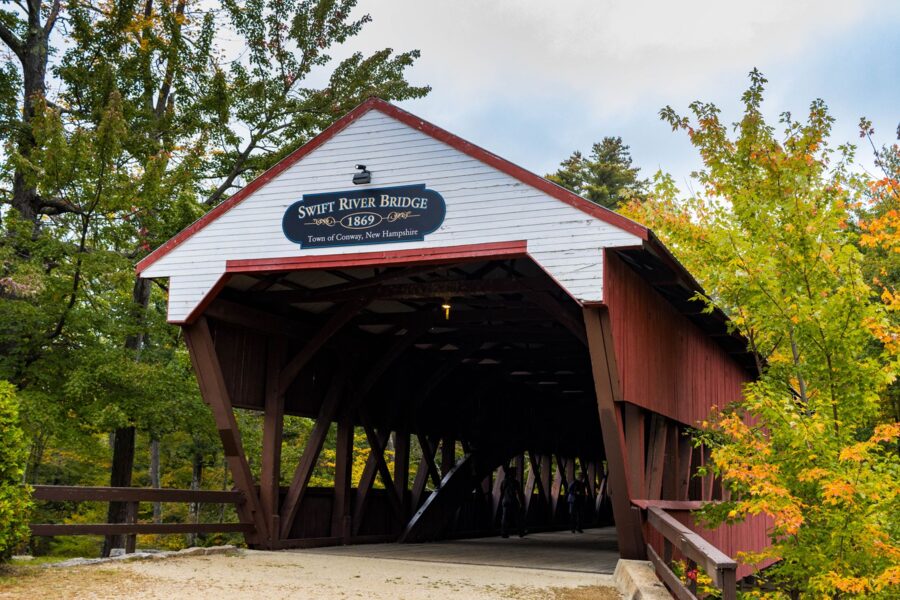
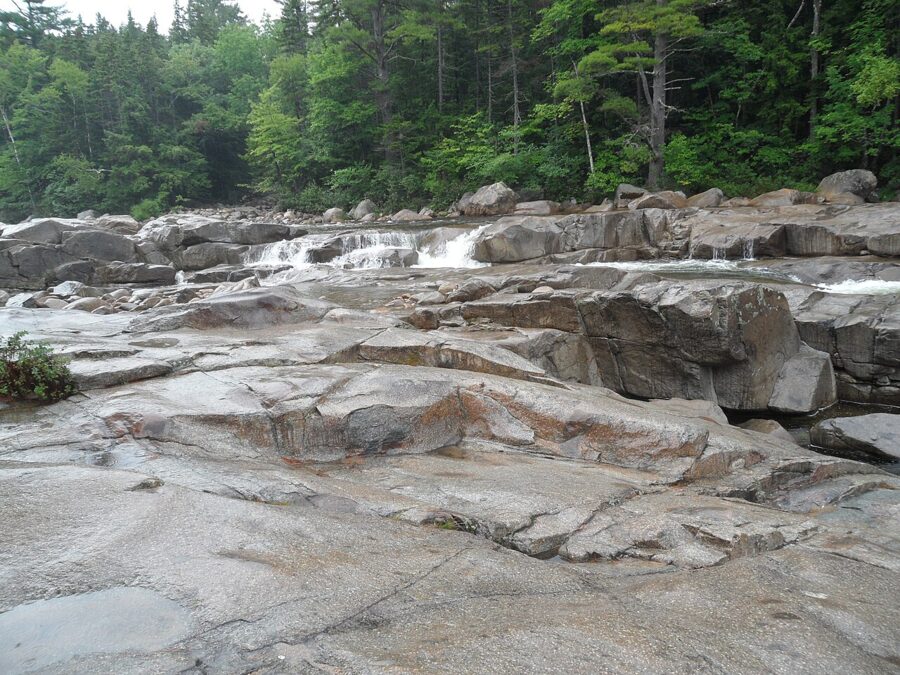
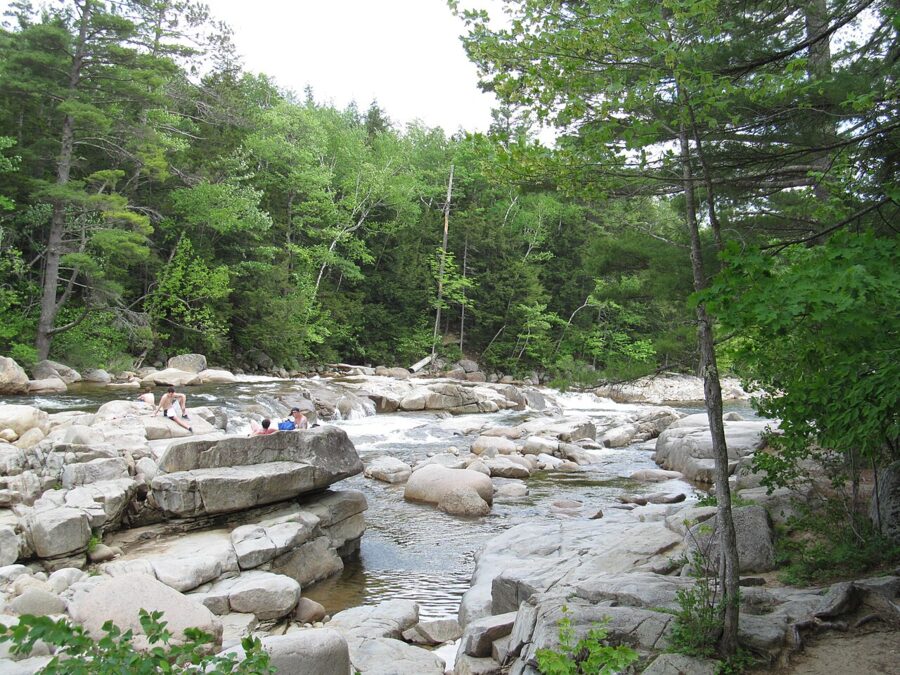
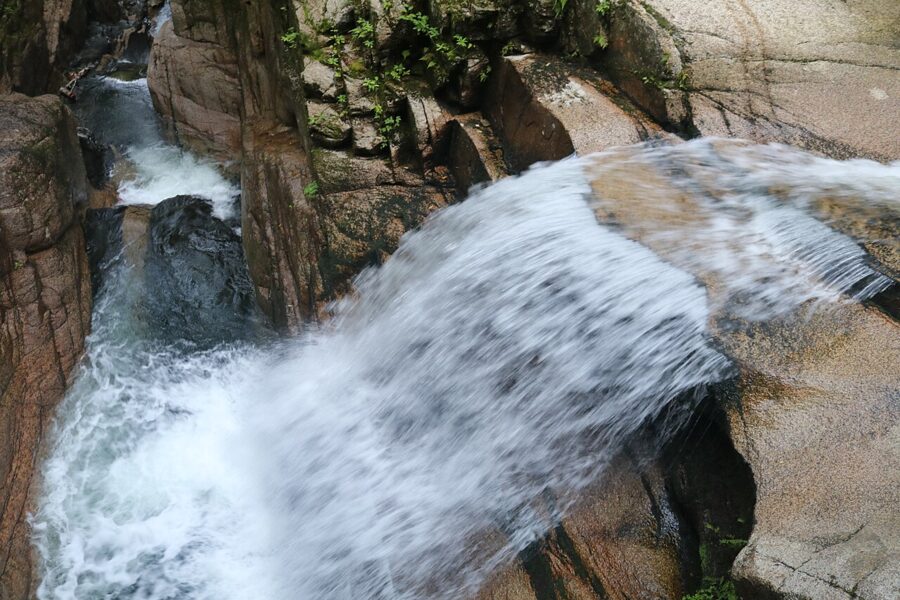
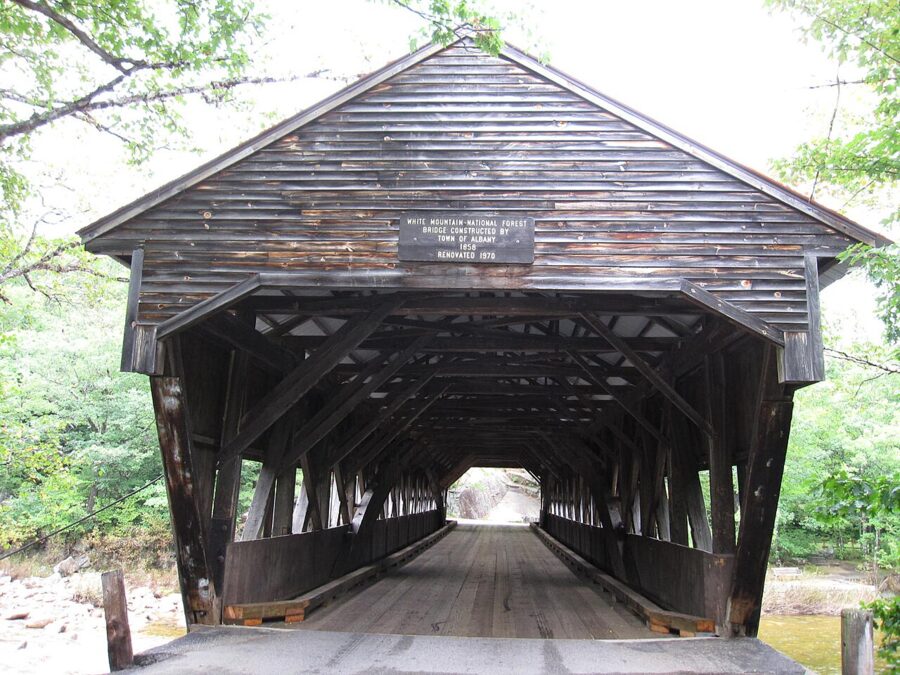
Starting from Conway, the first stops follow the Swift River. The Albany Covered Bridge sits just off the road about six miles in. Lower Falls has wide granite ledges and pools that fill with swimmers on hot weekends.
Rocky Gorge is a narrow cut in the rock with a footbridge over it and a short trail to Falls Pond. Farther west, Sabbaday Falls is a short, gentle walk to a waterfall that drops through a slot in the rock; it’s the best payoff for the least effort on the whole highway.



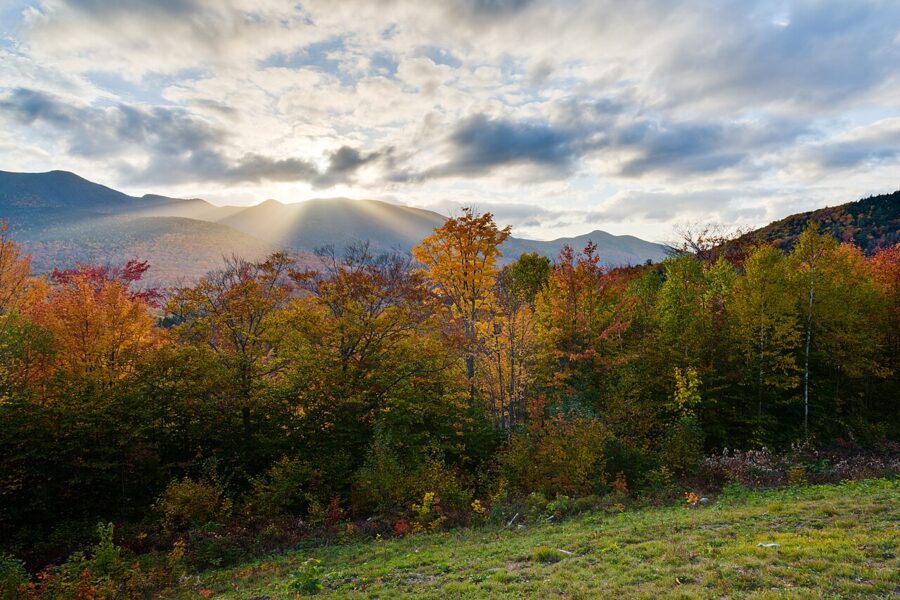
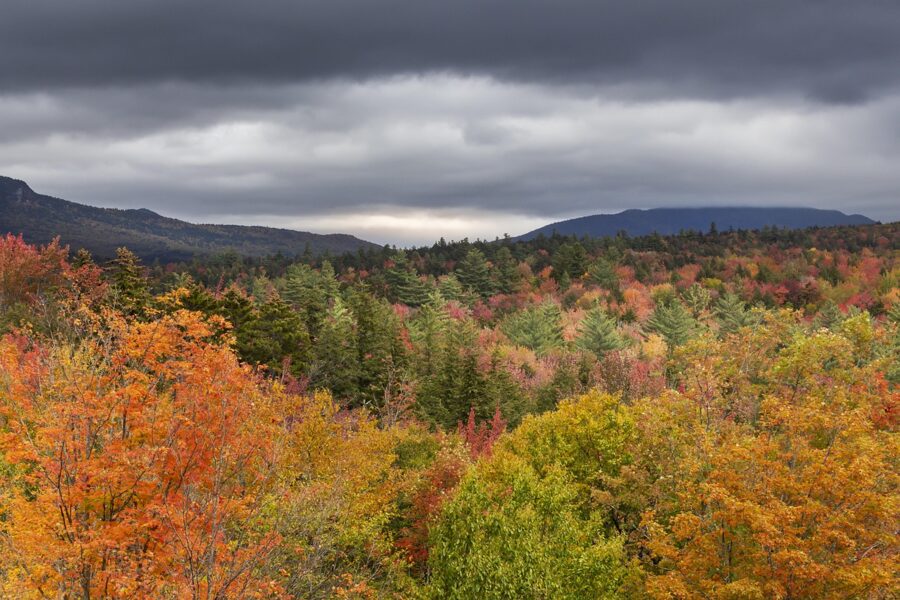
Past the pass, the Hancock and Pemigewasset overlooks are the ones in the foliage photos. The Lincoln Woods trailhead near the western end starts a flat, wide trail along the East Branch of the Pemigewasset River, good for an hour’s walk out and back.
Parking at the developed sites along the highway requires a White Mountain National Forest recreation pass. The Forest Service lists Lincoln Woods as a fee site year-round, and several Saco and Pemigewasset District sites on the road as fee sites in summer. Buy a day pass at the self-service stations at the sites or in advance on Recreation.gov, or display an America the Beautiful pass instead.
Foliage weekends turn the Kanc into a slow parade of cars. Go on a weekday, or leave Conway before 8am while the lots are still empty.
Cathedral Ledge and Echo Lake
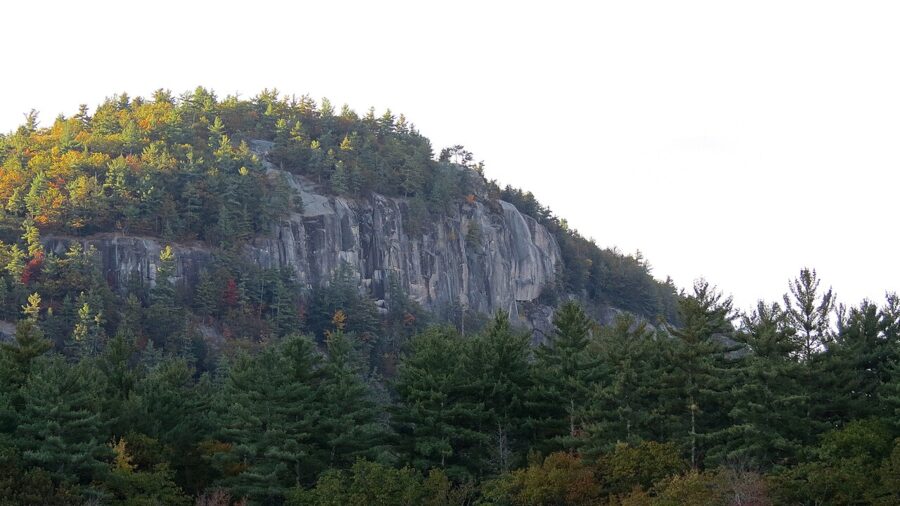
Look west from the village and you see two granite cliffs over the river meadows: Cathedral Ledge and, to its left, White Horse Ledge. Cathedral Ledge is about 700 feet high, and a mile-long road climbs to the top from the back, so you can stand on the rim without hiking. Below you are Echo Lake, the village and Cranmore.

Both ledges are state park land and popular rock- and ice-climbing walls. The summit road is at 579 Cathedral Ledge Road in Bartlett, off West Side Road. State parks charge a day-use fee here, paid at self-service “Iron Ranger” stations along the road and at the top when the park isn’t staffed. Gates can be closed in the off-season; in winter, plan to walk up the road or skip the ledge.
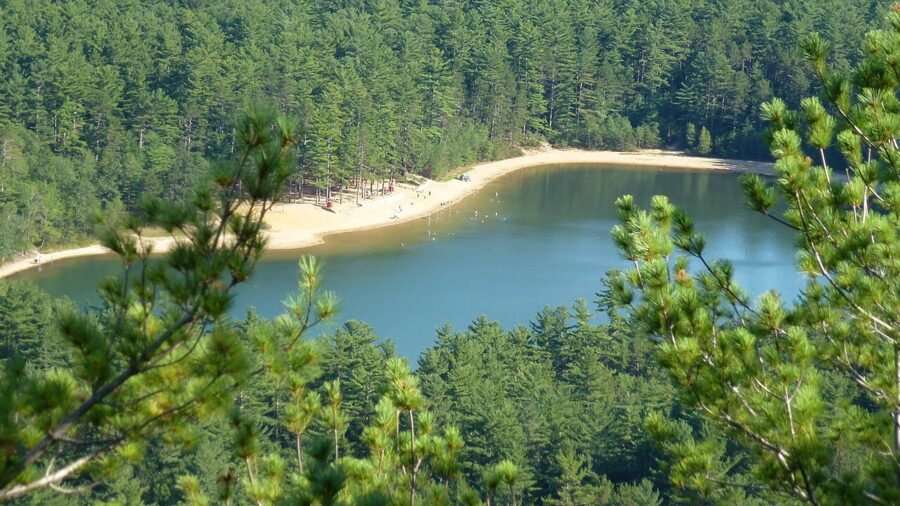
Echo Lake State Park sits at the foot of White Horse Ledge, at 68 Echo Lake Road. It has a small sandy beach, a flat trail around the lake that takes well under an hour, and cold, clear water.
Day-use fees are $4 for ages 12 and up and $2 for ages 6 to 11; children 5 and under and New Hampshire residents 65 and over get in free. Parking is limited on summer weekends; reserve online up to 30 days ahead. Pets aren’t allowed at Echo Lake from May 1 to October 31, though they can use the back trails around the ledges.

Diana’s Baths
Diana’s Baths is a series of small cascades and shallow pools where Lucy Brook spills over granite ledges, just off West Side Road in Bartlett, a few minutes from the village. The walk in is about six-tenths of a mile each way on a wide, nearly flat path, so it works for small children and grandparents. In the 1800s a sawmill stood here, and you can still find its stone foundations near the falls.
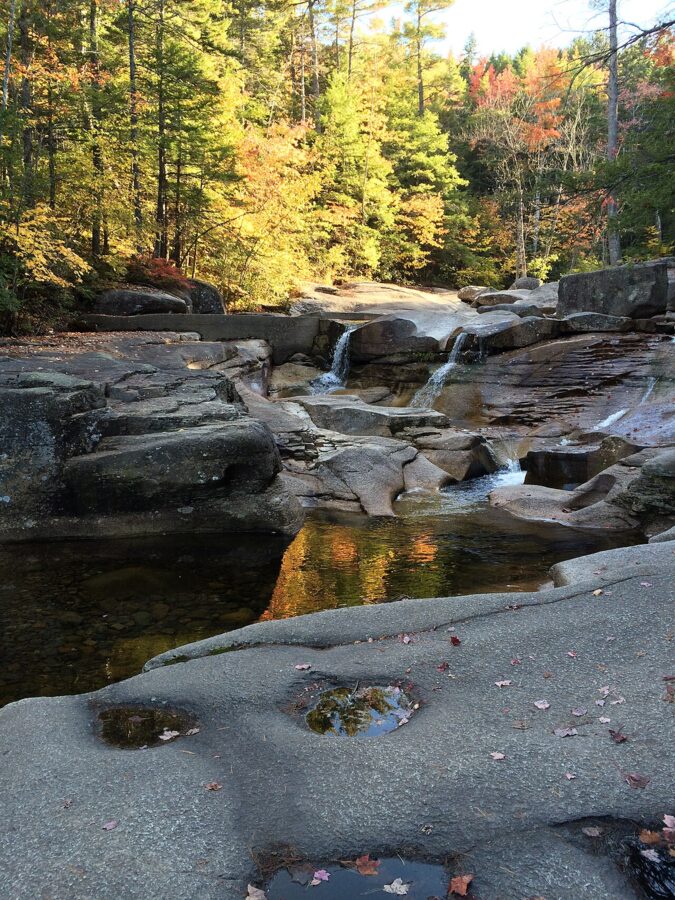

It’s a national forest day-use site, and the Forest Service lists it as a fee site year-round, so display a recreation pass or buy one at the lot. On hot July weekends the lot is full by mid-morning, so go early, late or midweek. Allow an hour.
Shopping without sales tax
New Hampshire has no general sales tax, which is why the stretch of Route 16 south of the village is lined with outlets. The tax-free part applies to goods in stores. Restaurant meals and hotel rooms are a different story: the state charges an 8.5% meals and rooms tax on both.
The biggest center is Settlers Green, which has three parts along the highway: the Outlet Village at 2 Common Court, Settlers Green Streetside at 1699 White Mountain Highway and Settlers Crossing at 1498 White Mountain Highway. Brands include lululemon, Burton, Marathon Sports and Books-A-Million; posted hours on a November 2026 weekday were 10am to 7pm. Settlers Crossing also has a Market Basket grocery, handy if you’re renting a cabin.
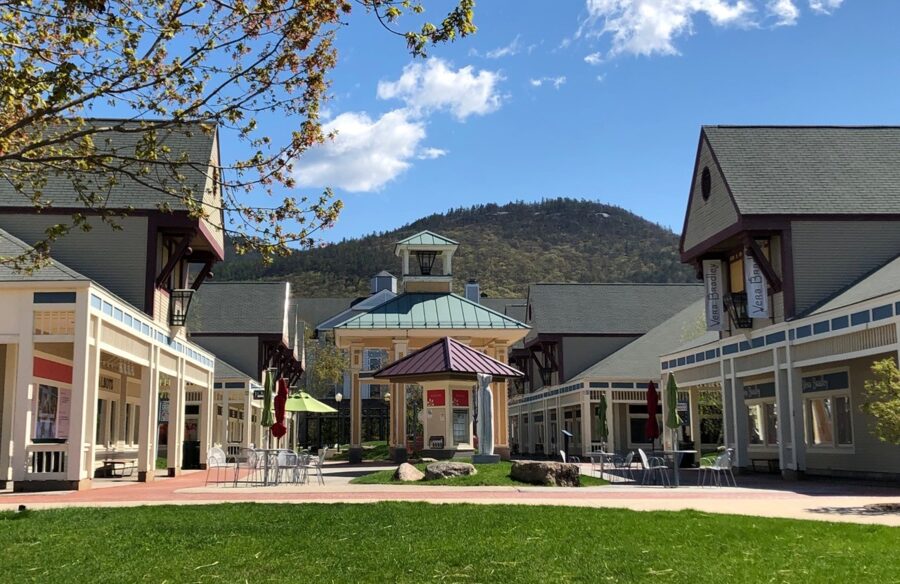

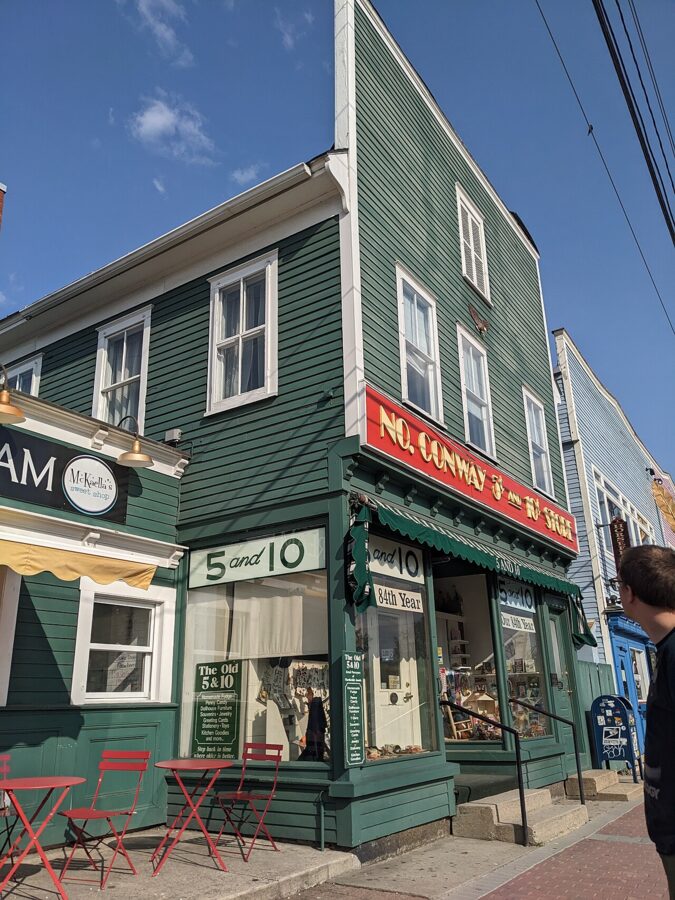
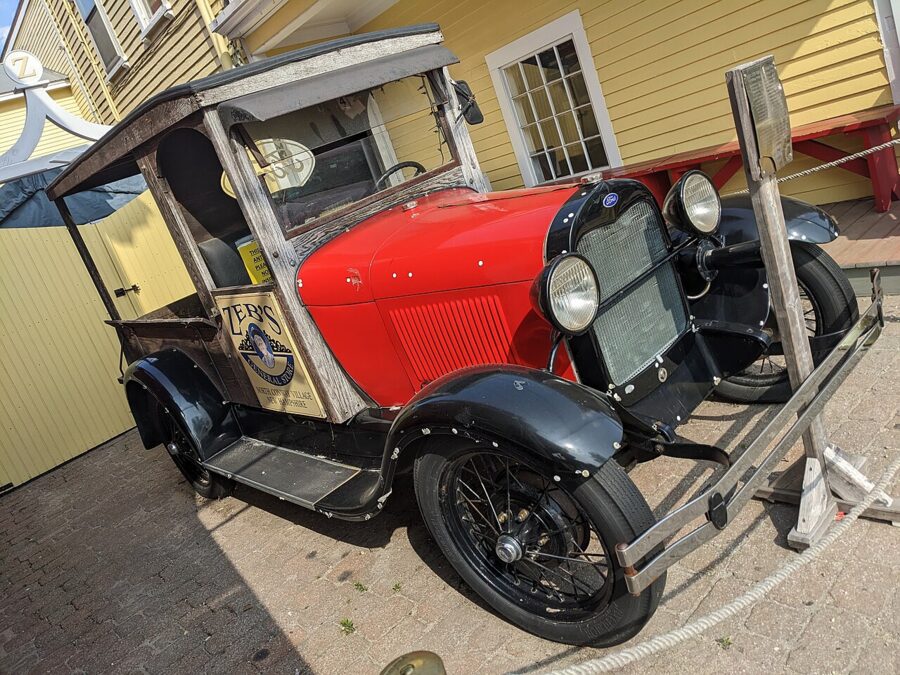
For something you can’t buy at every mall in the country, walk into Zeb’s General Store on Main Street (2675 White Mountain Highway): a long, old-fashioned shop full of New England-made foods, maple syrup, penny candy and gifts. As of November 2026 it opens 9am to 6pm Monday to Thursday, 9am to 8pm on Fridays and Sundays and 9am to 9pm on Saturdays.

Ski season
North Conway has been a ski town since the 1930s, and Cranmore Mountain Resort, on the eastern edge of the village at 239 Skimobile Road, is the reason. It’s a mid-sized, family-friendly hill: not big enough to fill a week, but close enough to ski a morning and be back on Main Street for lunch.
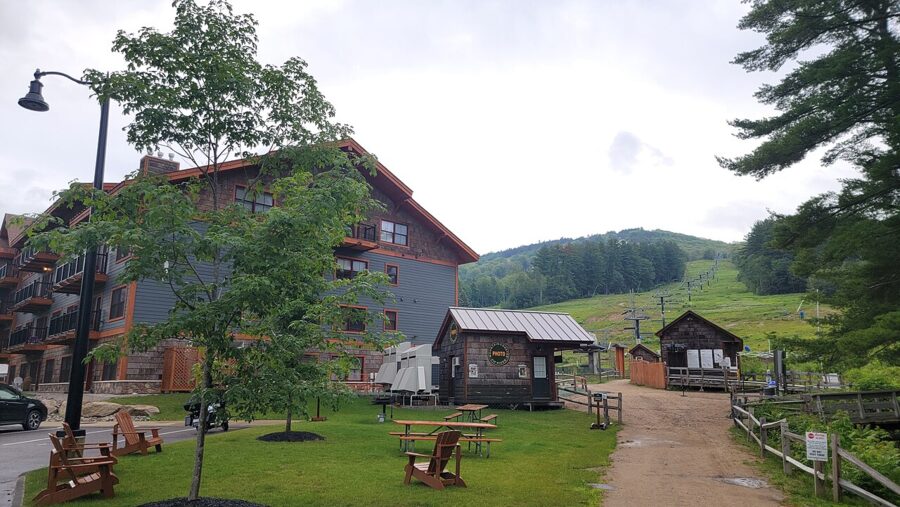

Cranmore’s projected opening for the 2026-27 season is Thanksgiving weekend, Friday November 27 to Sunday November 29, with early-season lifts from December 5 (9am to 4pm). In the core season, from January to mid-March, lifts run 9am to 4pm on most weekdays, with night skiing until 8pm on Wednesdays and Saturdays. The Arctic Lights tubing park runs evenings and weekends and fills up, so book sessions ahead. Beginner Basin tickets cost $34 midweek and $54 on weekends and holidays; full-mountain ticket prices change by date, and buying online ahead is cheaper than at the window.
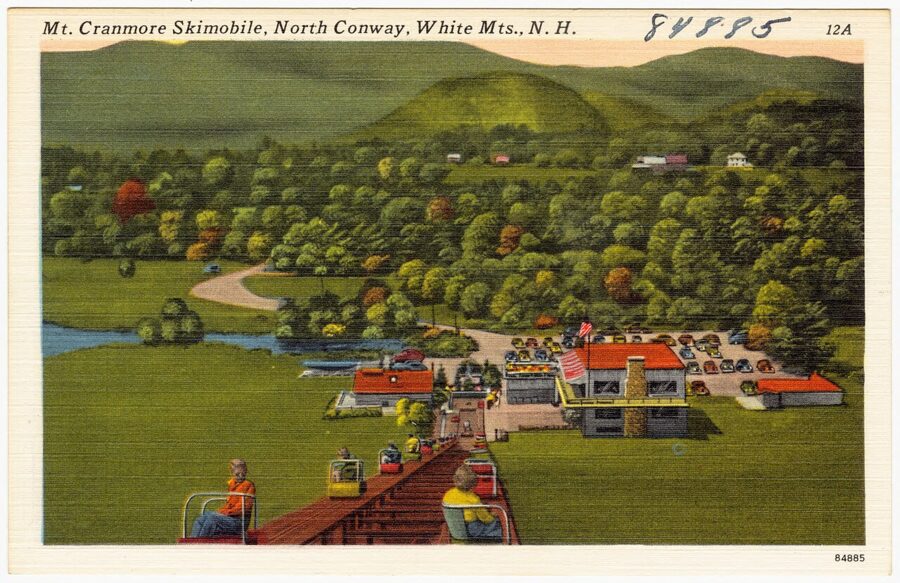
For bigger terrain, Attitash is about 15 minutes west on US 302 in Bartlett, and Wildcat Mountain is across Route 16 from the Auto Road in Pinkham Notch, about 35 minutes north, facing Mount Washington across the notch. Both are on Vail’s Epic Pass.
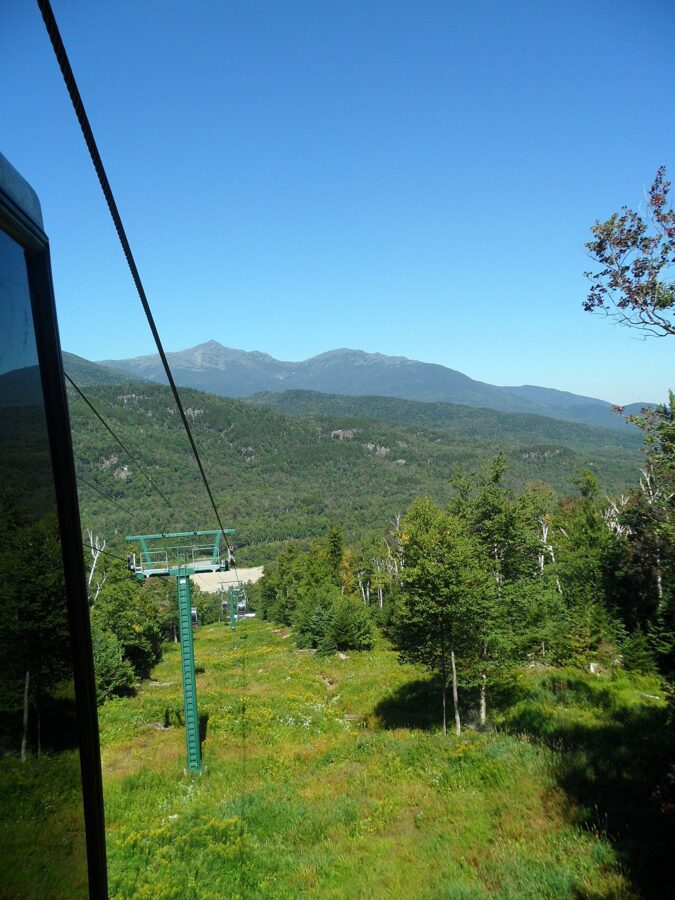

Off season, Cranmore’s Mountain Adventure Park is the obvious thing for kids. In summer 2026 (June 20 to September 7) an unlimited day cost $49 for riders 54 inches and taller and $39 for those 38 to 53 inches, with $5 off online. In fall (September 12 to October 18) it switched to two-hour passes at $39 at the window or $34 online.
Smaller things worth an hour
The New England Ski Museum’s North Conway branch
The New England Ski Museum runs a small, free branch in the village at 2628 White Mountain Highway. As of November 2026 it’s open Thursday to Sunday, 11am to 5pm, and closed November 26 and 27 for Thanksgiving and December 24 and 25. The current exhibit, “Chasing Snow: New Hampshire and the Olympic Spirit,” follows the state’s Olympians; allow 30 to 45 minutes.
Schouler Park and the Saco River
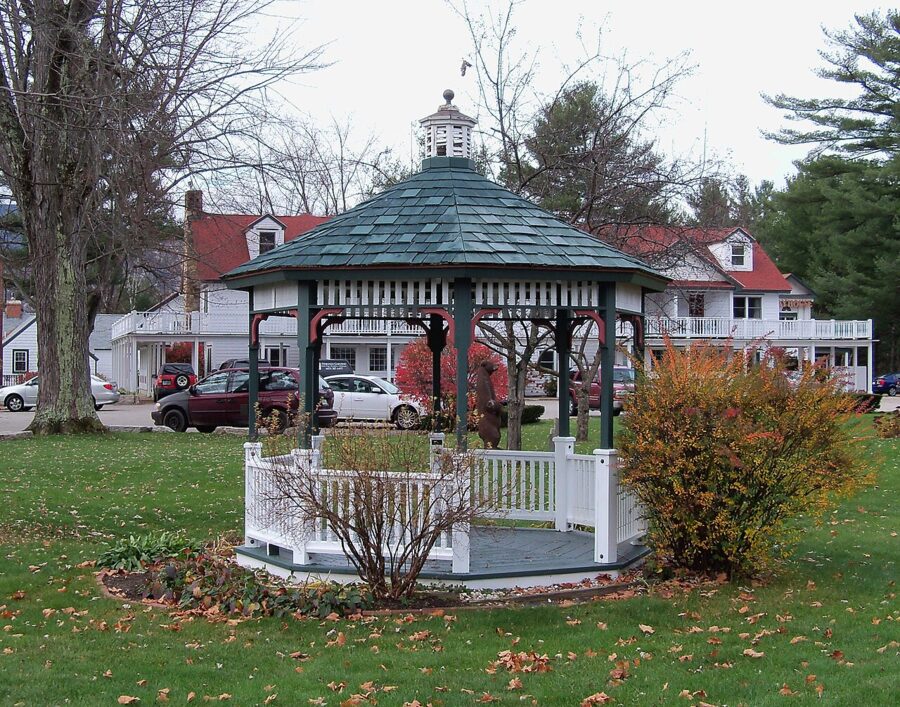
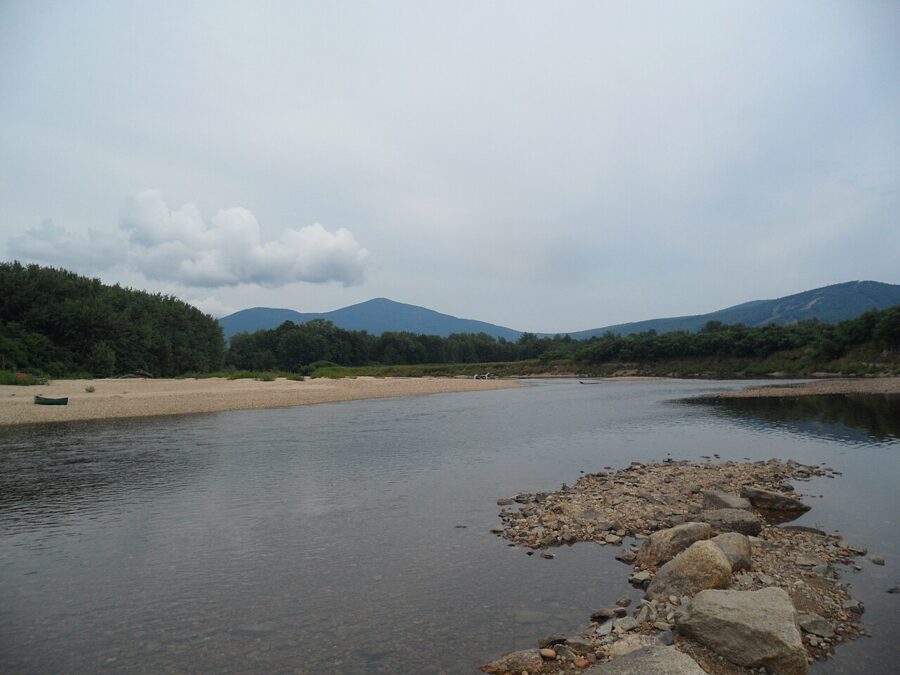
The open green beside the station is the village’s front lawn, with picnic benches and a clear view across the river meadows to Cathedral and White Horse ledges. Head west on River Road and you reach the Saco, which in summer is shallow, sandy-bottomed and slow enough for tubing and canoeing; outfitters on US 302 in Center Conway rent boats and run shuttles. In a dry August the river is ankle-deep in places, which kids love and paddlers don’t.

Black Cap
Black Cap is the short hike locals recommend first. The trail starts from Hurricane Mountain Road on the east side of the village and runs a little over a mile each way through the Green Hills Preserve to open ledges with a view across the valley to Cathedral Ledge and the Moat Range. Allow about two hours round trip. Hurricane Mountain Road is steep and narrow; if it’s icy or closed, skip it.
Jackson and the falls of Pinkham Notch
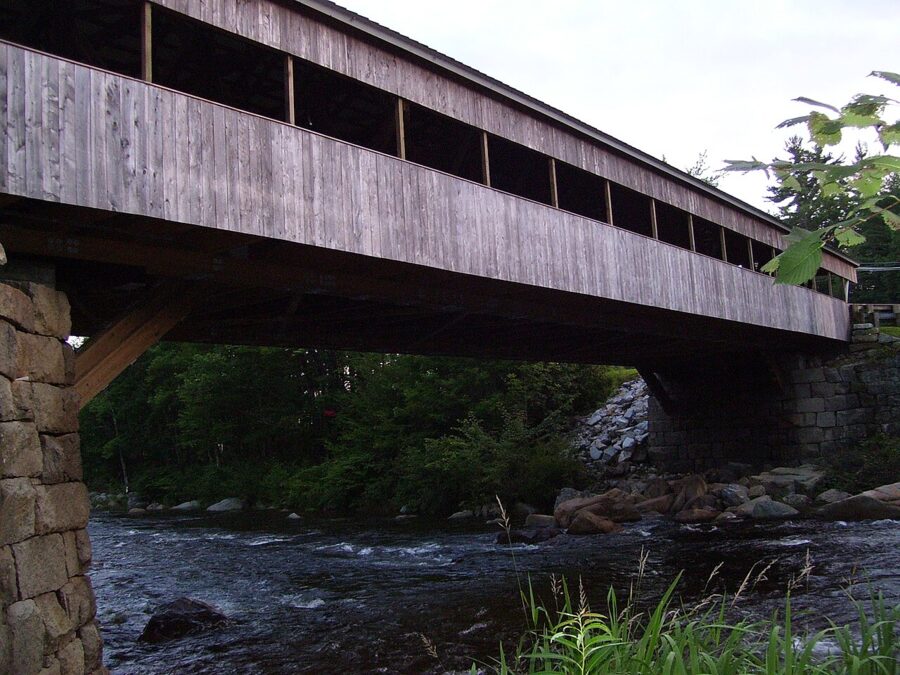
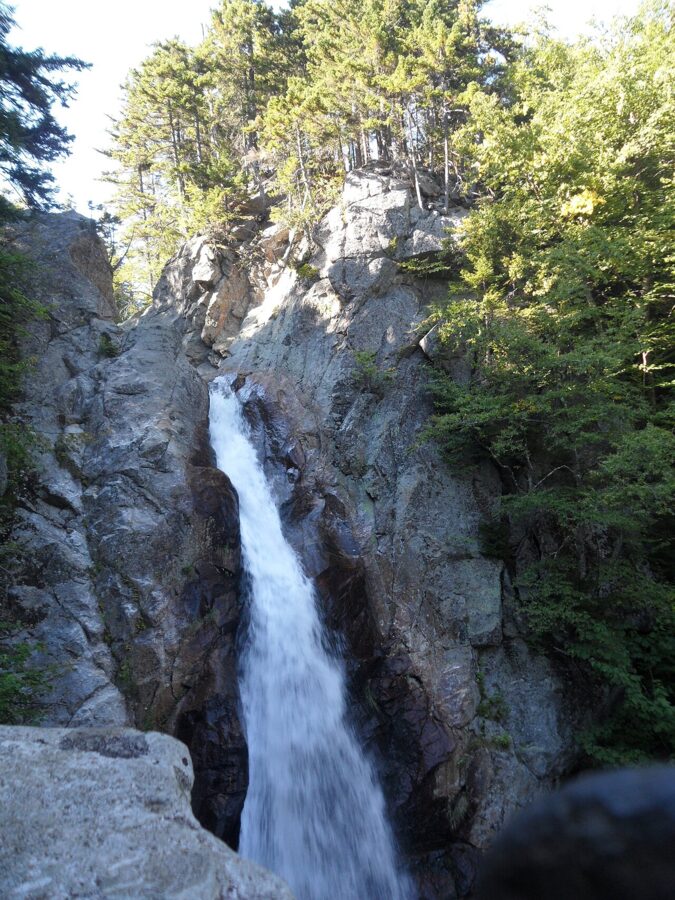
Ten minutes north on Route 16, the village of Jackson is entered through a covered bridge over the Ellis River, a favorite photo stop. Continue up Route 16 into Pinkham Notch and you reach Glen Ellis Falls, a short walk with stone steps down from a roadside lot to a waterfall that drops about 64 feet. Combine both with the Auto Road and you have a full day north of town.


Rainy days with kids
Story Land, in Glen about ten minutes north, is a storybook theme park aimed at young children; it’s seasonal, running from summer into early fall, so check its calendar before you promise anything. Kahuna Laguna, the indoor water park at the Red Jacket Mountain View Resort in North Conway, is open year-round and is the usual answer to a wet day.
Events through the year
Where a 2026 date has passed, it’s shown as a guide to when the event usually falls; check the organizer’s site for 2027.
| When | Event | Where |
|---|---|---|
| Late November to December | Cranmore’s opening weekend (projected November 27, 2026); Santa’s Holiday Special trains on weekends; Winter Mountaineer from November 28 | Cranmore; North Conway station |
| December 31 | New Year’s Eve Late Special train (21 and over) | North Conway station |
| Late June | Mount Washington Road Race, runners up the Auto Road (June 27 in 2026) | Auto Road, Pinkham Notch |
| August | Climb to the Clouds car hillclimb (August 7-9, 2026) and the Auto Road Bicycle Hillclimb (August 15, 2026) | Auto Road |
| Late September to mid-October | Peak foliage; Mountaineer trains at their busiest | Kancamagus Highway, Crawford Notch |
| Early October | Fryeburg Fair, a large agricultural fair just over the state line | 1154 Main Street, Fryeburg, Maine |
Where to eat and drink
Dining here is casual and hearty: smokehouse plates, pub food, big breakfasts. Book ahead on foliage and holiday weekends, when hour-long waits are normal.
Breakfast and coffee
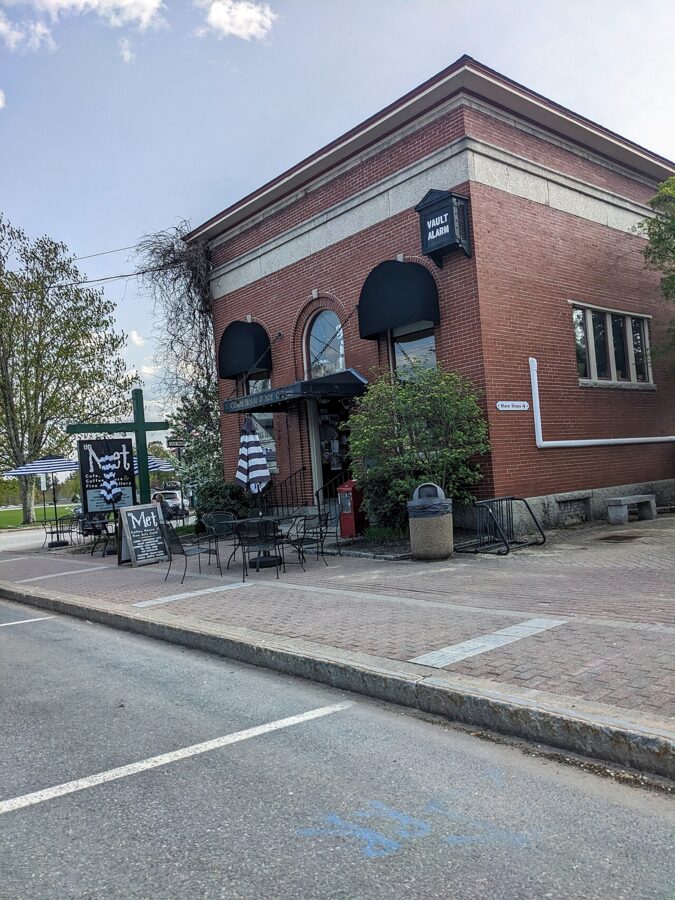
- The Met Coffee House, 2680 Main Street, in the middle of the village, for coffee and pastries; there’s a second outpost at Settlers Green.
- Big Dave’s Bagels & Deli, 1130 Eastman Road, for bagels, breakfast sandwiches, wraps and burritos to take on a hike.

Lunch, dinner and beer
- Moat Mountain Smokehouse & Brewing, 3378 White Mountain Highway, north of the village: barbecue and beer brewed on site. As of November 2026 it opens 11:30am to 8pm Sunday to Thursday (closed Wednesdays) and until 9pm on Fridays and Saturdays.
- Barley & Salt, 1699 White Mountain Highway at Settlers Green Streetside: street-food-style plates, about 30 rotating taps and cocktails, open daily from 11:30am, with last seating at 8pm (8:30pm on Fridays and Saturdays).
- Delaney’s Hole in the Wall: a long-running pub for burgers, sandwiches and a beer after skiing, open Wednesday to Sunday, 11:30am to 9pm, closed Mondays and Tuesdays.
- Muddy Moose, on Route 16 south of the village: a big, family-friendly room for comfort food after a day out, open from 11:30am daily until 9pm (10pm on Fridays and Saturdays).
When to go and how long to stay
Summer (late June through August) is warm in the valley and the season for swimming holes, the Kanc and the summit drives. Foliage, usually late September to mid-October, is the most beautiful and the most crowded time: higher train fares, full hotels and traffic on Route 16. Winter brings skiing, cold, snow and closed summit roads.
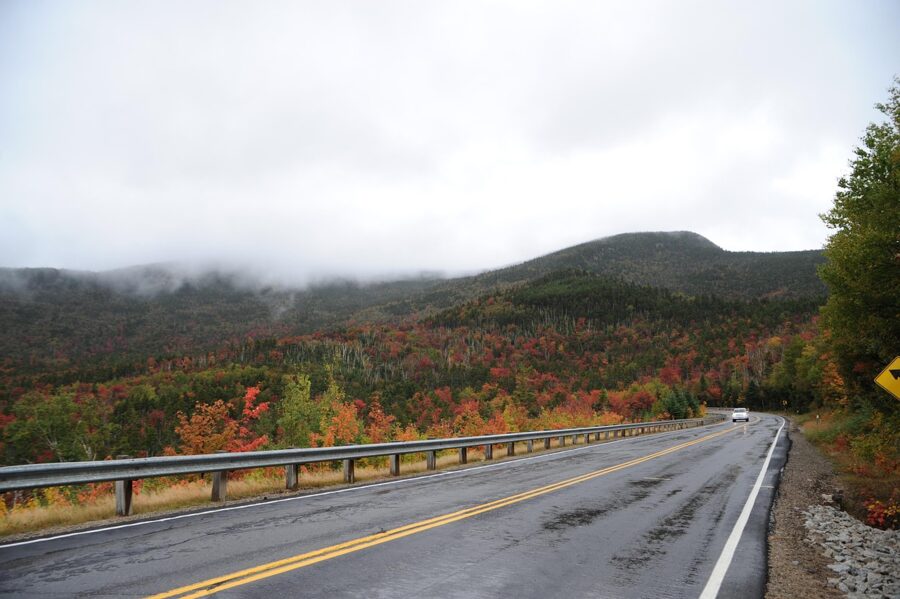
The quiet times are late fall, after the leaves drop, and spring. April and May are mud season, with soft trails and summit roads only starting to open, and black flies follow in late May and June. Prices are lower, though.
How long? One day gives you the village, a train ride and one of the ledges. Two days adds either Mount Washington or the Kancamagus. Three days lets you do both, plus Diana’s Baths and a lazy afternoon on the Saco.
A two-day plan
Day one: the village and the train
Start with coffee on Main Street, then ride the Valley Train, or the Mountaineer if you’re happy to spend the day on the rails. After lunch, drive up to Cathedral Ledge for the view, then walk the loop around Echo Lake and swim if it’s summer. Finish at Diana’s Baths in the late-afternoon light, when the morning crowd has gone, and eat dinner in the village or at Moat Mountain.
Day two: up the mountain or over the Kanc
If the summit forecast is clear, go north: Jackson’s covered bridge, Glen Ellis Falls, then the Auto Road, with the Ski Museum or the outlets on the way back. If the summit is socked in, drive the Kancamagus instead, stopping at the Albany Covered Bridge, Lower Falls, Rocky Gorge, Sabbaday Falls and the overlooks near the pass, and turn around at Lincoln or loop back through Franconia Notch and Crawford Notch.
Getting around and practical notes
- Traffic. Route 16 through the outlet strip backs up on summer and foliage weekends and on holiday Saturdays. West Side Road runs parallel on the far side of the Saco and reaches Cathedral Ledge, Echo Lake and Diana’s Baths without touching the strip; the North-South Road behind the outlets is the local bypass.
- Parking. Park once in the village and walk. Trailheads and swimming spots fill early on hot weekends.
- Passes. A White Mountain National Forest recreation pass covers Diana’s Baths and the fee sites on the Kancamagus; state parks (Echo Lake, Cathedral Ledge) charge their own day-use fee.
- Weather. Mountain weather changes fast. Pack a warm layer for any summit trip, even in August, and check the Higher Summits Forecast before hiking above treeline.
- Wildlife. Moose cross Route 16 and the Kancamagus at dusk and after dark, and they are hard to see. Slow down on the unlit stretches.
Book any October Mountaineer seat or Auto Road guided tour as soon as your dates are fixed, then plan the rest of the trip around it: everything else in North Conway can be decided the morning you wake up and look at the summit.