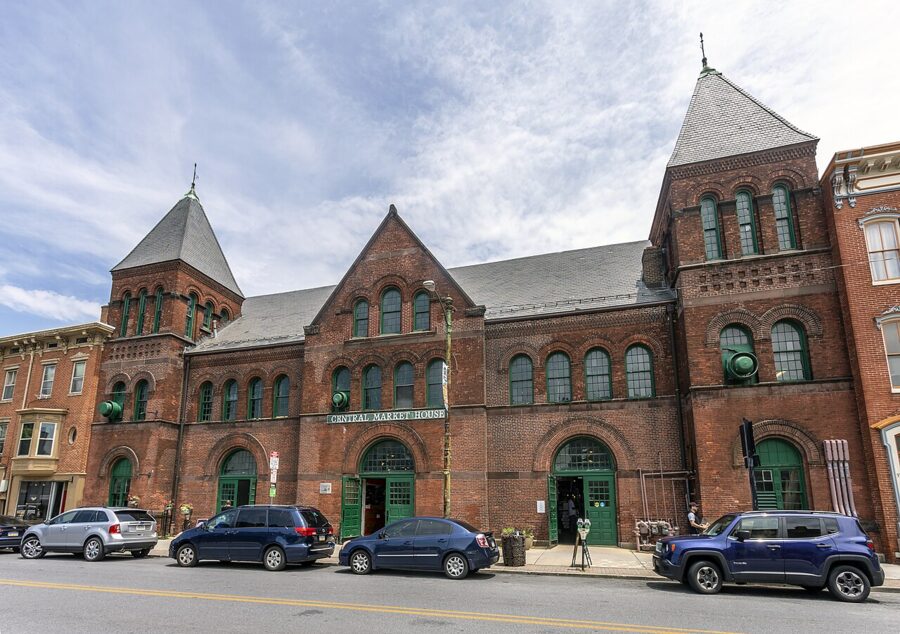
Go to York for a Saturday morning at Central Market, a guided tour of the Colonial Complex where the Continental Congress met in 1777 and 1778, and a ride or walk on the Heritage Rail Trail south toward Maryland. Two days covers the city and one excursion; add a third for the state parks along the Susquehanna River. One change to know before you plan: as of November 2026, Harley-Davidson’s public factory tours in York are temporarily closed.
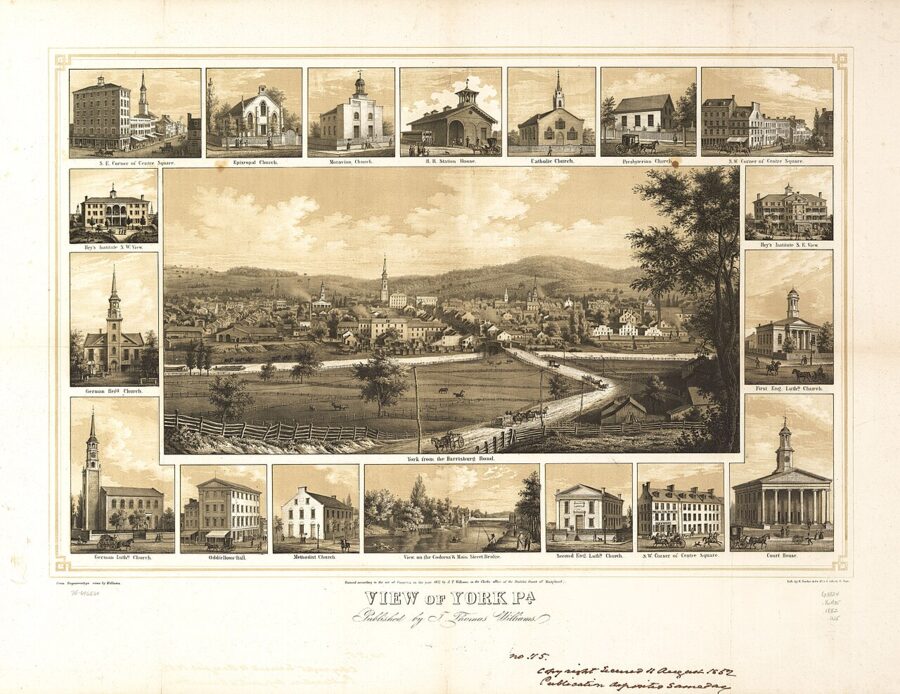
York is a small city of about 45,000 people in south-central Pennsylvania, on Codorus Creek a few miles west of the Susquehanna. It was laid out in 1741, grew rich making things (wagons, cars, air conditioners, barbells, motorcycles, peppermint patties) and still calls its county the Factory Tour Capital of the World. The center is compact: almost everything downtown sits within ten minutes’ walk of Continental Square, where George and Market Streets cross.
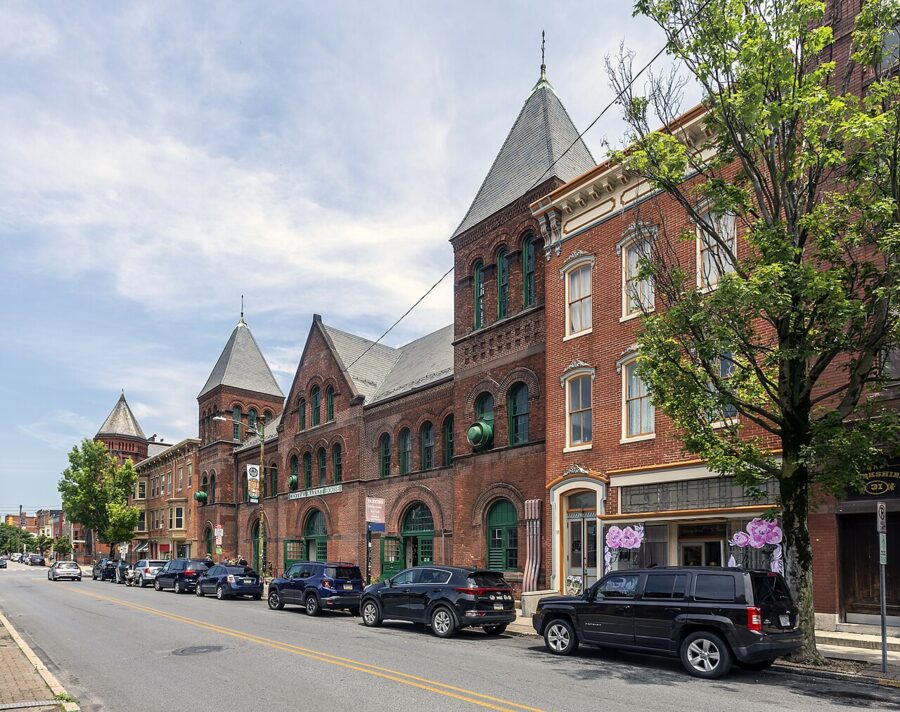

Prices are low by East Coast standards and there’s no big-ticket theme park. What York does have is an unusually complete story of early American government, a working market hall, county parks with real hills, and old storefronts refilled with breweries and small restaurants.
On this page
Where York is and how to get there
York sits on Interstate 83 roughly halfway between Harrisburg and Baltimore, and on US Route 30 between Lancaster and Gettysburg. That crossroads position is why it makes such an easy weekend: four or five worthwhile places lie within an hour’s drive in every direction. Nearly everyone arrives by car.
The nearest airport with scheduled flights is Harrisburg International (MDT), which the county tourism office puts about 30 minutes away via I-83. Baltimore/Washington International (BWI) is the bigger choice for fares and nonstops, a little over an hour’s drive south on I-695 and I-83. There’s no Amtrak station in York; the closest stops are Lancaster and Harrisburg on the Keystone line, both of which leave you needing a car or a ride.
| From | Main route | Typical drive |
|---|---|---|
| Harrisburg International Airport (MDT) | PA 283, I-76, I-83 south | About 30 minutes |
| Harrisburg | I-83 south | 35 to 40 minutes |
| Lancaster | US 30 west | About 35 minutes |
| Gettysburg | US 30 east | About 45 minutes |
| Baltimore | I-83 north | About 1 hour |
| BWI Airport | I-195, I-695, I-83 north | About 1 hour 10 minutes |
| Washington, DC | I-95, I-695, I-83 north | About 1 hour 45 minutes |
| Philadelphia | I-76 west, US 222, US 30 west | About 2 hours |
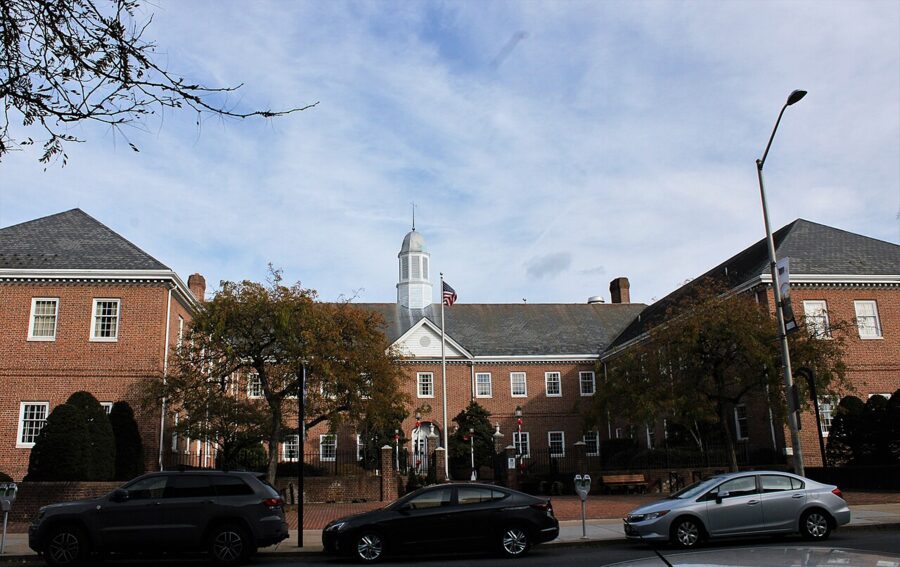

Why is York famous? For two things, mostly. In September 1777, with the British in Philadelphia, the Continental Congress moved to York, a town of about 1,800 people, and stayed until June 1778; here it adopted the Articles of Confederation, which is why York calls itself the first capital of the United States. In the twentieth century it was an industrial town known for Harley-Davidson, York Barbell and the York Peppermint Pattie, which was first made here.
The main things to do in York
York Central Market
If you only have one morning, spend it here. The Central Market House at 34 West Philadelphia Street was designed by the local architect John A. Dempwolf and opened in 1888, one of the first buildings in York with indoor plumbing. It was listed on the National Register of Historic Places in 1978 and got a $2 million renovation in 2013, which is why the hall feels bright rather than dusty.
The market’s own schedule, as of November 2026: doors open at 7am on Tuesdays and Thursdays and at 6am on Saturdays, with core hours of 9am to 2pm on all three days. Not every vendor opens on Tuesday, and individual stands set their own times, so Saturday between about 8am and noon is when you’ll see the place at full strength. On First Fridays the market also opens from 5pm to 9pm, though vendor hours vary.
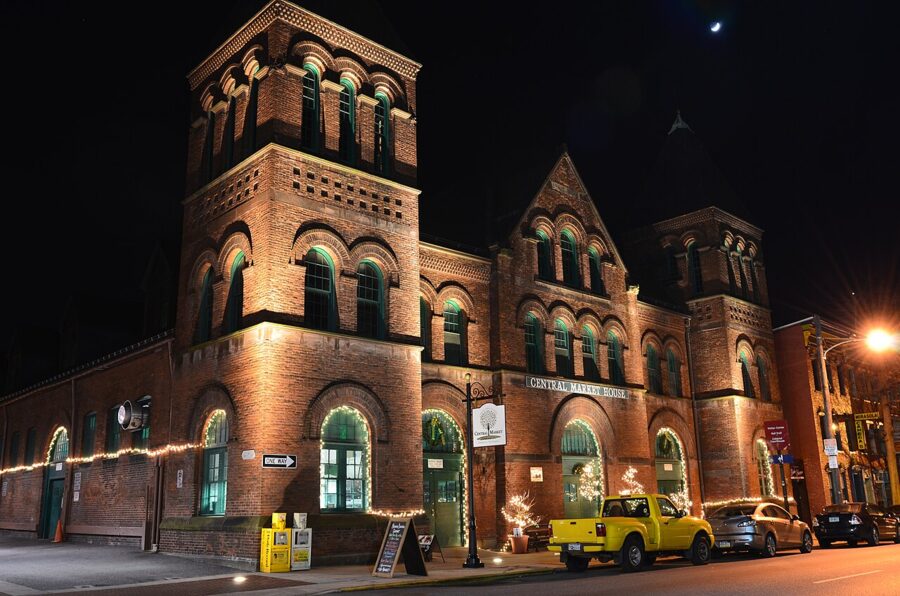

Inside are produce, meat and fish counters, bakers and lunch stands selling Thai, sushi, burritos, barbecue and soup. Admission is free. Allow an hour to graze and browse, more if you sit down to eat.
Parking is easy on Saturdays: the Philadelphia Street garage (25 West Philadelphia Street) and the Central Market parking deck at Philadelphia and Beaver Streets are both free during Saturday market hours, 6am to 2pm, according to the market. On Tuesdays and Thursdays, expect to pay at the garages or feed a meter. The market’s directory also lists an Explore York visitor information desk, a sensible first stop for maps and event flyers.
The Colonial Complex and the Colonial Courthouse
This is the one thing in York you can’t do anywhere else. The York County History Center runs guided tours of four buildings at the corner of West Market Street and Pershing Avenue, beside Codorus Creek, and together they tell the story of the nine months when York was the seat of the Revolutionary government.
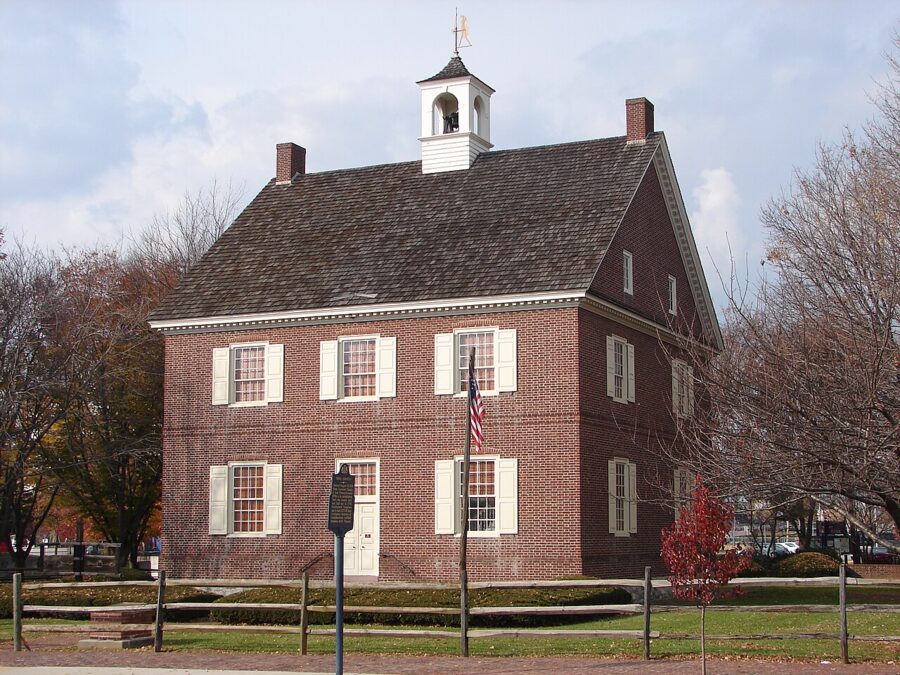
The Colonial Courthouse is where the tour slows down. The building you see is a reproduction built in 1976, but it follows the original courthouse that stood in the town square, and inside it displays period artifacts and tells how Congress adopted the Articles of Confederation and secured the French alliance while sitting in York.
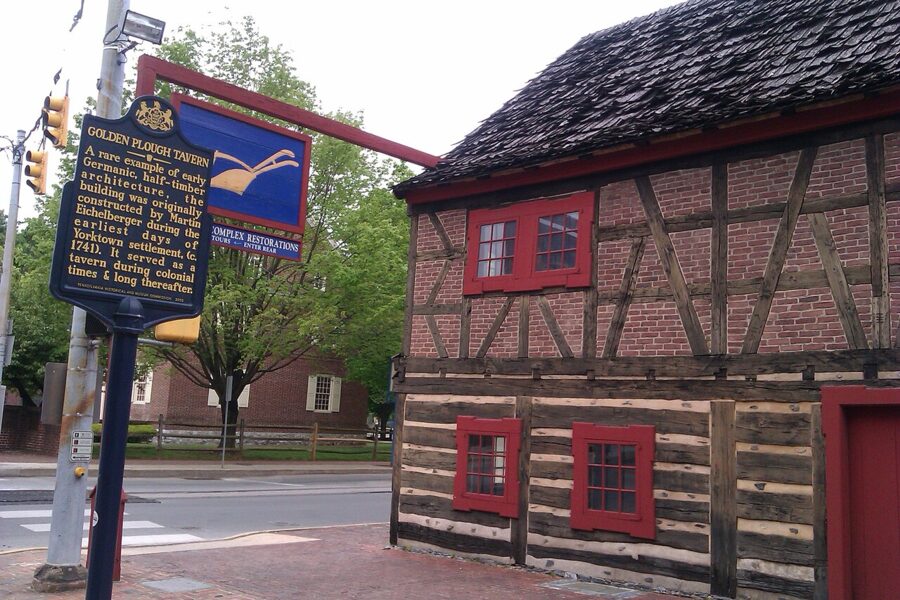

The other three stops are original buildings. The Golden Plough Tavern, built in 1741, shows how York’s first German settlers built: timber framing filled with brick, a German way of building that is rare in Pennsylvania today. Next door, the General Horatio Gates House is where the Continental Army general stayed, and behind them the Barnett Bobb log house shows a plainer family home of the period.
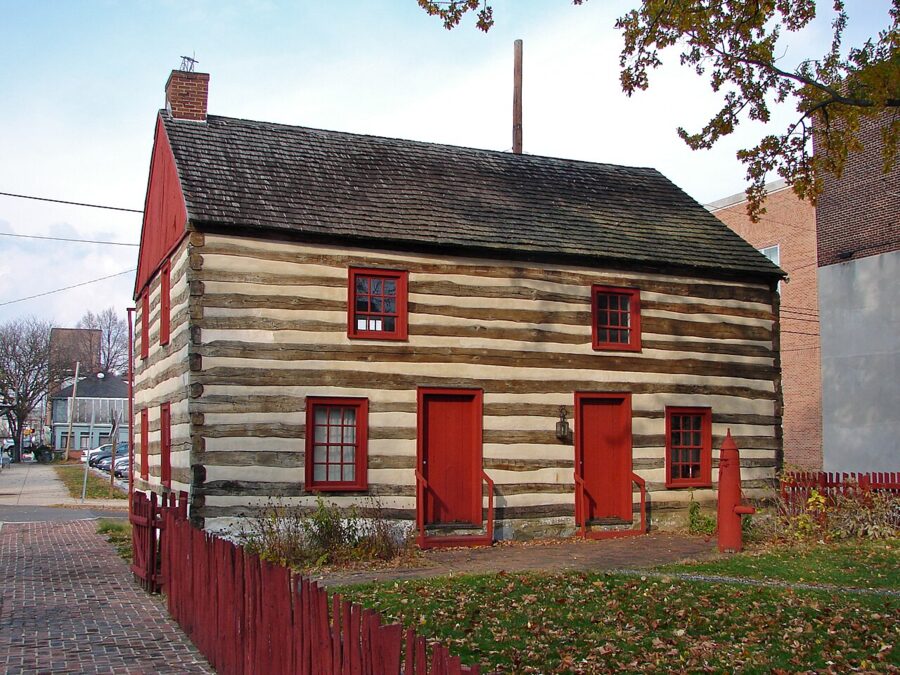
Practical details, as of November 2026: the complex opens seasonally from April through November, and every visit is by guided tour. Tours start at the History Center Museum (121 North Pershing Avenue), where you meet your guide, and last about an hour to an hour and a quarter. From November 3 to November 28, 2026, tours run at 11am and 2pm Tuesday through Saturday; in September and October they ran more often, with extra Friday and Saturday times. The complex is closed on Thanksgiving and through the winter, and its 18th-century buildings have no climate control, so summer tours can be cancelled in extreme heat.
York County History Center Museum
The History Center’s main museum moved into a converted power plant at 121 North Pershing Avenue and is the best introduction to the county you’ll get in one building. Sections on building, growing, energizing and making walk through farms, factories and the people who ran them, and the new “Revolutionary York” exhibit (on view July 2026 through December 2028) puts an original printing of the Articles of Confederation on display along with the drawings of Lewis Miller, a York carpenter who sketched his neighbors for decades in the early 1800s.
Hours are 10am to 4pm Tuesday through Saturday and noon to 4pm on Sunday; it’s closed on Mondays. The museum suggests up to two hours for a quick visit and half a day if you work through the interactive displays. There’s a free visitor lot behind the building, reached from Pershing Avenue.
Seasonal admission (April 1 to November 30) is $20 for adults, $10 for adults on Sundays, $8 for students aged 6 to 18, and free for children 5 and under. One ticket gets you into all of the History Center’s sites on the same day, so pair the museum with a Colonial Complex tour or the Agricultural and Industrial Museum. Winter prices aren’t posted on the History Center’s site as of this writing, so check before a December to March visit.
Agricultural and Industrial Museum and the Fire Museum
The Agricultural and Industrial Museum, at 217 West Princess Street, fills two floors of a former factory complex (some of its buildings date to 1874) with three centuries of York County making things. You can climb onto large vehicles, watch a working grist mill, try an old telephone switchboard, and see an exhibit on Pfaltzgraff, the pottery company that started in York County and became a national name in dinnerware.
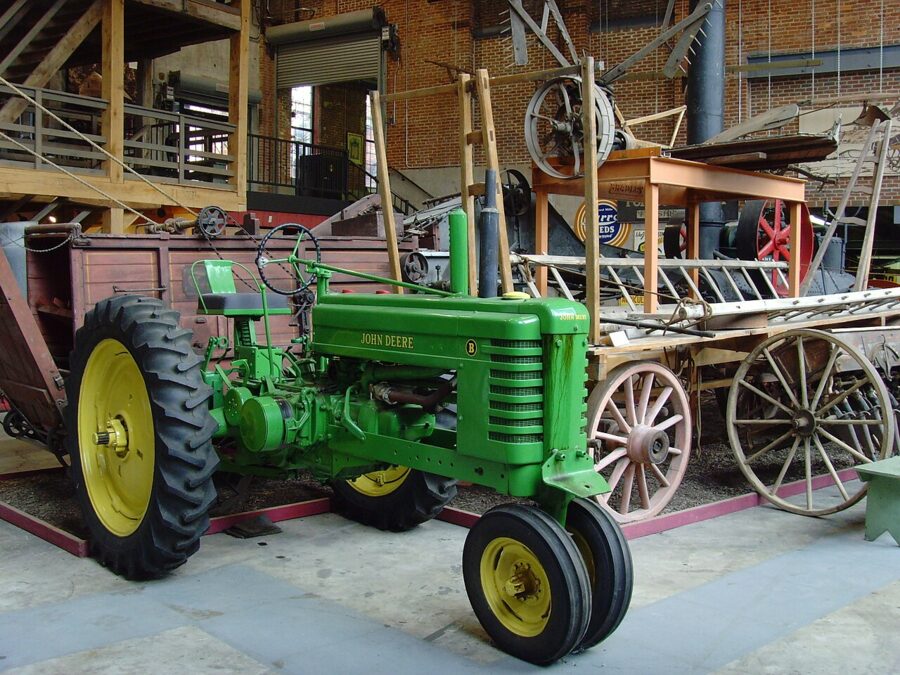

The catch is the schedule: it’s open Fridays and Saturdays only, 10am to 4pm, year round, on the same History Center ticket. Allow an hour and a half.
The Fire Museum, in the 1903 Royal Fire House at 757 West Market Street, is smaller and more specialized: six fire trucks from the 1920s to the 1950s, hand-drawn pumpers and the gear of York County’s fire companies. It opens on Saturdays only, 10am to 4pm, from April through November, and has a small lot behind the building off Carlisle Road. Skip it unless someone in your group loves fire engines; then it’s a good 45 minutes.
The Heritage Rail Trail
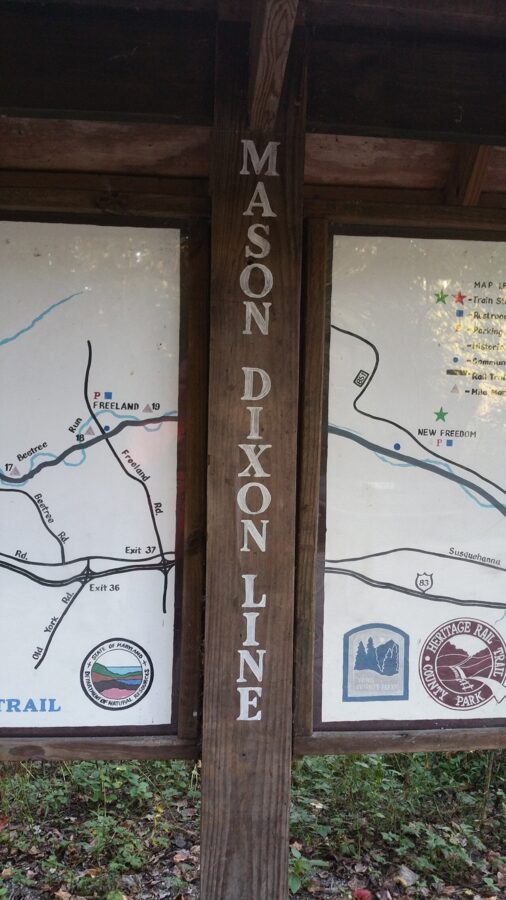
The York County Heritage Rail Trail is the best outdoor thing to do from the city, and it starts downtown. According to the county parks department, the trail runs 27 miles north from the Mason-Dixon Line through New Freedom, Glen Rock, Hanover Junction and Seven Valleys, passes through the Howard Tunnel, and reaches the Colonial Courthouse in York, with an extension on to John C. Rudy County Park.
At the state line it joins Maryland’s 20-mile Torrey C. Brown Trail, so a determined cyclist can ride all the way to the outskirts of Baltimore.
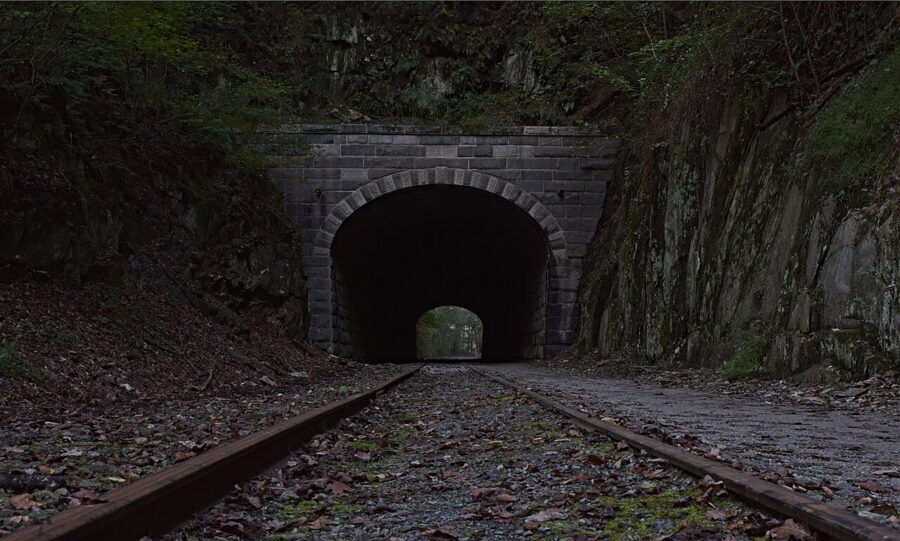

The trail follows the old Northern Central Railway, the line that carried Abraham Lincoln to Gettysburg in November 1863, and the surface is mostly crushed stone, fine for hybrid bikes and strollers. The county allows Class 1 e-bikes (pedal assist only, no throttle) on this trail and no other county park. A warning on the county’s page is worth repeating: the tracks beside the trail are active between New Freedom and the Seven Valleys lot, where the Northern Central Railway of York runs excursion trains, so look both ways at every crossing.
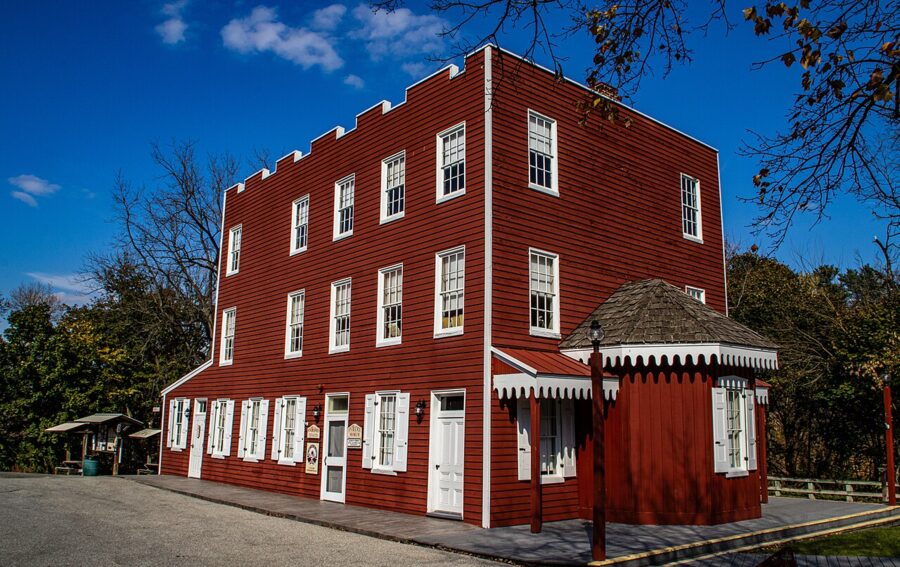

For a short outing, park at Hanover Junction (2433 Seven Valleys Road, Seven Valleys) and walk or ride north past Seven Valleys to the Howard Tunnel and back, which takes a few hours on foot or about an hour by bike. For the prettiest farm country, start at New Freedom (117 North Front Street) and head north toward Glen Rock. Other county lots sit at Railroad (5 East Main Street), Seven Valleys, Glatfelters Station, Brillhart Station and Centerville; the county lists roughly 24 to 50 spaces at each, and on fine fall weekends the small ones fill by mid-morning.
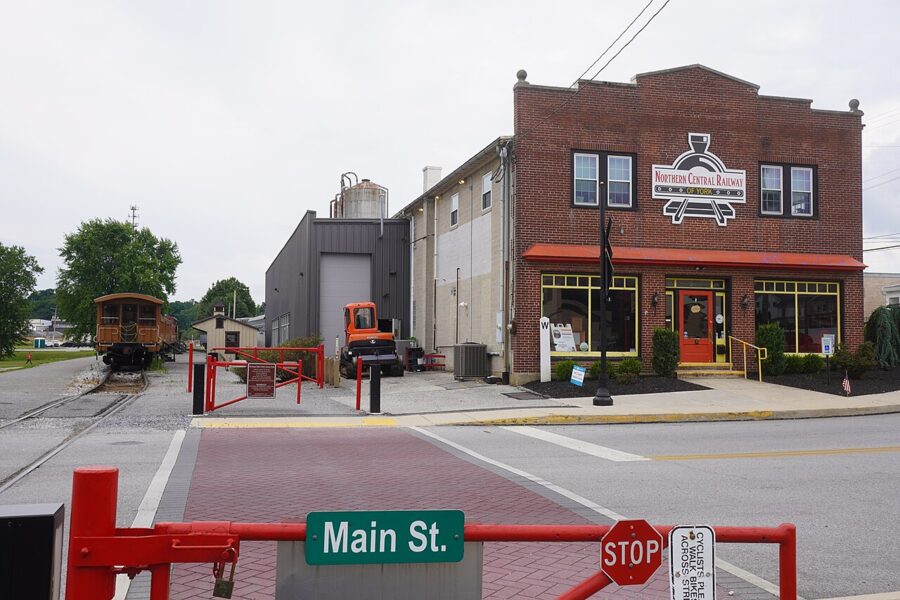

The county doesn’t rent bikes at its trailheads, so bring your own or arrange a rental before you go. In town, the trail passes the Colonial Courthouse, which makes an easy way to combine history and a walk along Codorus Creek on the same afternoon.
The Harley-Davidson factory tour (closed for now)
Harley-Davidson’s York plant at 1425 Eden Road machines, paints and assembles the company’s Touring and Trike motorcycles, along with limited-edition custom builds and replacement parts. For years its free factory tour was the most famous thing to do in York. As of November 2026, Harley-Davidson’s own York page says the public factory tours are temporarily closed, while manufacturing continues.
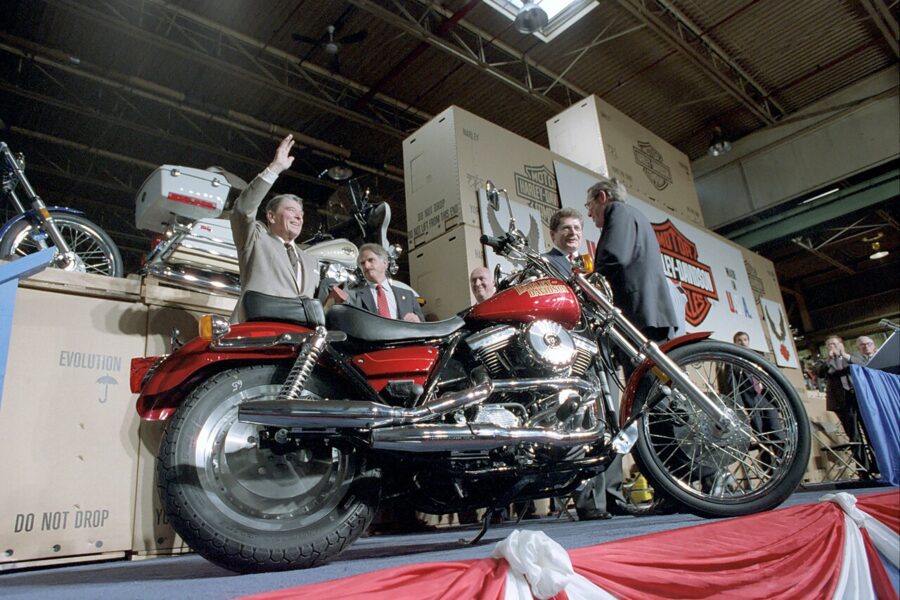
No reopening date has been announced, and the company’s private group tours are for its engine plant in Menomonee Falls, Wisconsin, not York. Check Harley-Davidson’s factory tours page before you plan around a visit; meanwhile, the Agricultural and Industrial Museum covers York’s manufacturing story well.
| Attraction | Open | Price | Allow |
|---|---|---|---|
| Central Market | Tue and Thu from 7am, Sat from 6am; core hours 9am to 2pm | Free | 1 to 2 hours |
| Colonial Complex (guided) | Tue to Sat, April to November; Nov 3 to 28, 2026 at 11am and 2pm | History Center ticket | About 1 hour 15 minutes |
| History Center Museum | Tue to Sat 10am to 4pm, Sun noon to 4pm | $20 adults ($10 Sun), $8 ages 6 to 18 (April to November) | 2 hours |
| Agricultural and Industrial Museum | Fri and Sat 10am to 4pm, year round | History Center ticket | 1.5 hours |
| Fire Museum | Sat 10am to 4pm, April to November | History Center ticket | 45 minutes |
| Heritage Rail Trail | Daily | Free | 2 hours to a full day |
| Harley-Davidson York tour | Temporarily closed | n/a | n/a |
All hours and prices are as published by each operator in November 2026.
Smaller sights, parks and local oddities
Downtown on foot
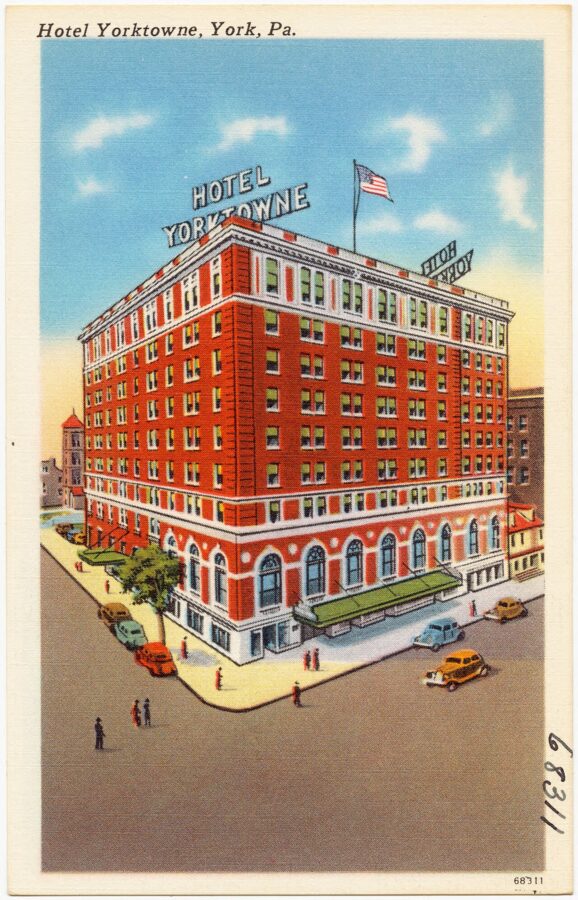
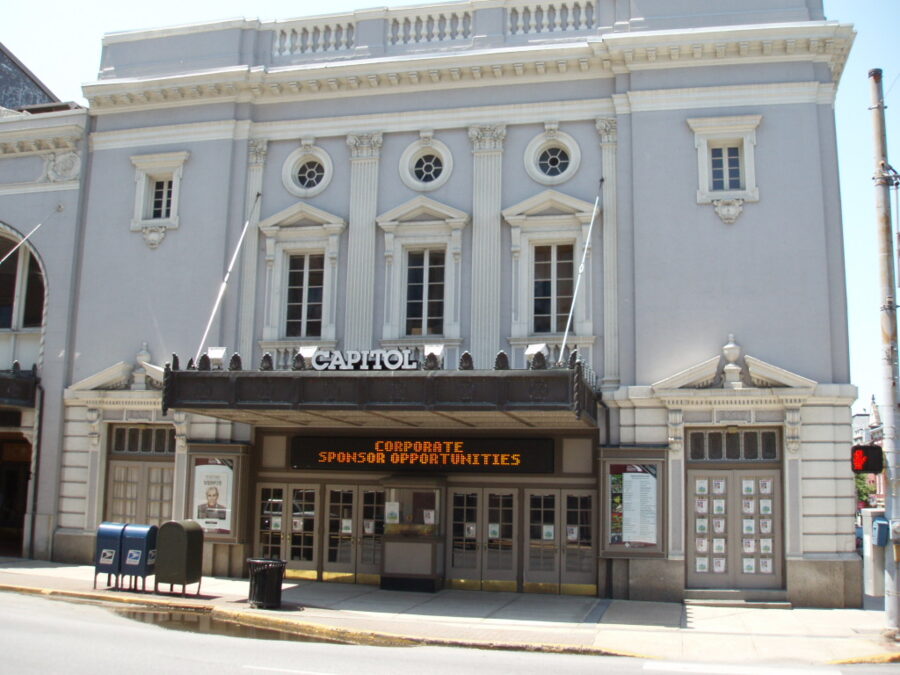
Start at Continental Square, where the original courthouse stood, and walk a loop of George, Market, Beaver and Duke Streets. You’ll pass the Yorktowne Hotel at 48 East Market Street, a 1925 hotel restored and reopened with a lobby bar and the Graham Rooftop Lounge, and the Appell Center for the Performing Arts on North George Street, which combines the old Strand and Capitol theaters. The Capitol shows films, from new releases to cult classics, and the larger stage hosts touring shows and concerts.
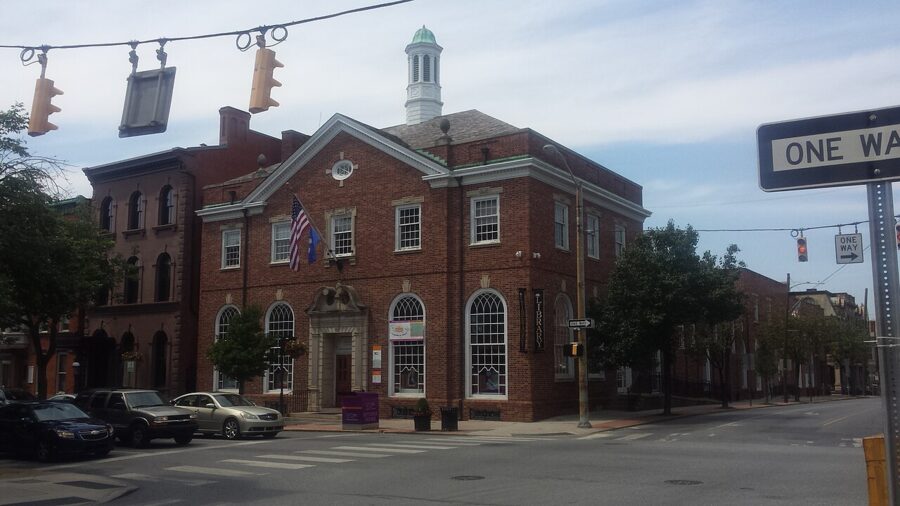
East of George Street, the Royal Square district around East King and South Duke Streets is where many of downtown’s murals, galleries and vintage shops sit. Martin Library, the central branch of the county library system, is on East Market Street a few blocks east of the square and a quiet place to sit out a rain shower.

The History Center also leads evening walking tours from May through August ($12 for non-members, 60 to 90 minutes, ages 12 and up).
Rocky Ridge, Nixon Park and Kain Park
York County runs a set of large parks within 20 minutes of downtown. Rocky Ridge County Park (3699 Deininger Road), the county’s first park, covers 750 acres of mostly mature oak forest northeast of the city, with more than 12 miles of trails and two observation decks; the north deck, which is ADA accessible, looks over the Susquehanna Valley. From September 1 to November 1, volunteers count migrating hawks there between 10am and 2pm, with the best days, the county says, from mid-September to mid-October on sunny days with a north wind.
From the Friday after Thanksgiving through December 30 (closed December 24 and 25), Rocky Ridge hosts Christmas Magic, a half-mile walking trail through about a million lights with heated pavilions and a model train display. Tickets are sold online for a chosen date and arrival time, and the path works for strollers and wheelchairs. Book weekend slots early.
Richard M. Nixon County Park, south of the city near Jacobus, is for quiet walking: 221 acres with more than six miles of trails where bikes, horses and pets aren’t allowed. Its Nature Center reopened after renovations and is open Tuesday through Saturday, 8:30am to 4:30pm, with Pennsylvania wildlife displays and a worldwide collection of mounted animals.
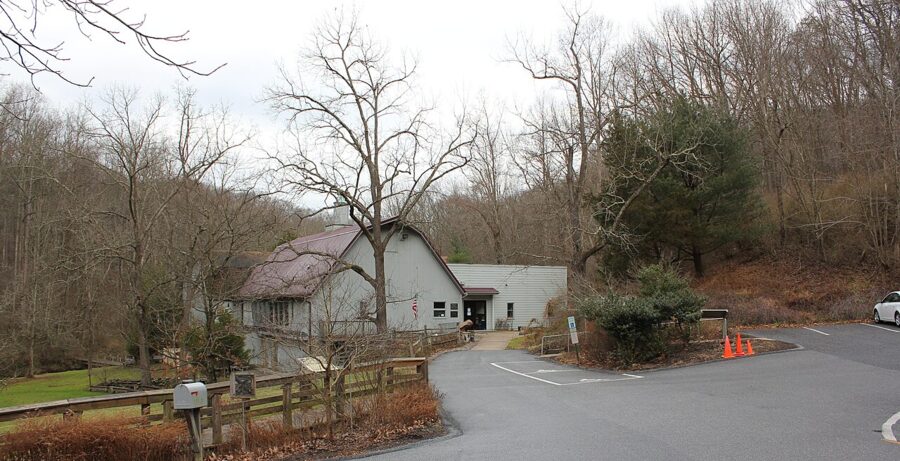

William H. Kain County Park wraps around two reservoirs, Lake Williams and Lake Redman, on 1,637 acres just off I-83 south of the city. It has more than 12 miles of marked trails, fishing, and seasonal rowboat, canoe and kayak rentals on Lake Redman, which in recent years have started on Memorial Day weekend.
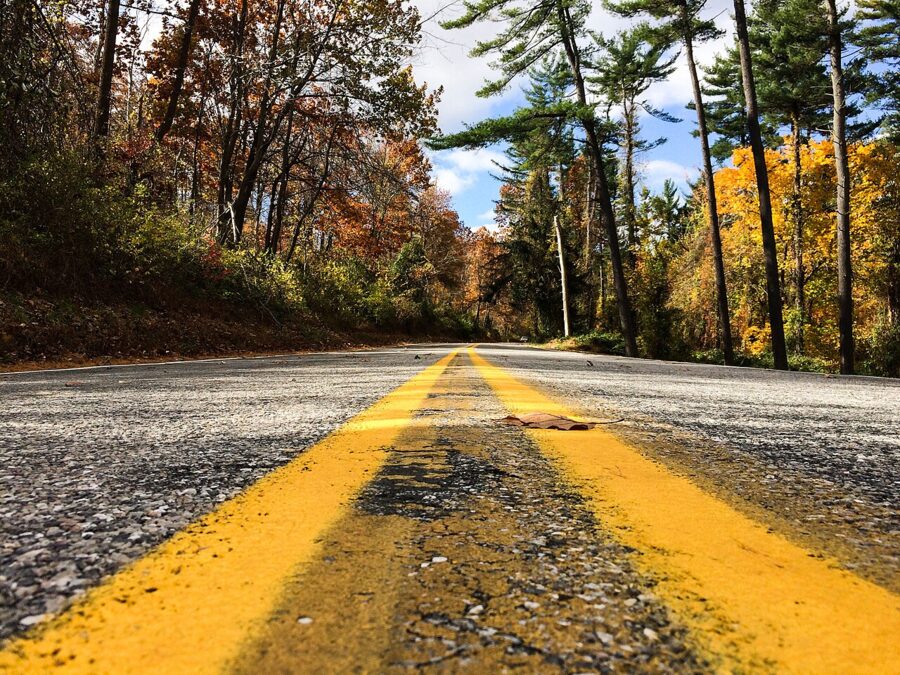
The Susquehanna and Samuel S. Lewis State Park
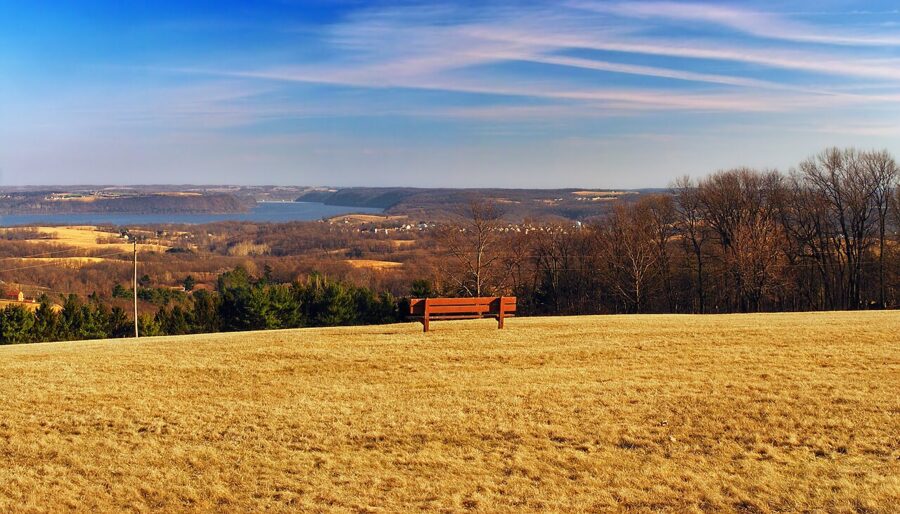
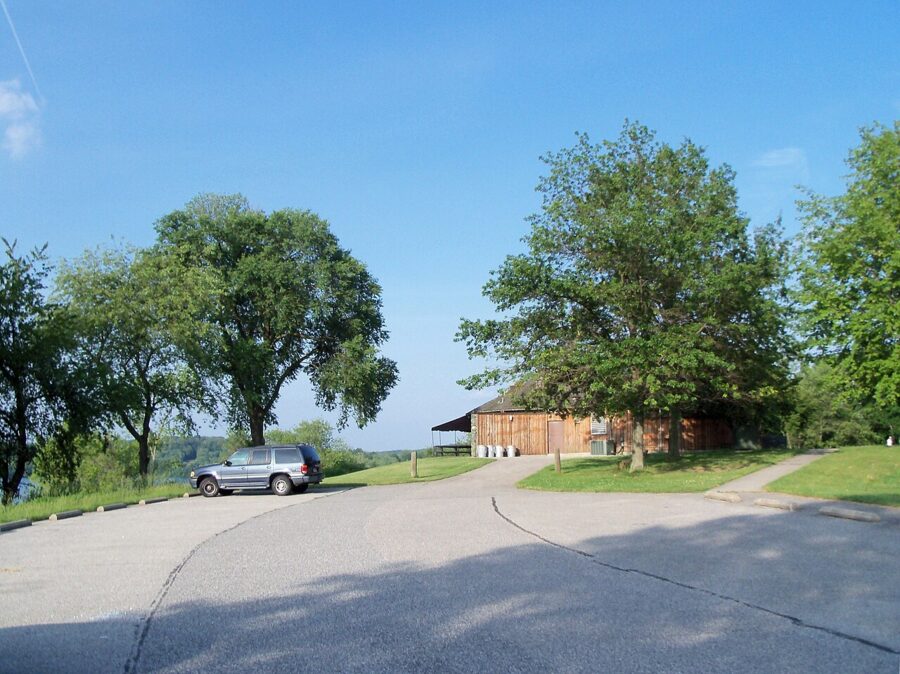
The easiest place to see the Susquehanna from above is Samuel S. Lewis State Park, about 12 miles east of York. The park is small (85 acres) and dominated by Mount Pisgah, an 885-foot ridge, with open grassy slopes that face out over the valley. It’s open daily from sunrise to sunset and costs nothing; take the Wrightsville exit of US 30 and follow Cool Creek Road south to Mount Pisgah Road.

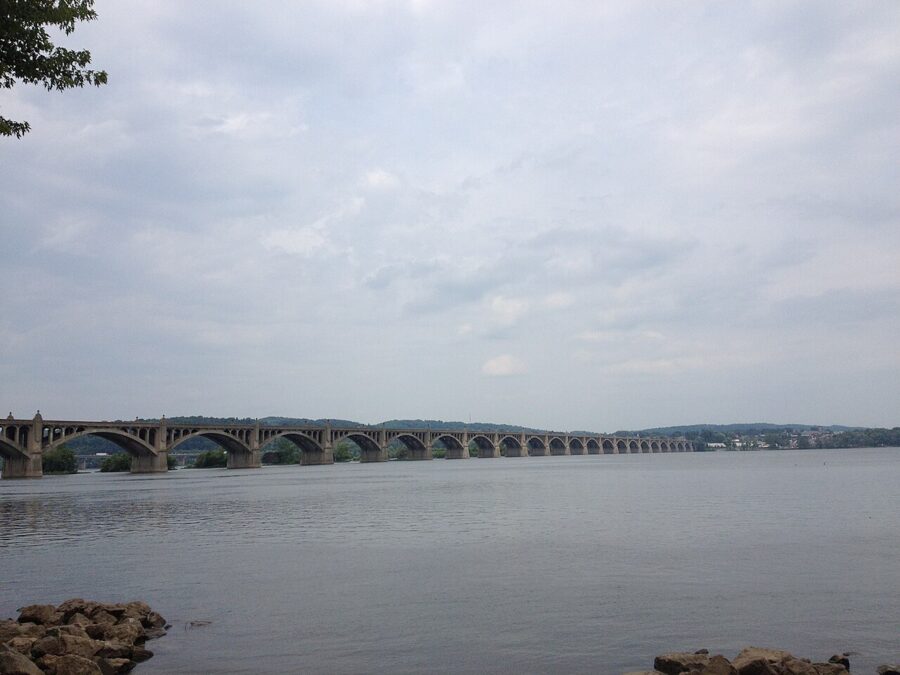
Wrightsville, on the river just beyond, is where US 30 and the old Lincoln Highway cross to Columbia in Lancaster County. The Columbia-Wrightsville Bridge, a long run of concrete arches from 1930, is worth a stop at the riverside park in Wrightsville for photos.

The Haines Shoe House
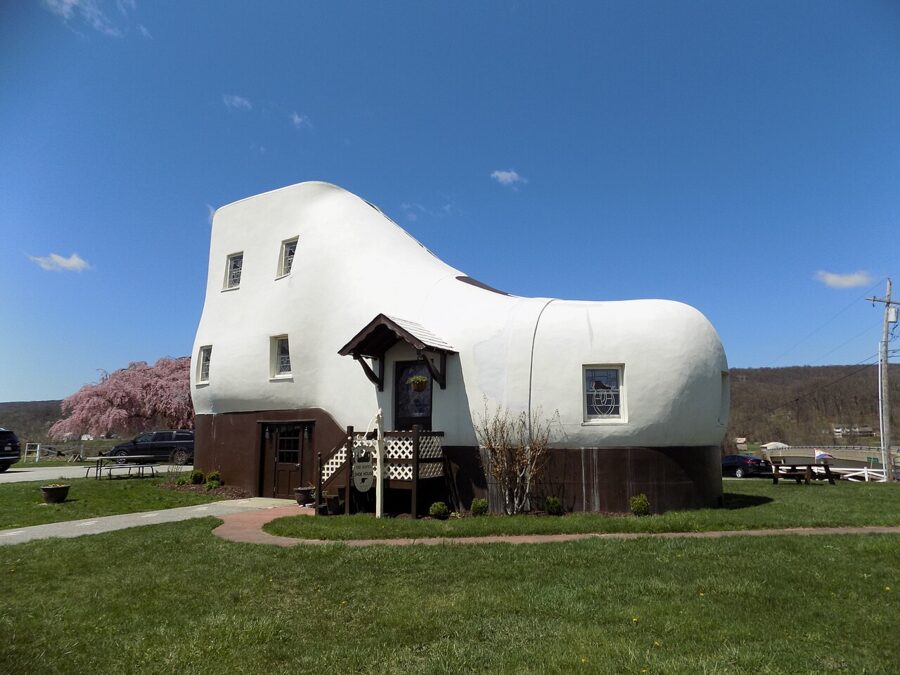
Off US 30 east of the city in Hellam Township stands a 48-foot house shaped like a work boot, built in the late 1940s by a local shoe-store owner as an advertisement. It’s now rented for overnight stays (up to six guests), so unless you’re staying, take your photo from outside the fence. It’s a short detour on the way to Samuel S. Lewis State Park.

Farms, factories and snack food
York County earned its factory tour reputation partly through snack makers around Hanover, about 30 minutes west. Utz has long run a free, self-guided observation gallery above its potato chip lines at 900 High Street in Hanover, but the company doesn’t publish a current schedule, so call before you drive out. Snyder’s of Hanover runs a factory store at 1350 York Street in Hanover.
Closer to the city, Perrydell Farm and Dairy (90 Indian Rock Dam Road) has been bottling its own milk since 1963. It’s a working farm where you can take a self-guided walk, pet the calves and buy ice cream made on site. The farm store opens 7am to 7pm Monday through Saturday and 11am to 6pm on Sunday.
Day trips: Gettysburg, Lancaster and the lakes
Gettysburg is 45 minutes west on US 30, and its battlefield fills a full day. Lancaster and the Amish farm country lie 35 minutes east. For a lake day, Codorus State Park near Hanover has the 1,275-acre Lake Marburg with 26 miles of shoreline, and Gifford Pinchot State Park in the north of the county has a 340-acre lake with a summer beach.


Festivals and events by month
What’s on this weekend? The county tourism office, Explore York, keeps a weekend events listing on its website, and the Appell Center and History Center post their own calendars. The fixed points of York’s year look like this:
- Every month: First Friday evenings downtown, when Central Market reopens from 5pm to 9pm and galleries and shops stay open late.
- April to November: Colonial Complex tours and the Fire Museum’s Saturday openings. The Heritage Rail Trail is at its best in April and May and again in October.
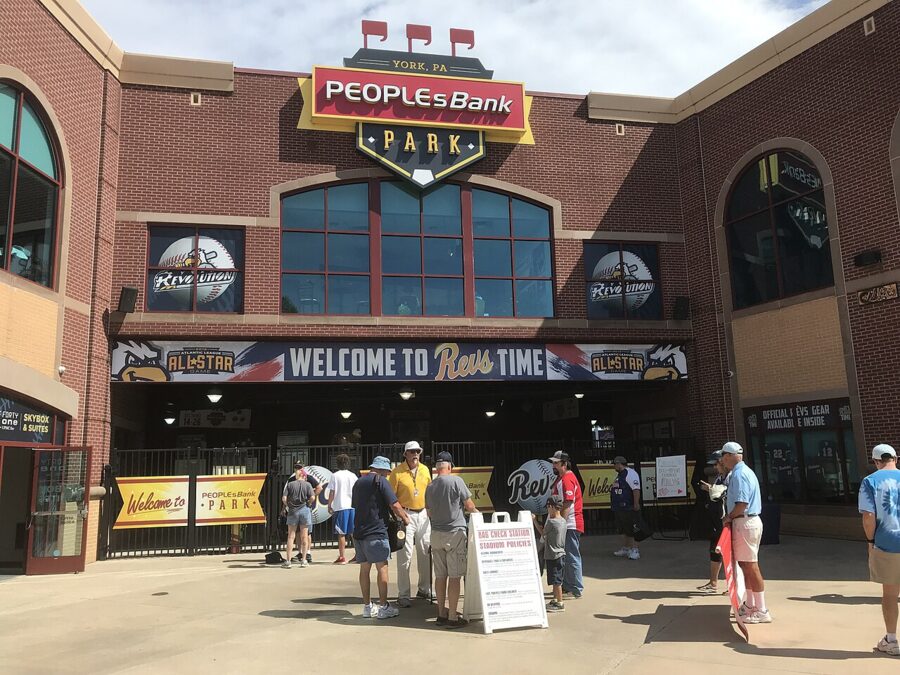
- Roughly late April into September: York Revolution baseball at WellSpan Park, a short walk north of downtown.
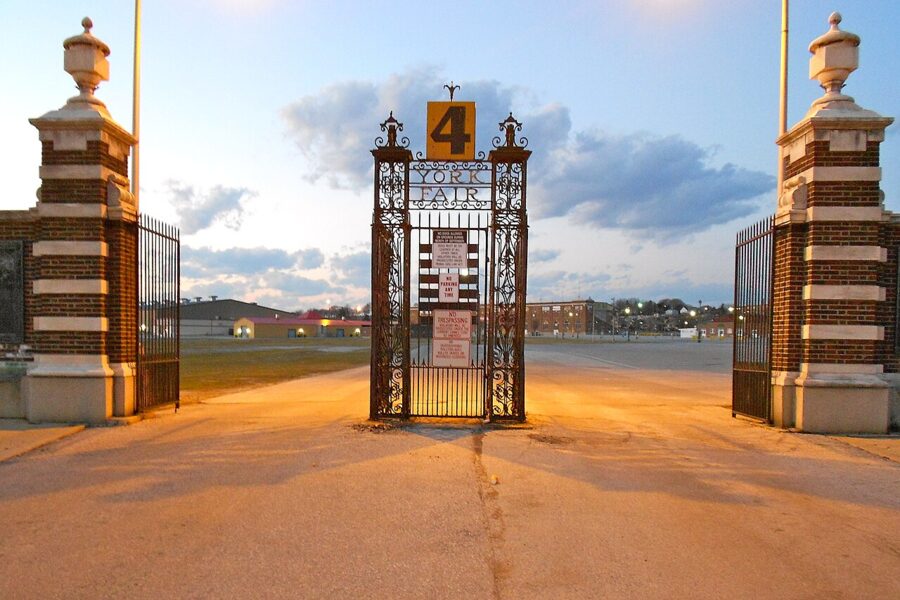
- Late July to early August: the York State Fair. It dates to 1765, which is why it calls itself America’s first fair; the 2026 fair ran July 24 to August 2, with rides, livestock shows and grandstand concerts at the York Expo Center fairgrounds on the city’s west side.
- September to October: hawk-watching at Rocky Ridge and fall color on the rail trail.
- November: Articles of Confederation Day at the Colonial Complex, held in mid-November to mark the Articles’ adoption in York in 1777.
- Late November to December 30: Christmas Magic at Rocky Ridge County Park, plus holiday shows at the Appell Center.

Where to eat and drink
York’s best meals are informal, and the strongest cluster of restaurants is within a few blocks of the market. Everything below was trading, with hours posted on its own site or the market’s vendor directory, as of November 2026. Always check holiday hours.
Breakfast and coffee. Central Market on a Saturday morning is the obvious choice, with PullShot Coffee Roasters, bakers and breakfast sandwiches among the stands. The Yorktowne Hotel has its own breakfast menu, and Perrydell Farm’s store opens at 7am for its own milk and baked goods.
Lunch. Stay in the market and graze: Little Elephant Thai, Nama Sushi, Roburrito’s and The Soup Dragon all appear in its current vendor directory. White Rose Bar & Grill, a family-owned downtown restaurant since 1933, serves lunch and dinner from 11am on weekdays and 10am on weekends.
Dinner. Tutoni’s, on North George Street, makes farm-to-table Italian from scratch and serves dinner from 5pm to 9pm, with its bar open from 4pm; reservations are recommended, and the same team runs the King George speakeasy. Mudhook Brewing, in Cherry Lane behind the market (34 North Cherry Lane), serves dinner Wednesday through Friday from 5pm, lunch and dinner on Saturday from 11:30am, and brunch on Sunday from 10:30am.
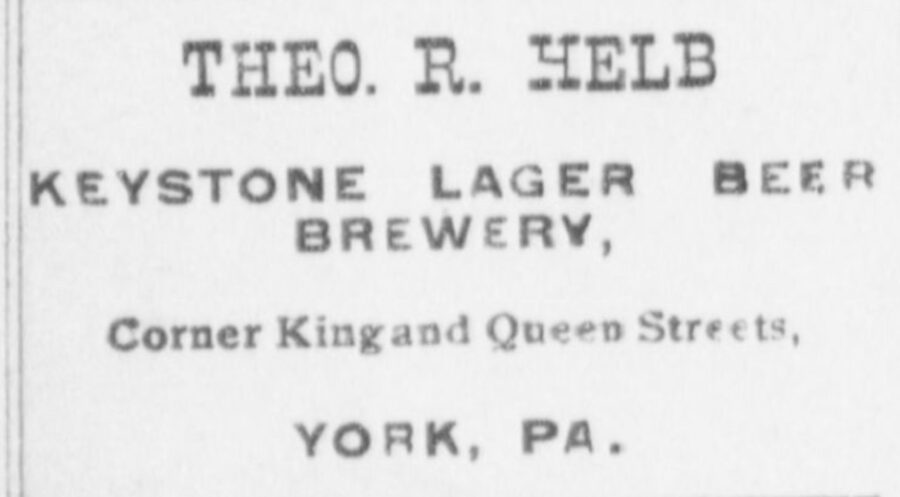
Beer and drinks. Gift Horse Brewing (117 North George Street) opens Wednesday through Sunday and stays open until midnight on Fridays and Saturdays. Collusion Tap Works (105 South Howard Street) opens Tuesday through Sunday. For a cocktail with a view, try the Yorktowne’s Graham Rooftop Lounge; inside the market, Copper Bonnet Distillery and Gear House Brewing have counters.
Something sweet. Perrydell’s ice cream changes flavors every month.
When to go and how long to stay
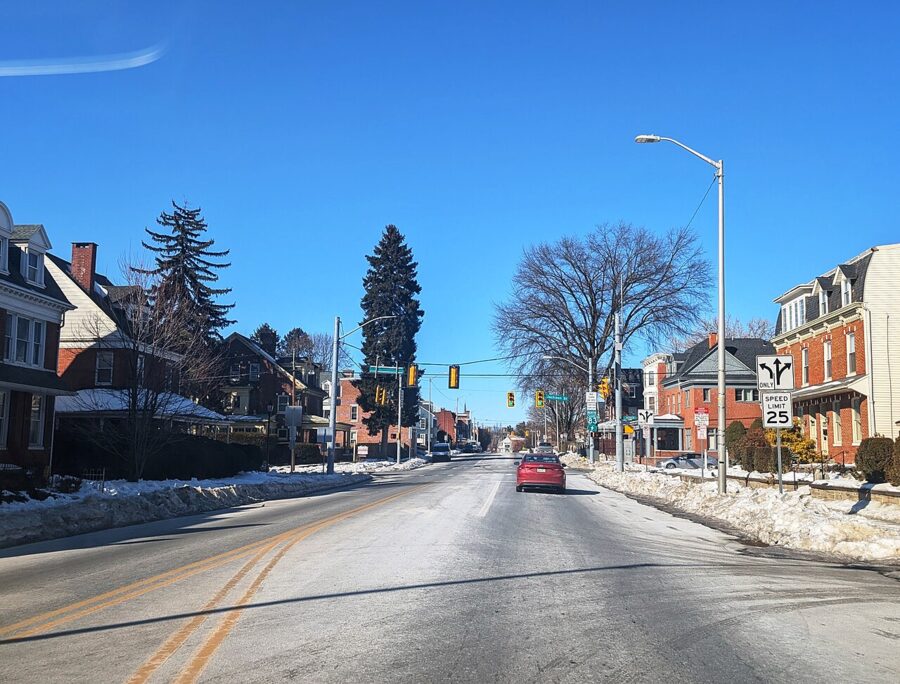
The best months are May, June, September and October. York has hot, humid summers with highs in the 80s, winters averaging in the mid-30s, and springs and falls that average in the mid-50s, according to the county tourism office. Snow falls mainly in January and February.

Timing matters more than weather here, because so much opens only on certain days. Central Market trades on Tuesday, Thursday and Saturday mornings; the Agricultural and Industrial Museum opens only on Friday and Saturday; and the Colonial Complex closes from December through March. A Friday-to-Sunday trip from April to November lines up nearly everything. In winter, the History Center Museum, the market and Christmas Magic carry a weekend on their own.
How many days? One full day covers downtown: the market, the History Center and a Colonial Complex tour. Two days lets you add the rail trail or a park and an evening at a brewery or the Appell Center. With three, you can fit in Gettysburg or Lancaster too.
A simple one- or two-day plan
Day one, a Saturday: Get to Central Market by 8am for breakfast and browse until about 10am. Walk to the History Center Museum for the 11am Colonial Complex tour, then spend an hour in the museum. After lunch, walk ten minutes south to the Agricultural and Industrial Museum (open until 4pm), and finish with dinner at Tutoni’s or Mudhook.
Day two, a Sunday: Drive 25 minutes south to Hanover Junction and walk or ride the Heritage Rail Trail to the Howard Tunnel and back. Come back for a late brunch at Mudhook, or swing east to Samuel S. Lewis State Park and the Haines Shoe House. Adult History Center tickets are $10 on Sundays, which makes the museum a cheap rainy-day backup.
On a weekday, swap the market for a Thursday morning visit and move the Agricultural and Industrial Museum to a Friday.
Getting around and practical notes

- Driving and parking. You’ll want a car for anything beyond downtown. The city has more than 1,000 metered spaces, and the City of York says all meters have a two-hour limit from 8am to 5pm. The History Center’s museums each have a free visitor lot, and Central Market’s two nearest garages are free during Saturday market hours.
- Buses. rabbittransit runs local buses in York, including stops near Central Market, but you’ll need a car for the parks and trailheads.
- Tickets. Buy History Center tickets online through its calendar or at the museum desk; one ticket covers every site on the same day. Christmas Magic sells timed entry online.
- Days to watch. Most museums close on Mondays. Check the Colonial Complex calendar for cancellations in summer heat, and the market’s vendor list if you’re coming on a Tuesday.
- Trail rules. Class 1 e-bikes only on the Heritage Rail Trail, and watch for trains at crossings between New Freedom and Seven Valleys. Nixon Park bars bikes and dogs on its trails.
- Harley tour. Closed to the public as of November 2026. Check Harley-Davidson’s site before planning around it.
One last tip: if your dates are flexible, arrive on a Friday afternoon. You’ll catch the Agricultural and Industrial Museum that day, have Saturday morning for the market and a Colonial Complex tour, and save Sunday, with its half-price museum tickets, for the trail.