The best things to do in Appleton, Wisconsin are the History Museum at the Castle and its Houdini collection, a walk along the Fox River past four hand-operated locks, a guided tour of Hearthstone (by its museum’s account, the first home lit from a central hydroelectric station), and an evening on College Avenue with a show, a brewpub and the free Trout Museum of Art. Add a half-day at High Cliff State Park on Lake Winnebago and a weekend covers it comfortably.
Two things have changed since many older lists were written. The Paper Discovery Center, later renamed the Atlas Science Center, closed for good in late 2024. And a tornado and severe storms hit Appleton and the surrounding area on July 27, 2026; the city says recovery work is still under way as of November 2026, so expect fallen-tree cleanup in some west-side neighborhoods.


On this page
- Appleton in brief
- The Fox River and its locks
- The History Museum at the Castle
- Hearthstone Historic House Museum
- College Avenue and downtown
- Lawrence University
- Parks and trails in town
- Day trips around the Fox Cities
- Baseball and the year's events
- Where to eat and drink
- When to go and how long to stay
- Getting around and practical notes
Appleton in brief
Appleton is a city of 75,644 people (2020 census) and the seat of Outagamie County, built where the Fox River drops in a series of rapids on its way from Lake Winnebago to Green Bay. That fall of water made it a paper town: the first mill went up in 1853, and the river still runs past old mill buildings now turned into apartments. Lawrence University, founded in 1847, is a few blocks east of downtown.
The wider area goes by the name Fox Cities: the string of towns along the river from Neenah and Menasha at the lake through Appleton, Kimberly, Little Chute and Kaukauna, with Grand Chute and Greenville spreading west along Interstate 41. Treat them as one place with one road network. Most of what’s worth seeing is within half an hour of College Avenue.
Is it worth a trip? For a weekend, yes. It’s not a resort town but a working small city, best known for paper, Houdini and the first Edison hydroelectric central station, with a good downtown, a strong arts and music scene for its size, and a river that’s easy to reach on foot.
Getting there
Appleton International Airport (ATW) is about 6 miles west of downtown in Greenville. As of May 2026 it has nonstop flights on American, Delta, United and Allegiant, plus seasonal Sun Country service, with ten daily departures to Chicago O’Hare, flights to Detroit, Minneapolis, Atlanta, Dallas and Denver, and Allegiant leisure routes, mostly to Florida and Las Vegas. Green Bay’s Austin Straubel airport (GRB), about half an hour’s drive north, is the other option.
By road, Appleton is about 30 miles southwest of Green Bay and about 100 miles north of Milwaukee on Interstate 41, a drive of roughly 1 hour 45 minutes. From Chicago allow 3 to 3.5 hours, and from Madison a little over 2 hours. There’s no passenger rail.


The Fox River and its locks
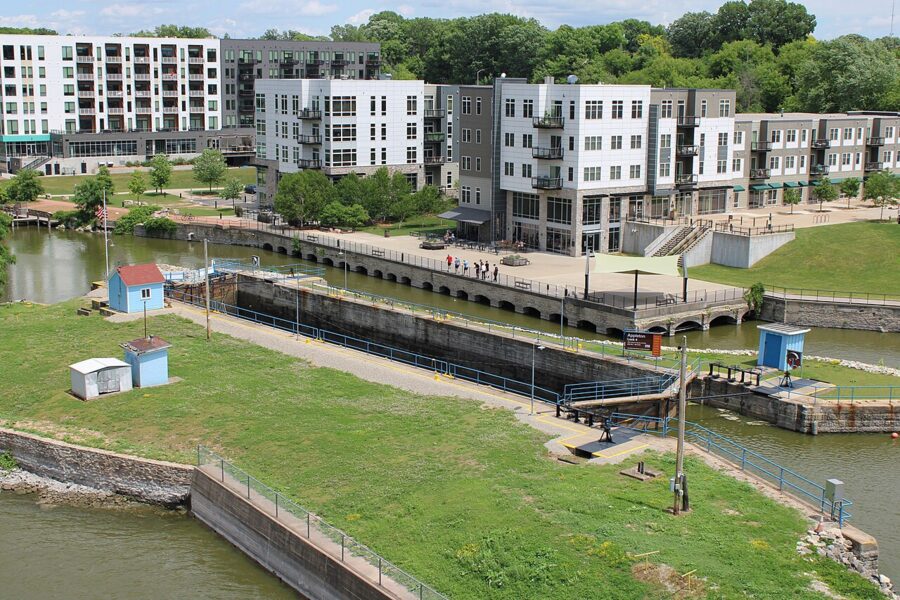
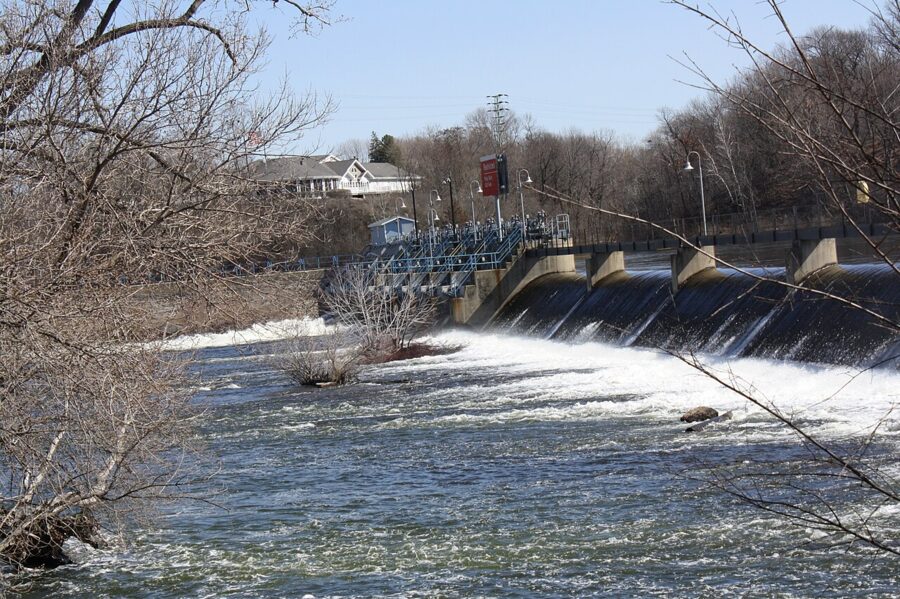
The Lower Fox runs about 40 miles from Lake Winnebago to Green Bay and drops roughly 164 feet along the way. In the 1850s the Fox and Wisconsin Improvement Company built locks and dams to get boats past the rapids, and 17 locks eventually lined the river. Sixteen have been restored to working order, and the Fox River Navigational System Authority describes them as the only fully restored, hand-operated lock system in the United States. Appleton has four of them, numbered 1 to 4 as you go downstream.
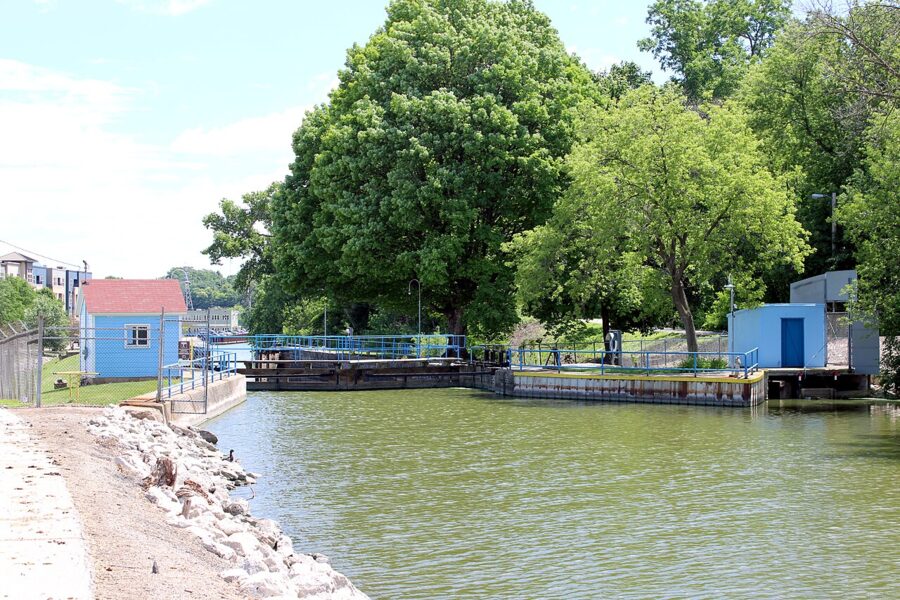

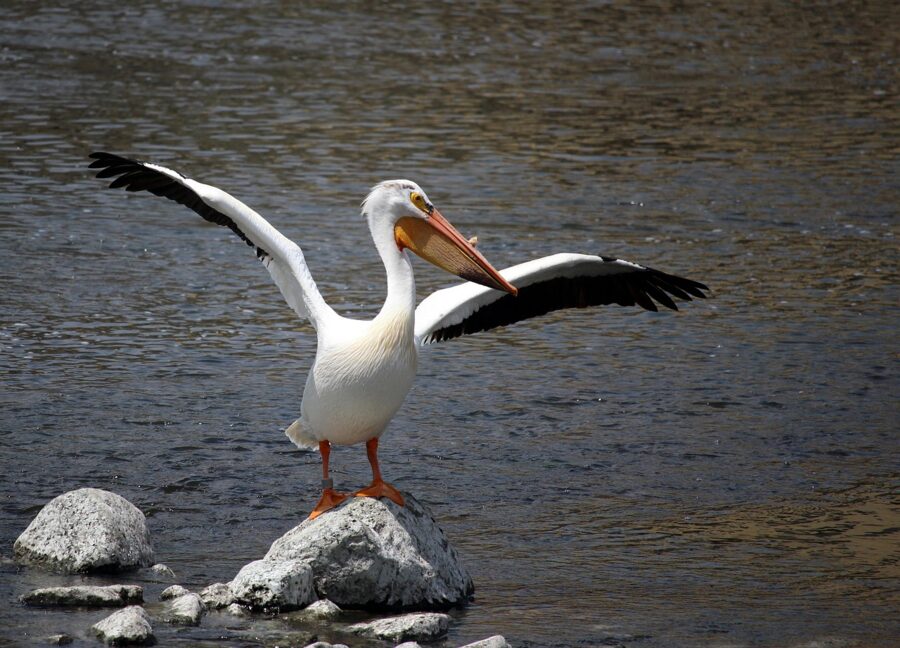
You don’t need a boat to enjoy them. The locks are easy to see from the bridges and the paths along the river, and watching a tender turn the gates on a summer weekend is free. Bring a camera: in the warmer months American white pelicans fish in the fast water below the dams.
If you are on the water, the 2026 lock season ran from May 16 to September 7, and the southern locks, Appleton’s included, opened on Saturdays and Sundays only, from 11am to 6pm, plus Memorial Day, the Fourth of July and Labor Day. A recreational day pass was $15 per boat and a season pass $150 ($75 after July 4), bought online in advance. You can’t run the whole river: the Menasha lock has been closed since 2015 to stop the round goby spreading, and Rapide Croche since 1985 to keep sea lamprey out of Lake Winnebago.

Vulcan Heritage Park
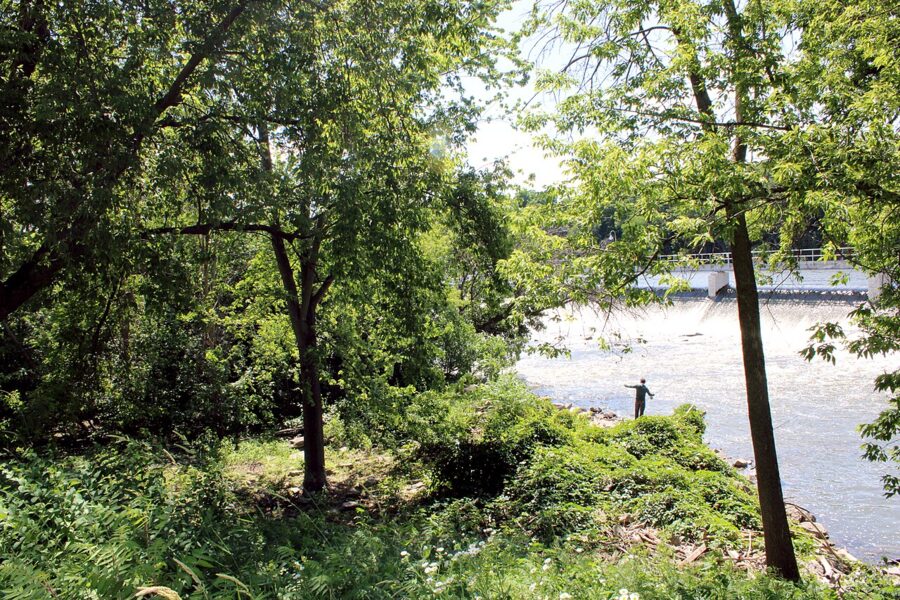
On September 30, 1882, a small plant on the Fox in Appleton started sending out electricity from a water-driven generator. The Vulcan Street Plant was the first Edison hydroelectric central station, and the American Society of Mechanical Engineers counts it as the first hydroelectric central station in North America to serve private and commercial customers. The original building burned long ago.
Vulcan Heritage Park, a small riverside park beside the rapids, marks the spot. It takes ten minutes, and it sets up the Hearthstone tour nicely.


The History Museum at the Castle
If you only do one thing in Appleton, do this. The museum, founded in 1872, fills three floors of a stone Masonic temple on East College Avenue with the story of the Fox Valley, its geology and its paper mills, plus a featured exhibit on Harry Houdini, who grew up here.
Houdini was born Ehrich Weiss in Budapest on March 24, 1874, and came to Appleton with his family in 1878, when his father became rabbi of the Zion Reform congregation. The family left for Milwaukee in 1882, but Houdini later claimed Appleton as his birthplace. The museum holds his handcuffs, lockpicks, keys and a straitjacket, along with scrapbooks, posters and photographs, and the hands-on gallery lets you try a few of his tricks.
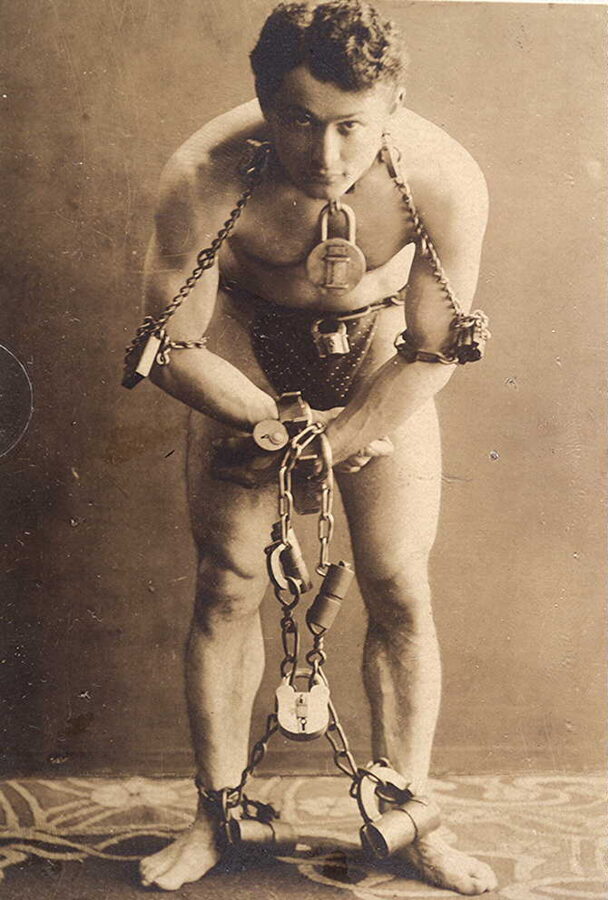
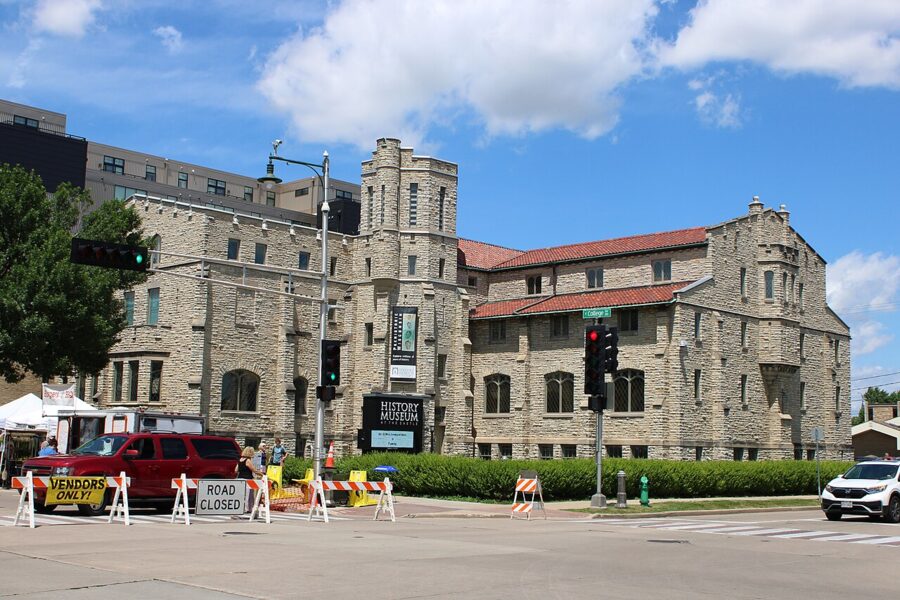

As of November 2026 the museum is open daily from 10am to 4pm. Admission is $12 for adults, $7.50 for children aged 3 to 17 and free under 3, with $3 Museums for All entry for EBT cardholders. It closes on major holidays, including Thanksgiving (November 26, 2026). Allow two hours, and park in the lot behind the building.
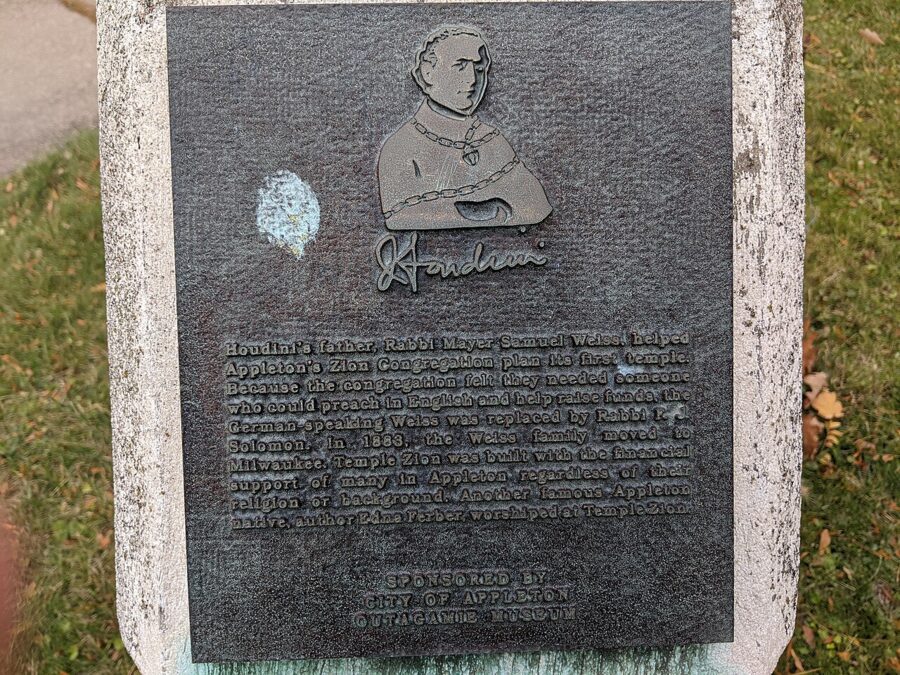
Houdini Plaza, a small square at College Avenue and Appleton Street, is the city’s other nod to him. It’s a pleasant place to sit, not a reason to drive across town. There’s also a Houdini plaque outside Temple Zion.

Hearthstone Historic House Museum
Hearthstone, at 625 West Prospect Avenue, is a large Victorian house from the early 1880s. The museum calls it the first residence to be electrified using a central hydroelectric power station, and that station was the Vulcan Street Plant, switched on in the autumn of 1882. The tour covers the house’s electric story, the Gilded Age and the family’s rise and fall.
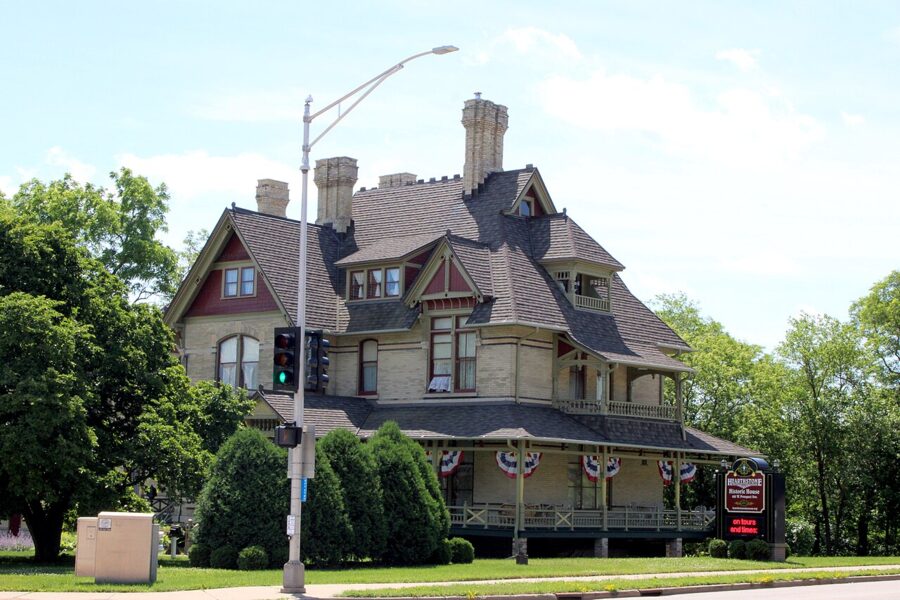

Every visit is a guided tour of about 75 minutes, followed by time in the lower-level exhibits on Thomas Edison and hydroelectric power. As of November 2026 tours run Thursday to Saturday at 10:30am, noon, 1:30pm and 3pm, and Sunday at 1:30pm and 3pm. Tickets are $13 for adults, $10 for seniors and $7 for ages 5 to 17, at the door or online. It’s closed on Thanksgiving and the day after.
College Avenue and downtown
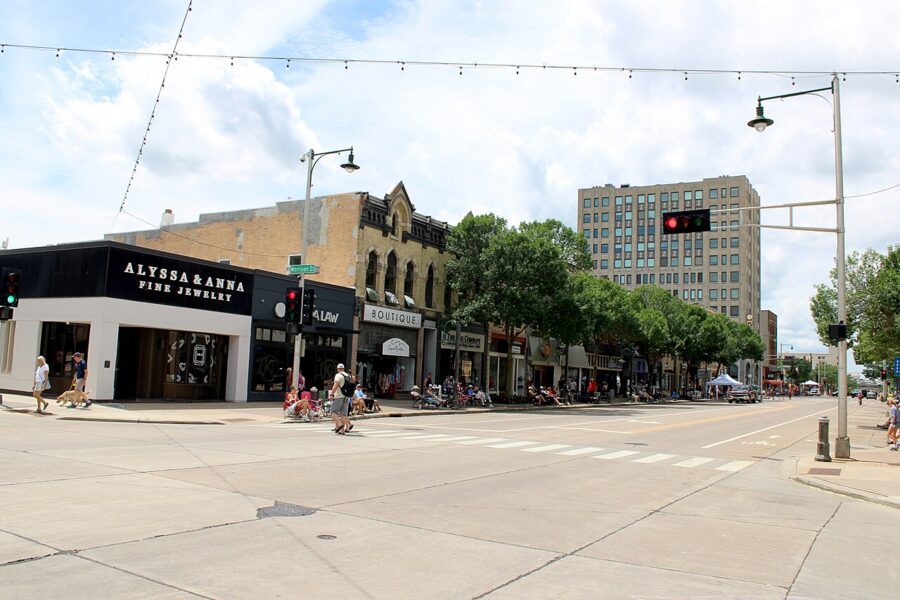
Downtown Appleton is College Avenue plus a block or two either side, running east to the Lawrence campus. It’s compact, walkable and busier in the evening than you’d expect for a city this size. Park once and leave the car.
Trout Museum of Art
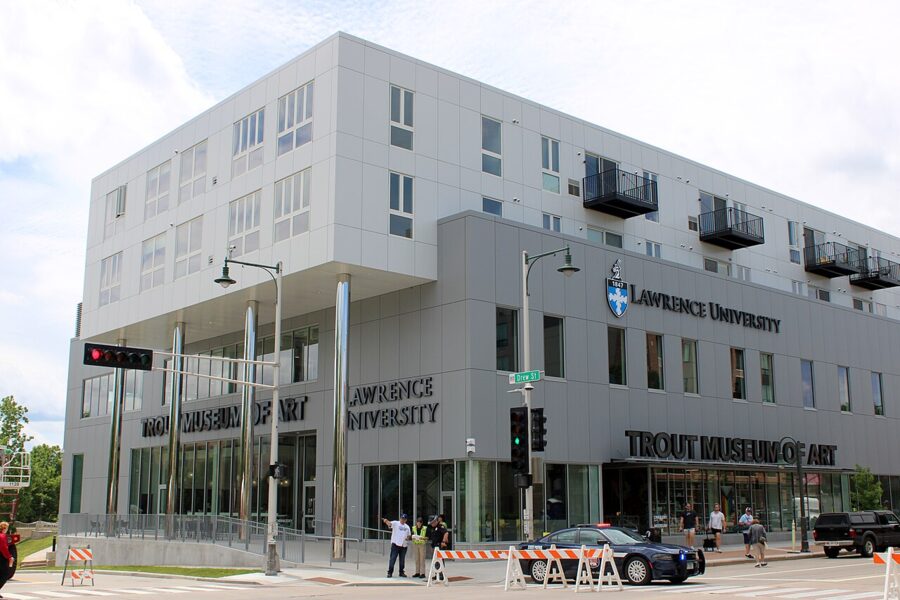
The Trout Museum of Art, at 325 East College Avenue, shows rotating contemporary exhibitions and community shows. As of November 2026 it’s open seven days a week with free admission, supported by a matching gift that runs through January 31. Its café, the Drinkery, serves coffee and vegetable-forward food, and the galleries are an easy hour.

Fox Cities Performing Arts Center
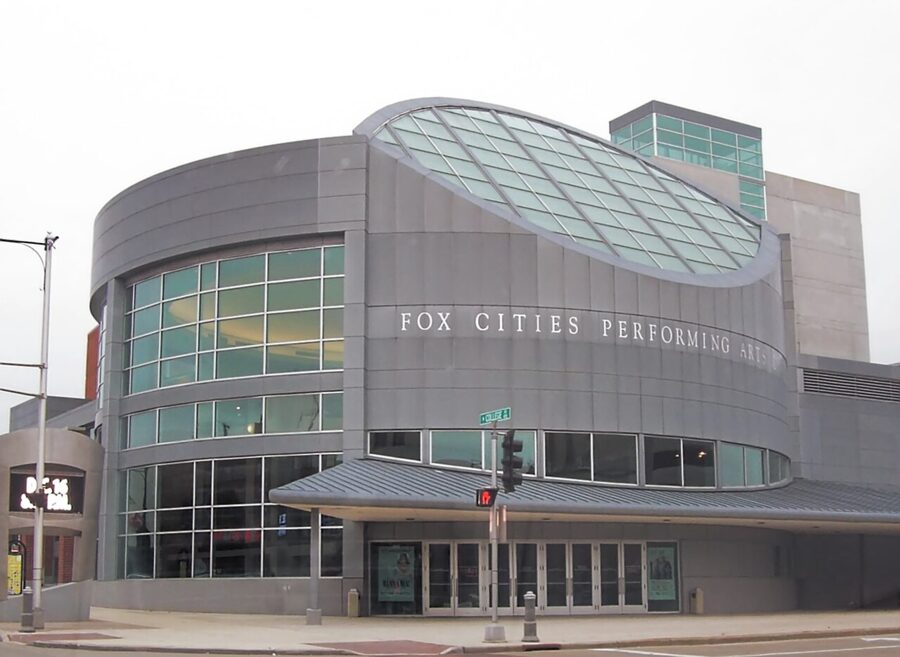
The PAC, at 400 West College Avenue, is where touring Broadway productions stop in northeast Wisconsin, alongside concerts and the Fox Valley Symphony. Book ahead for the big musicals, which sell out. Even if you don’t see a show, the glass front is the landmark you’ll navigate by.

Jones Park and the riverfront
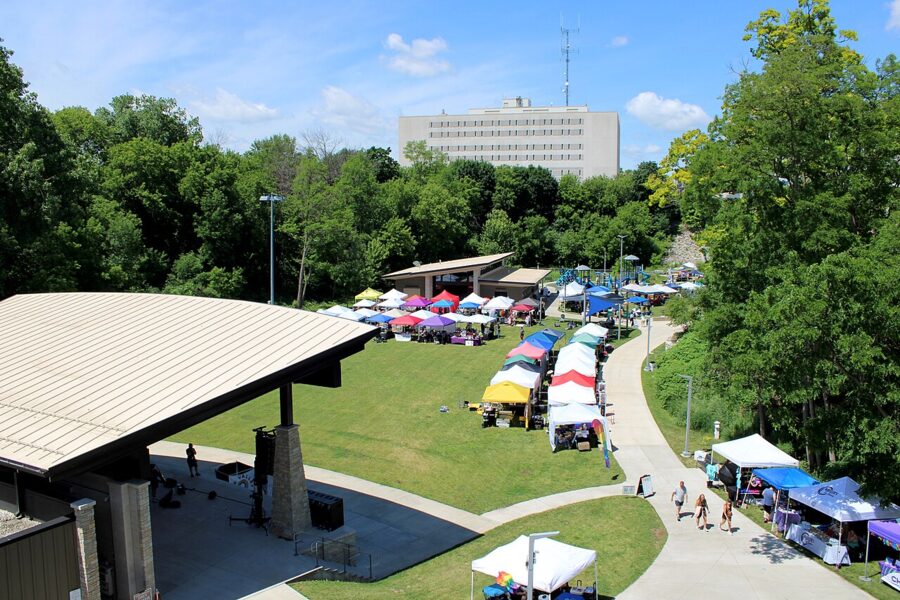
Jones Park, just south of College Avenue toward the river, has a stage and terraced lawns. It’s the main outdoor venue for downtown festivals, Mile of Music included.

Building for Kids and the farmers market
With children, the Building for Kids Children’s Museum at 100 West College Avenue is the obvious rainy-day stop. As of November 2026 it’s open Tuesday to Sunday, 9am to 4pm, and admission is $11 per person, free under 12 months.
On summer Saturdays the Downtown Appleton Farm Market takes over College Avenue, with produce, cheese, baked goods and crafts. The 2026 outdoor season ran Saturdays from June 6 to October 17, 8am to 12:30pm. A smaller indoor market has run in City Center Plaza in late fall in past years; check the downtown association’s schedule before planning around it.
Lawrence University
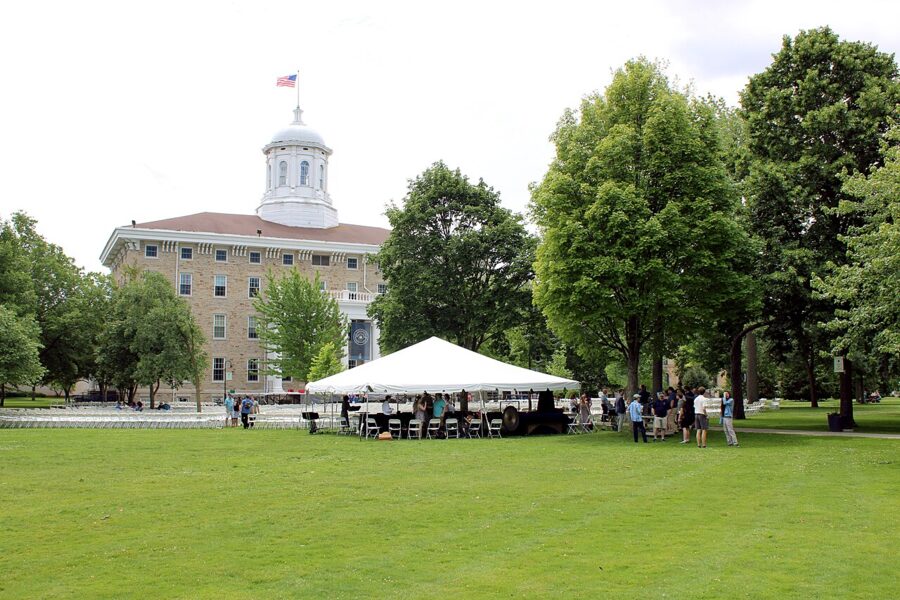
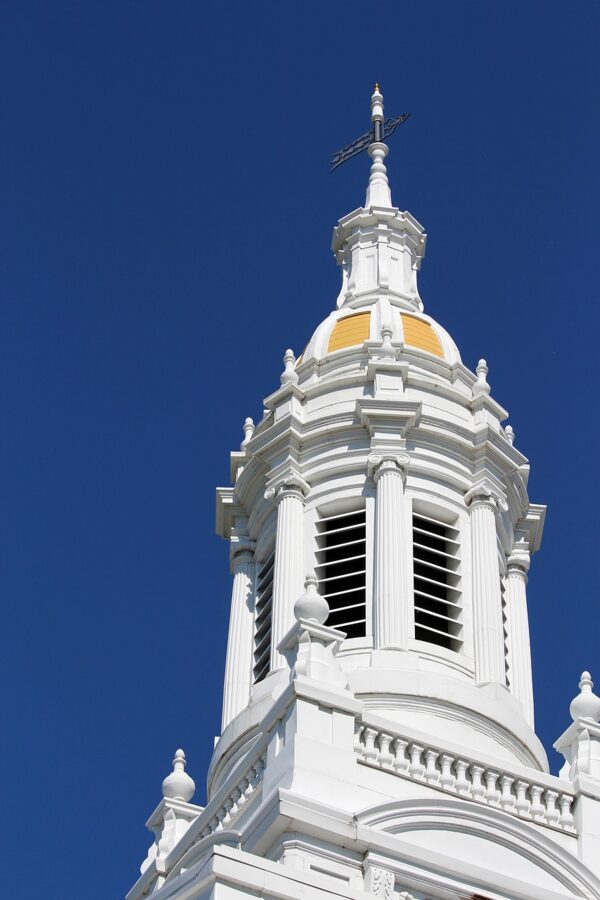
Lawrence is a small liberal arts college with a respected conservatory of music, and its campus runs along College Avenue east of downtown and down toward the river. The grounds are open and pleasant to walk, especially in fall.

The Wriston Art Center Galleries, at 613 East College Avenue, are free and open to the public during the academic year, closing over the summer break. Posted hours have changed between terms, so call the gallery before you go. The conservatory’s concerts are listed on the university’s events calendar.

Parks and trails in town
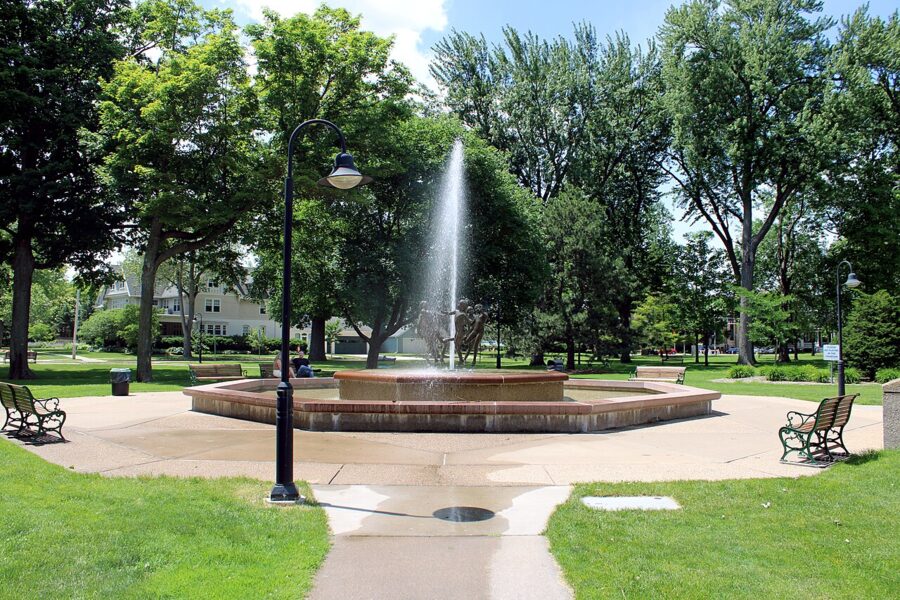
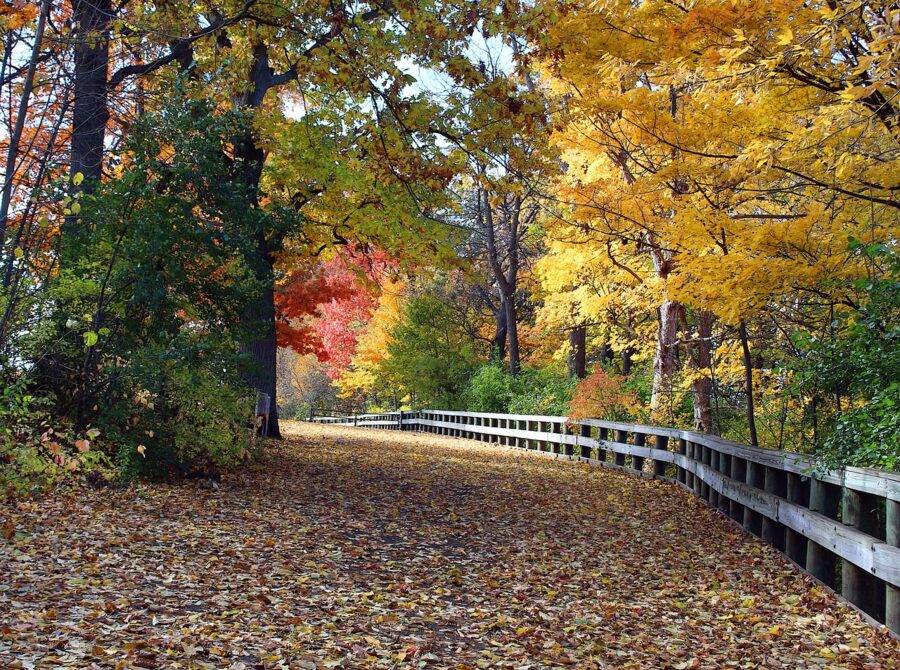
Gordon Bubolz Nature Preserve, at 4815 North Lynndale Drive on the northwest side, has more than 8.5 miles of trails. The trails are open daily from dawn to dusk year-round. The nature center is open Tuesday to Friday 8am to 4:30pm, Saturday 11am to 4pm and Sunday noon to 4pm, and closed Monday.
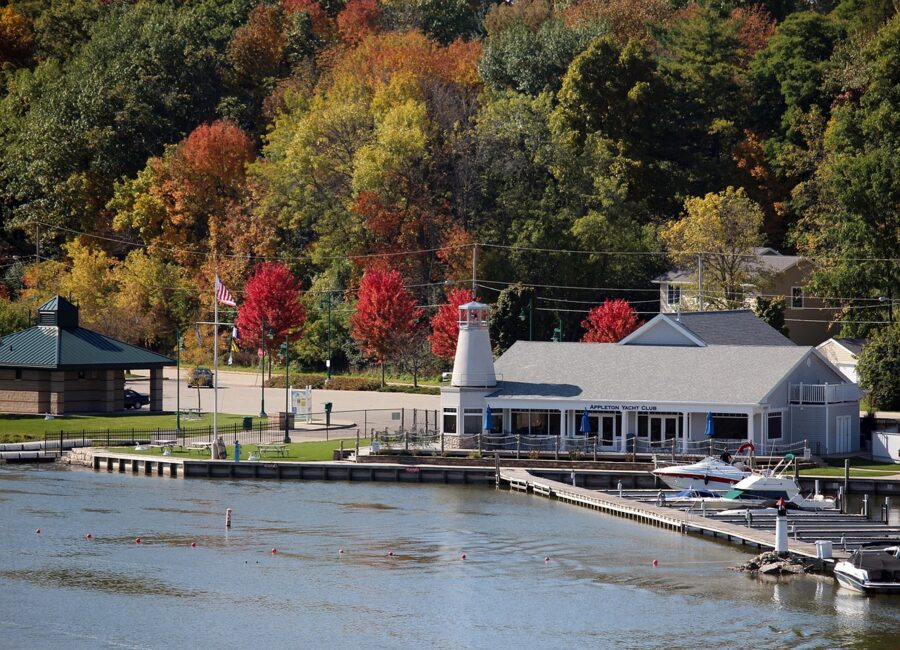
Closer in, Telulah Park on the east side and the waterfront around the Appleton Yacht Club are good for a short walk with river views, especially in October. Appleton Memorial Park, the city’s largest, is more about sports fields than scenery.
Day trips around the Fox Cities
The towns along the river and the lake are close enough to mix into an Appleton weekend. You’ll need a car.
High Cliff State Park
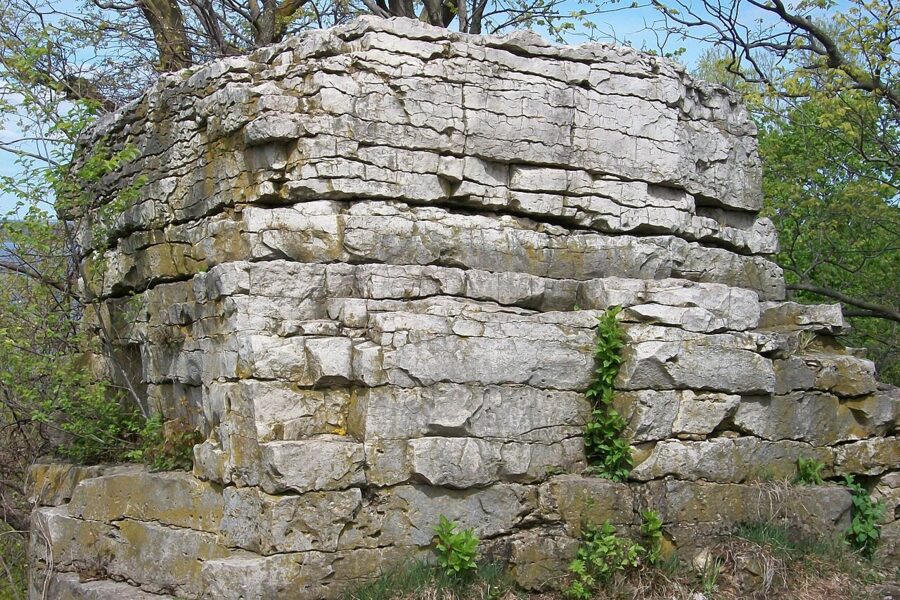
High Cliff, near Sherwood on the northeast shore of Lake Winnebago, is the best half-day out of Appleton and roughly a half-hour drive. The 1,187-acre park is the only state-owned recreational area on the lake, Wisconsin’s largest, and it sits on the limestone cliff of the Niagara Escarpment. It’s open 6am to 11pm year-round.
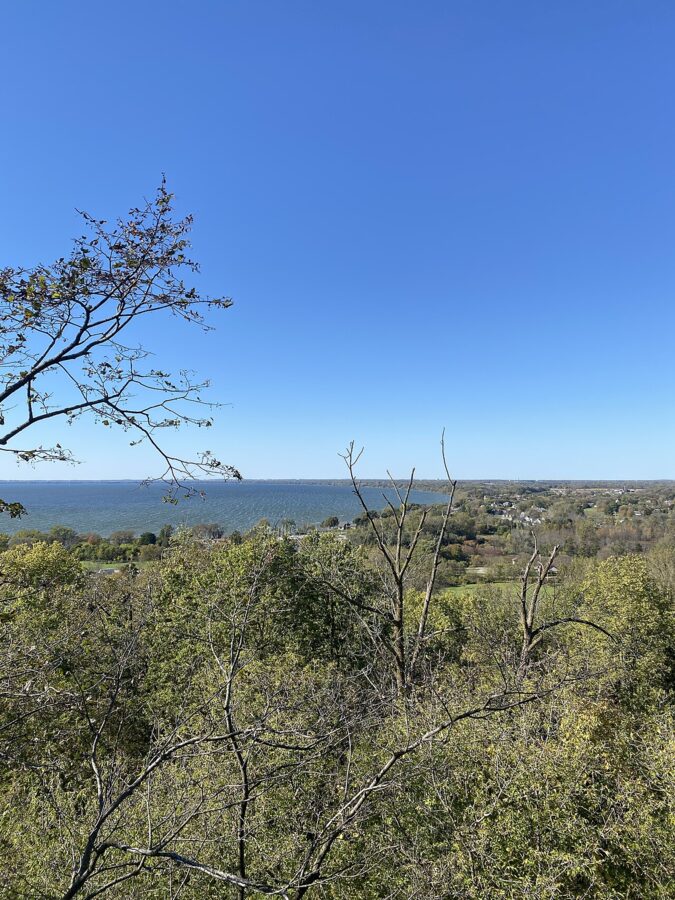

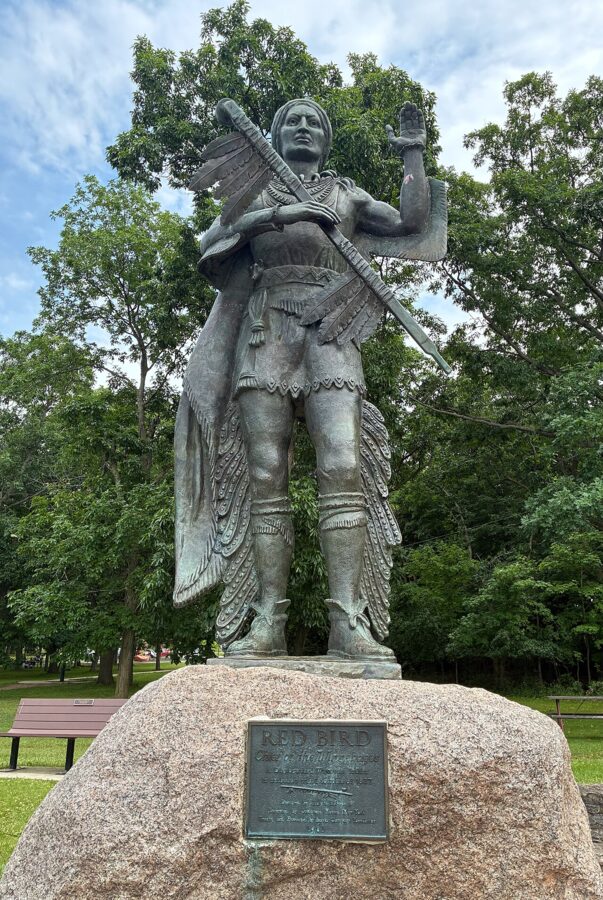
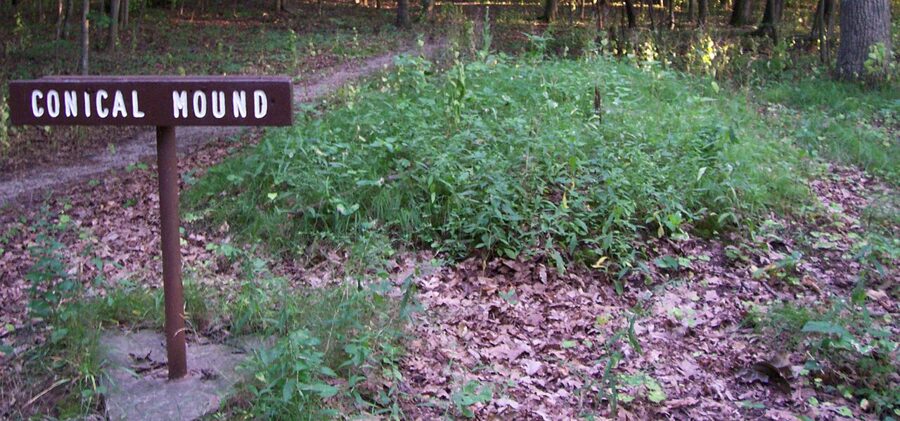
The Red Bird Trail, 3.4 miles and mostly level, follows the top of the escarpment past old limestone quarries to the 12-foot statue of Chief Red Bird. The Indian Mound Trail is shorter, at 0.6 miles, and passes effigy mounds built about 1,500 years ago. Of the original 30 mounds, nine remain, including a panther mound 285 feet long.



Every car needs a state park vehicle pass. In 2025 the Wisconsin DNR charged $13 a day for Wisconsin plates and $16 for out-of-state plates; check the current rate before you go.
Neenah
Neenah, about 20 minutes south, is where the Fox leaves Lake Winnebago. The Bergstrom-Mahler Museum of Glass, at 165 North Park Avenue, is built around a large collection of glass paperweights, and it’s free. As of November 2026 it opens Tuesday, Wednesday, Friday and Saturday 10am to 4:30pm, Thursday 10am to 8pm and Sunday 1pm to 4:30pm, and closes on Monday.
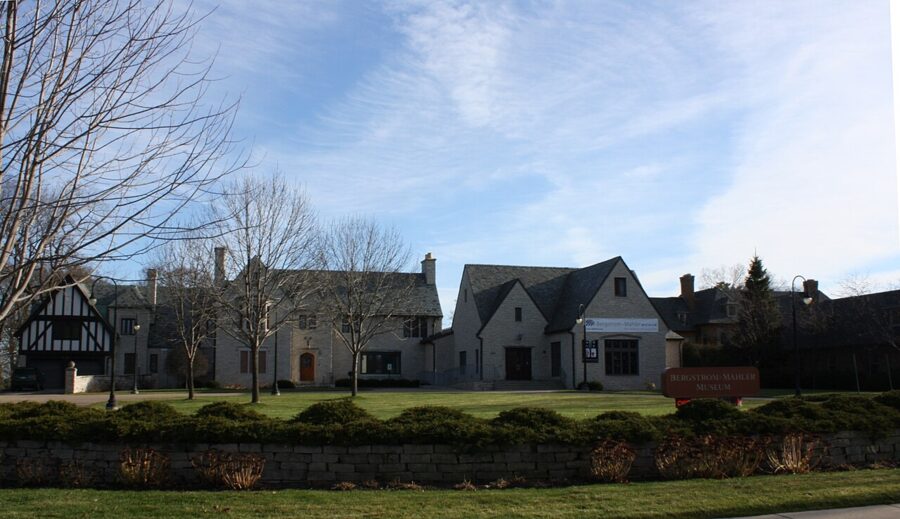

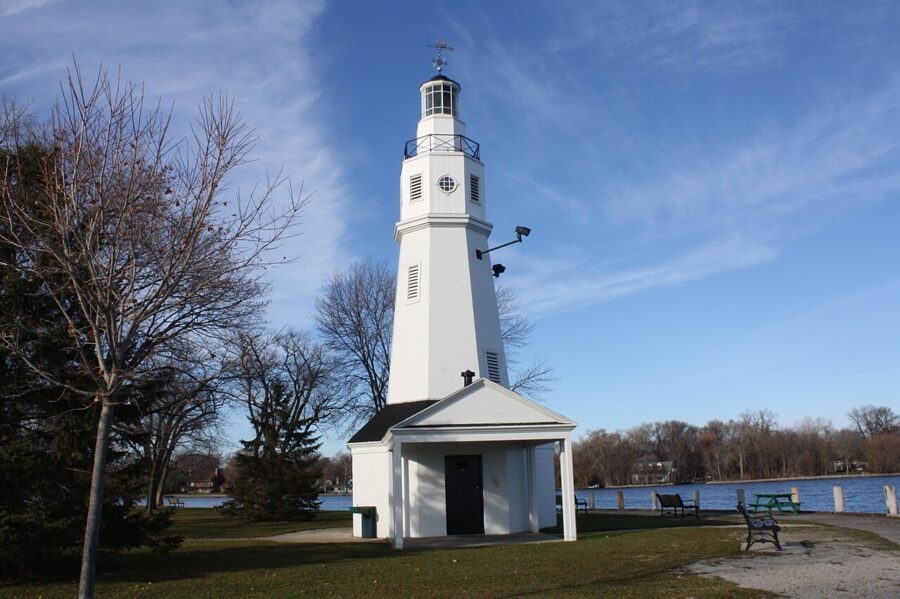
From the museum it’s a short drive or walk to Kimberly Point Park and its lighthouse, at the spot where the river begins.

Menasha
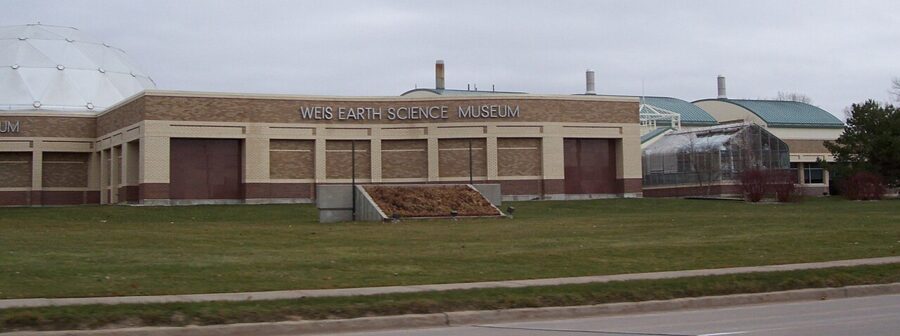
The Weis Earth Science Museum, at 1478 Midway Road on the university campus in Menasha, covers Wisconsin’s rocks, minerals and fossils and is a solid hour with children. It’s open Wednesday to Friday noon to 4:30pm and Saturday 10am to 4:30pm, and closed Sunday to Tuesday. Published admission prices disagree, so check before you go.

Kaukauna and Little Chute
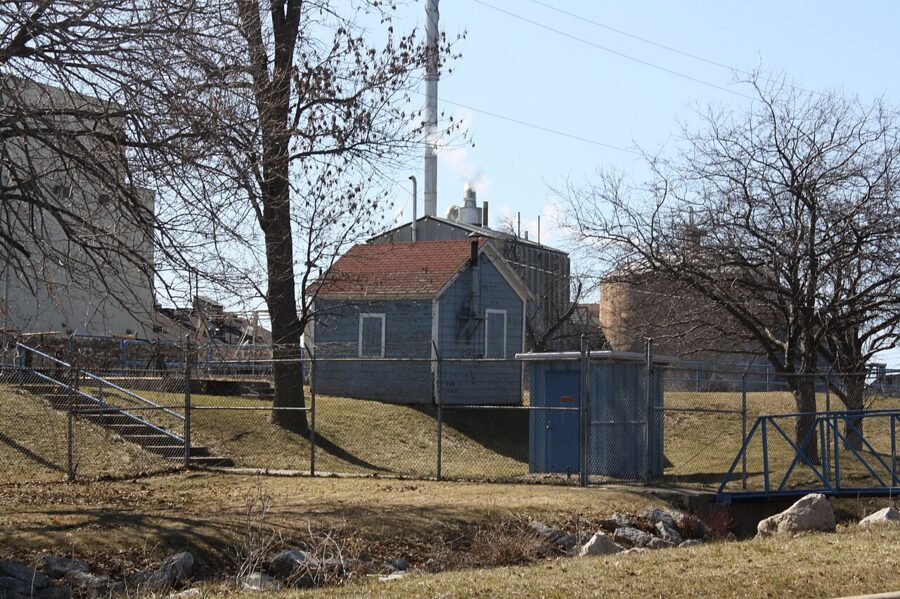
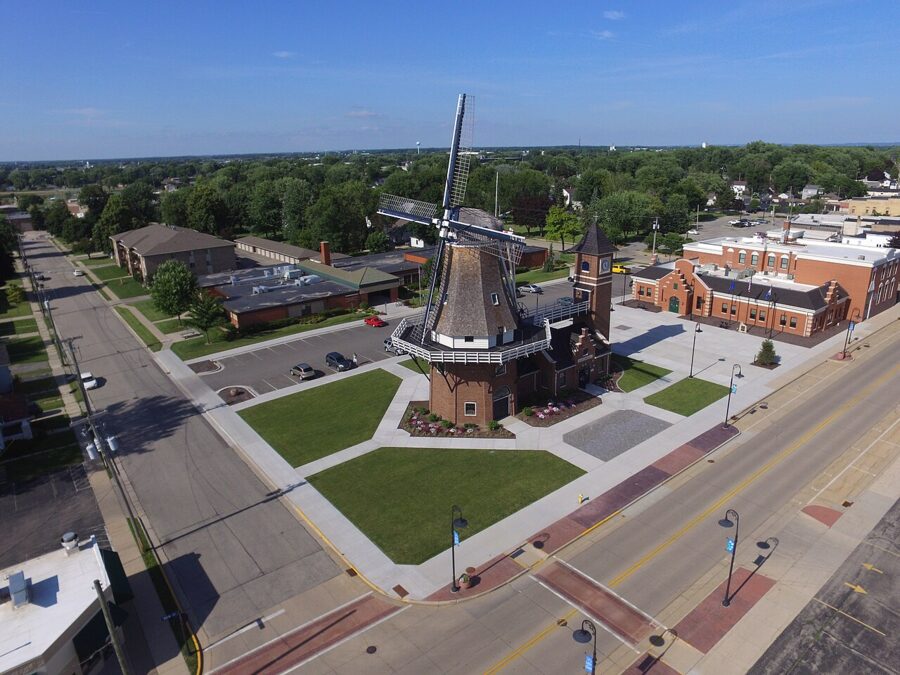
Downstream from Appleton, Kaukauna has five locks in a row, and the walk along them is one of the better free outings in the area. Little Chute, between the two, was settled by Dutch Catholic immigrants and has put up a Dutch-style windmill downtown as a nod to that past.


Baseball and the year’s events
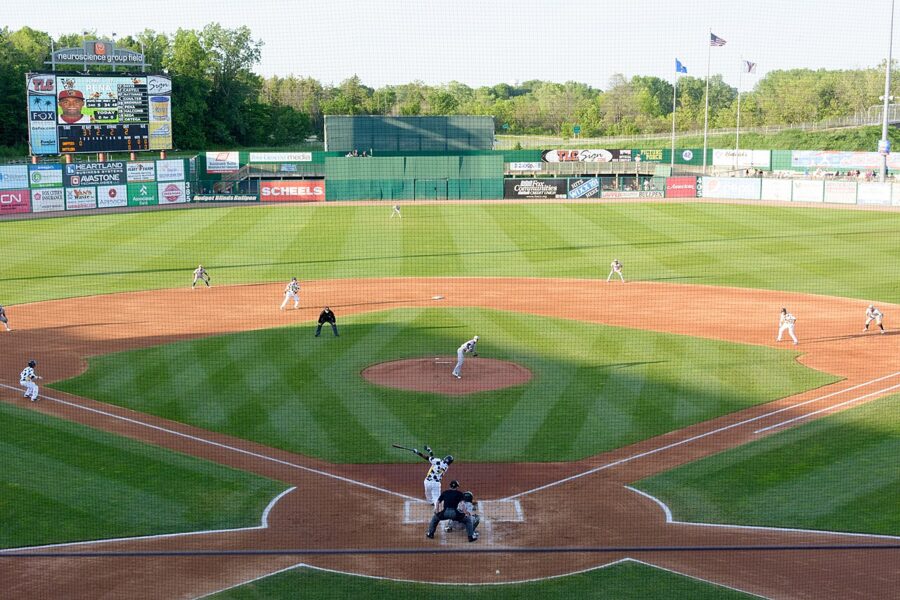
The Wisconsin Timber Rattlers, the Milwaukee Brewers’ affiliate, play at Neuroscience Group Field at Fox Cities Stadium on North Casaloma Drive in Grand Chute, about 15 minutes west of downtown. The season runs from early April to the end of August or early September; the 2027 home opener is set for April 6, 2027. A game costs far less than a big-league one, and it’s a good family night out.

| When | What | Notes |
|---|---|---|
| Mid-May to early September | Fox River locks open | Appleton locks on weekends and holidays only (2026: May 16 to September 7) |
| June to mid-October | Downtown Appleton Farm Market | Saturdays 8am to 12:30pm on College Avenue |
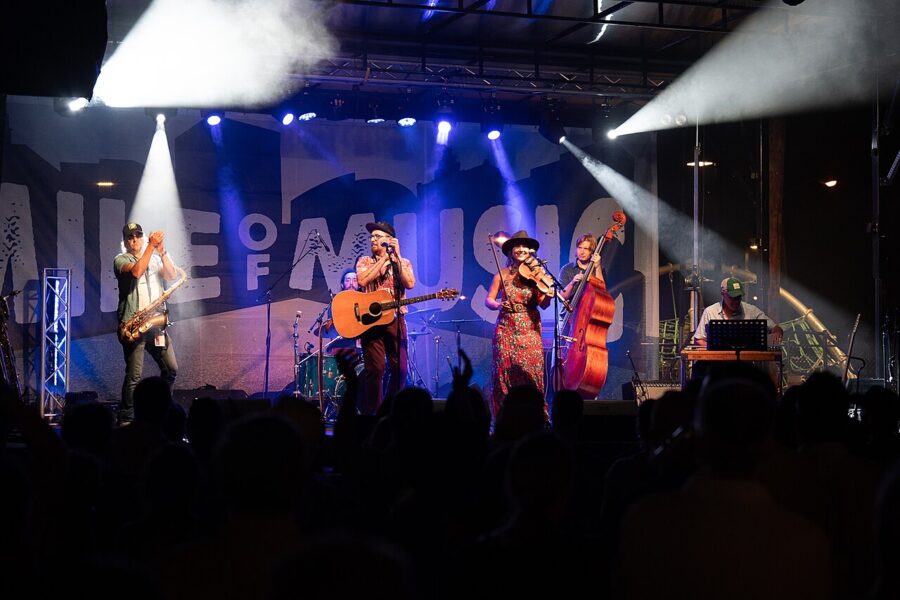
| Late July to early August | Mile of Music | Four days of free original music downtown; 2026 ran July 30 to August 2 |
| Late September | Octoberfest | One-day street festival on College Avenue (September 26 in 2026), with the License to Cruise car show the evening before |
| Tuesday before Thanksgiving | Downtown Appleton Christmas Parade | 7pm on College Avenue, State Street to Drew Street (November 24 in 2026) |
Mile of Music is the big one. Hundreds of sets of original music play in bars, cafés, parks and on the Lawrence lawns, and it’s free, so book a room early. The Christmas parade is a nighttime parade, and the convention bureau bills it as the largest of its kind in the Midwest. Dress for a cold November evening.

Where to eat and drink
Downtown and the blocks around it have the best spread. Everything below was listed as trading as of November 2026, but hours change with the season, so check before you go.
Breakfast and coffee
- Copper Rock Coffee Company, 210 West College Avenue: the downtown coffee standby, open early.
- ACOCA Cafe and Roastery, 500 West College Avenue: roasts its own beans.
- Voyageurs Bakehouse, 201 West College Avenue: pastries and bread, Tuesday to Saturday mornings.
- Author’s Kitchen and Bar, 125 East College Avenue: brunch.
- Apple Valley Pancake House, 1216 West Wisconsin Avenue: the classic pancake breakfast, open daily.
Lunch and casual
- Bowl Ninety-One, 100 East College Avenue: ramen.
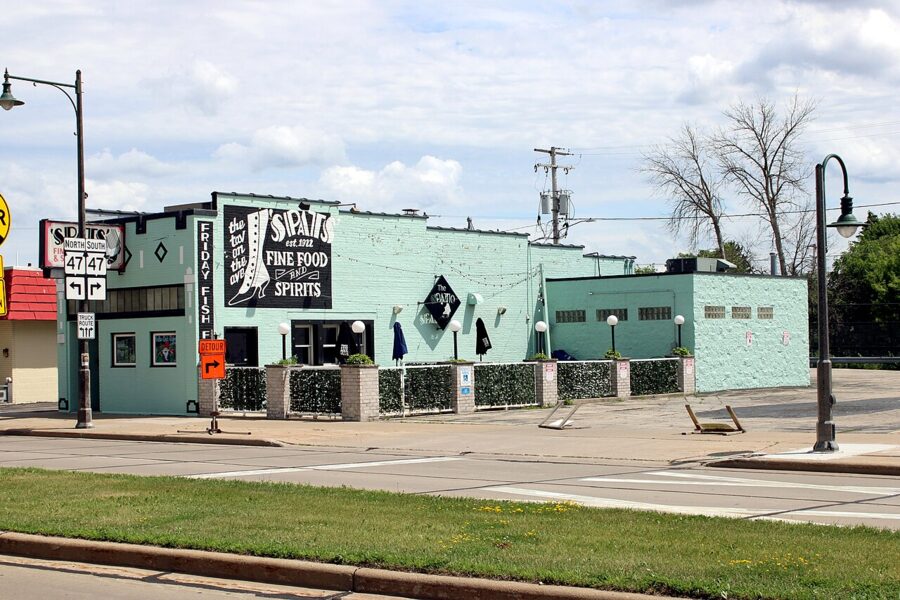
- Spats, 733 West College Avenue: a bar and grill at the west end of downtown.
- Good Company, 110 North Richmond Street: an American restaurant and bar.
- Pullmans at Trolley Square, 619 South Olde Oneida Street: on the same street as Stone Arch, close to the river.

Dinner
- Rye, 308 West College Avenue: the city’s fine-dining pick, with a cocktail bar.
- Apollon, 207 North Appleton Street: Greek and Mediterranean, dinner only.
- Katsu-Ya of Japan, 338 West College Avenue: sushi and Japanese.
- Ellinor, 1016 East Pacific Street, and Marvol, 126 East Pacific Street: small places a few blocks north of the avenue, open for dinner a few evenings a week.
- Mark’s East Side, 1405 East Wisconsin Avenue: German food, steaks and seafood.
- Black Otter Supper Club, Hortonville: a steak-and-seafood supper club about a 20-minute drive west, if you want the Wisconsin supper-club experience.
Beer
- Stone Arch Brewpub, 1004 South Olde Oneida Street: in the Between the Locks building by the river, the obvious stop after a walk past the locks.
- McFleshman’s Brewing Co., 115 South State Street, and Vault 202, 202 West College Avenue: downtown taprooms.
- Hop Yard Ale Works, 512 West Northland Avenue: beer and pizza on the north side.
- Fox River Brewery and Restaurant, 4301 West Wisconsin Avenue: by the Fox River Mall, handy if you’re staying out west.
When to go and how long to stay
Summer, from June to early September, is the best time. The locks open on weekends, the farmers market runs every Saturday, the Timber Rattlers are at home and Mile of Music fills downtown at the turn of July and August. July’s average high is about 81°F (1991 to 2020 normals).
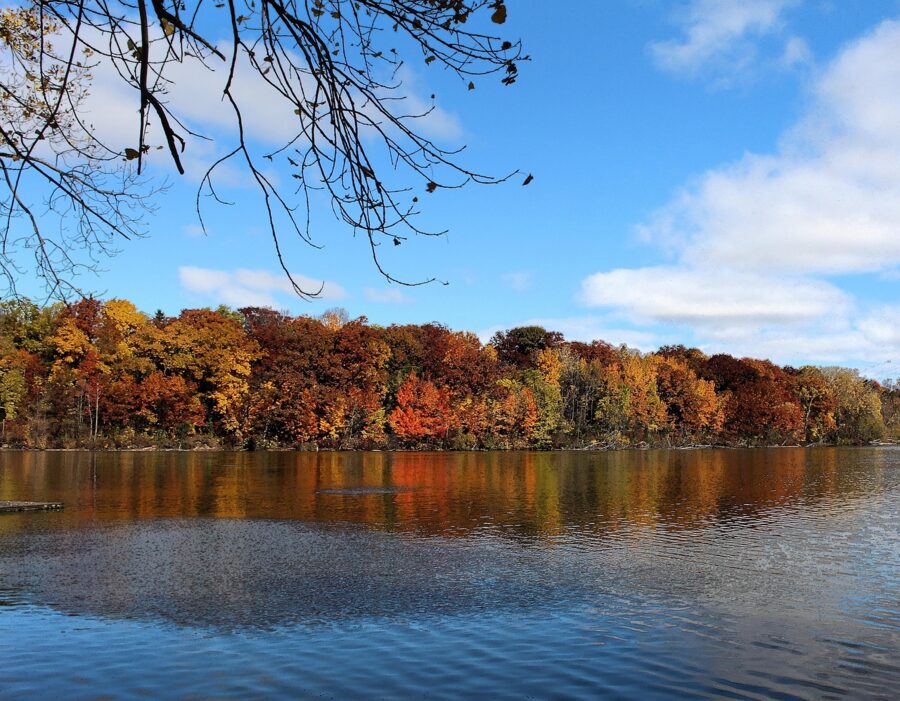
Late September and October come a close second, with Octoberfest, fall color along the river and fewer crowds. Winter is cold, with January highs averaging about 25°F, and the locks and many outdoor events are shut, but the museums, the PAC and the restaurants carry on. The Christmas parade the Tuesday before Thanksgiving is the one big winter draw.
Two days is right for Appleton and a side trip. One day covers downtown and the river.
A two-day plan
Day one. Start with coffee on College Avenue, then the History Museum at the Castle when it opens at 10am. Cross the avenue to the Trout Museum, walk west to Houdini Plaza, have lunch downtown, then head down through Jones Park to the river and the locks. Finish with Vulcan Heritage Park and a 3pm Hearthstone tour (Thursday to Sunday), then dinner and a show or a taproom downtown.
Day two. Drive to High Cliff State Park for the Red Bird and Indian Mound trails in the morning. Stop in Neenah on the way back for the Bergstrom-Mahler Museum and Kimberly Point, then end the day with a walk on the Lawrence campus or, in summer, a Timber Rattlers game.
With only one day, keep to the first plan and swap Hearthstone for the Lawrence campus if it’s not a tour day.
Getting around and practical notes
- Car. You’ll want one for the airport, High Cliff, Neenah and the ballpark. Downtown itself is easy on foot.
- Parking. The History Museum has its own lot behind the building, and there are public parking ramps downtown.
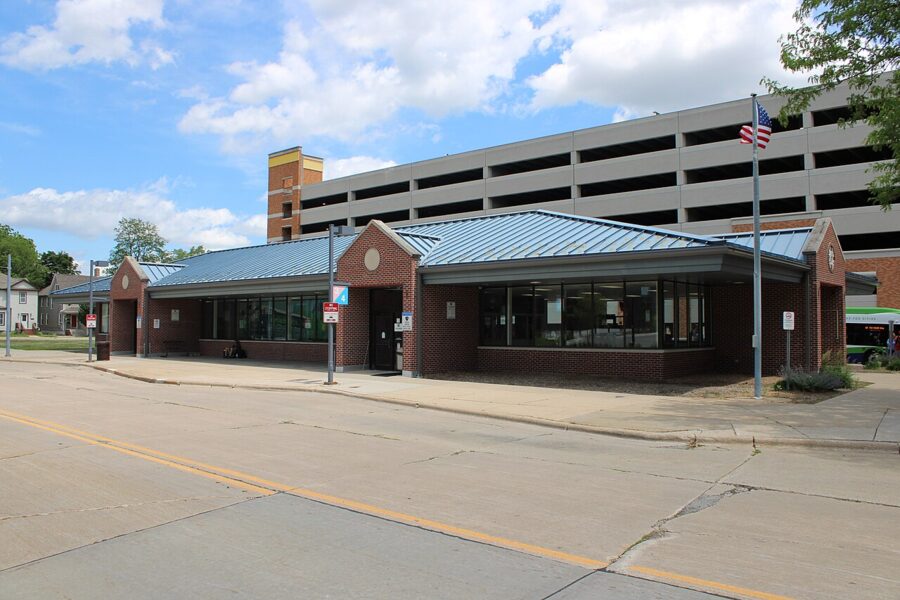
- Buses. Valley Transit runs the local bus network from the transit center downtown. Route 11 stops at the corner of the History Museum.
- Tickets. Hearthstone sells online and at the door; the PAC sells out for the big touring musicals, so book those early. Lock passes for boaters are sold online only.
- Closures to know. The Paper Discovery Center (Atlas Science Center) closed in late 2024. The Butterfly Gardens of Wisconsin appear on many older lists, but a 2026 season could not be confirmed, so call before driving out.
- Storm recovery. After the July 27, 2026 tornado, the city’s brush collection was still under way in the area between Northland Avenue, the Fox River, Richmond Street and the western city limits as of November 2026.

One last tip: Hearthstone runs tours only Thursday to Sunday and the Castle opens daily, so if your trip falls early in the week, put the Castle and the river first and save the house for another visit.