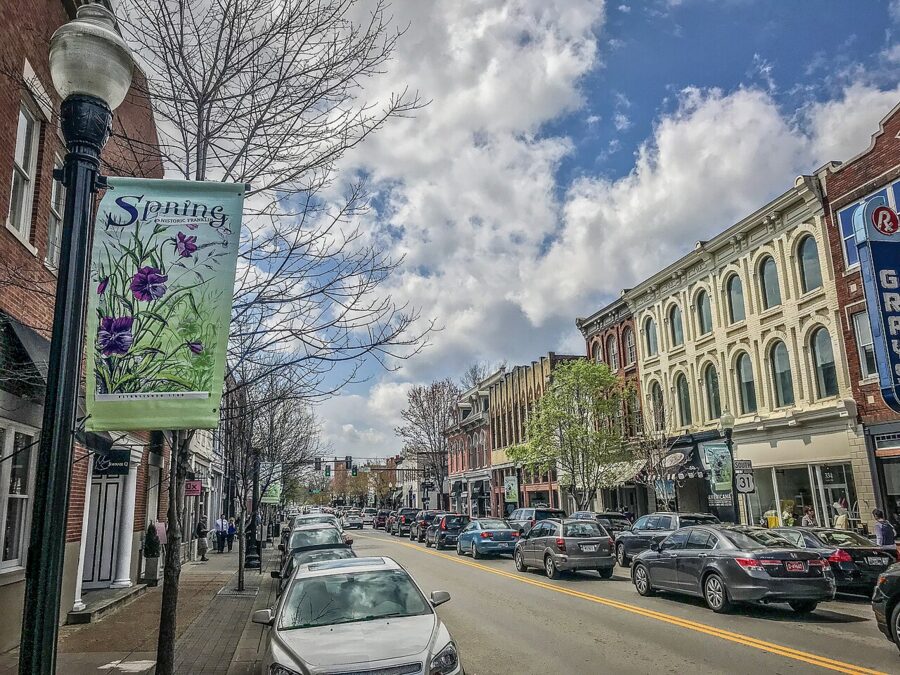
Franklin needs two days. Spend the first on the Battle of Franklin houses (Carter House, Carnton and the Lotz House) and the sixteen-block historic downtown around Main Street, then give the second to The Factory, the parks along the Harpeth River and the drive out to Leiper’s Fork and Arrington’s wine country. Everything on this list sits within about 15 miles of the Public Square, and most of it within two miles.
The town is 20 miles south of downtown Nashville on I-65, so many people treat it as an afternoon off a Nashville trip. That works for Main Street and a meal. The Civil War sites alone fill a day, though, and a rushed visit means choosing between Carter House and Carnton when you should see both.
Franklin is a working county seat of about 83,000 people (2020 census), not a museum town. Skip Cool Springs, the malls and office parks east of I-65, unless you need a hotel room there.

On this page
- Franklin in brief: where it is and how to get there
- The Civil War sites: Carter House, Carnton and the battlefield
- Main Street and downtown
- The Factory at Franklin
- Parks, trails and the Harpeth River
- Day trips: the Natchez Trace, Leiper's Fork and Arrington
- Festivals and events, month by month
- Where to eat and drink
- When to go and how long to stay
- Getting around and practical notes
Franklin in brief: where it is and how to get there
Franklin was laid out in 1799 and named for Benjamin Franklin. It grew rich on cotton and plantation agriculture, worked largely by enslaved people, and that history is the backdrop to everything that happened here in 1864. Today the seat of Williamson County is one of the fastest-growing cities in Tennessee, with a preserved downtown wrapped in new subdivisions.
There is no commercial airport in Franklin. Fly into Nashville International Airport (BNA), which is about 30 miles northeast, and allow 35 to 45 minutes by car outside rush hour. I-65 through Nashville and Brentwood backs up badly at weekday rush hours, so a late-afternoon landing can turn into an hour-plus drive.
Most visitors drive in. Rough driving times in light traffic:
| From | Distance | Drive time |
|---|---|---|
| Nashville (downtown) | 20 miles | 25 to 40 minutes |
| Nashville airport (BNA) | 30 miles | 35 to 45 minutes |
| Huntsville, Alabama | 100 miles | About 1 hour 45 minutes |
| Chattanooga | 125 miles | About 2 hours |
| Birmingham, Alabama | 175 miles | About 2 hours 45 minutes |
| Louisville, Kentucky | 190 miles | About 3 hours |
| Knoxville | 195 miles | About 3 hours |
| Memphis | 205 miles | About 3 hours |
| Atlanta | 245 miles | About 4 hours (you gain an hour: Franklin is on Central time) |
You will want a car. Downtown is walkable, but Carnton, The Factory, the Natchez Trace and Leiper’s Fork are spread out, and the city buses serve residents more than sightseers.
The Civil War sites: Carter House, Carnton and the battlefield
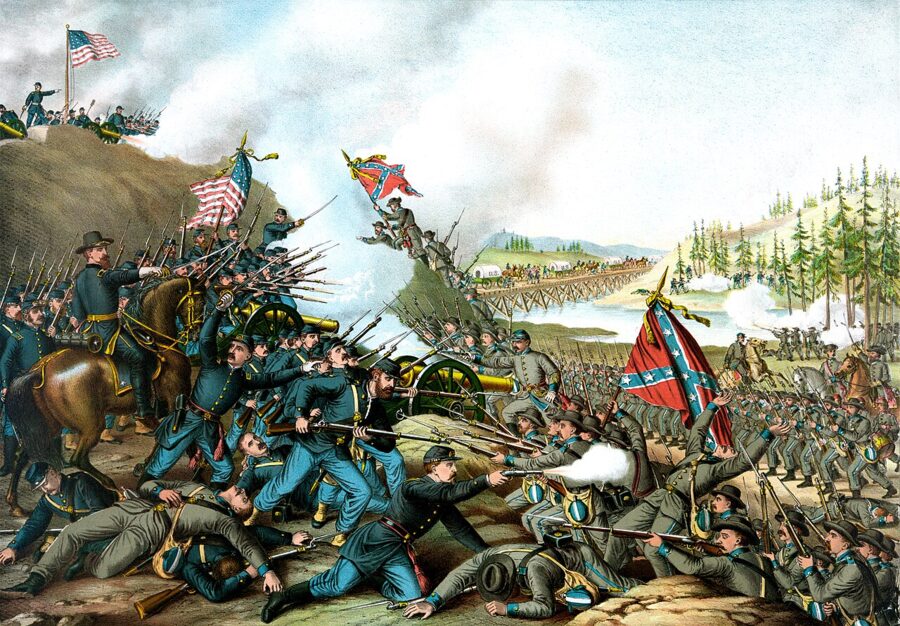
On the afternoon of November 30, 1864, Confederate General John Bell Hood sent the Army of Tennessee across two miles of open ground south of town against Union troops under General John Schofield, who were dug in around the Carter farm. The assault lasted about five hours, much of it after dark. The Confederates lost more than 6,000 men killed, wounded or captured, including six generals killed, and Schofield’s army slipped away north to Nashville that night.
Most of that battlefield disappeared under houses and shopping centers in the 20th century. What survives is a scatter of sites, several reclaimed by the city and preservation groups since the 2000s.
Carter House
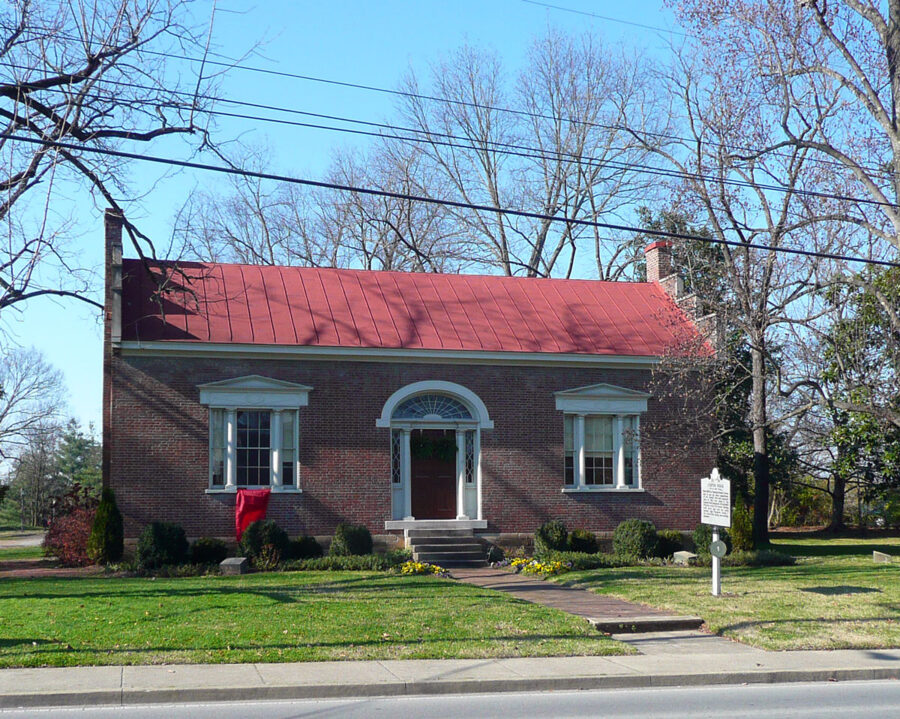
The Carter House (125 West Fowlkes Street, at Columbia Avenue) is a brick farmhouse built in 1830. It stood at the center of the Union line, and its outbuildings, especially the small farm office, are still pocked with bullet holes. Captain Tod Carter, a son of the house serving on a Confederate staff, was shot within sight of home and died in the house two days later.
The Battle of Franklin Trust runs the site. As of November 2026 the Classic House Tour costs $22 for adults and $14 for ages 6 to 15, lasts 60 minutes, and leaves every 30 to 40 minutes. The 90-minute specialty tours (Extended, Battlefield, Slavery and the Enslaved, and All Men Are Created Equal) cost $29 each and run at set times, such as the Battlefield Tour at 11am Monday to Thursday and at 11am and 2pm on Friday and Saturday.
Hours are 9am to 5pm Monday to Saturday and 10am to 5pm Sunday, with the last tour starting at 4pm. All the Trust’s sites close on New Year’s Day, Easter, Thanksgiving, Christmas Eve and Christmas Day. The state is building a new visitor center at Carter House, the Herbert Harper Visitor Center, with a new museum exhibit to follow, so ask what is open when you book.
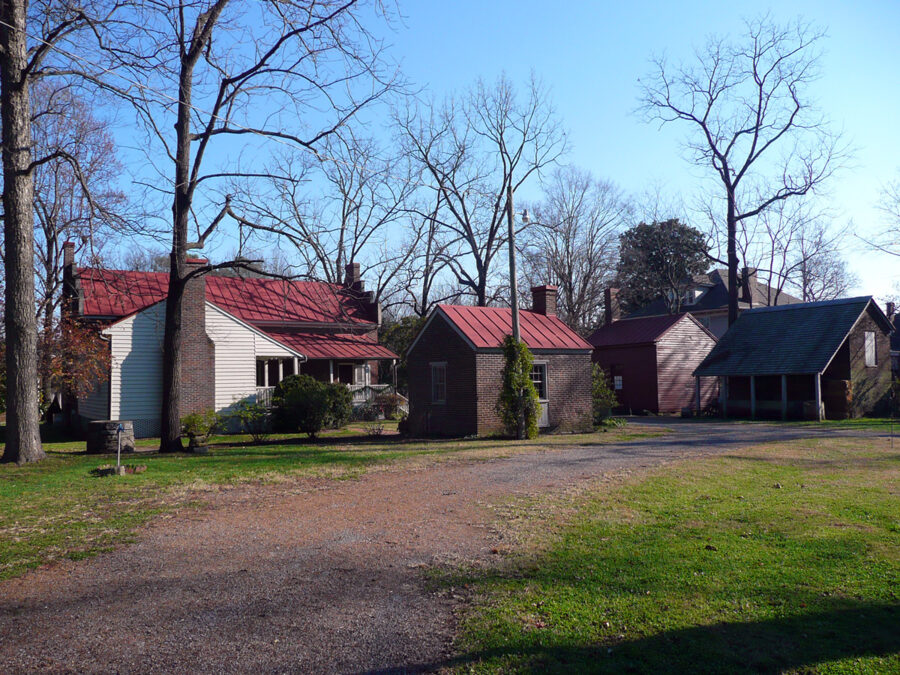
A short walk south, a one-acre city memorial park at 1259 Columbia Pike faces the spot where the Carter cotton gin stood and the fighting was worst. There is nothing left of the gin, just markers and a sense of how short the distance was between the two lines. It takes ten minutes and costs nothing.
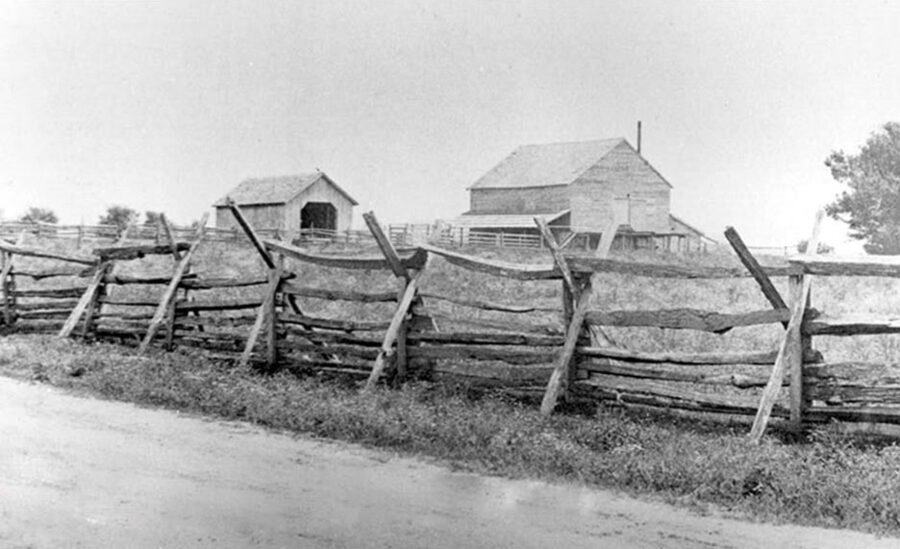
Carnton
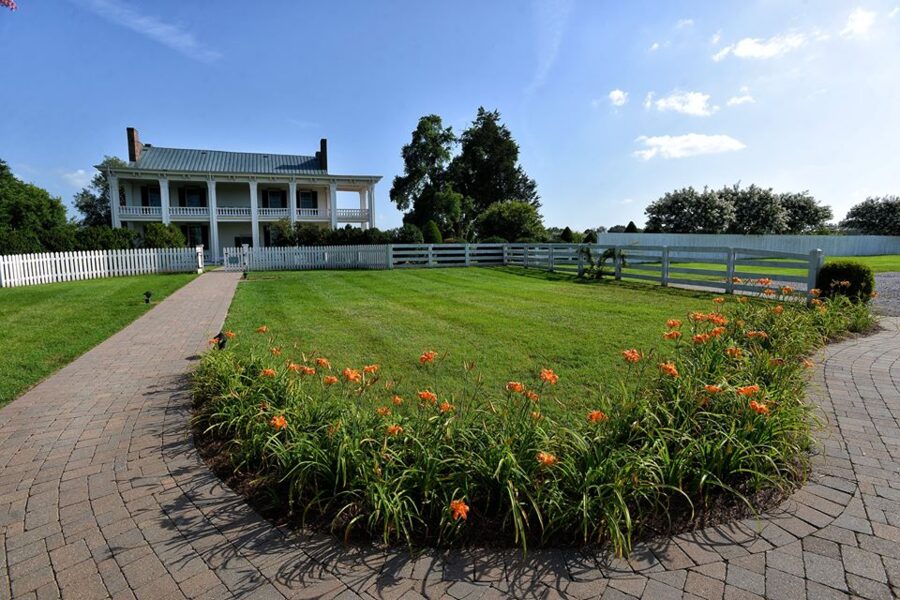
Carnton (1345 Eastern Flank Circle), about 1.5 miles southeast of downtown, is the house built in 1826 by Randal McGavock, a former mayor of Nashville. On the night of the battle his son John and daughter-in-law Carrie turned it into the largest field hospital in Franklin, and the bodies of four Confederate generals, Patrick Cleburne, Hiram Granbury, John Adams and Otho Strahl, were laid on its back porch. The bloodstains on the upstairs floors are still there.

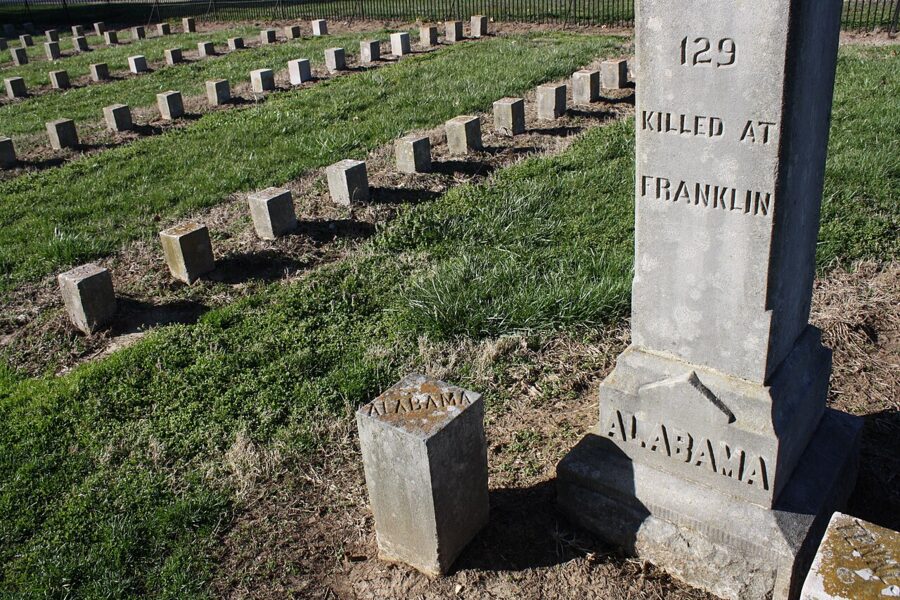
Behind the house is the McGavock Confederate Cemetery, where the family reburied nearly 1,500 Confederate soldiers in 1866, grouped by state. It is the largest privately owned military cemetery in the country, and the setting of Robert Hicks’s novel The Widow of the South, about Carrie McGavock. The cemetery is free to walk.

Carnton’s tours and prices match Carter House: $22 and $14 for the Classic House Tour, $29 for the 90-minute tours. The Carnton Battlefield Tour walks the Eastern Flank at 2pm on Monday, Tuesday, Wednesday, Thursday and Saturday, and the Behind the Scenes Tour (rooms the standard tour skips) runs at 10am Monday to Friday. Next door, Eastern Flank Battlefield Park (1368 Eastern Flank Circle) is open dawn to dark for free walking. It was a golf course until the city and preservation groups bought it back, and the city calls it the largest battlefield reclamation in the country.
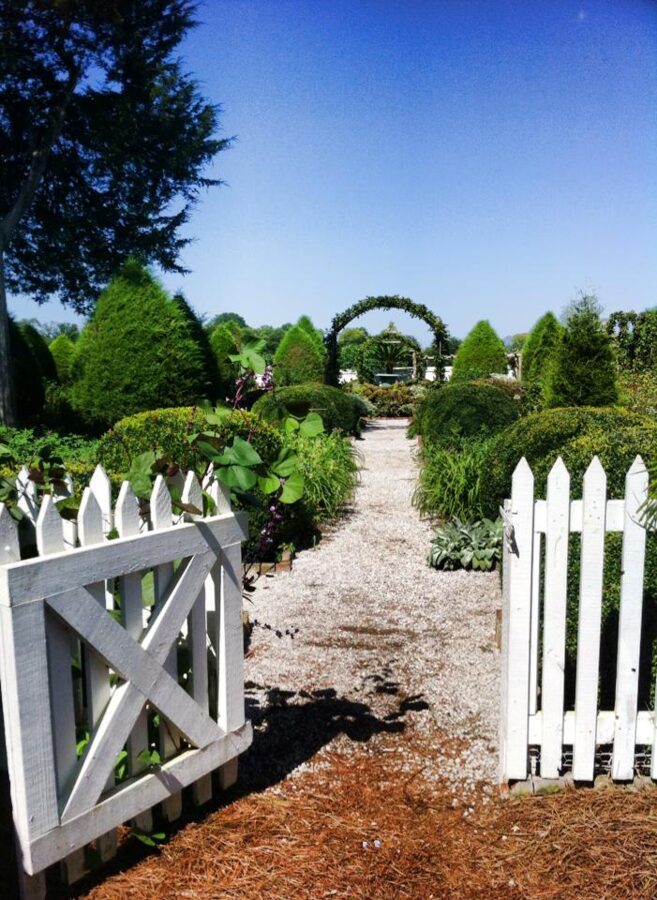

Tickets for both houses
If you are seeing Carter House and Carnton, buy the online-only combination ticket from the Battle of Franklin Trust, which costs less than two single tours. The Tennessee Campaign Ticket ($40 as of November 2026) adds Rippa Villa in Spring Hill, 12 miles south, where Hood and his generals met over breakfast on the morning of the battle, after the Union army had slipped past them in the night. Around the anniversary, on November 29 and 30, the Trust runs one-hour evening tours at $30 a person, limited to 20 people each, so book ahead.
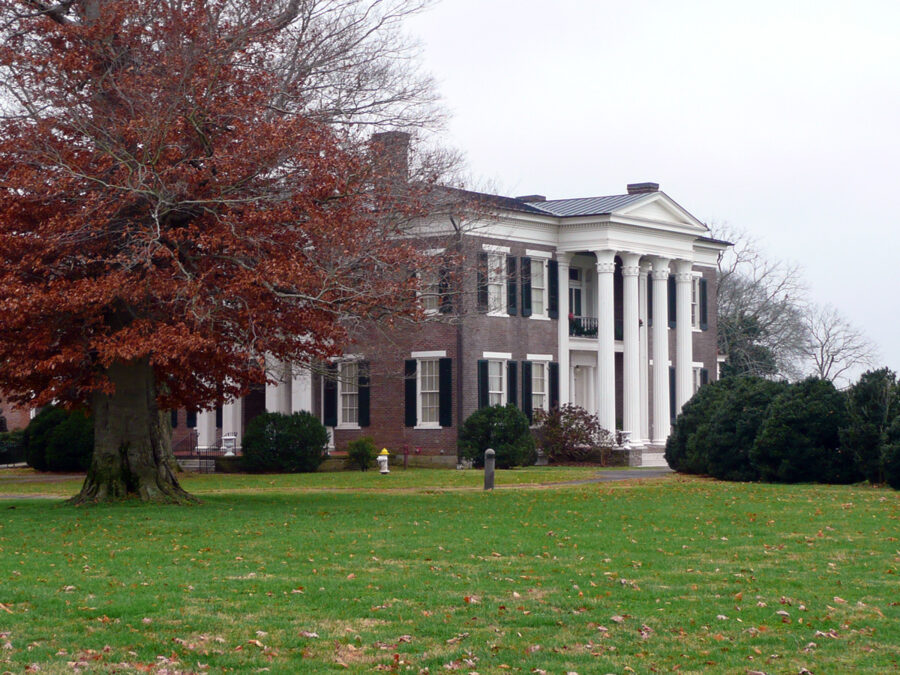
The Lotz House
The Lotz House (1111 Columbia Avenue) faces Carter House across the street. Johann Albert Lotz, a German-born carpenter and piano maker, finished it around 1858 as a showcase for his woodwork, and during the battle his family ran across the road to shelter in the Carters’ cellar. Cannon damage and bloodstains from its time as a hospital are still visible.
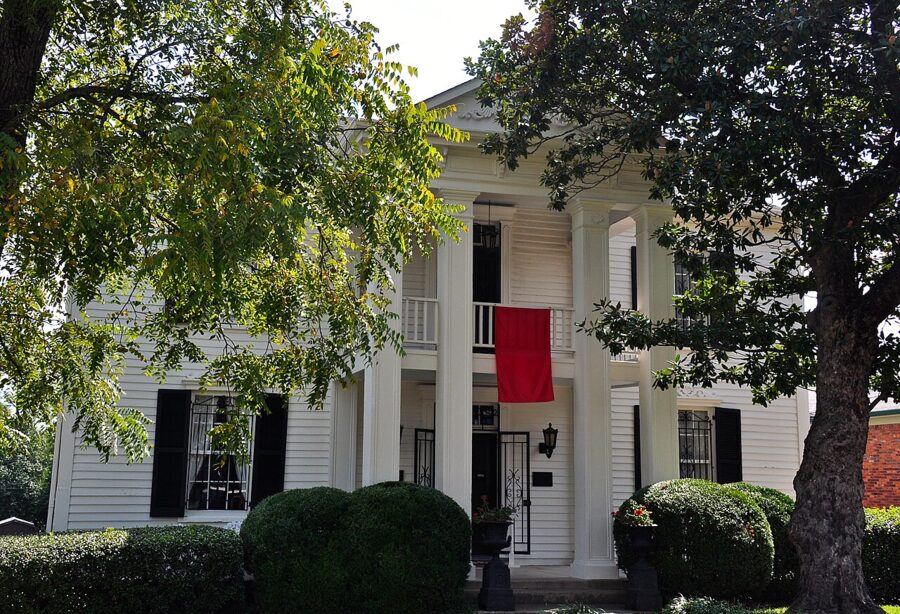

It is open 9am to 5pm Monday to Saturday and 11am to 4pm Sunday. The site lists its specialty tours with prices (the 90-minute Ghost Tour is $30 for adults and $12 for children, on autumn Saturday evenings; the Walking Battlefield Tour is $25), but the standard house tour price was not posted as of November 2026, so confirm it when you book.
Fort Granger, Winstead Hill and the free battlefield parks
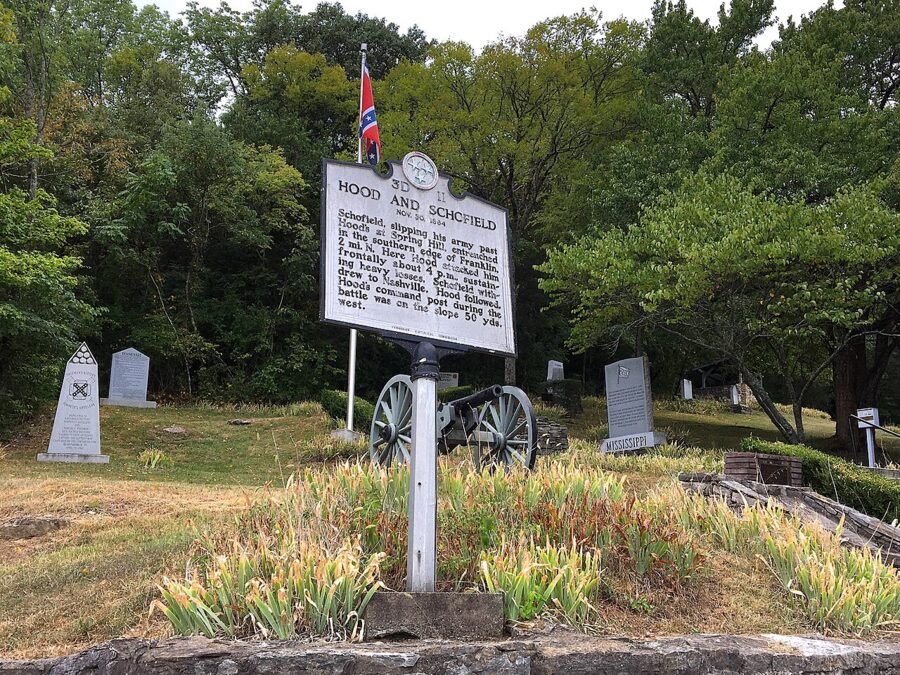
The city owns six historic parks, all free and open daily from dawn to dark. Two are worth the drive. Fort Granger (105 Fort Granger Drive) was the Union command post above the Harpeth River, and its earthworks are still there; you can reach it on a steep trail up from Pinkerton Park or park off Eddy Lane.
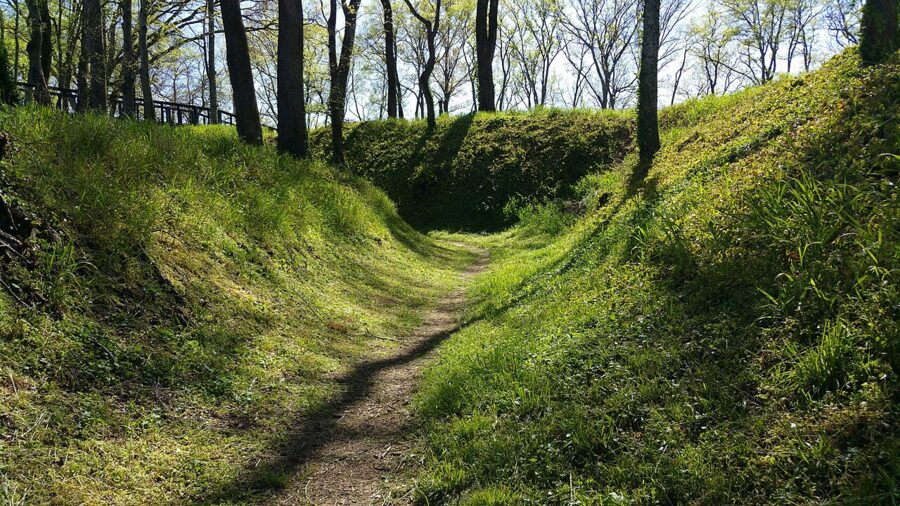

Winstead Hill (4023 Columbia Pike), two miles south of town, was Hood’s command post. From the overlook you look north over the ground the Confederate brigades crossed in formation, now mostly roads and rooftops, and the distance makes the plan’s odds plain. Go at the start of the day, before the battlefield tours, and the houses make more sense afterward.

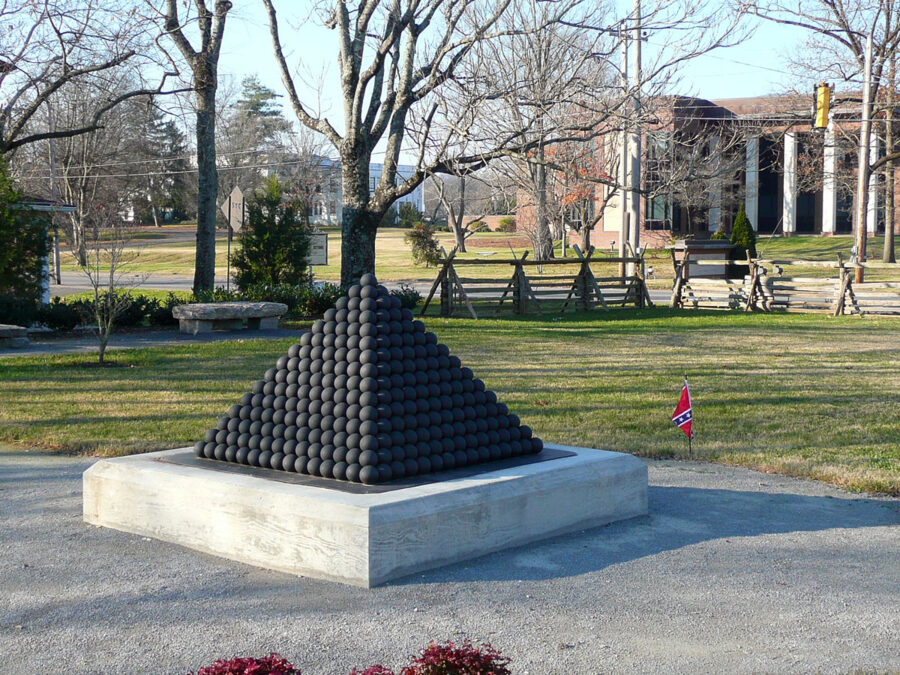
Close to the Carter House, a small pyramid of cannonballs marks where General Patrick Cleburne fell. Carter Hill Park is newer reclaimed ground near the house, and Collins Farm (418 Lewisburg Pike) preserves the house of Carnton’s wartime farm manager.
The Fuller Story and the McLemore House
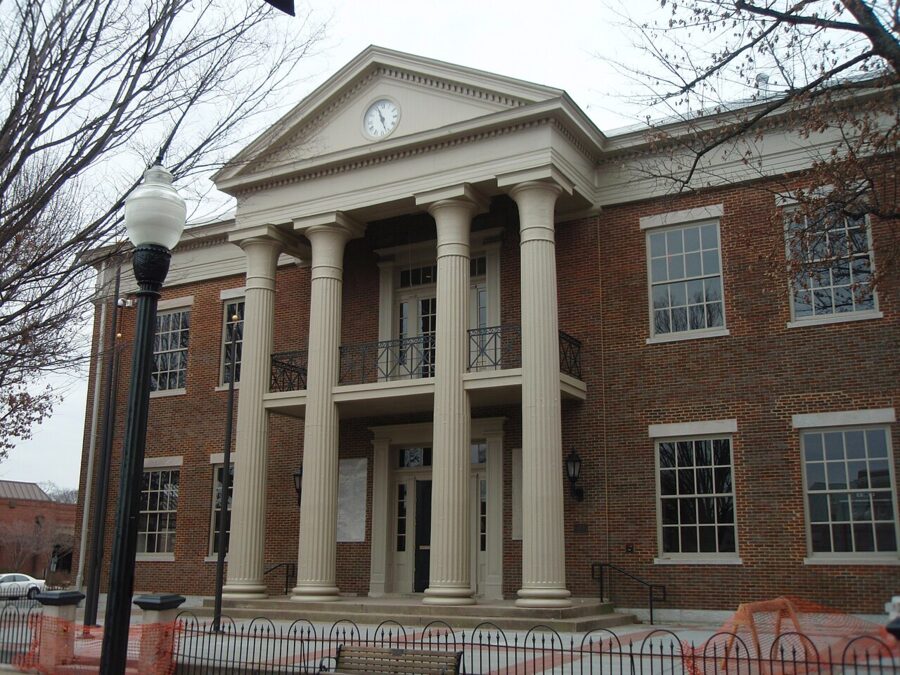
Around the Confederate monument on the Public Square, five historical markers put up in 2019 tell what the monument leaves out: the square’s slave market, the 1867 race riot, and the formerly enslaved men who enlisted in the US Colored Troops at the courthouse. The March to Freedom statue of a USCT soldier joined them in 2021.
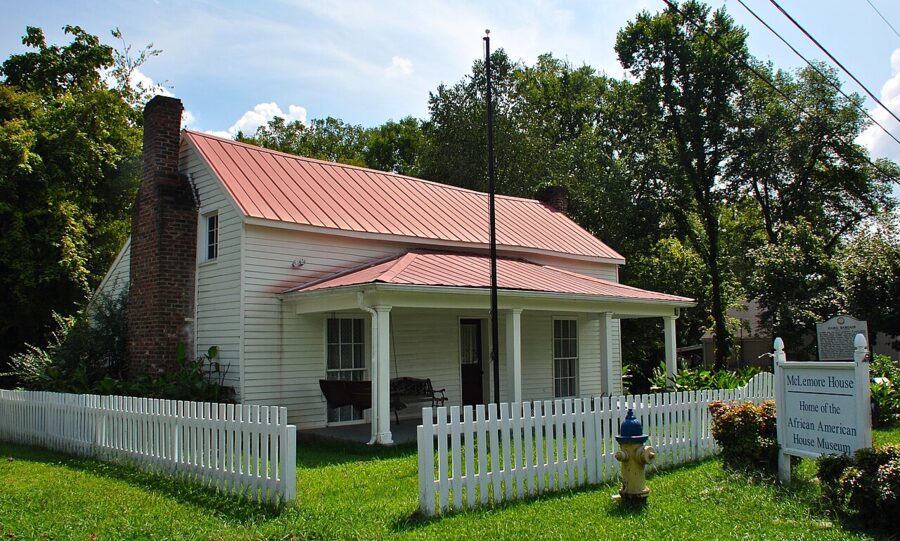
A few blocks west, in the Hard Bargain neighborhood, the McLemore House (446 11th Avenue North) was built in 1880 by Harvey McLemore, who was born enslaved and became a landowner after the war. It is now a museum of African American life in Williamson County. Tours run on limited days and the posted schedules disagree, so contact the house or the Battle of Franklin Trust before you go.

Main Street and downtown
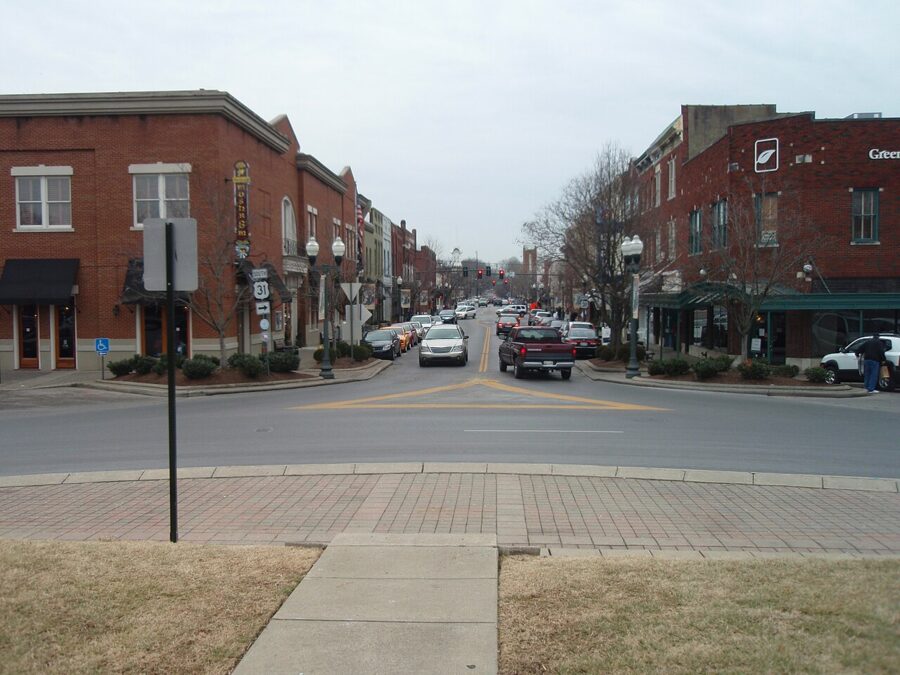
The Franklin Historic District covers 16 blocks around Main Street and the Public Square, and almost every building facing the street is from the 1800s or early 1900s. Start at the square, walk east along Main Street to the river bridge at the bottom, and come back on the other side. The loop is under a mile: an hour with a few shops, two with a bookstore.

The stops worth making:
- The Franklin Theatre (419 Main Street). The 1937 movie house closed in 2007 and reopened in 2011 after a restoration by the Heritage Foundation of Williamson County. It is a 300-seat venue for concerts, songwriter nights, theater and classic films; the box office is open 11am to 5pm daily.
- Landmark Booksellers (114 East Main Street). A long-running independent bookshop with a deep Southern and Civil War section, signed editions and author events. Open daily, 9am to 7pm.
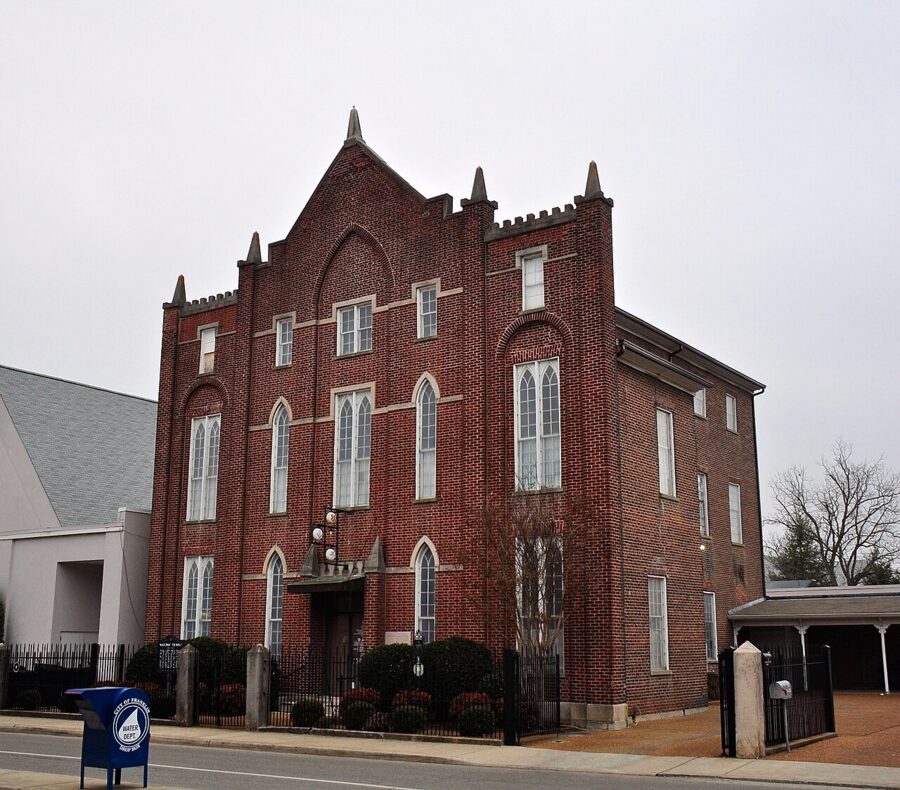
- The Masonic Hall (Second Avenue South). Built in 1823 for Hiram Lodge No. 7, this Gothic Revival building is where Andrew Jackson met Chickasaw leaders in 1830 to negotiate their removal west. You can only see the outside.
- Gray’s on Main (332 Main Street). A restaurant and music room in an 1876 building that housed Gray’s pharmacy for decades; the neon sign is the photo everyone takes.

On the first Friday of each month, the Franklin Art Crawl opens galleries and shops downtown and at The Factory from 6pm to 9pm, with a Franklin Transit route linking them. The Visit Franklin visitor center is at 400 Main Street, Suite 130, and can tell you what is on that week.
The Factory at Franklin
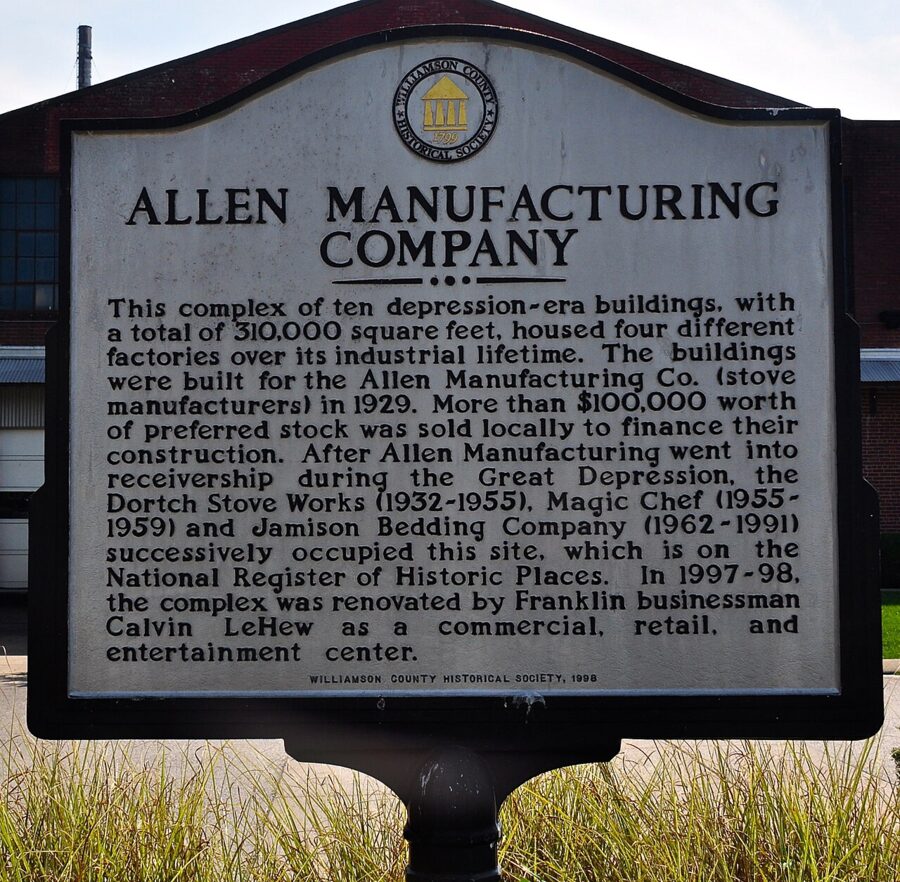
The Factory (230 Franklin Road) is a group of brick buildings put up in 1929 for the Allen Manufacturing Company’s stove works, later Dortch Stove Works. It is now shops, restaurants, studios and performance spaces, with common areas open daily from 7am to 10pm. Allow an hour, more if a show is on.

Three things to look for:
- The Carousel of Dreams. Ken Means, a former set designer, spent about 30 years hand-carving its 32 animals; it opened at The Factory on May 31, 2025. Rides were $5 at the 2025 opening events; check the current price on site.
- Studio Tenn. A professional theater company that stages musicals and plays at The Factory; check its season for what is on.
- The Factory Farmers Market. Saturdays, 9am to 1pm, year-round, outdoors under the water tower.
Don’t confuse that market with the Franklin Farmers Market, which ran at The Factory for more than 20 years. Since January 3, 2026 it has been at 120 Aldersgate Way, on the Franklin First United Methodist Church campus, on Saturdays from 8am to noon year-round, with far more parking. Go early in summer, before the heat.
Parks, trails and the Harpeth River
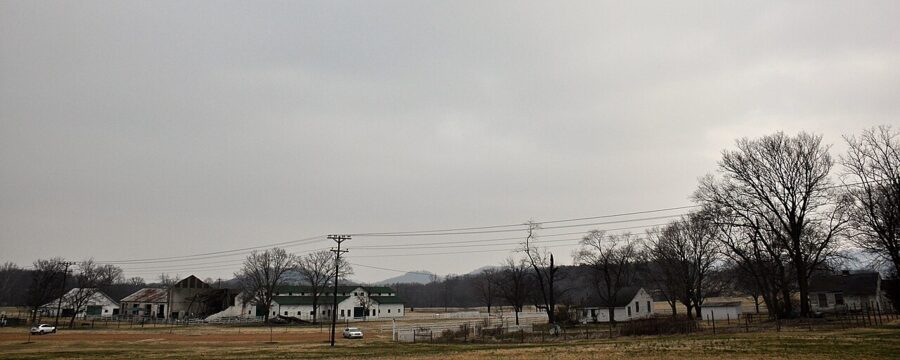
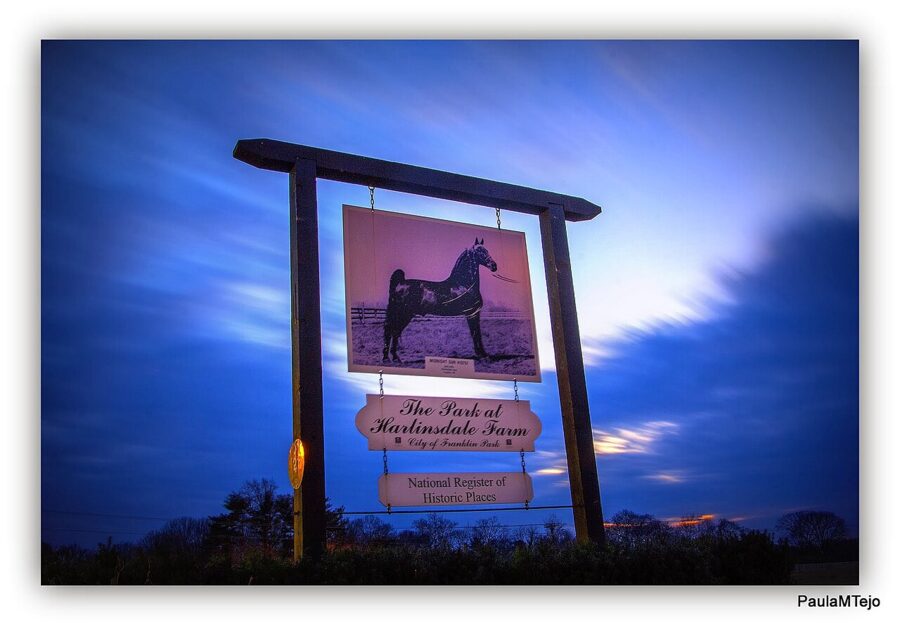
The Park at Harlinsdale Farm (239 Franklin Road), across the road from The Factory, is about 200 acres of former horse farm. It is credited as the birthplace of the Tennessee Walking Horse industry; the champion stallion Midnight Sun stood at stud here for 25 years. There’s a dog park, soft walking trails and catch-and-release fishing in the pond; the park is open daily, dawn to dusk, with free parking.

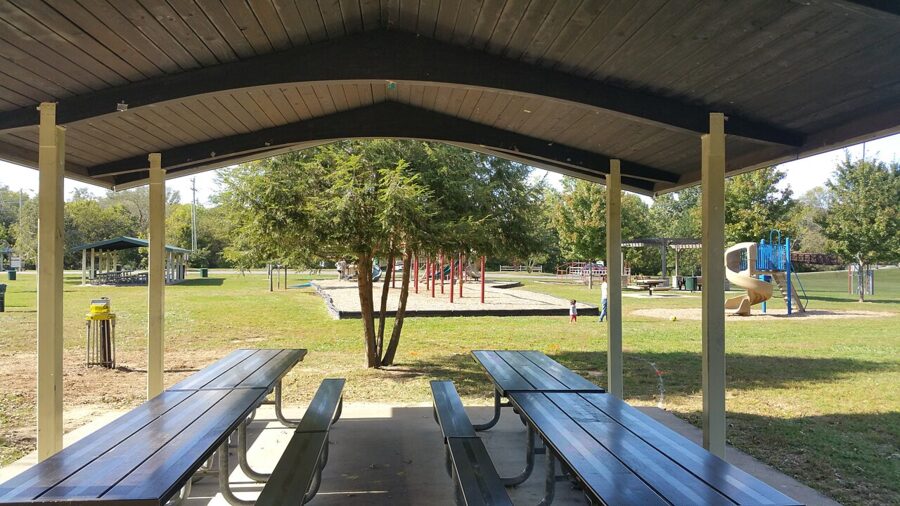
Pinkerton Park, just across the Harpeth River east of downtown, is the easy one: 34 acres with a lighted, paved one-mile loop, a playground and picnic shelters by the river. The trail uphill to Fort Granger starts here. If you have children with you, this is where they burn off a morning of house tours.

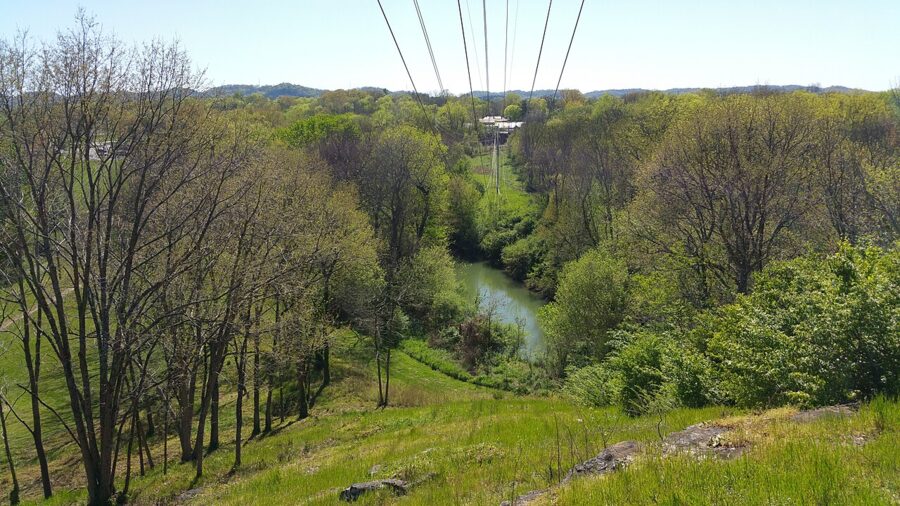

For a longer walk, Timberland Park sits just off the Natchez Trace Parkway at milepost 437.2, south of the Highway 96 entrance. The Williamson County park has an interpretive center, several loop trails through hardwood forest and an accessible overlook trail; it is free and open 8am to 6pm daily, and it closes in ice, snow and heavy rain.
Day trips: the Natchez Trace, Leiper’s Fork and Arrington
Natchez Trace Parkway and the Double Arch Bridge
The Natchez Trace Parkway runs 444 miles from Natchez, Mississippi, to its northern end southwest of Nashville, a few miles from Franklin, with no trucks, no billboards and a 50 mph limit. Its best-known structure is the Double Arch Bridge at milepost 438, opened in 1994: 1,572 feet long and about 155 feet above Birdsong Hollow and Highway 96.
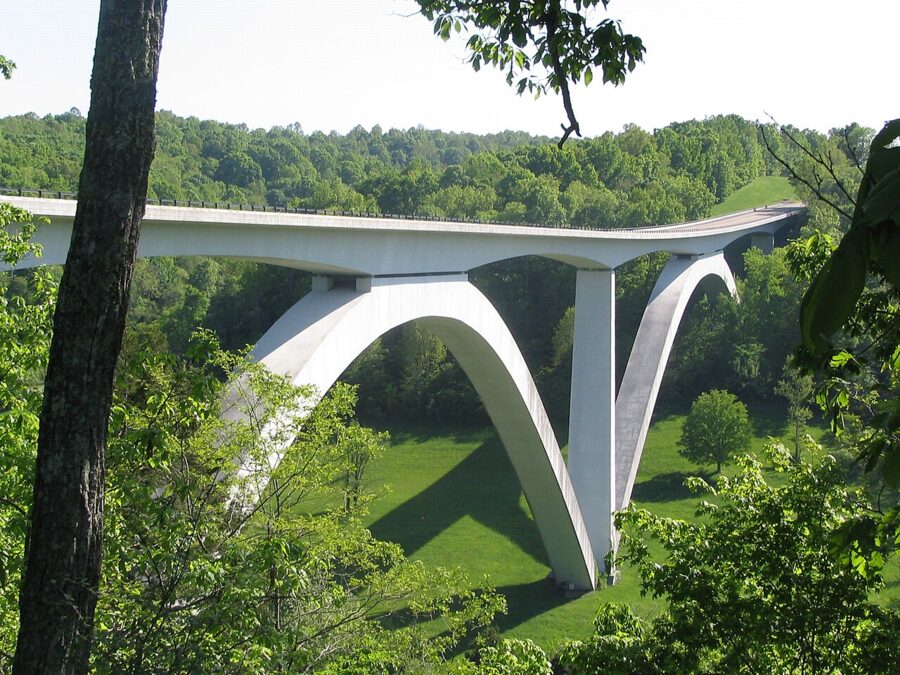

Check before you go: the National Park Service closed the bridge to cars, cyclists and pedestrians on April 15, 2026, to install a permanent safety barrier, and the parkway itself is closed between the Highway 96 off-ramp (milepost 437) and Big Tree Overlook (milepost 440) until spring 2027. A 7.5-mile detour is posted. The rest of the parkway south of Highway 96 is open, Timberland Park included.
Leiper’s Fork
Leiper’s Fork, about 20 minutes southwest of downtown, is a village of one main road, galleries and old frame houses. Fox & Locke, the old general store and restaurant that used to be Puckett’s of Leiper’s Fork, is the anchor: as of November 2026 it opens Wednesday to Sunday (11am to 9pm Wednesday, 11am to 9:30pm Thursday, 8am to 10pm Friday and Saturday, 8am to 7pm Sunday) and closes Monday and Tuesday. Its Thursday open mic is the night to go; arrive early for a table.
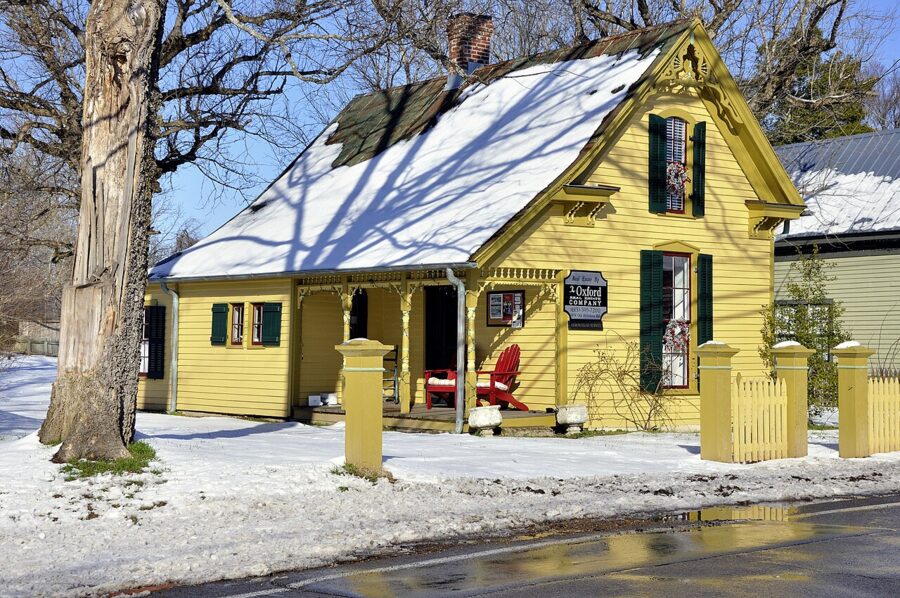

Leiper’s Fork Distillery, at its site in Leiper’s Fork, does tastings and tours from 10:30am Wednesday to Sunday (until 5pm Wednesday and Thursday, 6pm Friday to Sunday). Pair it with the Natchez Trace, whose northern section runs past the village, and you have an easy half day.
Arrington Vineyards
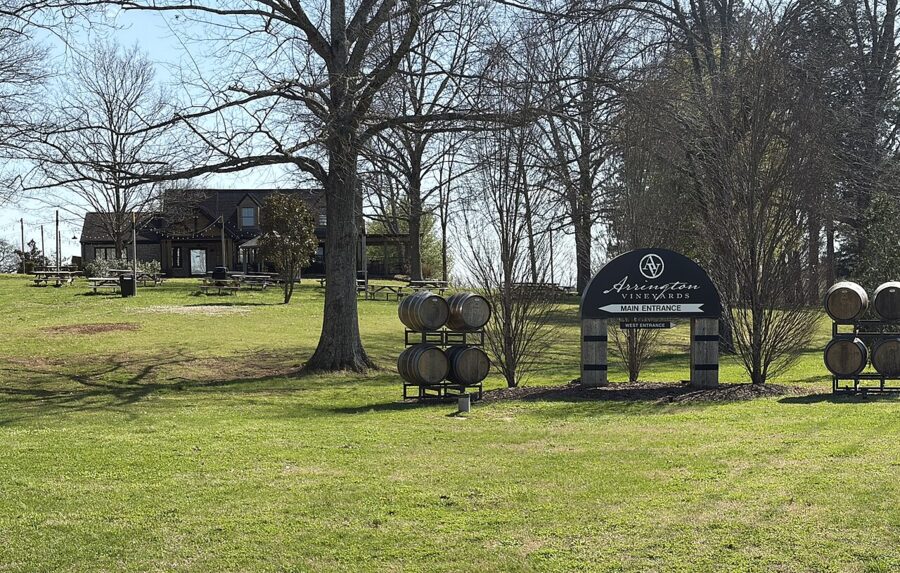
Arrington Vineyards, co-owned by country singer Kix Brooks, is about 25 minutes east of Franklin on 95 acres of hills, 16 of them planted with vines. As of November 2026 it opens 11am to 8pm Monday to Saturday and noon to 6pm Sunday (hours change seasonally), with live music on weekends from April through November and shaded picnic areas. Book a tasting ahead on fall weekends.

Festivals and events, month by month
The big festivals close Main Street to cars, which is great if you came for the festival and frustrating if you came for a quiet look at the houses. The dates below follow the city’s own pattern for each event; organizers post exact dates each year.
| When | Event | Where |
|---|---|---|
| Every month, first Friday, 6pm to 9pm | Franklin Art Crawl | Downtown galleries and The Factory |
| March | Kids Arts Festival | Bicentennial Park |
| April, fourth full weekend | Main Street Festival: 150-plus arts and crafts vendors, food and music | Downtown |
| April 10 and 11, 2027 | Pilgrimage Music and Cultural Festival, back after skipping 2026 and moved from September to spring | The Park at Harlinsdale Farm |
| Mid-May | Franklin Rodeo, three nights | Williamson County Ag Expo Park |
| July 4 | Franklin on the Fourth, with fireworks at Harlinsdale around 9pm | Downtown and Harlinsdale |
| July, fourth weekend | Bluegrass Along the Harpeth: bluegrass, fiddling and buck dancing | Downtown |
| Early to mid-August | Williamson County Fair, nine days | Williamson County Ag Expo Park |
| October, weekend before Halloween | Pumpkinfest | Downtown |
| November, first Saturday | Wine Down Main Street and Family Day at Harlinsdale | Downtown and Harlinsdale |
| November 29 and 30 | Battle anniversary evening tours | Rippa Villa, Carter House, Carnton |
| December, first Friday and Saturday | Christmas tree lighting, then the Christmas parade | Public Square and downtown |
| December, second weekend | Dickens of a Christmas | Downtown |


Pilgrimage is the one to plan around. It returns on April 10 and 11, 2027, with Post Malone and Megan Moroney announced as headliners in November 2026, and hotels in Franklin and Cool Springs fill months ahead. Dickens of a Christmas, with carolers and characters in Victorian dress on Main Street, is the other weekend when downtown rooms go early.


Where to eat and drink
Downtown is the place to eat, and the list below is short on purpose. Every place on it was open as of November 2026.
Breakfast and coffee
- Merridee’s Breadbasket (110 Fourth Avenue South). A bakery and breakfast spot a block off Main, with pastries, breakfast braids and sandwiches. Open 7am to 5pm Monday to Thursday and 7am to 6pm Friday and Saturday; closed Sunday.
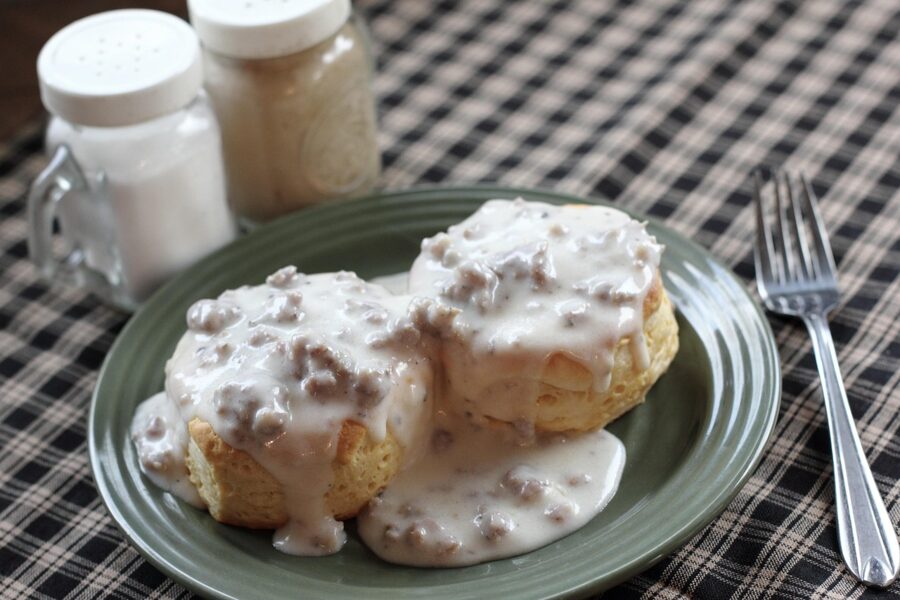
- Biscuit Love (3100 Village Plains Boulevard, Berry Farms). The Nashville biscuit chain’s Franklin branch is now in Berry Farms, about 10 minutes south of downtown, not on Main Street. Open daily 7am to 3pm; expect a line on weekends.
- Frothy Monkey (125 Fifth Avenue South). The Nashville coffeehouse’s downtown Franklin branch, a block off Main, with a full breakfast and lunch menu.
Lunch and casual dinners
- Puckett’s Franklin (downtown, off Main Street). Southern plates, burgers and barbecue, with live acoustic music most evenings; check the calendar on its site.
- McCreary’s Irish Pub (414 Main Street). Fish and chips, pot pies and a pint on Main, open from 11am on weekdays.
A special dinner
- Red Pony (408 Main Street). Chef Jason McConnell’s upscale Southern restaurant has been on Main since 2006. Book ahead for Friday and Saturday.
- January (Southall Farm and Inn). The restaurant at Southall, south of downtown, received a Michelin Green Star for sustainable cooking in the first Michelin Guide to the American South in November 2025; its kitchen cooks largely from the farm’s own gardens. It is a reservation-and-drive dinner, not a walk-in.
Drinks and live music
- Gray’s on Main (332 Main Street). Cocktails and Southern plates downstairs, a music room upstairs; closed Mondays.
- Kimbro’s Pickin’ Parlor (214 South Margin Street). A small bar in an old house a few blocks from Main, with live music most nights and jam sessions that drift onto the porch. Card is fine; seating isn’t guaranteed.
- Leiper’s Fork Distillery House of Spirits (334 Main Street). The distillery’s downtown tasting room, open 3pm to 9pm Monday to Wednesday, noon to 9pm Thursday and Sunday, and 11am to 11pm Friday and Saturday as of November 2026.


When to go and how long to stay
April to early June and mid-September to early November are the best months. Spring brings the Main Street Festival and green battlefields; fall brings cooler days, color in the trees along the Harpeth and the battle anniversary on November 30. Summer is hot and humid, with Middle Tennessee highs around 90°F in July and frequent afternoon storms, and the house tours are indoors but the battlefields are not.
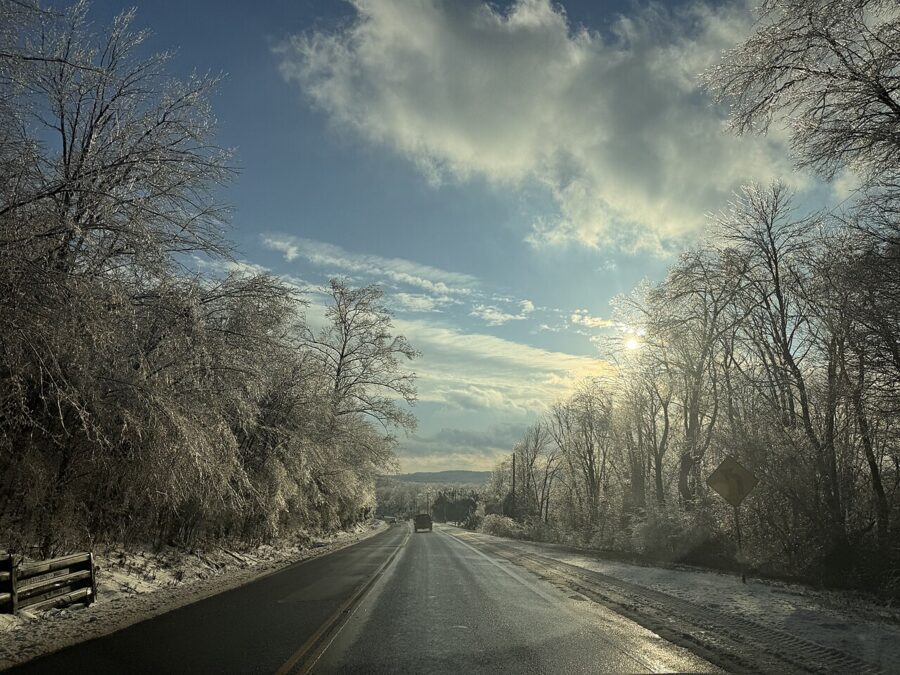
Winter is the quiet season. January highs are around 50°F, ice storms happen (a bad one hit in late January 2026), and the tour sites keep their hours except on the holidays above. December is the exception: the tree lighting, parade and Dickens of a Christmas make the first two weekends busy.

Weekdays beat weekends: downtown parking and restaurant waits are worse from Friday afternoon through Sunday. Two days covers Franklin well; a third lets you add the Natchez Trace, Leiper’s Fork and Arrington without rushing.
One day in Franklin
- 8:30am. Breakfast at Merridee’s, then drive to Winstead Hill for the overview of the battlefield.
- 9:30am. Carter House Classic House Tour, then walk across to the Lotz House or the cotton gin park.
- Noon. Lunch downtown and the Fuller Story markers on the Public Square.
- 1:30pm. Carnton tour and the McGavock Confederate Cemetery, then a walk around Eastern Flank Battlefield Park.
- 4pm. Main Street on foot: Landmark Booksellers, the Masonic Hall, the river.
- Evening. Dinner at Red Pony, then music at Gray’s on Main or Kimbro’s.
A second day
- Morning. Saturday farmers market (Aldersgate Way or The Factory), or Pinkerton Park and the climb to Fort Granger on a weekday.
- Late morning. The Factory and the Carousel of Dreams, then a walk at Harlinsdale across the road.
- Afternoon. Drive to Leiper’s Fork for galleries and the distillery, with a stop at Timberland Park on the Natchez Trace.
- Evening. Dinner at Fox & Locke (Thursday for the open mic), or head east to Arrington Vineyards before it closes.


Getting around and practical notes

Parking. As of November 2026, all public parking downtown is free. The two city garages, on Second Avenue South and Fourth Avenue South, have no time limit (head-in parking only), while street spaces are limited to two hours. The city began a downtown parking study in June 2026, so paid parking may come later; look at the signs.
Transit. Franklin Transit runs fixed bus routes about every 30 minutes for $1 per ride ($0.50 for seniors 65 and over), exact cash fare or a ticket; veterans and active military ride free. It is mostly useful for the free Hop and Shop Holiday Shuttle, which links The Factory and downtown on three Saturdays before Christmas (in 2026, November 28, December 5 and December 19, 10am to 6pm), and for the Art Crawl route.
Distances between the sites. From the Public Square it is half a mile to Carter House and the Lotz House, about 1.5 miles to Carnton, two miles to Winstead Hill and about a mile up Franklin Road to The Factory and Harlinsdale. Walking between Carter House and Carnton is possible but runs along busy roads; drive it.
Tickets. Book Battle of Franklin Trust tours online for fall weekends and the battle anniversary; walk-ins can wait up to 40 minutes.
Monday and Tuesday. The house tours run seven days, but Gray’s on Main, Fox & Locke and the Leiper’s Fork Distillery close on Monday, and the Leiper’s Fork pair on Tuesday too. If your trip starts early in the week, put Carter House, Carnton and the parks on those days and save Main Street dinners and Leiper’s Fork for Wednesday onward.