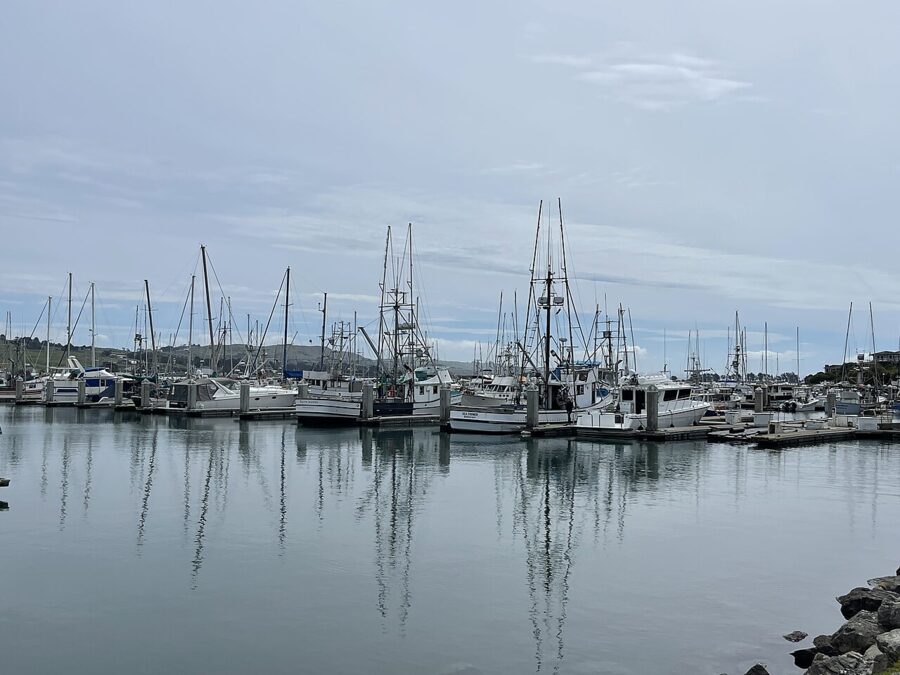
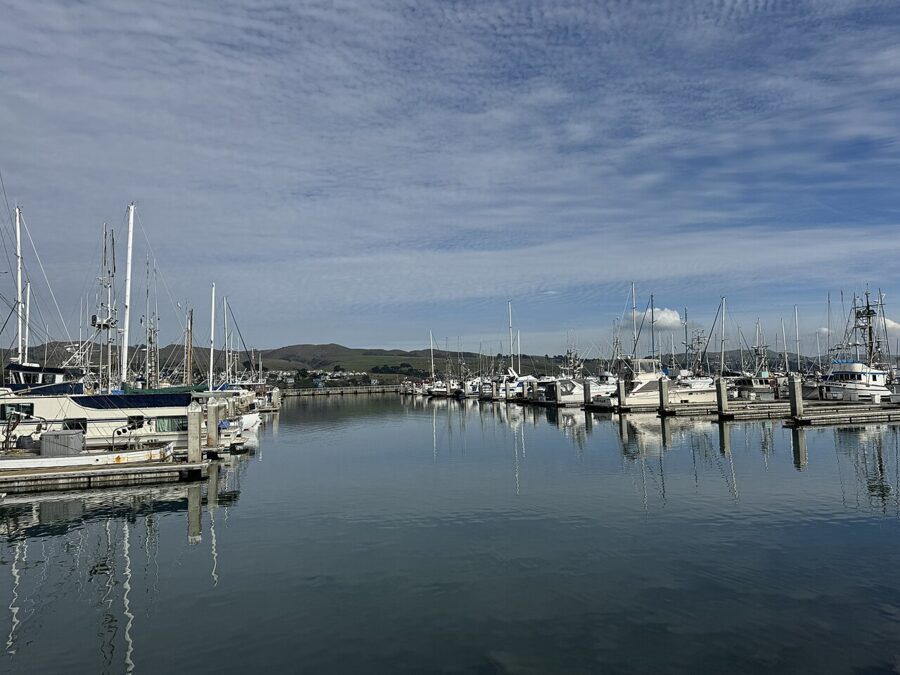
Bodega Bay is a small working harbor on Highway 1, about 65 miles north of San Francisco, and almost everything worth doing here happens outdoors. Walk the cliffs of Bodega Head, watch for gray whales between December and May, work your way up the Sonoma Coast beaches, and eat chowder or fish and chips within sight of the boats.
Add the Hitchcock sites from The Birds, most of them in the village of Bodega a few miles inland, and two days covers the town comfortably. A third lets you drive north to Jenner and Fort Ross. Hours, fees and seasons below are as of November 2026.

On this page
- Bodega Bay in brief
- Bodega Head
- Whale watching from Bodega Bay
- The Birds: Hitchcock's Bodega and Bodega Bay
- Sonoma Coast beaches
- Doran Beach and the harbor parks
- Fishing, crabbing and paddling
- Smaller things to do
- Festivals and events by month
- Where to eat and drink
- When to go and how long to stay
- Getting around and practical notes
Bodega Bay in brief
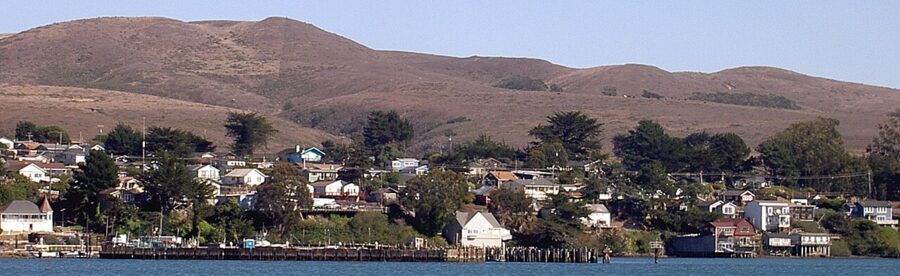
Bodega Bay sits on the Sonoma County coast where Highway 1 meets a sheltered harbor. It is a small place: the 2020 census counted 912 residents. There’s no downtown in the usual sense, just a strip of restaurants, motels, fish markets and taffy shops along the highway, with marinas on the water side and houses climbing the hills behind.
Don’t confuse it with Bodega, a separate village about six miles inland on Bodega Highway. Bodega has the church and schoolhouse from The Birds, a country store and not much else, and it makes a short detour on the way in or out.
Getting there
Most people drive. From San Francisco it is about 65 miles, usually an hour and a half to two hours over the Golden Gate Bridge and up US-101, then west through Petaluma and Valley Ford. From Santa Rosa it is roughly 25 miles and 40 minutes west through Sebastopol and Bodega. Sacramento is around two and a half to three hours away.
The closest airport is Charles M. Schulz Sonoma County Airport (STS) in Santa Rosa, about 45 minutes away. As of November 2026 it has nonstop flights on Alaska Airlines to West Coast cities including Seattle, Portland, Los Angeles, San Diego and Las Vegas, and Southwest Airlines started flying there in April 2026. San Francisco International (SFO) and Oakland (OAK) have far more flights but sit around two hours’ drive away, more in Friday traffic.
Without a car it is hard work. Mendocino Transit Authority’s Route 95 runs seven days a week between the south Mendocino coast and Santa Rosa by way of Bodega Bay, with a daily northbound pickup at the Sonoma County Airport at 3:45pm, and Golden Gate Transit’s Route 101 links San Francisco with Santa Rosa. Once there, though, the sights are spread out, and you’ll want a car.
Bodega Head
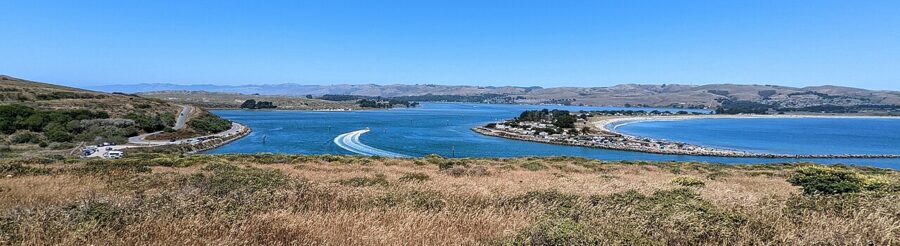
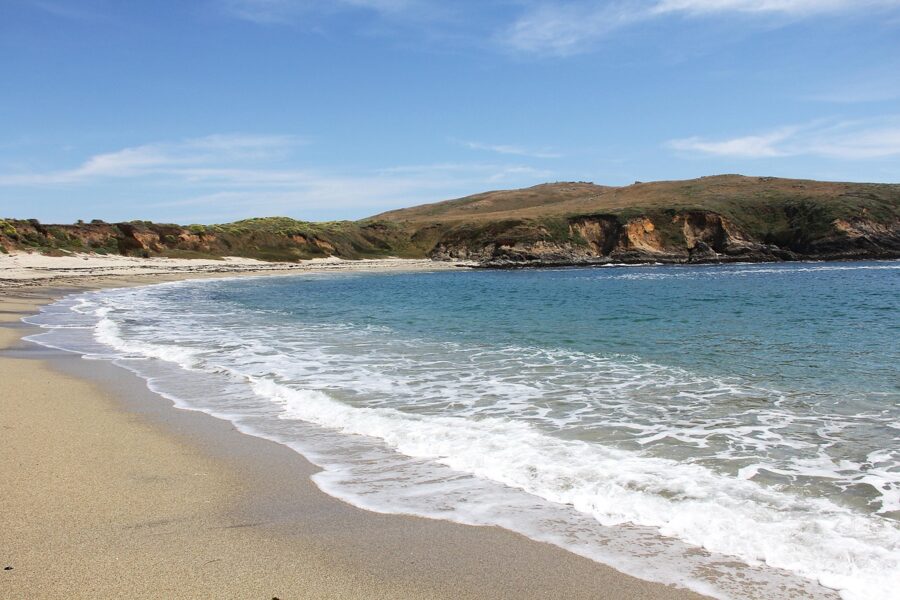
If you only do one thing, do this. Bodega Head is the granite headland that shelters the harbor, and it forms the south end of Sonoma Coast State Park. Drive out Westshore Road past the marinas to the parking areas at the end, where the land drops away to the Pacific on three sides.
The 1.89-mile Bodega Head Trail loops along the bluffs with views north up the coast toward Jenner and south across the bay to Point Reyes. It’s mostly easy walking on dirt paths, but the wind can be fierce and the cliff edges are unstable, so stay behind the fences. Allow one to two hours with stops.
The park’s day-use hours are 8am to sunset. As of the park’s June 2026 information sheet, the $10 day-use fee applies only at its campground parking areas, so parking at Bodega Head is free.
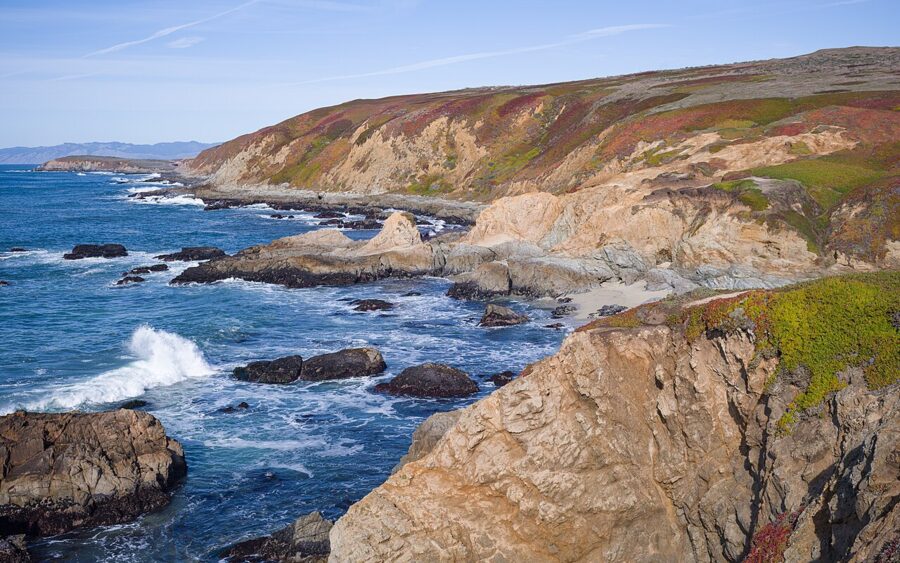

Bring a layer even in summer. The headland catches the full northwest wind, and fog can roll over it in minutes. Dogs must stay on a six-foot leash, and the state park doesn’t allow them on its trails.
The harbor side of the head is a different place. The jetty is popular for crabbing and fishing, and the water there is flat when the ocean side is white.

The Hole in the Head
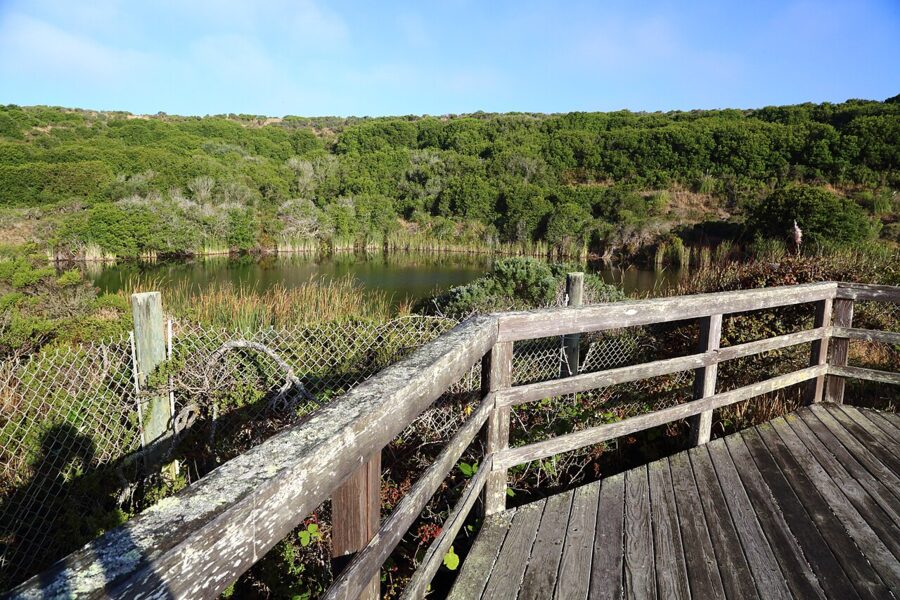
On the drive out you pass a reed-fringed pond in a deep depression. It is what’s left of the excavation Pacific Gas and Electric dug in the early 1960s for a nuclear power plant on the headland, close to the San Andreas Fault. Local opponents, among them landowner Rose Gaffney, fought the project, scientists raised concerns about the fault, and PG&E abandoned it in October 1964.
The flooded pit has been known as the Hole in the Head ever since. The fight is often counted among the first wins of the American anti-nuclear movement, and the land went on to become part of the state park and the University of California’s marine reserve.

Bodega Marine Laboratory
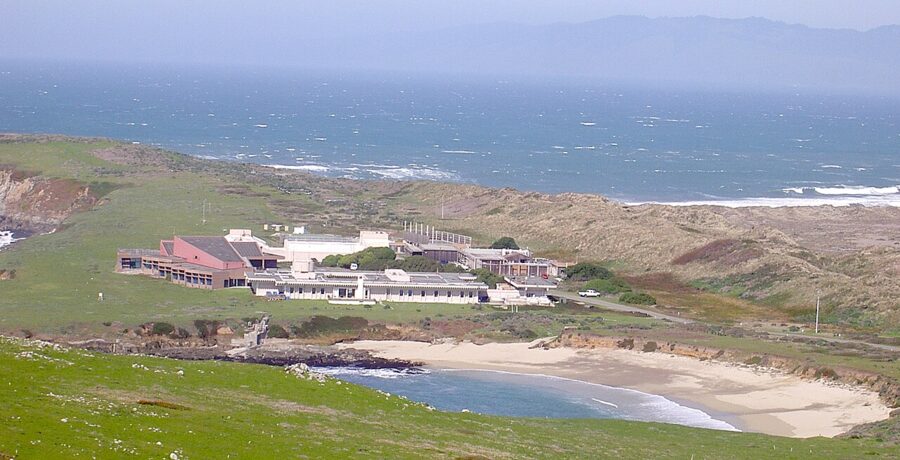
The low buildings above Horseshoe Cove belong to the UC Davis Bodega Marine Laboratory, a working research station at 2099 Westshore Road. It runs free, docent-led public tours on Friday afternoons at 2pm for individuals and groups of up to 10, booked ahead through its Eventbrite page. The lab’s calendar lists the 2026 tours running from June 5 through December 18. It has skipped holiday Fridays before, so check the booking page for the day after Thanksgiving.
It’s the best rainy-day option in town and good for older kids. Access to the reserve is restricted, so the tour is the way in.
Whale watching from Bodega Bay
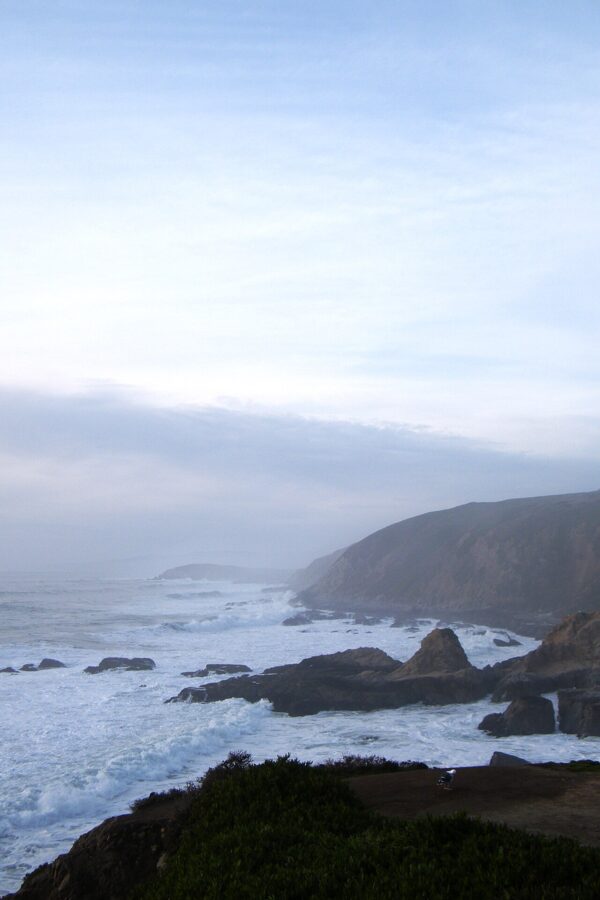
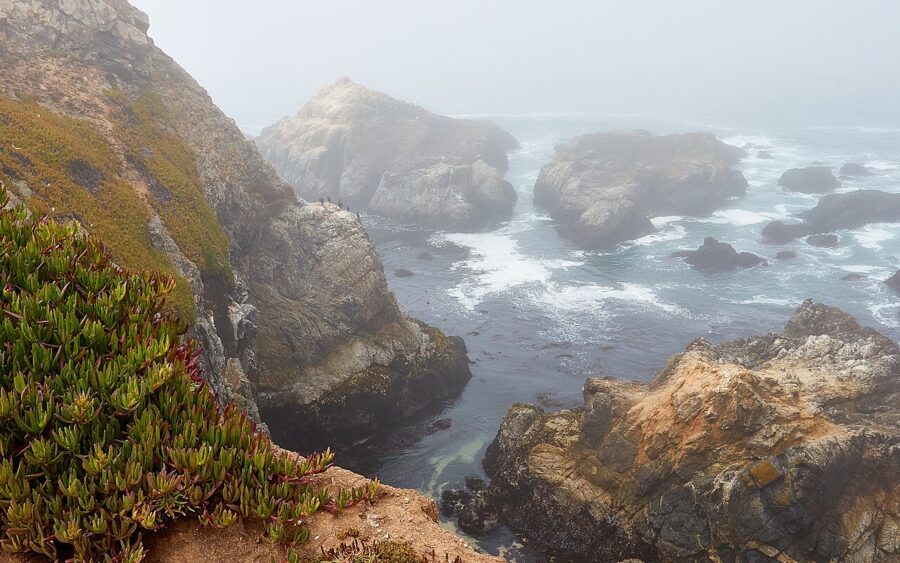
Gray whales pass Bodega Head twice a year on their migration between Alaska and Baja California. The southbound run is roughly December through February, and the northbound run roughly February through May, when mothers travel with newborn calves and often swim closer to shore. The headland’s high cliffs make it one of the better places on the California coast to see them from land.
From the bluffs you’re usually looking for spouts: a puff of vapor on the horizon, then another a minute or so later along the same line. A calm, overcast morning is easier than a bright windy afternoon, when whitecaps hide everything. Binoculars help a lot.
Volunteer docents from the nonprofit Stewards of the Coast and Redwoods have staffed a whale watch at Bodega Head on weekends during the season. Check their calendar for this winter’s dates.
Humpback whales feed off the Sonoma Coast in summer and fall, and that has a knock-on effect for anyone who likes crab. Humpback entanglements in fishing gear during 2026 led the state to restrict recreational crab traps and delay the commercial Dungeness season, which is covered below.
To get closer, charter companies in the harbor run whale-watching trips in season alongside their fishing trips. Schedules and prices change with the weather and the fishing, so book directly with an operator and ask how long the trip is and how far offshore it goes. The open Pacific is rough, so take seasickness precautions before you board, not after.
The Birds: Hitchcock’s Bodega and Bodega Bay
Alfred Hitchcock released The Birds in 1963, and the area has never quite let it go. The film blends two places into one fictional Bodega Bay, so the sites are split between the harbor and the village of Bodega, about six miles inland on Bodega Highway.
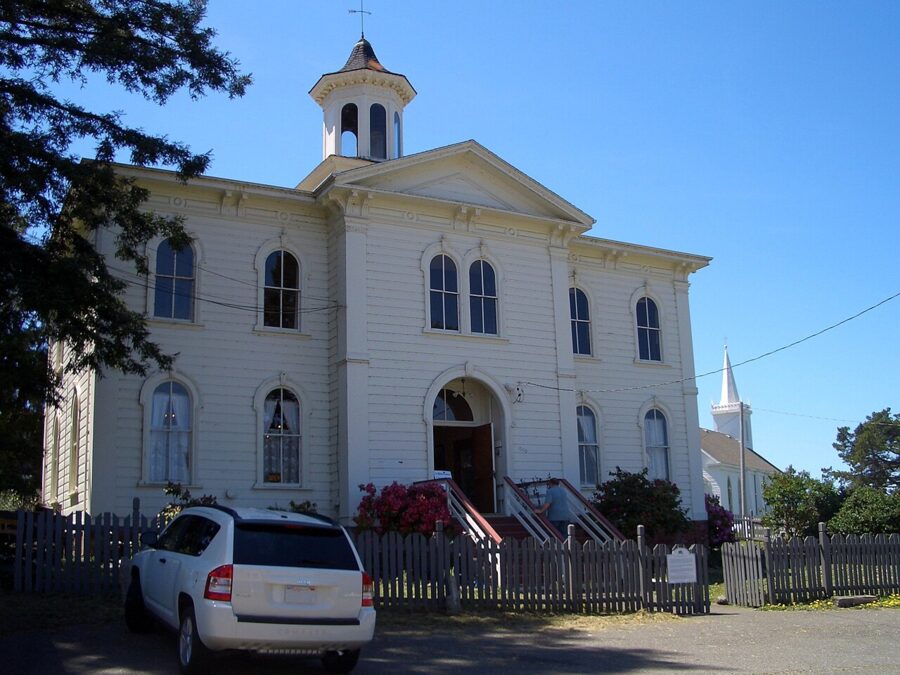
The Potter School in Bodega is the one people come for. Built in 1873 and now a Sonoma County historic landmark, it’s the film’s schoolhouse, and the scene where the children flee from the birds was shot outside it and the neighboring Druid’s Hall on Bodega Lane. It’s private property, so look and take photos from the road and don’t block driveways.

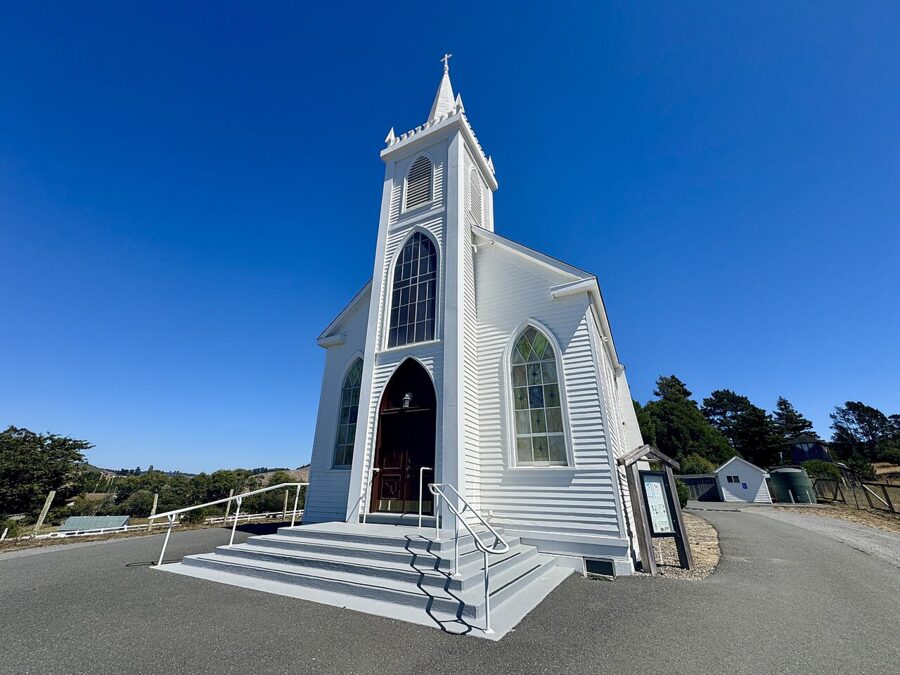
Up the hill behind it stands Saint Teresa of Avila Church, built of wood in 1859 by a shipwright with lumber donated by Jasper O’Farrell, the early San Francisco surveyor. It’s a California State Historical Landmark and still a working parish, so keep quiet if a service is on. It’s also the prettiest building in either town.
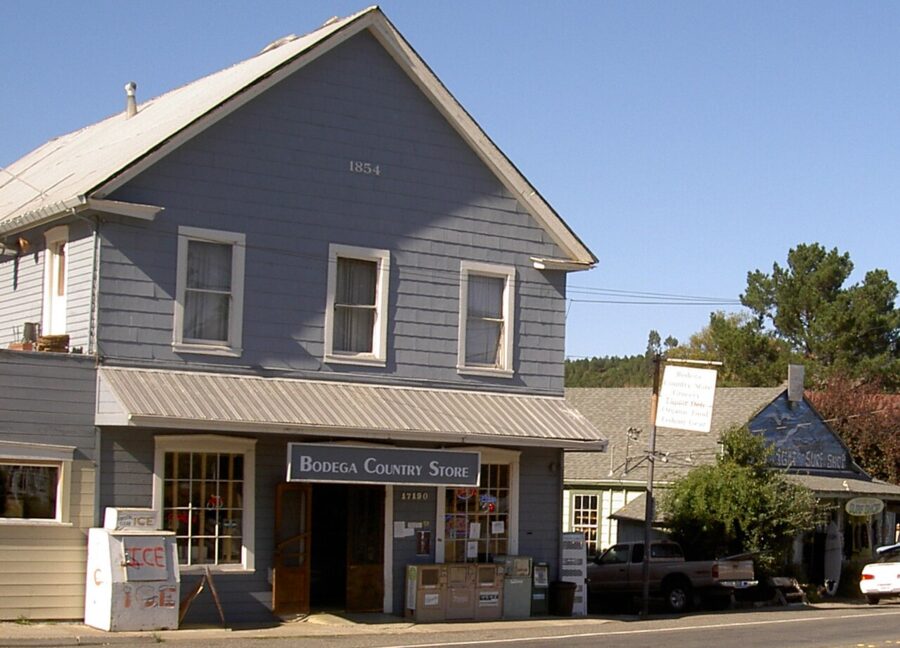
Down at the crossroads, the Bodega Country Store sells Birds memorabilia among the groceries and souvenirs. In Bodega Bay itself, the Tides Wharf on Highway 1 is where the film’s waterfront scenes were set.
If you’re a fan, time a visit for the Hitchcock Film Festival, a small fundraiser run by the local chamber of commerce at the Bodega Bay Grange Hall. Its 12th edition ran October 16 and 17, 2026, with screenings of The Birds, Rebecca and Rear Window. Recent editions have been in October, but check the chamber’s calendar for the 2027 date.
Sonoma Coast beaches
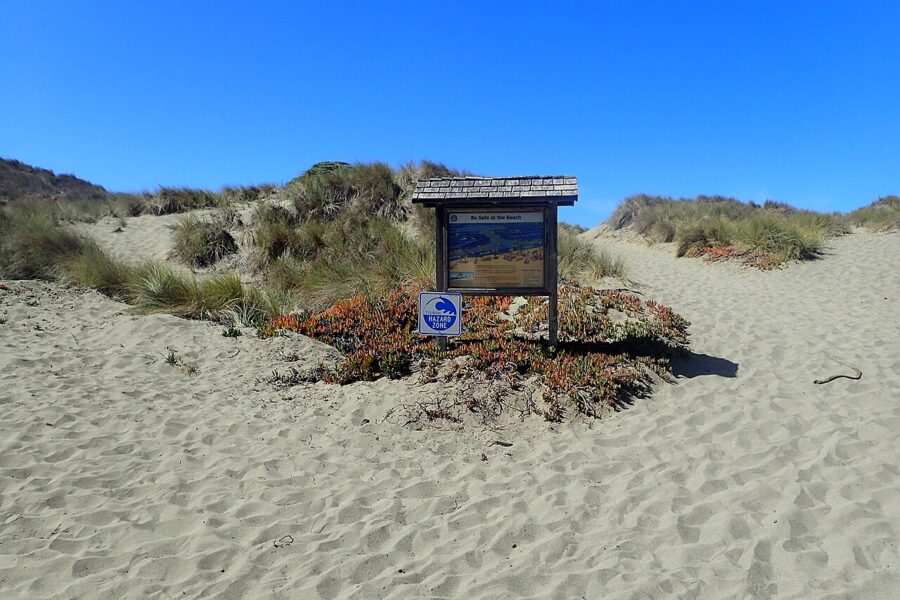
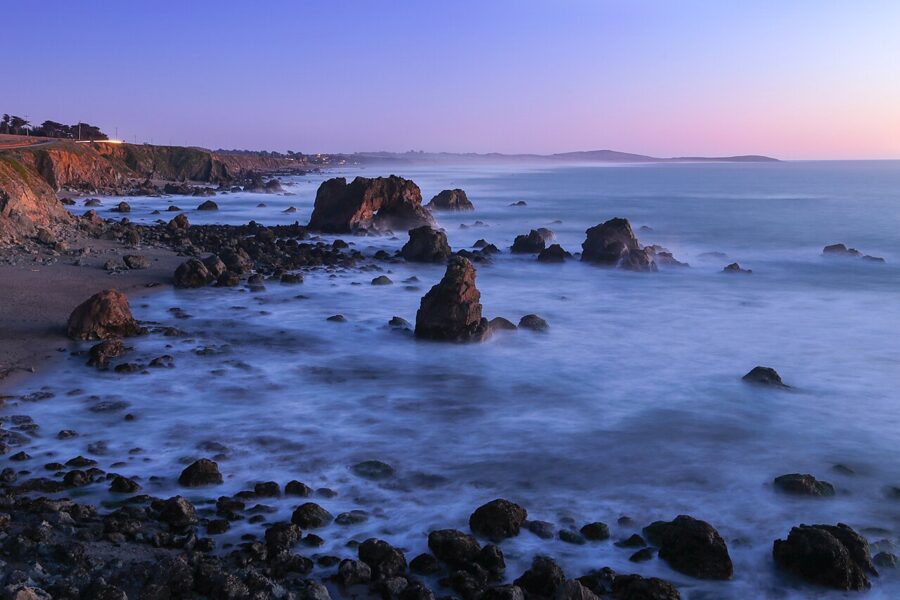
North of town, Sonoma Coast State Park runs 17 miles from Bodega Head to just past Jenner. Highway 1 follows it the whole way, with pullouts and short paths down to a string of beaches. They’re beautiful and they’re dangerous: the park says the beaches along this coast are not recommended for swimming or even wading, because of large surf, cold water, sudden drop-offs, pounding shore breaks and rip currents.
Take that seriously. Keep children back from the highest line of wet sand, stay off the bluffs and rocks, and never turn your back on the water.
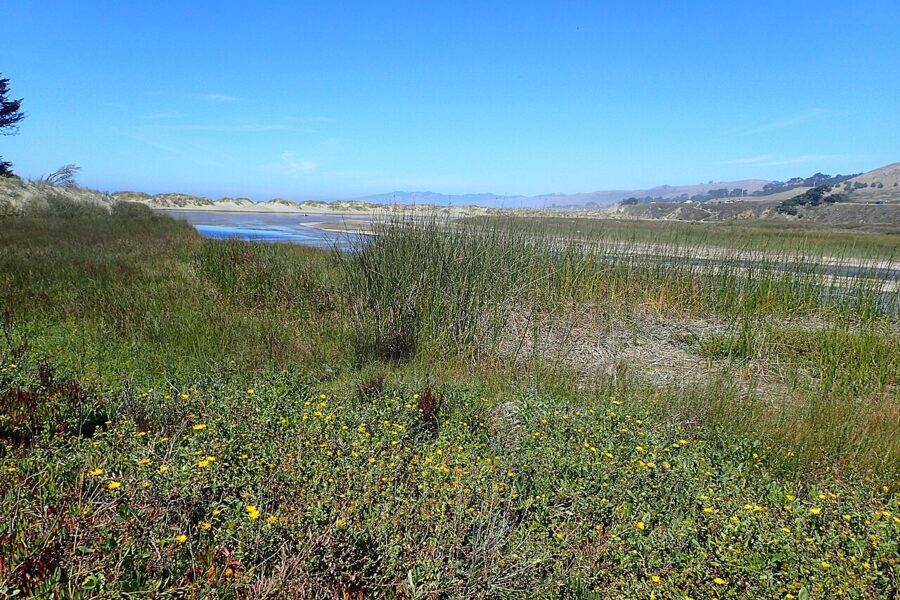

Here are the stops, south to north. All are free to park at except the campground lots.
- Salmon Creek Beach. Two miles of unbroken sand just north of town, popular for surfing, fishing and picnics. A lagoon forms behind it in summer. No dogs.
- Bodega Dunes. The campground and day-use area behind the dunes, open 8am to sunset; parking here is one of the $10 lots. The dune boardwalk and accessible ramp are permanently closed after storm damage.
- Portuguese Beach and Schoolhouse Beach. Sandy coves between rocky headlands, good for a picnic out of the wind.
- Duncan’s Landing. An old lumber-loading point that the park calls the most dangerous spot on the Sonoma Coast, with large and unpredictable surf. Waves have reached the parking lot, so look from the top and move on.
- Shell Beach and the Kortum Trail. The 2.5-mile Kortum Trail crosses the coastal prairie above the beaches, and the 7-mile round-trip Pomo Canyon Trail climbs inland from Shell Beach.
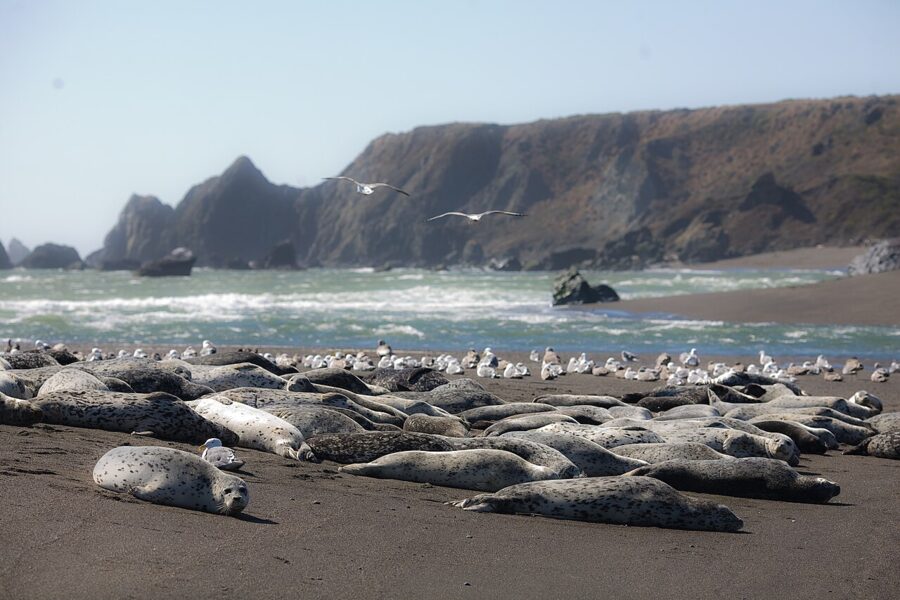
- Goat Rock. A big beach where the Russian River meets the ocean, with Arched Rock offshore and harbor seals hauled out at the river mouth. No dogs on Goat Rock Beach, though leashed dogs are allowed at neighboring Blind Beach. The gate may close in dangerous surf, but walk-in access stays open.

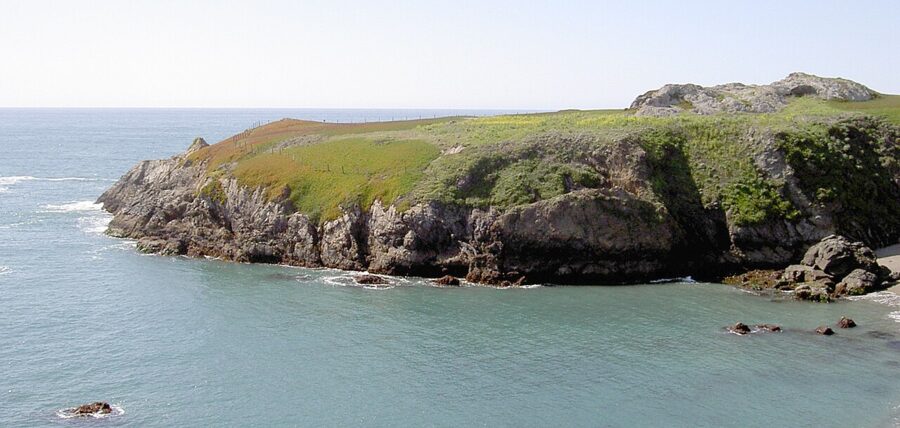
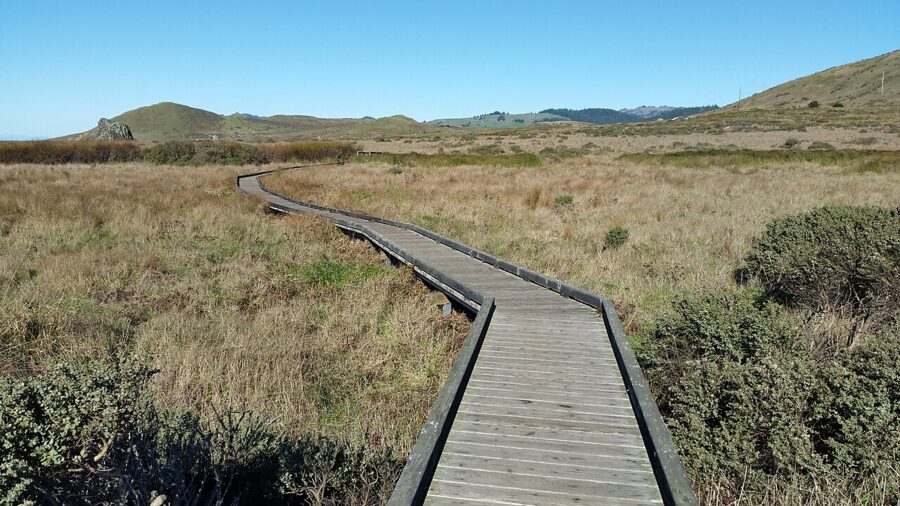
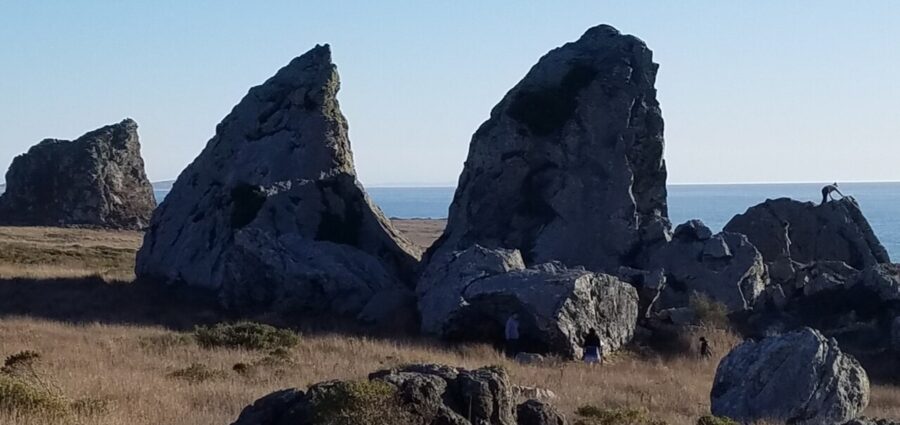
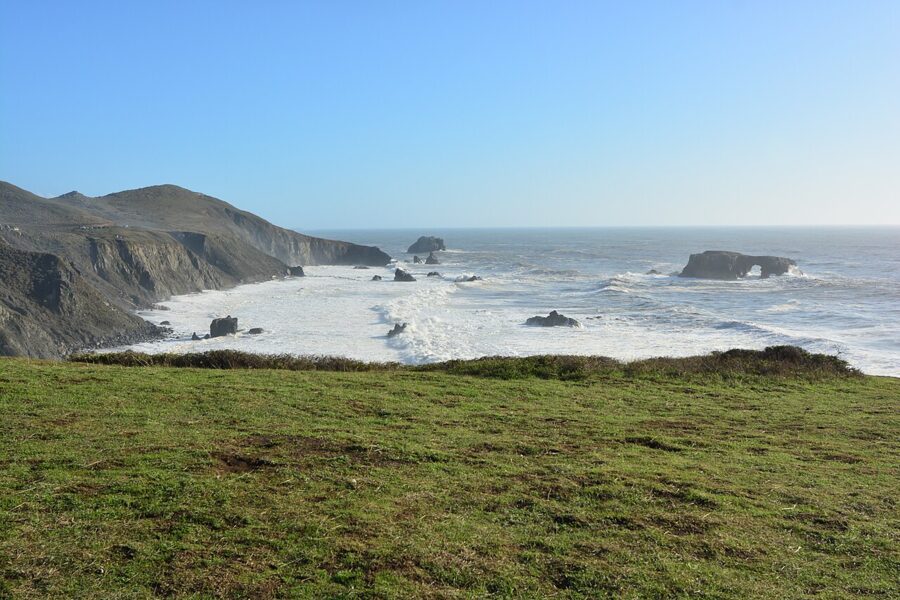

The harbor seals at the Russian River mouth are the closest thing here to a guaranteed wildlife sighting. If you have an hour, the state park suggests the Jenner visitor center and the seal rookery at the river mouth. Pups arrive in spring, when volunteers often keep watch over the colony. Stay well back: a seal that lifts its head and stares at you is already disturbed.

Can you swim in Bodega Bay?
Not on the ocean beaches north of town. The one place people do get in is Doran Beach, which faces south into the bay and usually has calmer waves than the rest of this coast, so it’s where families wade and bodyboard. The water is cold all year, a wetsuit makes a big difference, and lifeguards can’t be counted on.
Doran Beach and the harbor parks
Sonoma County runs a cluster of small parks around the harbor. Parking at the county parks below is $8, or free for Sonoma County Regional Parks members, unless noted.
Doran Regional Park is the town beach: a two-mile sandspit between the harbor and the bay, open 7am to sunset. It’s the best stretch of sand for families, with restrooms, picnic areas, a campground, an accessible kayak launch, and leashed dogs allowed. On summer weekends and holidays the entrance closes when the lot fills, so arrive by mid-morning.
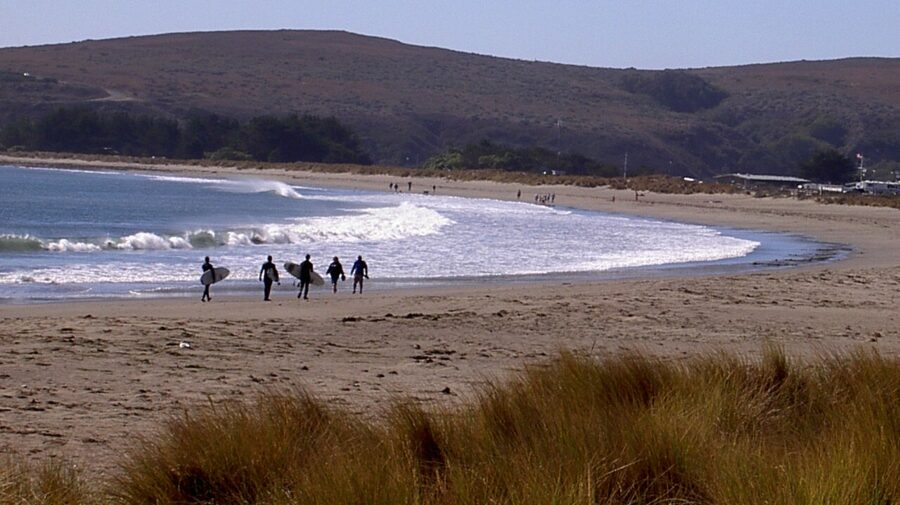
Westside Regional Park, on the Bodega Head side of the harbor, opens at 5:30am and is mostly about boats: a three-lane launch ramp, an accessible kayak launch and a campground. It’s a quiet place to sit by the water.
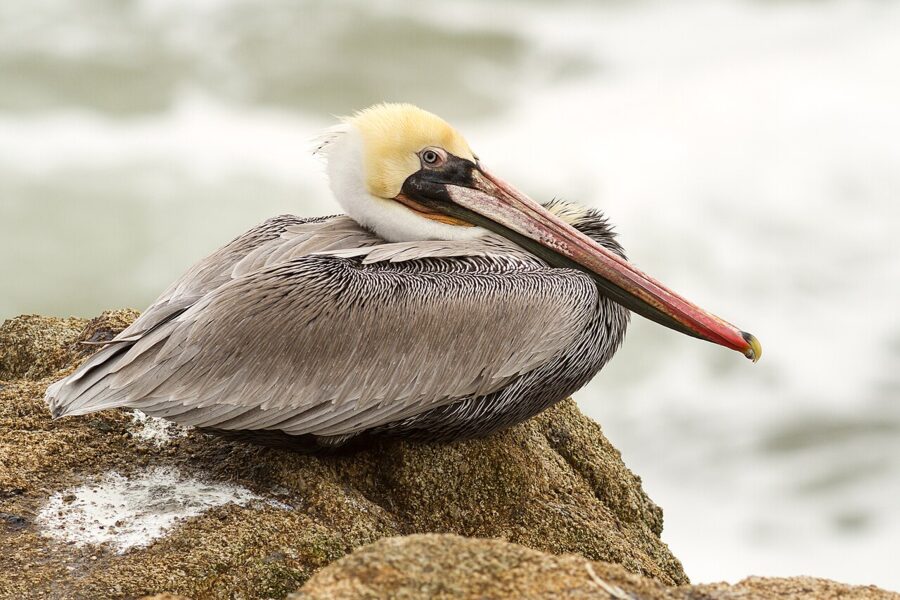
Bird Walk Coastal Access Trail, at the south end of town, is a flat 1.19-mile loop around a saltwater marsh and two freshwater ponds. It’s the best birding spot in town and easy with small children. Hours are 7am to sunset.
Pinnacle Gulch Coastal Access Trail has free parking and drops 0.55 miles to a quarter-mile beach on the bay. The lot is small and fills early on weekends, and the low-tide walk along the shore toward Doran Beach or Shorttail Gulch needs a tide table.
One date-specific warning: high tides and unusual ocean conditions could close parts or all of Doran and Westside parks from November 23 to 27, 2026, according to the county. If you’re visiting Thanksgiving week, check the county parks site before you go.
Fishing, crabbing and paddling
Bodega Bay is still a fishing town, and 2026 has been a better year than most. Ocean salmon fishing, completely closed to sport anglers in 2023 and 2024 and open for only six days in 2025, came back in 2026, and commercial salmon boats went out for the first time since 2022. Season dates and limits change in-season, so check the California Department of Fish and Wildlife’s ocean salmon page before booking a trip.
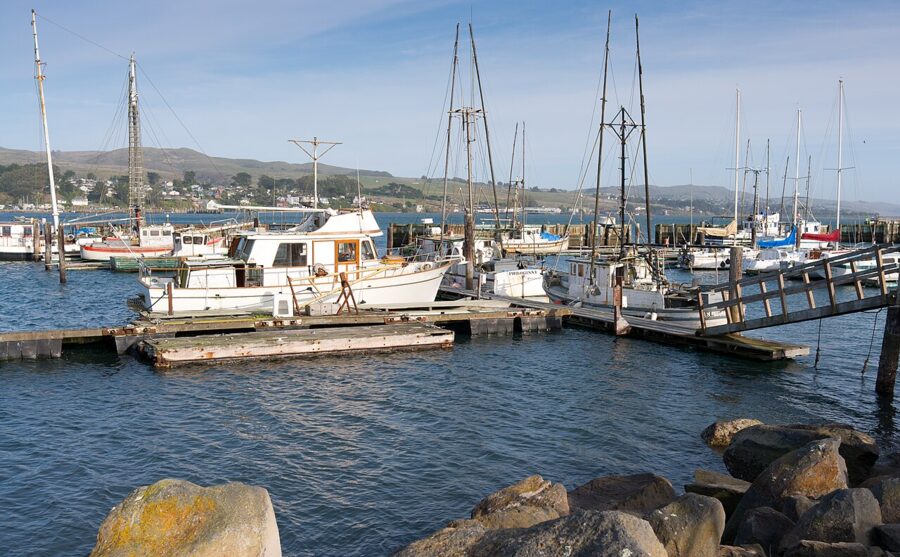

Dungeness crab is the other big draw, and the 2026 season comes with a catch. The recreational season opened on November 7, 2026, but because of humpback whale entanglements, standard crab traps are restricted along the whole coast from Oregon to Point Conception until at least January 1, 2027. Hoop nets and crab snares are still allowed, and hoop nets must be checked at least every two hours.
The commercial season is delayed until at least the same date, so locally caught Dungeness may be scarce in restaurants until January.
You need a California fishing license if you’re 16 or older. You can fish and crab from the pier at Spud Point Marina, at 1818 Westshore Road, or from the jetty on the harbor side of Bodega Head. Party boats and charters load at the Sport Fishing Center in Porto Bodega Marina, across the harbor from Spud Point.
For paddling, the harbor is the place, not the open coast. Doran and Westside both have accessible kayak launches, and the inner harbor is sheltered. Afternoon wind is the problem, so go out early and stay inside the jetty.
Smaller things to do
The Children’s Bell Tower
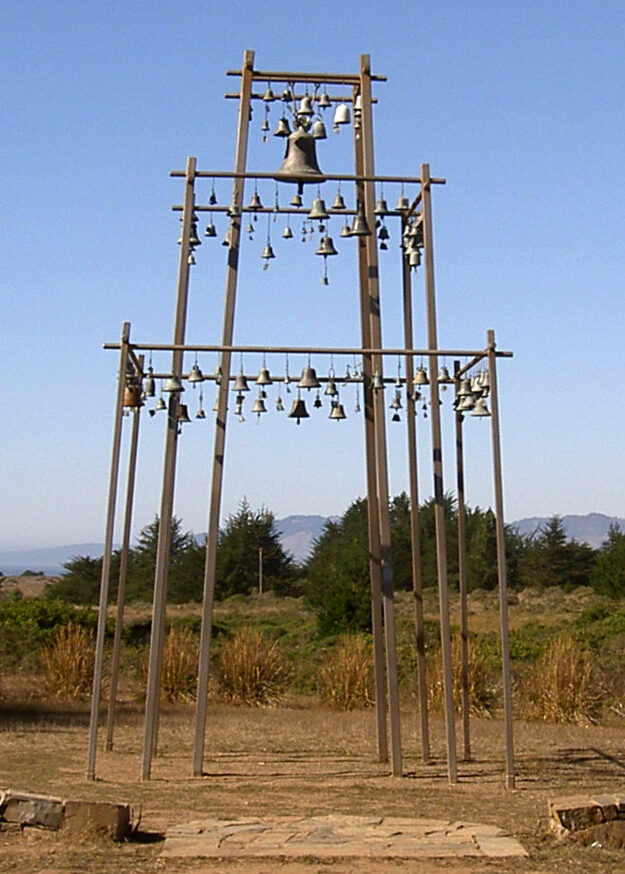
Beside the Bodega Bay Community Center at 2255 Highway 1 stands a tall metal frame hung with 140 bells. It’s a memorial to Nicholas Green, a seven-year-old from Bodega Bay who was shot during an attempted robbery while his family was driving through southern Italy in 1994. His parents donated his organs to Italian patients, and the story set off a wave of organ donation in Italy.
Most of the bells were sent by Italian families. The centerpiece was cast at a foundry that has made bells for the papacy, and Pope John Paul II blessed it before it was shipped. Sculptor Bruce Hasson designed the tower, which went up in 1996. It’s free, and 15 minutes is enough.
Horseback riding
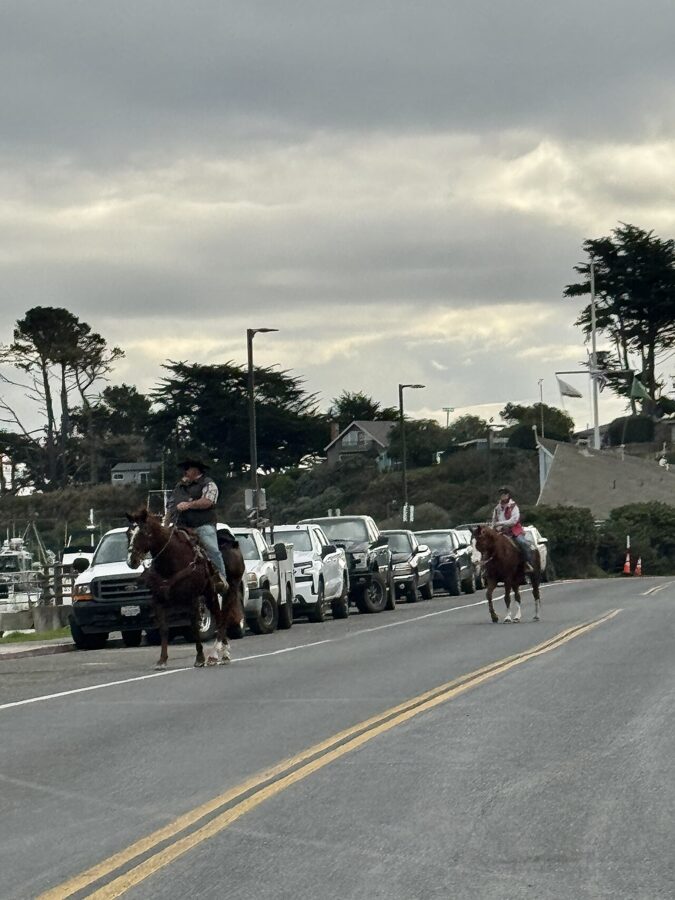
Trail rides are one of the few organized activities in the area. Horse N Around Trail Rides, based on Bodega Highway in Bodega, runs rides on a cattle ranch and on the beach, by reservation only through its website. Chanslor Ranch, a Sonoma County park on Highway 1 just north of town, has trails for hiking and riding. Check prices, ride lengths and age limits when you book.
Wine tasting
Bodega Bay isn’t wine country, but Sonoma Coast Vineyards has a tasting room in town at 555 Highway 1, pouring cool-climate wines from vineyards about five miles from the ocean. It’s open Wednesday through Monday, 11am to 5pm, and closed Tuesdays.
Fort Ross
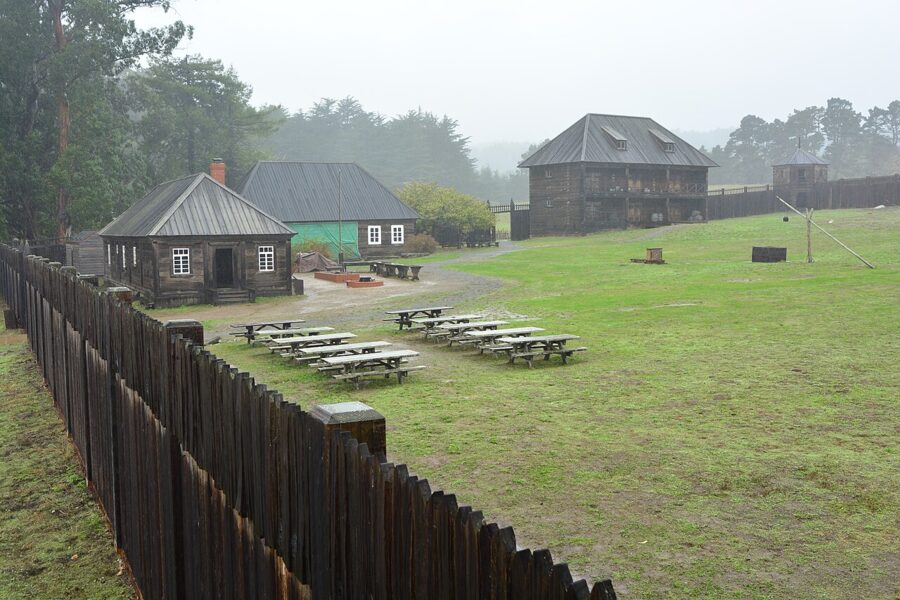
About 45 minutes north, 12 miles past Jenner on a slow, twisting stretch of Highway 1, Fort Ross State Historic Park preserves the reconstructed stockade of the Russian colony that held this coast from 1812 until 1841. As of November 20, 2026, the fort compound is open 9am to 3:30pm and the visitor center 10am to 3:30pm, and parking is $10 per vehicle. Allow two hours there plus the drive, and check which days it’s open before you set out.

Festivals and events by month
The calendar is short. These are the dates that matter:
| When | What | Notes |
|---|---|---|
| December to February | Southbound gray whales | Watch from Bodega Head |
| February to May | Northbound gray whales, mothers with calves | Often closer to shore; March is a strong month |
| Spring | Harbor seal pupping at the Russian River mouth | Goat Rock and Jenner; keep your distance |
| Early May | Bodega Bay Fisherman’s Festival | Blessing of the fleet, boat parade, music; the 53rd ran May 2 and 3, 2026, at Westside Regional Park |
| Summer and fall | Humpback whales offshore | Best seen from a boat |
| October | Hitchcock Film Festival | The 12th ran October 16 and 17, 2026 |
| November | Recreational Dungeness crab season opens | Opened November 7 in 2026, with trap restrictions |
The Fisherman’s Festival has run since 1973 and is the biggest weekend of the year, with tickets listed at $20 for adults and $18 for seniors in 2026 and children under 12 free. If you’re going, book a room early.
Where to eat and drink
Seafood, mostly casual, mostly on Highway 1. Hours change with the seasons, so check before driving over for a late meal.
Chowder, crab and fish and chips
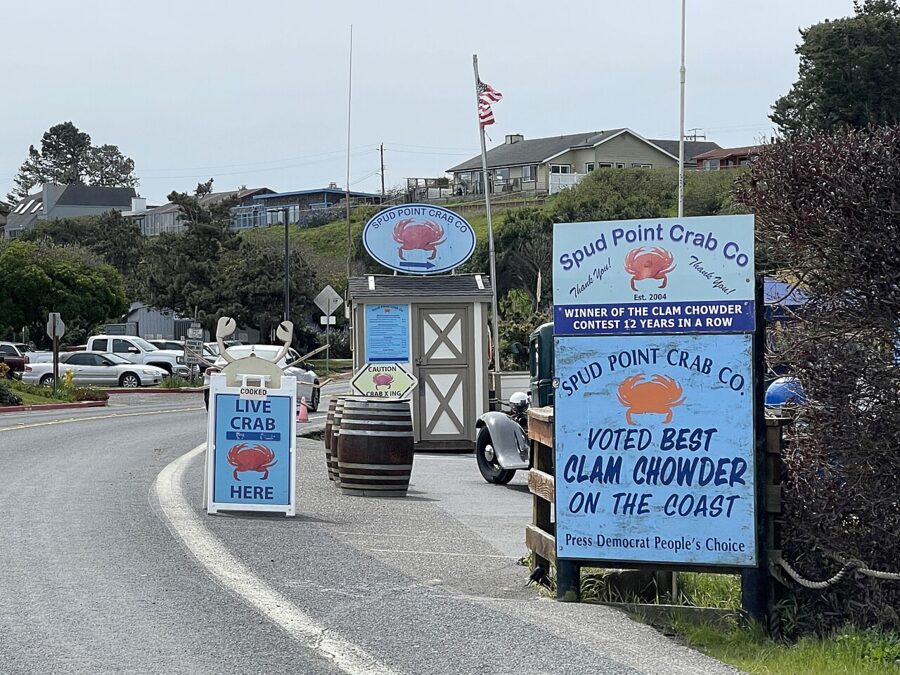
Spud Point Crab Company, at 1910 Westshore Road across from Spud Point Marina, is the famous one: a family-run seafood shack known for its white clam chowder ($9.95 as of November 2026) and crab sandwiches. It’s open 9am to 5pm daily but closed on Easter, Thanksgiving and Christmas. It reopened on October 22, 2026, after a short break, and expect a line on summer weekends.
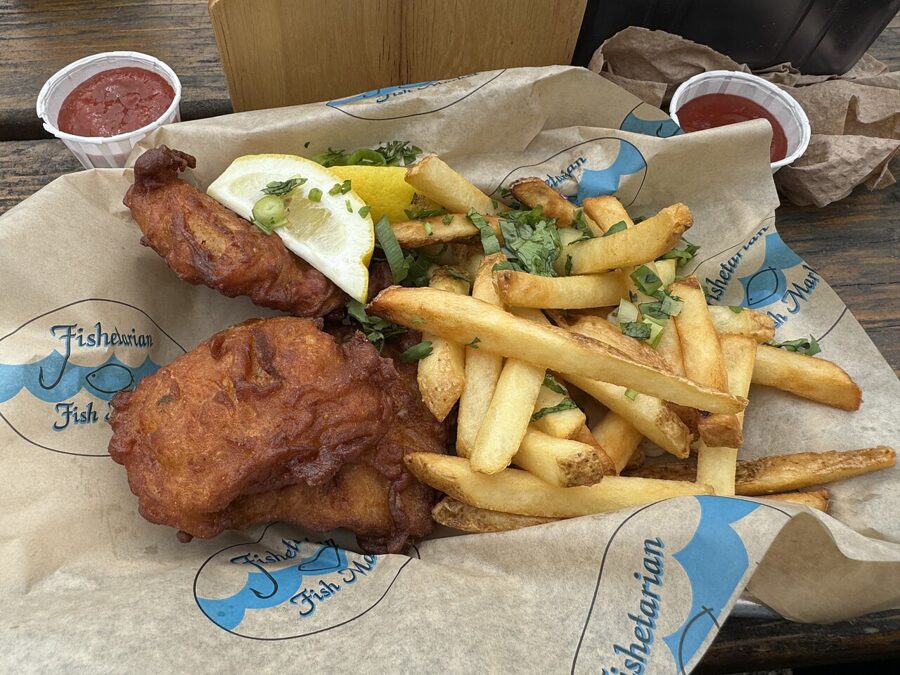
Fishetarian Fish Market, at 599 Highway 1, is a counter-service seafood spot looking over the bay, open 11am to 7pm daily. It’s the easiest good lunch in town, and its fish and chips come in a gluten-free version too.
Sea and Sons opened in May 2026 on the southwest corner of the Tides Wharf building, run by the family behind the Tides Wharf wholesale seafood business. It sits between the chowder stands and the sit-down restaurants: Dungeness crab sandwiches, poke bowls, shrimp tacos, clam chowder, gluten-free fish and chips, and a smoked-salmon platter. It’s open Thursday through Monday, 11am to 6pm.
Sit-down meals
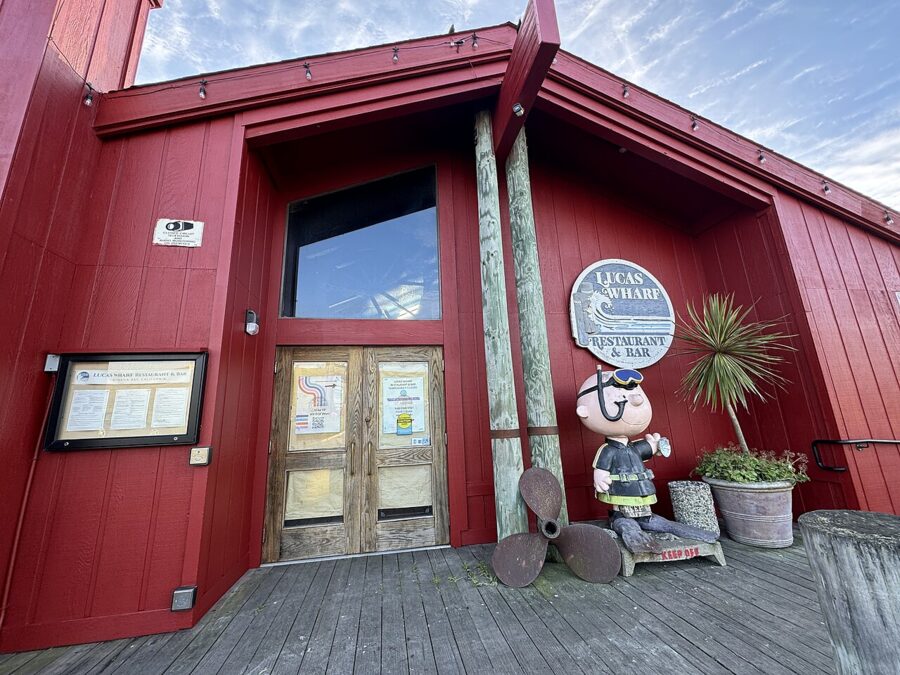
Rocker Oysterfeller’s at the Wharf, at 595 Highway 1, took over the old Lucas Wharf restaurant on the water. Expect oysters, chowder and seafood platters. It’s open 11am to 8pm Sunday through Thursday, and until 9pm on Friday and Saturday.

Terrapin Creek, at 1580 Eastshore Road, is the town’s best dinner and the one to reserve, with a seasonal menu built around local seafood. It serves dinner only, Thursday through Monday, 4:30pm to 8:30pm.
Drakes Sonoma Coast, in The Lodge at Bodega Bay at 103 Coast Highway One, is the hotel option and the best bet for a sit-down breakfast. It serves breakfast 7:30am to 11am on weekdays, brunch 7:30am to 2pm on weekends, and dinner daily from 5pm to 9pm.
Across the highway from the wharf, the Bay View Restaurant at the Inn at the Tides is the other upscale room in town, with a set Thanksgiving dinner on November 26, 2026, from 3pm to 7pm. The Tides Wharf Restaurant serves breakfast, lunch and dinner by the harbor, but its published hours vary between listings, so call ahead.
On the drive in
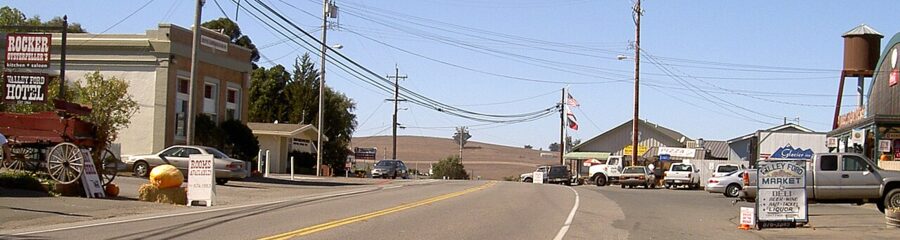
In Valley Ford, about 15 minutes inland on the San Francisco route, Rocker’s Roadhouse at the Valley Ford Hotel is a good stop for lunch or Sunday brunch. It’s open Monday and Thursday through Saturday from noon to 8pm, with Sunday brunch 10:30am to 2pm and dinner 2pm to 8pm. It’s closed Tuesday and Wednesday.
When to go and how long to stay
September and October are the best months. The summer fog usually eases, the crowds thin out after Labor Day, and you get the clearest views from Bodega Head. This is often the warmest stretch of the year on this coast, too.
Summer is the busiest season and often the grayest: fog can sit on the coast for days while it’s hot 20 miles inland, and Doran Beach fills on weekends. Winter brings storms, big surf and the southbound whales, plus very high tides and the odd park closure. Spring means northbound whales with calves, seal pups at Goat Rock and the Fisherman’s Festival in early May.

How long to stay: one full day covers Bodega Head, the harbor and a seafood lunch. Two days lets you add Bodega village, the Sonoma Coast beaches and Goat Rock without rushing. Three days takes you north to Fort Ross, or leaves time for a fishing trip or the Friday lab tour.
A one-day plan
- Morning: Bodega Head. Walk the trail, watch for whales in season, and look at the Hole in the Head on the drive back.
- Lunch: Chowder at Spud Point Crab Company or fish and chips at Fishetarian.
- Afternoon: Doran Beach or the Bird Walk trail, then the Children’s Bell Tower.
- Evening: Dinner at Terrapin Creek (reserve) or Rocker Oysterfeller’s.
Adding a second day
- Morning: Drive north on Highway 1 with stops at Salmon Creek, Shell Beach for the Kortum Trail, and Goat Rock for the seals.
- Lunch: Back in town, or a picnic on the bluffs.
- Afternoon: Bodega village for the schoolhouse, the church and the country store, then a tasting at Sonoma Coast Vineyards on the way back.
Where to stay
The two big hotels are The Lodge at Bodega Bay, at the south end of town near Doran Beach, and the Inn at the Tides, on the hill across from the wharf. Beyond those you have motels and vacation rentals, plus campgrounds at Doran, Westside, Bodega Dunes and Wright’s Beach. Wright’s Beach campground is closed to overnight camping from November 16 to 30, 2026, because of forecast high swells. Doran’s campsites take reservations up to six months ahead, and summer weekends go early.

Getting around and practical notes
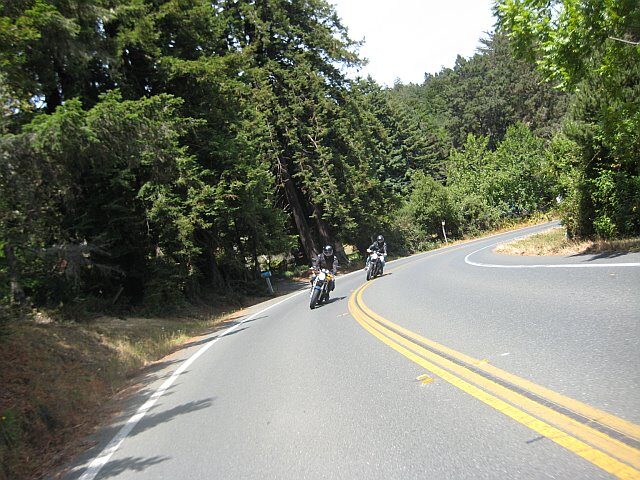
You need a car. Highway 1 is the only through road, two lanes and slow, especially north of Jenner. Parking is easy everywhere except Doran Beach and Pinnacle Gulch on summer weekends.

| Place | Hours | Parking (November 2026) |
|---|---|---|
| Bodega Head (Sonoma Coast State Park) | 8am to sunset | Free |
| Sonoma Coast State Park campground lots (Bodega Dunes, Wright’s Beach) | 8am to sunset | $10 per vehicle; $9 seniors |
| Doran Regional Park | 7am to sunset | $8, free for county parks members |
| Westside Regional Park | 5:30am to sunset | $8, free for members |
| Bird Walk Coastal Access Trail | 7am to sunset | $8, free for members |
| Pinnacle Gulch Coastal Access Trail | 7am to sunset | Free |
| Fort Ross State Historic Park | Compound 9am to 3:30pm | $10 per vehicle |
A few rules catch people out. Dogs aren’t allowed on state park trails, or on the beaches at Salmon Creek, Bodega Dunes and Goat Rock, but they’re welcome on a leash at the county parks. Beach fires are banned in the state park, and natural features may not be disturbed or taken. The Bodega Bay visitor center is at 913 Highway 1.
Last, dress for wind, not for the San Francisco forecast. A warm layer and a windproof shell will do more for your trip than anything else you pack.